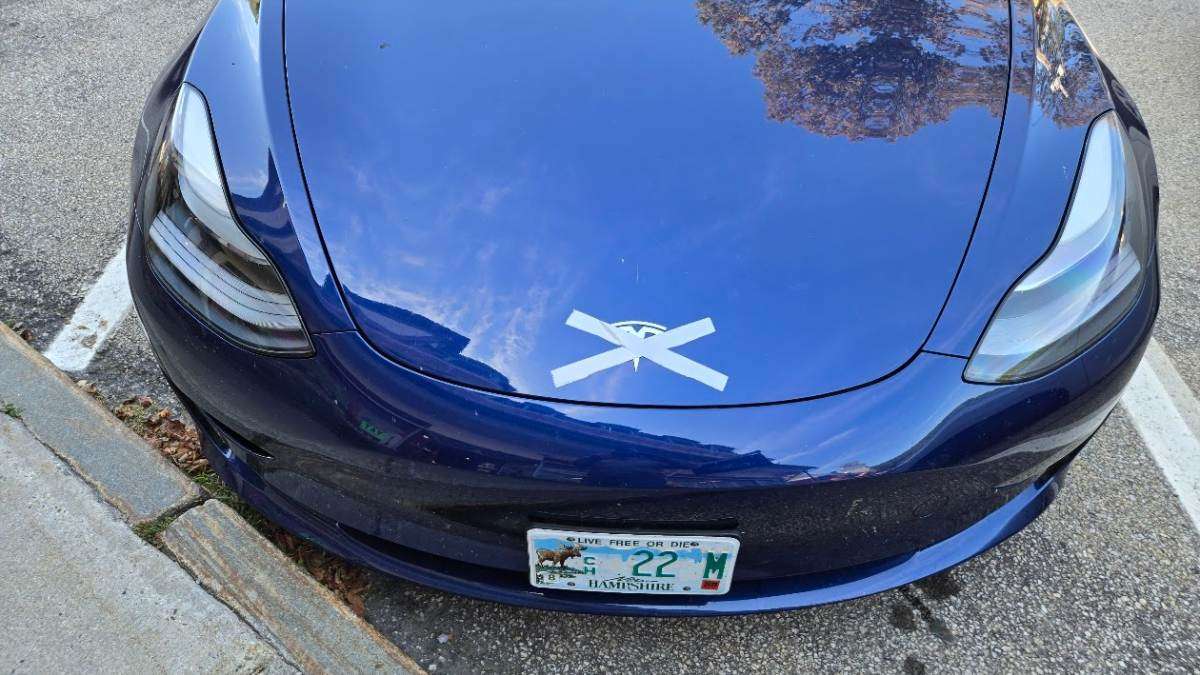

Hidden inside a recent Cox Automotive EV Market Monitor Report was a tidbit about Tesla that most reporters overlooked. Tesla’s share of the American EV market has grown. A lot. Tesla now has a staggering 61% of the total EV market in the U.S. The strangest part is how Tesla got to this point.
Tesla Has 61% U.S. EV Market Share - But Not Through Growth
Tesla’s U.S. electric vehicle market share in August 2025 had dropped to a low of 38%, according to EV publication Recharged. That was not a bad thing in the eyes of many, even Elon Musk. He’s long said that he hoped that Tesla would have many great competitors who would lead the world to a greener all-EV future. Ford, GM, Hyundai, and others were coming on, and Tesla was looking like it was a leader who was about to share the top of the mountain. Nope.
Fast forward just five short months, and Tesla now has an insane 61% market share according to Cox Automotive. 60.5% if you prefer estimates with decimals. I’m an integer guy at heart, myself, when estimating things. This Tesla market share number is not far off a supermajority. Not far off a two-thirds share of the market. Not far off of making it seem like every other brand isn't really even in the game at all. Let’s explore that a bit.
Are Tesla’s Competitors Really Even In the EV Game? Tiny Percents Of Tiny Percents
When we speak about the “EV market in America,” it is very important to bear in mind that all of the battery-electric vehicles (BEVs) sold in America don't really add up to a hill of beans. As of the latest data from Cox Automotive, the share of BEVs in the overall U.S. vehicle market is just 6%. It was 5.8 in 2022, by the way. Of the 6% of the U.S. market that BEVs earn, Tesla has about 4 of those percentages. That means that all of the other automakers in America who build and deliver EVs are sharing just 2% of the total U.S. market. Teeney tiny numbers. Deliveries so low that if EVs had not been mandated, the automakers would have never bothered. There is no cheese down that tunnel.
How Much Bigger Is Tesla Than Its U.S. Competitors In EV Deliveries?
We created this chart to give you a sense of how much bigger Tesla’s U.S. market deliveries are than its competitors in that subsegment of the marketplace. This is a top-down list of the highest volume EV brands in America as of January 2026.
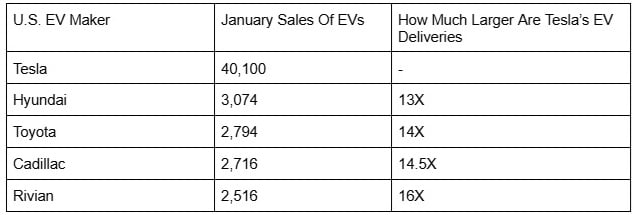
As you can see, Tesla is many multiples larger than its peers in the U.S. EV market.
Tesla Is Just 2 Models
The craziest thing about the U.S. battery-electric vehicle market is there are only two successful models. They are the Tesla Model Y, and the Tesla Model 3. Not a single other EV in America sells at anywhere close to the volumes needed to justify its existence from a profit-and-loss standpoint. With over 25,000 monthly deliveries, the Model Y is a straight-up success. It is neck and neck with the Toyota RAV4 for best-selling vehicle in America that is not a Ford F-series product. The Model 3 has lower deliveries, but it has been a long-term success, selling at high volume now for many years in a row.
As the U.S. EV Market Weakens, Tesla Strengthens
An odd side effect of the U.S. EV market shrinking back to 2022 levels is that the more it contracts, the better Tesla seems in the context of winners and losers in the (tiny) U.S. EV market. A slow month for Tesla is still many tens of thousands of EVs being built, sold, and delivered. A slow month of EVs for a brand like Subaru may mean fewer than 1,000 EVs overall sold by its entire operation. Why even bother?
Tesla Takedown
We’ve reported multiple times that the Tesla takedown by left-wing liberal protesters was always suspect. EVs are a decidedly left-of-center topic. Championed by left-of-center politicians and activists. The idea that killing off the only successful EV company because the left-of-center agitators don’t like the right-of-center politics of the company’s CEO seems like cutting off the branch one is standing on. In any event, there is almost no empirical evidence that the shootings (into buildings), arson, vandalism, and announcements of Tesla boycotts had any meaningful effect on Tesla. Factually, the company is now more dominant in its niche than it has been in many years.
Tesla Culls Its Slow-Selling EVs
Tesla recently killed off two EVs that failed miserably in the marketplace, the X and S. The craziest thing about Tesla killing them off because they didn't sell is that if they had been built and sold by literally any other brand, they would have been number one or two of that brand’s “top-selling” EVs. Again, because the volumes of EVs sold by the other brands are incredibly minute. The power of tiny numbers in action.
What do you think of Tesla regaining its place as the one and only successful EV company in North America? Tell us in the comments below.
Sources - We must acknowledge that the outstanding data provided by Cox Automotive is the backbone of this story. Please do visit the site, read the reports there, and draw your own conclusions.
Image by John Goreham. Chart by John Goreham, using Cox Automotive data.
John Goreham is the Vice President of the New England Motor Press Association and an expert vehicle tester. John completed an engineering program with a focus on electric vehicles, followed by two decades of work in high-tech, biopharma, and the automotive supply chain before becoming a news contributor. He is a member of the Society of Automotive Engineers (SAE int). In addition to his fourteen years of work at Torque News, John has published thousands of articles and reviews at American news outlets. He is known for offering unfiltered opinions on vehicle topics. You can connect with John on LinkedIn and follow his work on his personal X channel or on our X channel. John employs grammar and punctuation software when proofreading, and he sometimes uses image generation tools.
Set Torque News as Preferred Source on Google
Follow us today...