

Key Points
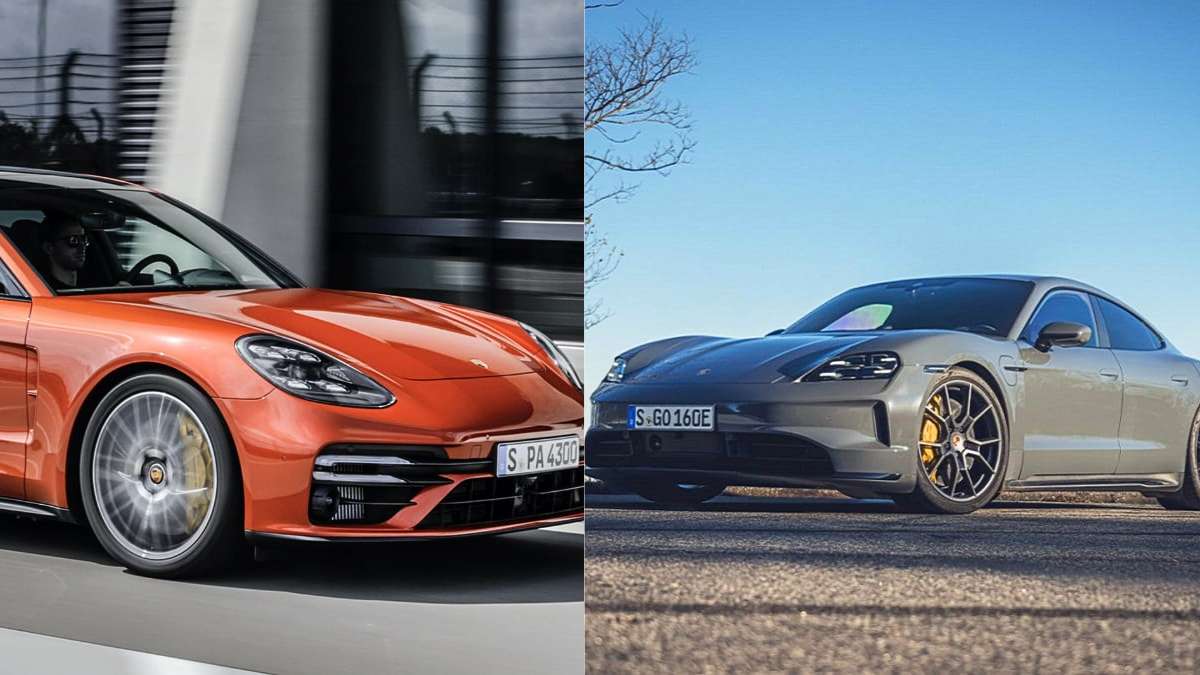
- Porsche is merging its Panamera and Taycan lineups into one model to slash costs amid a 22% Taycan sales collapse.
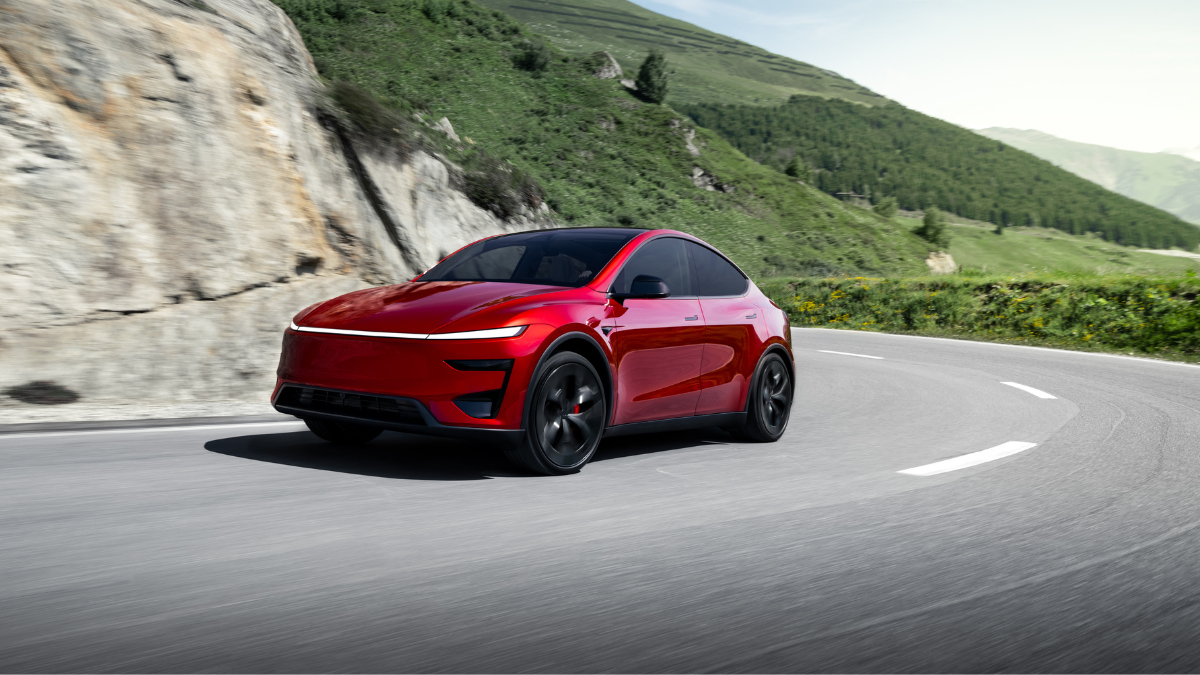
- Tesla cracked this code years ago by sharing 75% of components between the Model 3 and Model Y, enabling massive profitability.
- The brands and people who thrive are those willing to learn from unexpected sources before it's too late.
Here's something that would have sounded completely absurd five years ago: Porsche, the brand that built its entire reputation on engineering precision and never cutting corners, is now seriously considering merging two of its most iconic model lines just to save money, British magazine Autocar claims. And the company they should have been watching all along? Tesla. A Silicon Valley startup that the old-guard automotive world once dismissed as a flashy science project.
Let's dig into this, because the story here is bigger than just a German automaker shuffling its lineup around. This is a masterclass in what happens when you learn from the competition, and what happens when you don't.
Porsche's Costly Double Life
Right now, Porsche runs two completely separate four-door performance sedan lineups. You've got the Panamera, a gas and plug-in hybrid grand touring sedan that's been around since 2009, and the Taycan, which debuted in 2019 as Porsche's all-electric flagship. Two separate platforms. Two separate engineering teams. Two separate development budgets. Two separate production lines.
For a while, that seemed perfectly sustainable. The Taycan, in fact, launched with extraordinary momentum. Back in early 2021, Porsche Taycan sales were shooting through the roof, nearly matching the legendary 911 in quarterly deliveries worldwide, which, for an electric car, was something nobody saw coming. It was the kind of unexpected success story that made headlines and silenced skeptics.
But the good times didn't last.
The Fall That Nobody Predicted
Fast forward to today, and the numbers tell a sobering story. Porsche's overall global sales dropped 10% in 2025. The Taycan? Its deliveries collapsed 22% in one year alone, falling to just 16,339 units globally. To put that in context, the Taycan moved over 40,000 units in 2023. That's more than a slump. That's a freefall.
China is the epicenter of the pain. Chinese buyers, once a critical pillar of Porsche's growth story, have pivoted hard toward domestic brands that offer technology-loaded EVs at prices that make the Taycan look almost comically overpriced by comparison. As we reported earlier this year, China's SAIC launched a Porsche Taycan lookalike for $27,000, and buyers on social media said they'd buy it even with tariffs on top. That should tell you everything about the competitive pressure Porsche is facing right now.
Meanwhile, Porsche's operating profit reportedly collapsed by 99%, driven by weak demand, rising costs, and a massive bill to revise its EV strategy. Porsche is also dealing with well-documented quality headaches: between 2020 and 2024, the Taycan accumulated 25 service recalls, including troubling battery issues that have left owners and dealers frustrated. That's a pattern that erodes buyer confidence, and it erodes it fast.
So what do you do when you're burning money on two parallel premium sedan lineups, your EV sales are tanking, and China is copying your car for a fifth of the price? You call your new CEO, and you start making some uncomfortable decisions.
If you’d like to dive deeper into why Porsche may be restructuring its sedan lineup and how Tesla solved a similar challenge years ago with the Tesla Model 3 and Tesla Model Y, watch my analysis in the video below from the Torque News Youtube channel.
Enter Michael Leiters And a Plan That Tesla Already Ran
Porsche's incoming CEO, Michael Leiters, who came over from McLare, is reportedly eyeing a bold consolidation move: merging the Panamera and Taycan into a single unified model lineup. Under this plan, one nameplate would offer buyers a choice of petrol, plug-in hybrid, and fully electric variants. One car. One platform. Multiple powertrains.
It sounds innovative. It sounds risky. But here's the twist: it's the exact playbook Tesla has already used, and used brilliantly, for years.
What Tesla Figured Out Early, And How It Changed Everything
Let's rewind to around 2017–2019. While Porsche was still putting the finishing touches on the Taycan and budgeting for two entirely separate sedans, Tesla was doing something that seemed almost too simple on the surface: they engineered their Model 3 sedan and Model Y crossover to share roughly 75% of their components. Same battery architecture. Same drivetrain technology. Shared production lines in their Gigafactories. Even the manufacturing robots could transition between the two models.
The result? Tesla was able to scale production of both vehicles simultaneously at a dramatically lower per-unit cost. They could cut prices when they needed to, absorb supply chain shocks more easily, and redirect engineering resources toward innovation instead of duplicating work across separate platforms. If you've ever wondered why people choose the Tesla Model Y even though the Model 3 handles better and costs less, part of the answer is that Tesla could keep pricing both cars competitive precisely because the shared platform made both affordable to build.
This wasn't an accident. It was a deliberate engineering philosophy baked into Tesla's DNA from the start: don't build two separate cars when you can build one architecture that does two jobs. The savings don't just come from parts sharing, they come from R&D consolidation, reduced supplier complexity, streamlined service and replacement parts, and faster software deployment across the entire lineup at once.
Tesla's Numbers Don't Lie
Consider what Tesla pulled off commercially. The Model Y went on to become the best-selling vehicle on the planet in certain markets, not just the best-selling EV, but the best-selling car, period. And it did so while sharing its bones with a sedan. That kind of scale efficiency is what allows Tesla to absorb price cuts and still remain profitable, something that has frustrated legacy automakers for years.
Porsche, by contrast, has been running two full development programs simultaneously for cars that target essentially the same buyer in the same segment. The person cross-shopping a Taycan Turbo is also potentially the person looking at a Panamera Turbo S E-Hybrid. These aren't different customers. They're often the same customer trying to decide between petrol performance and electric performance. Running two entirely separate engineering programs to serve the same customer profile is, in hindsight, an expensive and somewhat unlikeable luxury that Porsche simply can no longer afford.
What a Combined Model Could Actually Look Like
Here's where things get interesting. A merged Panamera-Taycan lineup wouldn't necessarily mean the end of the Taycan's character, or the Panamera's long-distance grand touring soul. Under one nameplate - and Panamera makes more historical sense given its nearly two-decade heritage - buyers could choose:
- A V8-powered Panamera for the traditionalist who wants thunderous combustion (Porsche has already confirmed the V8 will stay into the 2030s)
- A plug-in hybrid variant for the pragmatist who wants range flexibility
- A fully electric variant for the performance EV buyer
One car. Three powertrain philosophies. Shared platform, shared chassis engineering, shared electronics architecture. Sound familiar? It should. The electric Cayenne is already following this exact dual-strategy logic, sitting alongside its gas-powered sibling under the same nameplate.
The question of what to call it matters too. "Panamera" carries decades of brand equity. "Taycan" is younger and more volatile. And as Porsche Taycan U.S. sales slid 37% in 2024, even while the broader EV market grew, the nameplate's pull has visibly weakened.
The Deeper Lesson For EV Buyers
Here's something worth thinking about if you're in the market for a luxury EV or a Porsche of any kind. When an automaker runs leaner, more integrated platforms, it tends to improve reliability, accelerate software updates, and reduce long-term ownership costs. A unified Panamera lineup would theoretically mean faster fixes, simpler parts sourcing, and a cleaner ownership experience.
If you're comparing premium EVs right now, understanding the underlying platform strategy matters. It affects resale value, parts availability, service costs, and how quickly a manufacturer can push software improvements to your car. As we've seen firsthand with long-term Tesla Model 3 ownership stories - one owner who drove 13,561 miles in a year averaging 4.40 miles per kWh - the efficiency of Tesla's integrated platform directly translates into a better experience for the driver.
For Porsche fans who might be worried about the brand losing its soul in this consolidation, here's a thought: saving money on engineering overhead isn't the same as cutting performance. Ferrari and McLaren build very few models and achieve extraordinary results with focused engineering budgets. Porsche consolidating from two sedan platforms to one doesn't mean less performance, it potentially means more resources concentrated on making that one platform extraordinary.
Porsche Is Playing Catch-Up, But It's Not Too Late
The comparison between Tesla's approach and what Porsche is now considering reveals something important about the auto industry as a whole. Tesla didn't build its platform strategy because it had more money or more engineers. It built it because it had no choice. Tesla was a startup that had to be brutally efficient or die. That constraint forced a discipline that now looks like genius.
Porsche, BMW, Mercedes: these legacy brands grew up in an era where separate platforms for each model were normal and affordable. The EV transition has changed the economics completely. Battery development is expensive. Software is expensive. Running two separate EV development programs for two cars in the same segment is a luxury that's now producing losses, not margins. As we've noted in coverage of Porsche's early Taycan planning compared to how Tesla had already established its competitive ground, the gap in manufacturing philosophy was visible even before the Taycan launched.
This is the story of an industry finally learning a lesson Tesla wrote years ago, not because Tesla is infallible, but because market pressure is the ultimate teacher.
A Moral Worth Carrying Beyond the Garage
Here's something to think about that goes beyond horsepower and platform sharing. The most enduring lesson in this story is about ego and timing. Porsche's delay in recognizing the efficiency of shared platforms wasn't a lack of engineering talent, but it was partly a resistance to learning from a source that felt beneath them. A Silicon Valley startup. A company that, for years, much of the automotive establishment found genuinely unlikeable in its brashness and dismissal of legacy wisdom.
The truth is, the best decisions, whether you're running a car company or managing your own finances, come from the ability to set aside pride and learn from wherever wisdom is available, even from unexpected sources. Being willing to say, "They got something right, and we should adopt it," is not weakness. It's the most sophisticated form of intelligence there is. The companies and people who thrive long-term are usually the ones who watch their competition with genuine curiosity rather than contempt.
What Do You Think?
Porsche is at a crossroads, and how this plays out will shape the luxury EV market for years. So here are two questions I'd love for you to weigh in on below:
If Porsche merges the Panamera and Taycan into one lineup, would you see that as a smart strategic move, or would it make you less likely to consider buying one?
And looking at Tesla's platform-sharing success with the Model 3 and Model Y, do you think other legacy automakers are catching on fast enough, or are they still playing a game that's already been decided?
Drop your thoughts and personal experiences in the comments section below. Have you owned a Taycan, a Panamera, a Model 3, or a Model Y? What was your ownership experience like? I genuinely want to hear from you.
Image creation by Torque News.
About The Author
Armen Hareyan is the founder and Editor-in-Chief of Torque News and an automotive journalist with over 15 years of experience writing car reviews and industry news. Now based in the Charlotte region (Indian Land, SC, he founded Torque News in 2010, which since then has been publishing expert news and analysis about the automotive industry. He can be reached at Torque News on X, Linkedin, and Youtube. Armen holds three Masters Degrees, including an MBA, and has become one of the known voices in the industry, specializing in the landscape of electric vehicles and real-world stories of actual car owners. Armen focuses on providing readers with transparent, data-backed analysis bridging the gap of complex engineering and car buyer practicality. Armen frequently participates in automotive events throughout the United States, national and local car reveals and personally test-drives new vehicles every week. Armen has also been published as an automotive expert in publications like the Transit Tomorrow, discussing how will autonomous vehicles reshape the supply chain, and emerging technologies in vehicle maintenance.
Set Torque News as Preferred Source on Google
Follow us today...


Comments
Long time Model S driver [9…
Permalink
Long time Model S driver [9 years]. Bought the Plaid when it was announced and it's a blast but lack of turn signal stalk makes driving in traffic a challenge. I was looking at switching to the Taycan but lack of 1 foot driving is a deal breaker. And battery issues and limited range don't help.