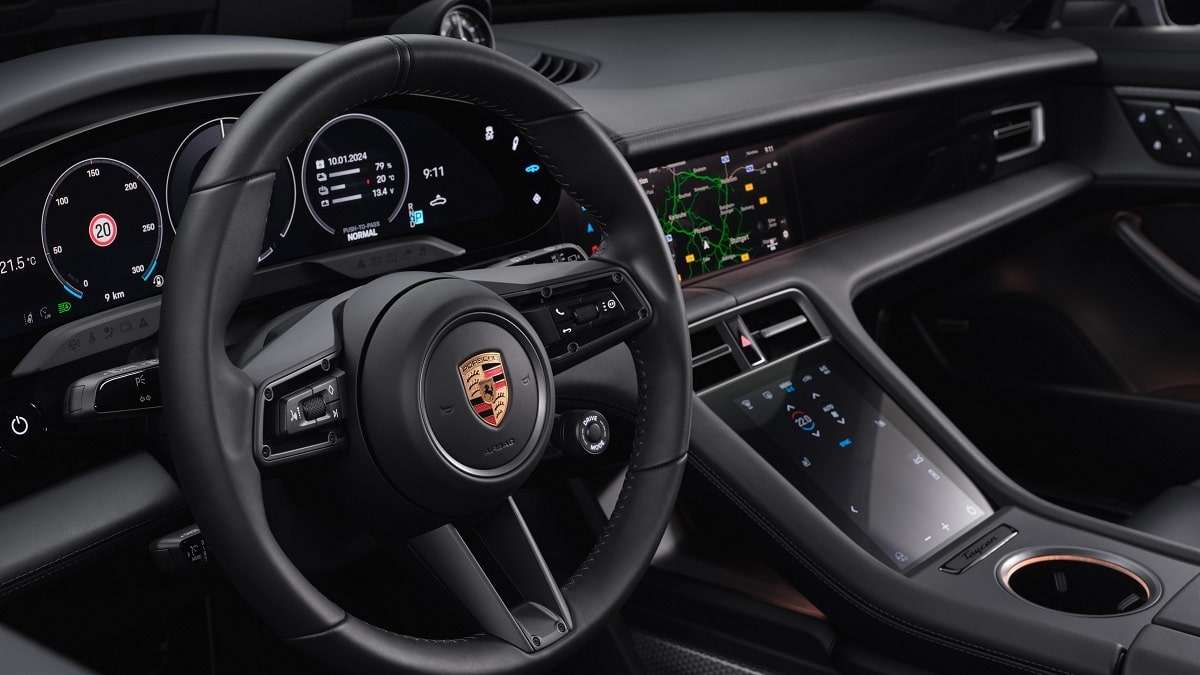

Volkswagen Group CEO, Thomas Schäfer, stated that the interior touch screen concept, "definitely caused a lot of damage." He went on to say, “We had frustrated customers who shouldn’t have been frustrated.”
This is in stark contrast to Tesla which has been lauded for its use of touch screens and the many advantages that they add to user experience, cost savings, and reliability. Tesla shined because they started with a blank sheet and went through the difficult process of gaining customer feedback as part of their initial design process. The hard work paid off in something that was bold and engaging.
To make matters worse, Volkswagen Group (which includes the Porsche and Audi brands) lacked consistency between car brands and models. Tesla has been careful to have a similar user interface between models. Volkswagen Group inadequately thought through how touch screens would be utilized, and didn’t extend the plan for how they would be rolled out across their various brand models. This caused customer confusion. By not having a familiar feeling when moving from one model to another, Volkswagen Group customer felt confused and frustrated that they had to learn a new interface with each new model. This undermined brand loyalty.
The Volkswagen/Porsche miss hasn’t gone unnoticed on social media. For example, here’s a long Reddit thread has a lot of interesting comments. that_dutch_dude started the thread with:
“I love the shade the boss of Volkswagen Automotive Group was throwing towards Tesla for not having buttons. I now drive an ID Buzz and it has fewer physical buttons than a Tesla. The exact thing they gave musk so much grief over.”
12monthsinlondon responded with:
“It was probably a combination of marketing people saying that this trend of minimalist interior would be more aesthetic (and sell cars until people started using them daily and found the experience underwhelming), and cost cutting where you can pawn off any hardware control to the software console where you can get away with some pretty bad UI.”
Phx_trojan noted:
“The Porsche Cayenne is a luxury product. Cost cutting on the interior is not a smart move.”
With the newer Cayenne models, Porsche backtracked and brought back more physical buttons and knobs on the dashboard, making them easier to use while driving. Earlier versions relied heavily on touch screen controls, especially for climate and audio settings, which some drivers found distracting. In the latest Cayenne, Porsche has reintroduced mechanical switches for the air conditioning and a real volume knob in the center console. The gear selector has also been redesigned to free up space for more tactile controls. These updates give drivers a more natural feel, combining modern technology with the satisfying precision of traditional buttons.
How Tesla Got It Right and Volkswagen Didn’t
Tesla was successful introducing a bold concept like touch screens to replace most physical knobs and buttons because they rethought the entire driving process using a process known as “first principles.” First principles is a design method of deconstructing a problem into its absolute fundamental truths to rebuild a solution from scratch. In this case, it is the driving experience and all the minute things a driver does while operating the vehicle. First principles is a foundational reasoning tool that challenges all assumptions and breaks a problem down to its most basic, components to rebuild a solution from the ground up. For example, think about reimagining a rocket by breaking it down to its most fundamental function (moving through space) and rebuilding from there, rather than simply copying and trying to marginally improve existing designs. When looking at earlier Porsche Cayenne with touch screen controls, one could argue that Porsche simple copied the Tesla implementation rather than designing a solution that was specific to their brand and vehicle models.
Why Switch to Touch Screens Anyway?
Touch screen controls aren’t just a cool, modern way to enable a driver to control a car. They have many advantages over physical knobs and buttons. One of the biggest advantages of using touch screen controls in a car, as Tesla does, is efficiency in both design and manufacturing. Every physical knob, button, or switch requires an engineer or designer to create it, test it, and integrate it into the vehicle’s layout. Each one adds complexity, time, and cost. A touch screen interface eliminates the need for hundreds of these small components, replacing them with software-based controls makes it possible for them to be updated and improved over time after the vehicle has shipped from the factory. This approach streamlines development and reduces the number of specialized parts needed to bring a vehicle to market.
On the assembly line, the savings become even more significant. Each physical control must be installed by a technician or robot, which increases labor and slows production. A touch screen, however, is installed as a single component, reducing parts count and simplifying manufacturing. This not only lowers production costs but also shortens assembly time, allowing for greater consistency from one vehicle to the next. A simpler interior design built around a central screen creates a cleaner aesthetic while helping automakers avoid many of the complications of traditional dashboard layouts.
After the car leaves the factory, touch screens continue to offer major advantages. They are flexible, allowing automakers to enhance or reorganize functions through software updates. A feature that feels buried or confusing today can be improved with a simple interface update tomorrow, something impossible with physical controls once a car is built. Touch screens are also more reliable since every physical knob or button is a potential point of failure. With fewer mechanical parts to wear out, the likelihood of long-term issues decreases. The result is a more adaptable, cost-efficient, and dependable driving experience.
With over the air updates of touch screen controls, cars can remain current which slows the rate of depreciation and makes the car more valuable.
Software-Defined Cars
Touch screen controls are part of the overall shift to “software-defined” cars. Software-defined cars are changing how we think about vehicle ownership and value. In the past, a car’s features were locked in the day it left the factory. Now, automakers like Tesla are proving that a car can improve over time through software updates. These updates can enhance performance, fix issues, and even add entirely new features without a trip to the dealership. This approach keeps vehicles feeling fresh and modern for years, which helps slow depreciation and strengthen brand loyalty. It also gives automakers a new way to engage customers long after purchase through digital upgrades and subscription services. For drivers, it means their investment holds value longer and their car continues to evolve with new technology. For automakers, it marks a shift from one-time product sales to an ongoing relationship built around software and customer experience.
Bottom Line
The story of Volkswagen and Tesla highlights how deeply design choices can shape brand identity and customer satisfaction. Volkswagen’s missteps show what happens when technology is added without a unified vision, while Tesla’s success shows the power of rethinking a problem from the ground up. Cars are no longer just machines built in a factory, they are becoming living products that evolve through software. Touch screens, over-the-air updates, and connected features are redefining what ownership means. The automakers that embrace this mindset will lead the future, while those that resist change risk being left behind in the digital shift.
What Do You Think?
Do you prefer using physical buttons and knobs while driving, or do you like the cleaner look of touch screens?
Has Tesla’s approach to interior design set a new standard for the entire industry, or are other automakers chasing a trend they don’t fully understand?
Chris Johnston is the author of SAE’s comprehensive book on electric vehicles, "The Arrival of The Electric Car." His coverage on Torque News focuses on electric vehicles. Chris has decades of product management experience in telematics, mobile computing, and wireless communications. Chris has a B.S. in electrical engineering from Purdue University and an MBA. He lives in Seattle. When not working, Chris enjoys restoring classic wooden boats, open water swimming, cycling and flying (as a private pilot). You can connect with Chris on LinkedIn and follow his work on X at ChrisJohnstonEV.
Photo credit: Porsche media kit
Set Torque News as Preferred Source on Google
Follow us today...