
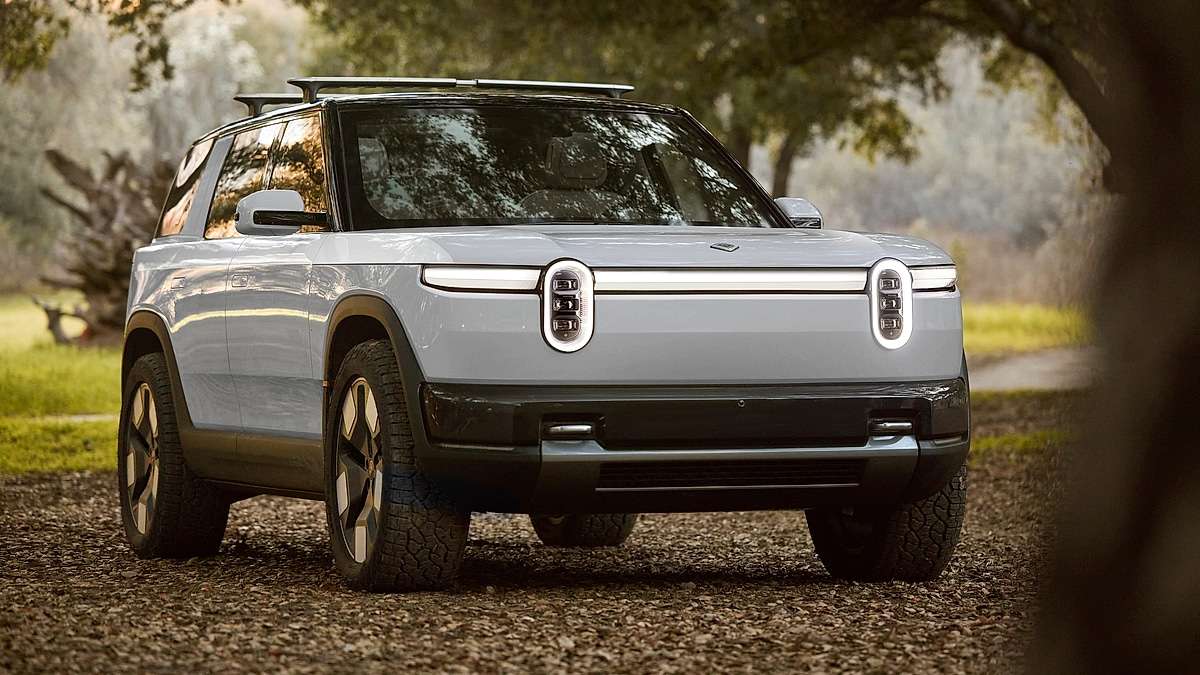

Rivian's official R2 product page now confirms a 23-mile range penalty for buyers opting for All-Terrain (AT) tires over the standard All-Season (AS) rubber. This is a 6.97% reduction in capability, directly impacting how far an owner can travel on a single charge. For a vehicle positioned as an adventure EV, this trade-off forces a difficult choice between off-road prowess and practical usability.
This specific data point from Rivian illuminates a broader, often understated challenge facing the entire electric vehicle market, particularly in the truck and SUV segments. Manufacturers are constantly chasing higher EPA range figures for marketing, yet real-world applications like towing, heavy loads, or, in this case, more aggressive tires, routinely erode those numbers. It forces consumers into a compromise that gasoline vehicles rarely demand with such stark clarity.
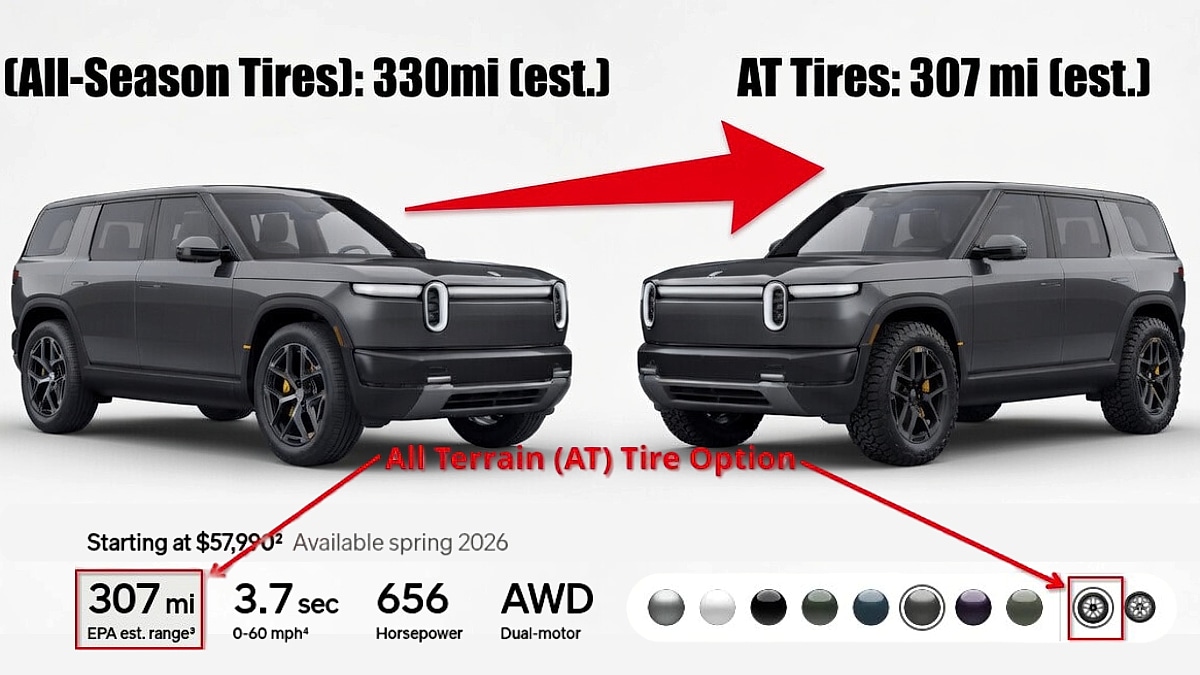
Rivian R2: Range and Tire Trade-Offs
- The Rivian R2, a mid-size electric SUV, is expected to offer two tire options: All-Season (AS) and All-Terrain (AT), with the AT option incurring a 23-mile range reduction. This specific range penalty directly impacts the vehicle's practical usability, particularly for owners planning longer trips or off-road excursions where charging might be limited.
- This 23-mile difference represents a tangible efficiency loss, forcing buyers to weigh off-road capability against daily driving range. The choice between tire types becomes a critical factor in the R2's utility, influencing everything from charging frequency to route planning.
- All-Terrain tires inherently increase rolling resistance and alter aerodynamics due to their aggressive tread patterns and open shoulder designs. These factors demand more energy from the battery to maintain speed, directly translating into reduced range compared to smoother, more efficient All-Season tires.
- The industry's practice of quoting optimal EPA range figures, often achieved with the most efficient tires, frequently misrepresents real-world performance. This discrepancy shows a broader issue where EV manufacturers must better integrate practical use-case options, like AT tires, into their initial design and advertised performance metrics.
The 23-mile discrepancy for the Rivian R2 is a direct consequence of rolling resistance and aerodynamics, two factors that become magnified in the efficiency-critical world of electric vehicles. AT tires, by their very design, feature more aggressive tread patterns and often stiffer sidewalls, increasing friction with the road and disrupting airflow around the wheel wells.
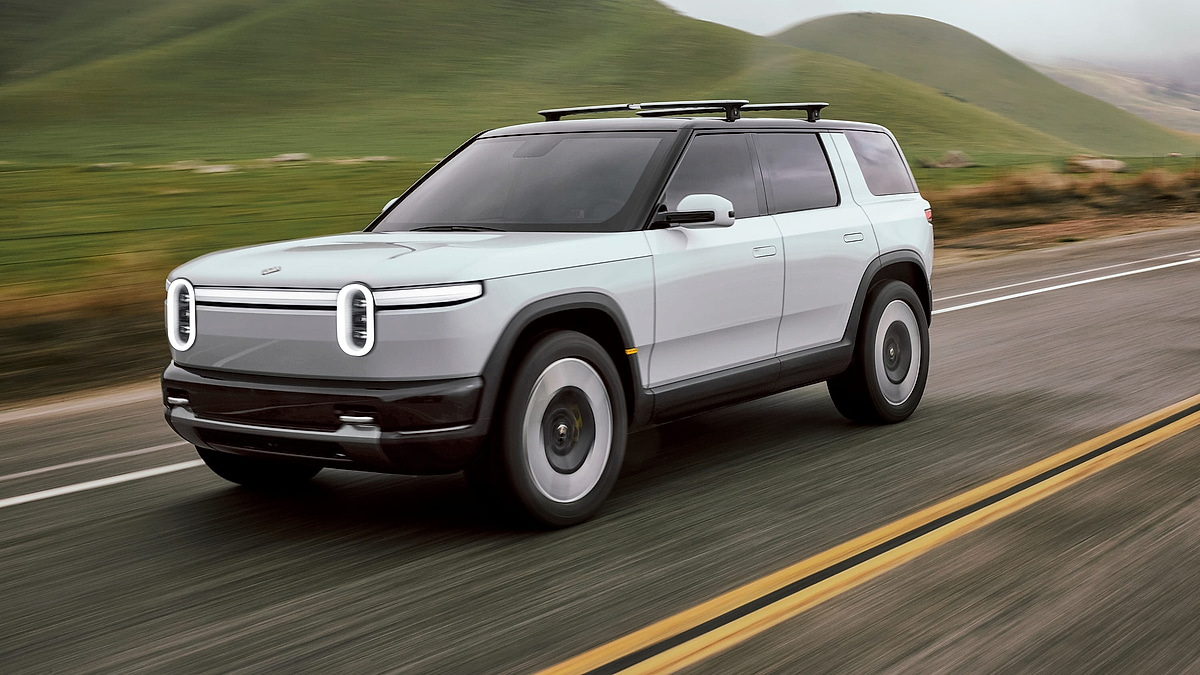
This translates directly into more energy required to maintain speed, and consequently, less range. This choice fundamentally alters the vehicle's operational envelope, beyond just comfort or traction.
This isn't a new problem, but it's one that EV manufacturers, Rivian included, have yet to fully address in their marketing or engineering. The industry has been quick to tout impressive EPA range estimates, often achieved with the most aerodynamic and lowest rolling resistance tires available. Manufacturers need to engineer EVs that deliver on their promises across the full spectrum of intended use, not just in optimal, laboratory-tested conditions. This pattern of presenting an optimal, rather than a realistic, range figure forces a difficult decision on the consumer after the purchase commitment has been made.
Consider the implications for an R2 owner planning a 250-mile road trip. With the standard tires, that might be a single charge with a comfortable buffer. With the AT tires, that 23-mile reduction could easily push them into an unplanned charging stop, or worse, range anxiety in an area with sparse charging infrastructure. For a vehicle designed for adventure, this effectively limits the adventure itself, or at least dictates its parameters more strictly. This is where the gap between brochure figures and actual experience becomes a chasm.
The engineering challenge here is significant: how do you design an EV that can deliver both impressive range on standard tires and maintain acceptable efficiency with more aggressive, off-road-capable options? It's a question of motor efficiency, battery density, and aerodynamic optimization that goes beyond simply swapping rubber. Until manufacturers begin to engineer for these real-world use cases from the ground up, rather than treating AT tires as an afterthought or a simple option box, these range penalties will continue to be a point of contention for buyers.
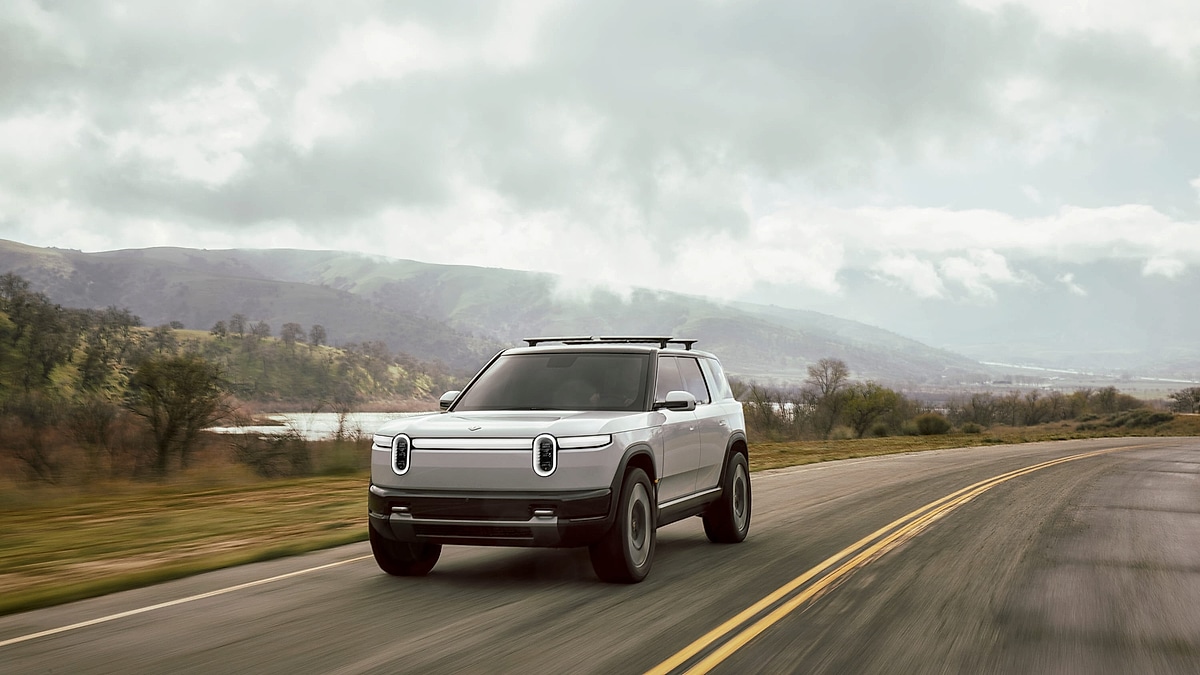
Rivian's transparent disclosure of the 23-mile range penalty for the R2 with AT tires is a step towards honesty, but it also shows an ongoing industry-wide failure to reconcile advertised EV range with the practical demands of truck and SUV ownership. R2 buyers are being asked to choose between the utility they expect from an adventure vehicle and the range they paid for. However, when customers then opt for the utility-focused tires that buyers of SUVs and trucks actually want, the real-world range can drop.
About The Author
Noah Washington is an automotive journalist based in Atlanta, Georgia, covering sports cars, luxury vehicles, and performance culture. His reporting focuses on explaining the engineering, design philosophy, and real-world ownership experience behind modern vehicles.
Noah has been immersed in the automotive world since his early teens, attending industry events and following the enthusiast communities that shape how cars are built and driven today. His work blends industry insight with enthusiastic storytelling, helping readers understand not just what a car is, but why it matters.
Noah is also a member of the Southeast Automotive Media Association (SAMA), a professional organization for automotive journalists and industry media in the Southeast.
His coverage regularly explores sports cars, luxury vehicles, and performance-driven segments of the automotive industry, including the evolving culture surrounding Formula Drift and enthusiast builds.
Read more of Noah's work on his author profile page.
You can also follow Noah here:
Set Torque News as Preferred Source on Google
Follow us today...






