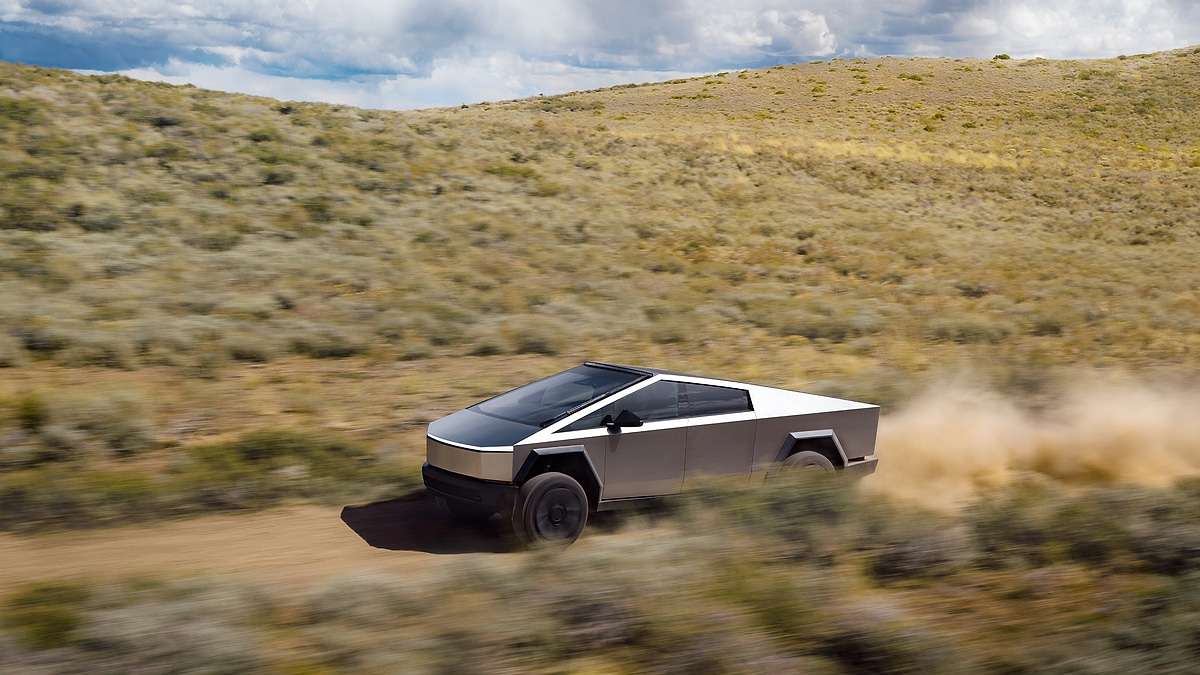

The Tesla Cybertruck, a vehicle often derided for its polarizing design and delayed production, is proving to be a surprisingly comfortable and maneuverable machine in real-world driving.
Despite its imposing dimensions, the Cybertruck's steer-by-wire system allows it to "drive much smaller than its size," according to one recent test driver who directly compared it to a Rivian R1S. This unexpected agility, coupled with superior ride comfort, directly challenges the perception that the Cybertruck is merely a spectacle.
This reflects the fundamental engineering choices underpinning these vehicles. Tesla's decision to embrace steer-by-wire and a minimalist cabin, often criticized as cost-cutting, appears to deliver tangible benefits in driver experience and the way the chassis interacts with the road. For consumers weighing premium electric truck options, these real-world comparisons cut through the marketing noise, showing how design philosophies translate into the precision and feedback a driver receives.
The Cybertruck's unconventional engineering delivers a more refined experience behind the wheel, with a higher degree of chassis control and driver feedback than its traditional-feeling competitors, despite its radical aesthetic.
“Hey, everyone,
I recently had the opportunity to test drive both the Tesla Cybertruck and the Rivian R1S, and while they may not be direct competitors, I was honestly impressed by the Cybertruck. Here are some key takeaways from my experiences with each vehicle:
First off, the Cybertruck is large, but thanks to its steer-by-wire system, it drove much smaller than its size. The interior is sleek and minimalistic, which I appreciate compared to the more luxurious feel of the Rivian R1S. If you prefer a more upscale, premium interior, the Rivian definitely has that luxury vibe.
One of the things I love about the Cybertruck is its simplicity. There are very few buttons, and everything is controlled through the touchscreen. In contrast, the Rivian has a more traditional setup, with more buttons and dual screens positioned in front of and to the side of the driver. The design made it challenging for me to decide where my focus should be when controlling the settings while driving.
Now, the ride comfort, both vehicles both have air suspension, but I found the Cybertruck to deliver a smoother ride with less road noise. Navigating bumps felt significantly less impact in the Cybertruck compared to the Rivian, even at their softest settings. Personally, I wasn't fond of how the Rivian handled on rougher roads.
Both vehicles have excellent camera systems, but I have to admit that Rivian's camera quality was sharper and clearer.
Advertising
Overall, I'm happy that I opted for the base model AWD Cybertruck, as I won't be considering a Rivian. While both vehicles have a lot to offer, the Cybertruck sticks with me more. The Rivian felt more like a conventional vehicle, while the Cybertruck represents the future.”
Dima Rodriguez's assessment on the Cybertruck Facebook Group shows a critical distinction between Tesla's approach and that of more traditional manufacturers, even those building electric vehicles. The Cybertruck's steer-by-wire system, a technology still viewed with skepticism by some, is clearly delivering on its promise of enhanced maneuverability.
Tesla Cybertruck: Engineering Choices for a New Era
- The Cybertruck utilizes a steer-by-wire system, eliminating a direct mechanical link between the steering wheel and the front wheels. This allows for variable steering ratios, making the large vehicle feel more agile at low speeds and stable at high speeds.
- Its adaptive air suspension system provides up to 16 inches of ground clearance and 12 inches of wheel travel, contributing to its reported smooth ride and ability to absorb significant road imperfections. The system can adjust damping and ride height in real-time based on driving conditions.
- The minimalist interior design centralizes most controls on an 18.5-inch touchscreen, with critical functions also accessible via voice commands. This approach reduces physical buttons and switches, aiming for a cleaner aesthetic and potentially fewer distractions once users adapt.
- The Cybertruck is constructed with an ultra-hard 30X cold-rolled stainless-steel exoskeleton, which contributes to its unique aesthetic and structural rigidity. This material choice is also a factor in its manufacturing process and repair considerations.
This fundamentally alters the driving experience of a large vehicle, making it feel less cumbersome in tight spaces and potentially more engaging on the road. The fact that the Cybertruck also delivered a "smoother ride with less road noise" and handled bumps with "significantly less impact" than the R1S, despite both having air suspension, suggests a more sophisticated or better-tuned suspension setup in the Tesla.
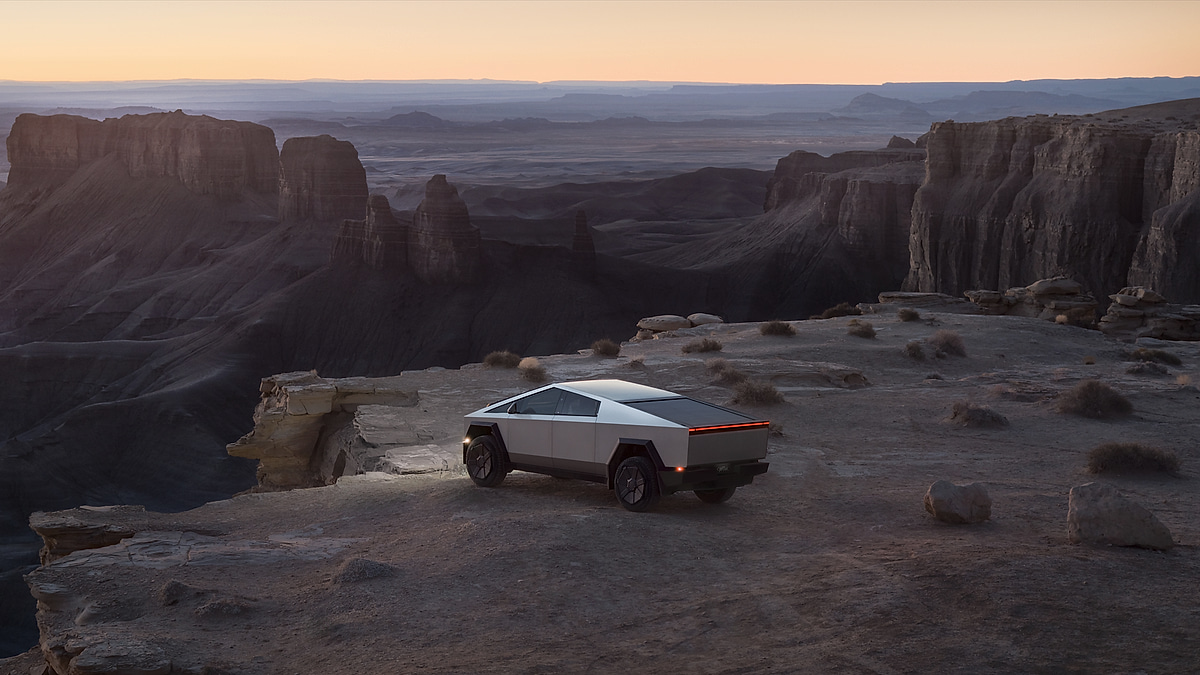
This focus on ride dynamics and driver feel is often overlooked in the EV truck segment, where horsepower and towing figures dominate the headlines. Yet, for daily driving, these attributes are paramount. The Cybertruck's minimalist interior, with its reliance on a central touchscreen and few physical buttons, is another point of contention for many. Rodriguez, however, appreciates its "simplicity," contrasting it with Rivian's "more traditional setup" and "dual screens" that he found distracting. This preference reveals a growing divide in automotive design: those who prioritize physical controls and those who embrace digital integration.
The comments section offers further insight into the perceived shortcomings of the Rivian. Steven Michael, who claims to have driven "a few R1T's," echoed Rodriguez's sentiment about Rivian's driving dynamics, stating they "feel like someone converted a Tacoma to a clunky electric powertrain." This is a pointed criticism that suggests a lack of refinement in Rivian's core driving experience, despite its premium aspirations. The R1T, while visually appealing, appears to struggle with the integration of its electric powertrain into a chassis that still feels conventional.
This feedback from multiple drivers suggests that Rivian, despite its innovative spirit, may be falling into the trap of building an electric vehicle that still feels tethered to internal combustion paradigms. The "clunky" description implies a disconnect between the instant torque of an EV and the chassis's ability to manage it gracefully. Meanwhile, Jim Smith pointed out a key Cybertruck feature that enhances its minimalist interface: "You don’t even need the screen to find most controls. You can just talk." This voice command capability, often underutilized, is a testament to Tesla's commitment to a screen-centric but ultimately intuitive user experience, further differentiating it from Rivian's dual-screen approach.
The final comment from Drew Million, a terse "One has fsd, and one does not," cuts directly to a significant technological chasm. While Rodriguez's review focuses on tangible driving dynamics and interior design, the presence of Tesla's Full Self-Driving (FSD) capability, however controversial, represents a technological leap that Rivian has yet to match. The disparity in advanced driver-assistance systems (ADAS) influences many buyers, positioning the Cybertruck as a more forward-looking proposition.
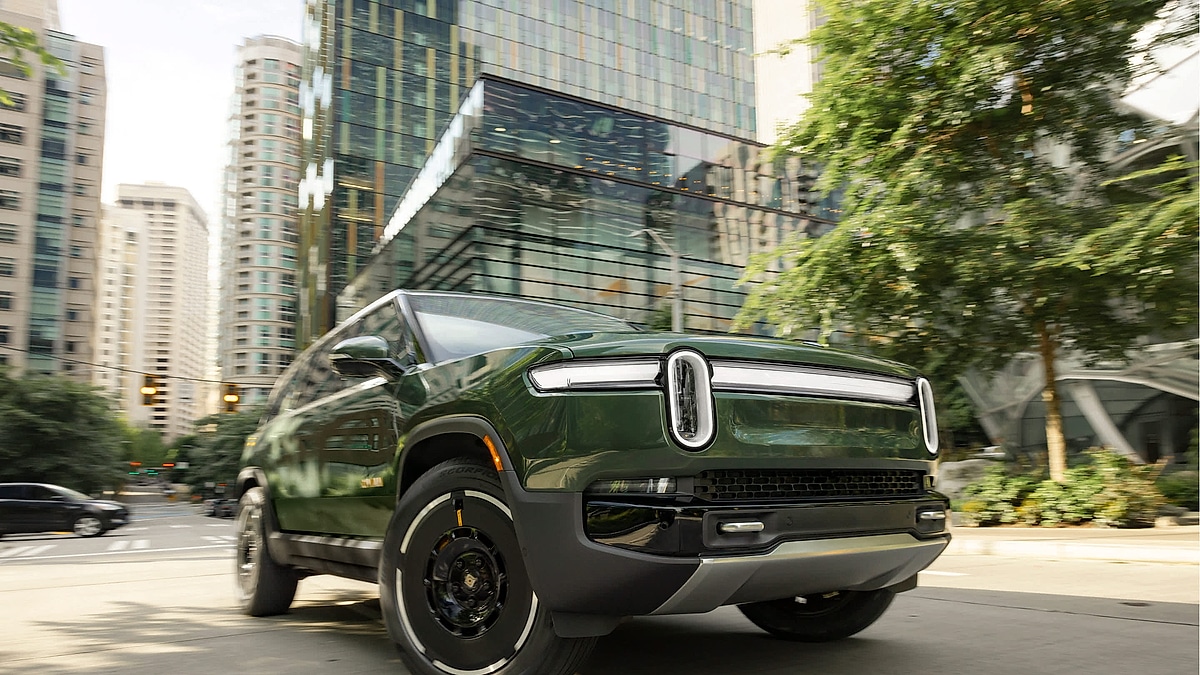
Rodriguez's test drive shows that the Cybertruck, despite its polarizing design, delivers a surprisingly refined and future-forward driving experience, particularly in ride comfort and maneuverability, that the Rivian R1S struggles to match. Tesla's use of steer-by-wire and a minimalist, voice-controlled cabin offers tangible benefits that directly address common criticisms of large EVs. The Rivian, by contrast, appears to be caught between traditional automotive design and the demands of an electric powertrain, resulting in a driving feel that some find underwhelming.
Image Sources: Tesla Media Center
About The Author
Noah Washington is an automotive journalist based in Atlanta, Georgia, covering sports cars, luxury vehicles, and performance culture. His reporting focuses on explaining the engineering, design philosophy, and real-world ownership experience behind modern vehicles.
Noah has been immersed in the automotive world since his early teens, attending industry events and following the enthusiast communities that shape how cars are built and driven today. His work blends industry insight with enthusiastic storytelling, helping readers understand not just what a car is, but why it matters.
Noah is also a member of the Southeast Automotive Media Association (SAMA), a professional organization for automotive journalists and industry media in the Southeast.
His coverage regularly explores sports cars, luxury vehicles, and performance-driven segments of the automotive industry, including the evolving culture surrounding Formula Drift and enthusiast builds.
Read more of Noah's work on his author profile page or on his personal website.
You can also follow Noah here:
Set Torque News as Preferred Source on Google
Follow us today...