
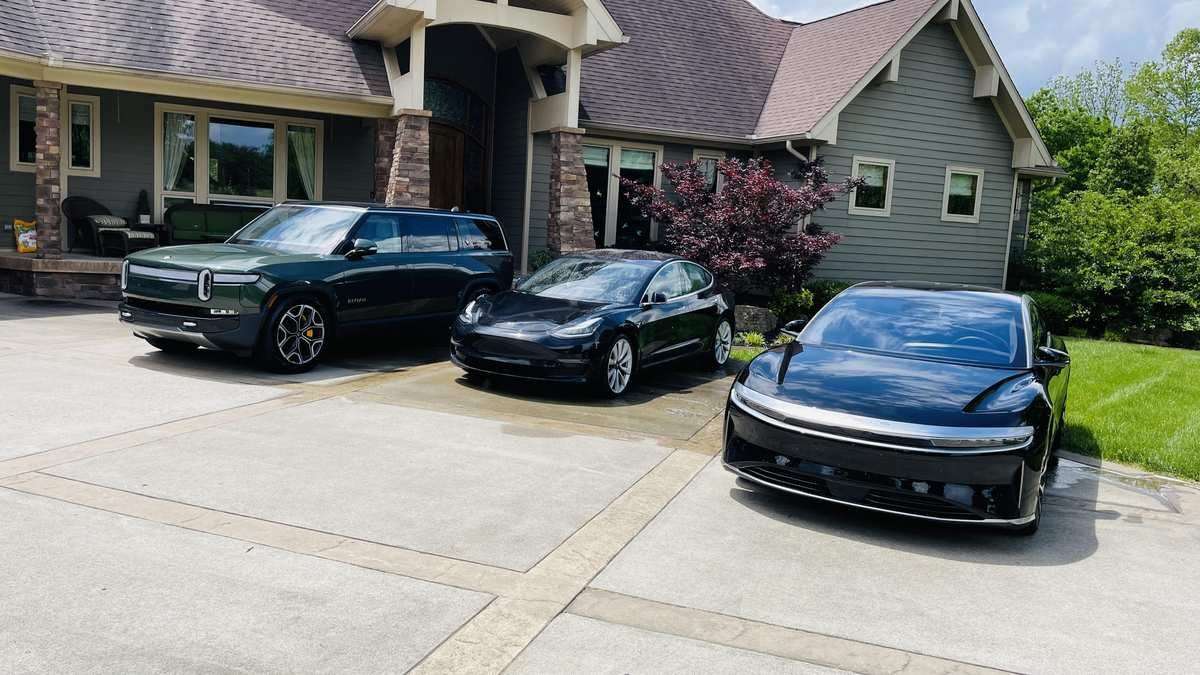

I've been covering the automotive industry for 15 years, and I've seen a lot of trends come and go. Hybrids were supposed to be the answer. Then hydrogen. Then range anxiety was supposed to kill EVs before they started. But right now, in March 2026, something genuinely unusual is happening in the electric vehicle space, and it's moving fast enough that if you blink, you'll miss the moment things shifted for good.
A global trends strategist named Abdul Abdullah from Morganville, New Jersey, spotted it too. He posted something on LinkedIn this week that stopped me mid-scroll. Here it is in full, because it deserves to be read carefully:
"The EV Endgame Is Shifting, And It's Happening Fast ⚡🚗
The electric vehicle market is entering a decisive phase. What we're seeing now isn't just growth. It's strategic separation.
This March, two distinct plays are emerging: Rivian is moving down-market to unlock volume, while Lucid Motors is expanding geographically to defend its luxury positioning.
🚙 Rivian R2: Scaling the "Adventure" Brand Rivian's R2 may be its most critical product yet, engineered to bridge premium capability with broader affordability.
What stands out: • Utility-first design: Rear drop-glass + fold-flat seating = real-world flexibility • Charging edge: Native NACS access to Tesla's Supercharger network • Enhanced dynamics: Matrix LED lighting + semi-active suspension
Pricing & rollout (USD, starting MSRP): • Performance (Spring 2026): $57,990 | 656 hp | ~330-mile range • Premium (Late 2026): $53,990 | 450 hp | ~330-mile range • Standard Long Range (Early 2027): $48,490 | 350 hp | ~345-mile range • Standard Base (Late 2027): Target ~$45,000 (~275+ mile range)
👉 Translation: Rivian is expanding beyond niche buyers without diluting its core identity.
Lucid's European Pivot: Precision Expansion While Rivian focuses domestically, Lucid is executing a calculated European entry starting with Germany.
Key moves: • Partnership with Wackenhut Group (first European retail partner) • Launch in Baden-Baden: March 30, 2026 • Expansion: 4 → 16 cities by year-end
Why it matters: Lucid is adopting a hybrid retail model: maintaining pricing and brand control while leveraging local partners. The result: lower capital intensity and faster market penetration for the Air sedan and Gravity SUV.
💡 The Bigger Signal This is what market maturity looks like: • Tiered pricing is no longer optional. It's strategic • Charging infrastructure is now a competitive moat • Regional partnerships are replacing one-size-fits-all expansion
The EV race is no longer about who builds the best car. It's about who scales smarter.
From a driveway in New Jersey to a street in Baden-Baden the competition is accelerating.
What's your take․ Does Rivian win on accessibility, or does Lucid dominate through global luxury positioning?"
That's Abdullah's take. And honestly? He's right on most of it. But let me give you my editorial take because I think the full picture is even more interesting than what he's laid out.
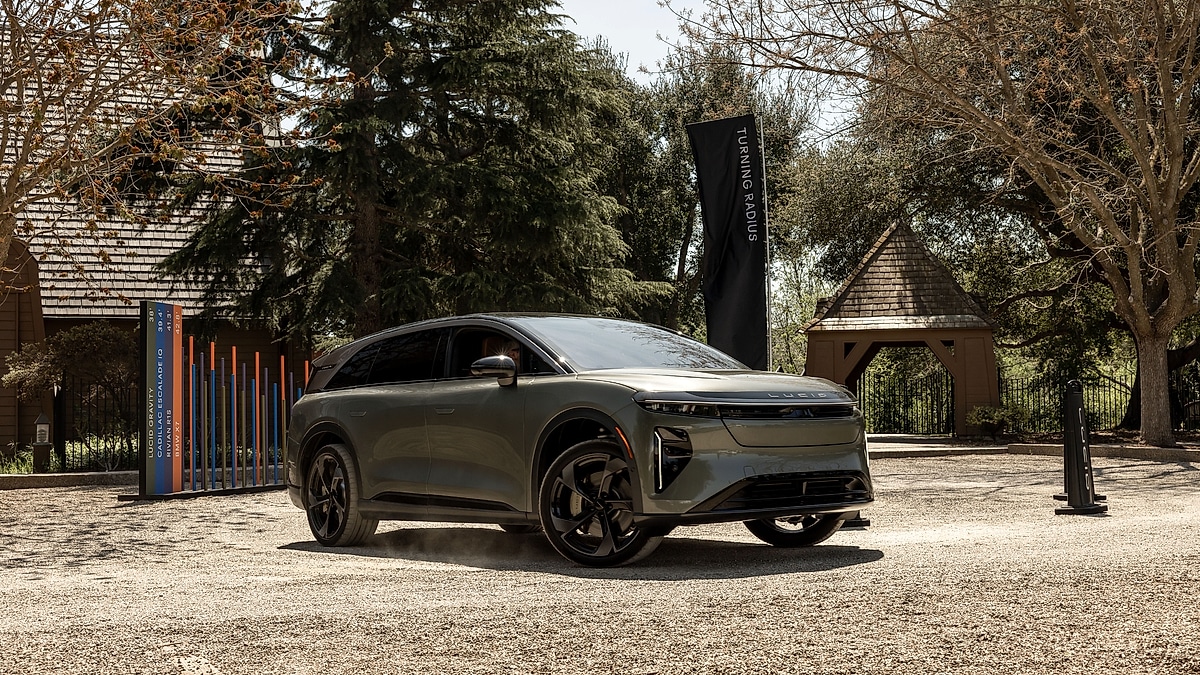
The Rivian R2: This Is the Moment That Changes Everything
Let's start with Rivian, because that's where the action is closest to home.
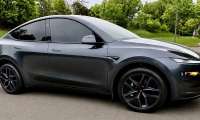
The Tesla Model Y better watch out. Rivian has officially revealed R2 pricing and specs for all trims of its upcoming midsize electric SUV, immediately beginning with a $57,990 Performance Launch model arriving this spring, while a more affordable $45,000 base version is planned for later.
Now here's where I want you to really pay attention. The R2 Performance with Launch Package starts at $57,990, packs a 656-hp dual-motor AWD setup, does 0-60 in 3.6 seconds, and hits an EPA-estimated 330 miles of range. A Premium AWD trim follows in late 2026 at $53,990, while a Standard RWD Long Range version arrives in early 2027 at $48,490 with 345 miles of estimated range.
That's a lineup. That's not just a car. That's a strategy with four acts.
And here's what I find unexpected, and this is important. For years, people assumed Rivian could only play in the premium outdoorsy niche with $70,000-plus trucks and SUVs. The R2 completely shatters that assumption. The R2 will come with a Tesla-style NACS port, recharge from 10% to 80% in 29 minutes, and weighs about 2,000 pounds less than Rivian's larger R1 vehicles, while still maintaining some off-road capability with 9.6 inches of ground clearance, better than any EV in its segment.
We've been tracking this story on Torque News for a long time. When we wrote about how the Rivian R2 is the first real threat to Tesla's Model Y hegemony, we were laying out how Rivian has been methodically building toward a single, defining product moment. And this is it. The R2 is that moment. Think of what the Model 3 did for Tesla: democratizing the brand without killing its cool factor. Rivian is attempting exactly that same trick, but with an outdoor-adventure identity instead of Silicon Valley tech swagger.
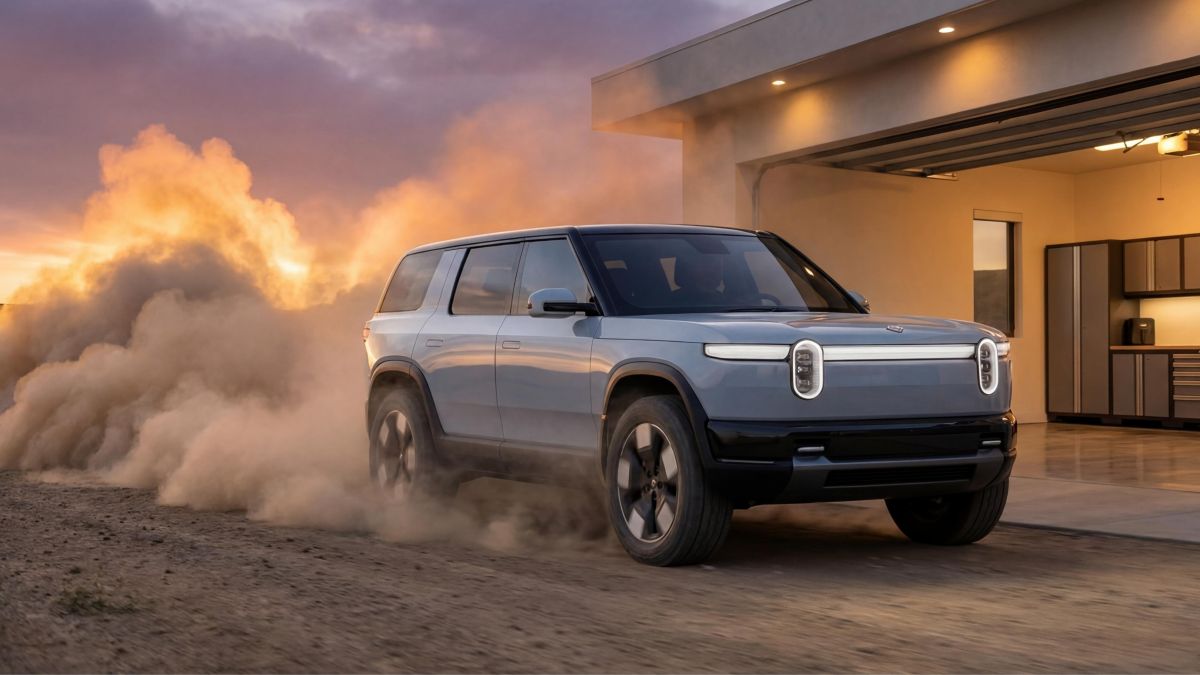
The Tesla Factor Nobody Wants to Talk About
Here's the thing Abdullah touches on but doesn't fully unpack. Tesla is sitting right in the middle of all this. And it's not as comfortable as it used to be.
Tesla built its dominance on two pillars: software and Superchargers. The software lead is eroding. U.S. News named Lucid the Best Luxury EV Brand for 2025, validating a strategy Lucid has doggedly pursued - engineering excellence paired with genuine luxury, rather than just technology wrapped in minimalism. For Tesla, it's described as a brand identity crisis: you cannot be the ubiquitous affordable option and the prestigious luxury brand simultaneously forever.
And now? The Supercharger moat, Tesla's greatest competitive advantage, is actually helping Rivian. Rivian announced that its upcoming R2 platform vehicles will come standard with the North American Charging Standard charge ports, giving Rivian drivers access to more than 12,000 Tesla Superchargers.
Think about that. Tesla opened its charging network to competitors, and now that decision is actively accelerating the growth of its most direct lifestyle-brand rival. I'm not saying that was the wrong call. It absolutely was the right call for consumers and for the long-term health of the EV ecosystem. But it is an unexpected consequence that Tesla probably didn't fully game out at the time.
If you're a Tesla Model Y owner wondering whether to stick with the brand or make a jump, our readers have been wrestling with exactly this. One of our most-read pieces this year was from a reader weighing whether the Rivian R1S or Tesla Model Y was the ultimate adventure SUV for a growing family, and the conversation in the comments was raw, honest, and deeply practical in a way that tells you everything about where real buyers' heads are right now.
Lucid's European Play: Quietly Brilliant or Quietly Desperate?
Let's talk about Lucid, because this is where I think Abdullah's analysis is sharp but perhaps a little too rosy.
The move into Germany via Wackenhut Group and the expansion from 4 to 16 European cities is smart. Going into Baden-Baden - a city known for luxury, thermal spas, and old European money - is exactly the right cultural positioning for the Lucid Air. These are people who already drive AMG, Bentley, and S-Class. Lucid speaks their language.
But here's my honest concern: Lucid has a service infrastructure problem that doesn't disappear just because you open showrooms. We covered this directly when we wrote about why one Lucid owner said the nearest dealership was 1,000 miles away and argued the company needs to prioritize physical retail access over factory expansion. That problem on American soil will be replicated in Europe if Lucid doesn't get its service network right from day one.
One of the biggest strategic pivots Lucid has touted is its plan to introduce a more affordable midsize EV priced near $50,000 in coming years, intended to broaden Lucid's market beyond luxury buyers. But competing at a lower price level means going head-to-head with mainstream rivals, and margins matter more at $50,000 than at $90,000-plus luxury pricing.
So Lucid is playing two games simultaneously: expand geographically and figure out how to go downmarket, all while posting nearly $1 billion in quarterly losses even as production climbed significantly. That is not an unlikeable strategy. It's actually bold and necessary. But it requires flawless execution. And in this industry, flawless execution is the rarest commodity of all.
What Abdullah Gets Exactly Right: The Three New Rules of the EV Market
Abdullah identifies three structural shifts, and I want to validate and expand on each of them, because these are genuinely the new rules of the game:
Rule 1: Tiered pricing is now non-negotiable. The era of "here's our one great car, take it or leave it" is over. Consumers have learned to expect a ladder of options, and any EV brand that doesn't offer entry, mid, and premium variants will struggle to hold volume. Rivian's four-trim R2 rollout is a textbook execution of this rule.
Rule 2: Charging infrastructure is a moat, but it can be borrowed. Tesla proved this first. But now that NACS has become the industry standard, the moat is more like a shared waterway. What matters is how seamlessly your car integrates into it. This is an area where we've seen even loyal Tesla fans begin to consider switching to Rivian once they understood how well the R2 accesses the Supercharger network without the old adapter headaches.
Rule 3: Regional partnerships beat global overreach. This is the most underrated point in Abdullah's post. Lucid's Wackenhut partnership in Germany is a lesson in capital efficiency. You don't need to own every showroom in every city. You need the right partner who understands local culture, local customers, and local regulation. This is how legacy European brands built their dealer networks over decades, and smart EV startups are compressing that timeline.
The Bigger Picture: Who Actually Wins?
Here's my honest answer: in the short term, Rivian wins on accessibility. The R2's pricing, adventure-ready identity, and Supercharger access make it the most credible mainstream Tesla alternative on the market right now. Rivian's R2 is aimed at the heart of the American driveway, priced around $45,000 and sized to take on the Tesla Model Y, built on a new, more cost-effective platform. And with over 200,000 reservations already in the system, the demand signal is as clear as it gets.
But over time? The question of whether Lucid can survive its financial pressures long enough to execute its global vision is one that keeps me up at night as an industry watcher. We wrote about Lucid's workforce cuts and what they signal for the company's future, and the conclusion was sobering: Lucid is a brilliant company building brilliant cars, and it is in a very real race against its own burn rate.
The most unusual part of this entire story, to me, is that the company with the best car on a pure engineering basis - Lucid - is also the company facing the most existential financial pressure. Meanwhile, Rivian, which has its own history of losses, seems to have found a product-market fit that could carry it through.
A Moral Worth Carrying Beyond the Car Lot
Here's something worth sitting with for a moment, and I say this not as a car critic but as someone who's watched countless companies rise and fall in this industry.
The lesson of this EV moment is not just about cars. It's about the courage to do something genuinely hard and then remain patient enough to see it through. Rivian didn't rush the R2 to market. Instead, Rivian they took the time to engineer it properly, to price it honestly, and to build a customer community that was rooting for them before the first car was even built. Lucid didn't chase the mass market before establishing their credibility. They went deep on engineering excellence first, even when the financials were screaming at them to cut corners.
There's a lesson here for all of us, not just automakers. Build your credibility before you build your market. Do the hard thing with integrity. Don't dilute your identity just to chase a number. The brands that endure are the ones that know what they stand for, and then stay there, even when it's painful.
Be patient. Be purposeful. Scale smartly.
Two Questions for You
I'd love to keep this conversation going. This is exactly the kind of topic where our readers have the most valuable real-world insight:
1. If you were shopping for a new EV today in the $45,000 to $60,000 range, would you go with the Rivian R2 over a Tesla Model Y, and what would ultimately make the decision for you?
2. Do you think Lucid Motors has the staying power to execute its European expansion, or will financial pressures force them to pull back before they can establish real traction overseas?
Drop your answers and personal experiences in the comments below. I read every single one of them, and your firsthand knowledge of these vehicles is something no analyst in New Jersey - or Baden-Baden - can replicate.
Image Reference: Torque News, and Artlist.
About The Author
Armen Hareyan is the founder and Editor-in-Chief of Torque News and an automotive journalist with over 15 years of experience writing car reviews and industry news. Now based in the Charlotte region (Indian Land, SC, he founded Torque News in 2010, which since then has been publishing expert news and analysis about the automotive industry. He can be reached at Torque News on X, Linkedin, Facebook, and Youtube. Armen holds three Masters Degrees, including an MBA, and has become one of the known voices in the industry, specializing in the landscape of electric vehicles and real-world stories of actual car owners. Armen focuses on providing readers with transparent, data-backed analysis bridging the gap of complex engineering and car buyer practicality. Armen frequently participates in automotive events throughout the United States, national and local car reveals and personally test-drives new vehicles every week. Armen has also been published as an automotive expert in publications like the Transit Tomorrow, discussing how will autonomous vehicles reshape the supply chain, and emerging technologies in vehicle maintenance.
Set Torque News as Preferred Source on Google
Follow us today...


Comments
I would and in fact did go…
Permalink
I would and in fact did go for the XPeng G6 which is better than either of them
1. I might pick the R2 over…
Permalink
1. I might pick the R2 over a Tesla Model Y due to Rivian’s use of LIDAR and their lower cost autonomy. Rivian’s “Autonomy+”, their Full Self‑Driving (FSD) equivalent) cost $49.99 per month or $2,500 as a permanent one-time purchase, and they offer lane centering at no cost, which is no longer available on new Teslas without FSD.
Both Rivian 2 and Tesla Model Y are compelling. While I haven't seen or driven an R2 in person, I imagine I’ll really like it. I’ve liked every Rivian I’ve driven, including their delivery van.
I also like Tesla’s and am a current owner.
I have both a Rivian and a Tesla service center within 3 miles of my house.
2. I hope Lucid survives and does well. Offering lower-cost vehicles and entering the robotaxi space could help. I love driving the Lucid Air and it might sound crazy but I think it could be a great American police car at its size, speed, range, and cost of ownership.
Truthfully speaking... There…
Permalink
Truthfully speaking... There's no such thing as "Range Anxiety." we came from a world with 400+ cubic inch big blocks and 12-gallon tanks that required gas at every operation.
It's mostly a polite way to state the product is boring, stale and lazily designed.
But to answer, Model Y over the R2 because Rivian wont be a thing in a year or two outside of a UI company, the Model Y also will retain the value the best so I can drive over to another dealership and trade it in for something that doesn't suck.
As for Lucid, they likely will not have any issues seeking expansion where bureaucrats influence less than fruitful energy policies. I would expect them to even likely shift their production focus wherever most of said bureaucrats exist as they're a morbid failure in the U.S.
Tesler* owner here. 1 - I…
Permalink
Tesler* owner here.
1 - I cannot wait for my lease to be over and be done with this company because they are truly awful to deal with.
2 - Looking forward to getting our R2 sometime in late 26'
* - Yes, it's spelled that way for a very specific Orange reason!