


When Lucid Motors announced it would trim 12% of its U.S. workforce this week (via Bloomberg), the news was met with a mix of cautious optimism and serious concern across the automotive and tech communities. On the surface, the move - targeting non-hourly salaried employees while explicitly sparing manufacturing workers - was framed as a bid to improve profitability and streamline operations. But beneath that headline lies a set of deeper questions that could shape the company’s future and the broader narrative about the sustainability of the premium EV startup model.
Lucid's big job cut isn’t just a workforce reduction story. It’s a turning point: potentially signaling how Lucid is rebalancing ambition with financial reality. And with delivery and production numbers rising year-over-year while profitability remains elusive, readers and industry watchers alike are asking: Is this cost discipline in service of growth, or cost containment in preparation for a liquidity crunch?
Here’s a data-backed deep dive into what the cuts mean, what remains unasked, and why this matters to anyone tracking EV stocks, automotive industry health, or the future of electric mobility. As evidence that Lucid is investing in actual engineering enhancements despite internal layoffs Lucid’s chief engineer explains how the Gravity SUV was refined to eliminate highway wind buffeting, revealing the engineering rigor behind the vehicle’s aerodynamics and NVH performance. This technical insight underscores that Lucid continues to iterate and improve its product even as it navigates cost pressures.
1. What We Know So Far About Lucid's Layoff Details
According to multiple outlets reporting on an internal memo from interim CEO Marc Winterhoff, Lucid is reducing its U.S. workforce by about 12%, or roughly 800 roles out of approximately 6,800 employees worldwide at the end of 2024.
Crucially:
- Hourly workers - those on factory floors, in logistics, and quality control - are not impacted.
- The affected roles are largely salaried and white-collar, including corporate, engineering, and administrative positions.
- Severance, continued benefits, and transition support are being provided for departing employees.
On paper, that sounds like a targeted efficiency move. But the deeper narrative is that this is the third major rounds of layoffs in as many years, underscoring sustained pressure on Lucid to reign in costs while staying competitive in an increasingly crowded EV market.
2. Profitability vs. Cash Burn: Are Lucid's Cuts Enough?
Lucid’s own messaging frames the layoffs as part of a push toward profitability: a message that’s both necessary and strategic. But the numbers tell a sobering story.
According to recent reporting, even as production and deliveries climbed significantly in 2025 (production up 116% and deliveries up 31% in Q4 alone), the company still posted hefty losses, with nearly $1 billion lost in recent quarterly results.
This dichotomy - stronger production growth paired with heavy financial losses - is the heart of the debate:
- On one hand, higher deliveries and production volumes could point to scaling and improving operational execution.
- On the other hand, continued red ink suggests Lucid has yet to find a path to sustainable gross margins and positive cash flow.
Lucid itself said the move “improves operational effectiveness” and aligns with long-term growth objectives, but that’s not the same thing as saying the company is close to breaking even.
In fact, analysts have expressed concern about Lucid’s timeline to profitability, which was underscored by a recent downgrade from Morgan Stanley that cited concerns over Lucid’s ability to reach profitability quickly enough.
This first-hand delivery experience of a 2025 Lucid Gravity GT highlights real-world owner interaction with the brand, from dealership service to initial impressions of the vehicle. Sharing the positives, from build quality to customer service, grounds the narrative in actual owner sentiment rather than just corporate strategy.
3. Why Salaried Cuts and Spared Manufacturing Matter
This staffing decision - trimming corporate and R&D roles while leaving factory jobs untouched - is more than a humane gesture. It’s a window into Lucid’s priorities.
By preserving manufacturing capacity:
- Lucid ensures production of its Air luxury sedan and its newer Gravity SUV continues unabated.
- It protects the operational backbone of future growth, especially as the Gravity SUV becomes a bigger part of the company’s revenue mix.
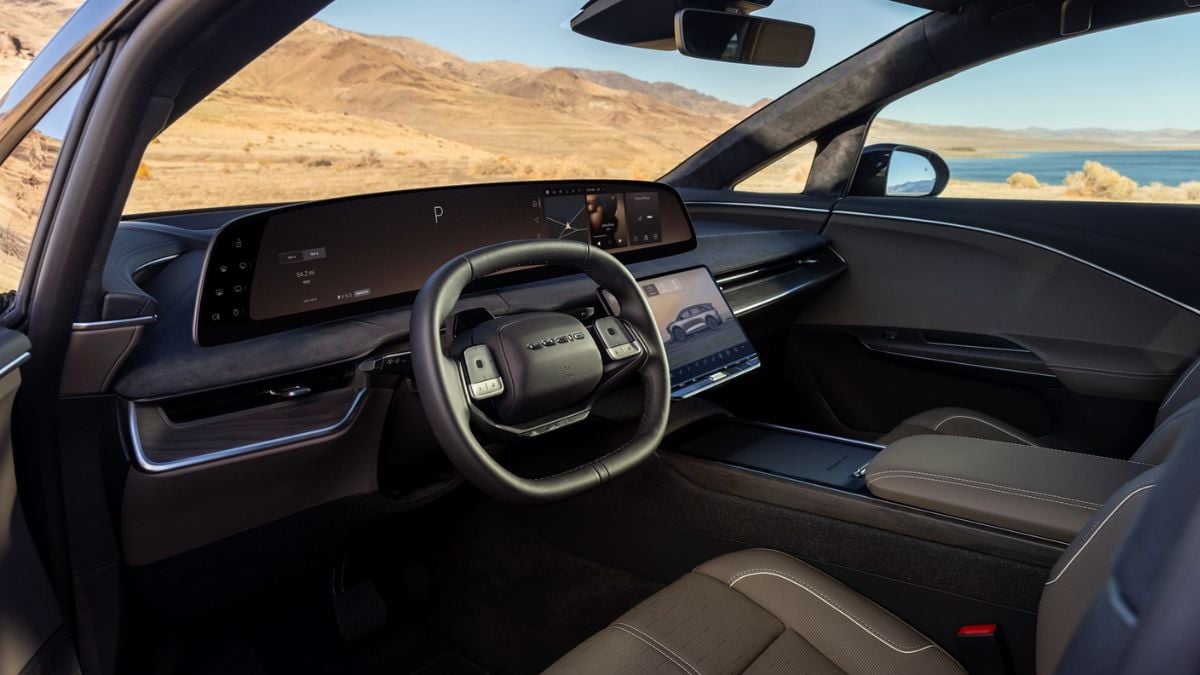
But by cutting salaried roles - the engineers, product planners, and corporate strategists - Lucid may be signaling:
- a tighter focus on execution over innovation;
- or a narrowing of strategic investments to core revenue-producing activities.
It’s worth asking whether this prioritization reflects strategic discipline, or whether it’s an early warning that Lucid needs to preserve cash for its factories at the expense of broader innovation and planning.
Many EV startups burn through cash in early years, but the difference is how they sustain that burn. Startups that strike the balance between disciplined investment and product development achieve scaling, and eventual profitability. Whether Lucid’s cuts are a smart pruning or a defensive squeeze remains open.
4. The $50,000 Mid-Size EV: Still Realistic?
One of the biggest strategic pivots Lucid has touted is its plan to introduce a more affordable midsize EV priced near $50,000 in coming years. This model is intended to broaden Lucid’s market beyond luxury buyers, and it is central to the company’s growth story.
But here’s the crux of the debate:
- Luxury EVs like the Lucid Air and Gravity have a smaller niche of buyers at higher price points.
- Competing at a lower price level means going head-to-head with mainstream rivals such as those from Tesla, Ford, General Motors, and others targeting mass-market EV buyers.
That’s a different game. Margins matter more at $50,000 than at $90,000+ luxury pricing, and cost discipline becomes even more critical. So one question remains: Can Lucid truly maintain quality, innovation, and profitability at that lower price point?
In fact, a Lucid Gravity owner shares that during a 1500-mile road trip, Tesla’s charging network stood out for reliability, illustrating a current edge ecosystem players like Tesla still hold. This kind of qualitative user feedback speaks directly to one of the most searched practical topics: EV charging network reliability on long journeys.
These layoffs could be a sign that Lucid is streamlining cost structures in preparation for that bigger challenge, or they could be a preemptive belt-tightening because internal forecasts show the $50,000 EV will take longer to reach profitability than anticipated.
5. Robotaxis and Software: Priority or Cost Center?
Lucid’s strategy isn’t limited to traditional EVs. The company has publicly partnered with Uber and Nuro on robotaxi projects and plans to expand its software and autonomous technology capabilities.
Other automakers have spent billions to make autonomous tech commercially viable, and the history of full robotaxi deployment suggests multi-year, multi-billion-dollar investments before profitability. For example, rivals like GM’s Cruise have tallied years of R&D at high costs just to reach limited deployment. (While Lucid’s path with Nuro and Uber is unique, the broader capital intensity debate is relevant and ongoing.)
Cutting salaried roles - often where software, autonomy planning, and strategic expansion live - raises questions:
- Is Lucid reducing internal technical capacity to save costs?
- Or is it refocusing its autonomy roadmap to rely more on partnerships and external technology?
Either scenario is plausible, but each implies different risk profiles for investors and industry watchers.
6. The Bigger Picture: EV Market Softness and Valuation Pressure
Lucid’s layoffs didn’t happen in a vacuum. The broader EV sector is dealing with:
- Softening demand after the expiration of generous tax credits that helped drive early EV adoption.
- Downward pressure on vehicle pricing, especially in higher segments.
- Volatility in stock valuations, particularly for companies not yet consistently profitable.
Other EV makers, from Rivian to Tesla (adjusting product lineups), have weathered similar challenges. Investors are increasingly demanding clear paths to profitability, not just growth at any cost.
For Lucid, trimming 12% of salaried staff is one response, but the company still must contend with broader questions about:
- cash runway: How long can losses persist before capital raises are needed?
- market demand: Will mid-market EV buyers embrace a Lucid product?
- competitive pressure: Can Lucid maintain differentiation against more established brands?
These are the kinds of considerations that could affect not just Lucid’s stock, but its strategic viability.
7. Is Lucid In Growth Discipline or Desperate Containment?
So where does this all land?
Is Lucid’s workforce cut a sign of disciplined focus, or a signal of deeper financial constraint? The answer might be both. There’s evidence that Lucid is improving production performance and setting up for future product launches. But there’s also data suggesting that profitability remains far from certain and that investor patience is wearing thin.
What’s clear is this: this layoff is far more than a staffing decision. It’s a reflection of strategic realignment, market realities, and the tension between innovation and financial sustainability that every EV maker now faces.
A former Tesla Model S owner reports nearly flawless experience with his Lucid Air GT over 19,000 miles, offering real-world validation of Lucid’s product quality and reliability. This reader account reinforces that beyond corporate strategy and layoffs, the vehicles themselves are impressing everyday drivers in meaningful ways
Questions for You
Here are a couple questions that matter, and we’d love to hear your thoughts in the comments:
- Does Lucid’s decision to cut salaried workers while sparing manufacturing show smart cost discipline and focus for future growth, or does it signal cash-flow trouble ahead?
- Will Lucid’s plan for a $50,000 mid-size EV ever generate profits in a competitive market, or will this strategy leave the company financially stretched?
Drop your answers below - including why you believe Lucid can (or can’t) thrive against rivals like Tesla, Ford, GM, and Rivian in the years ahead.
Armen Hareyan is the founder and Editor-in-Chief of Torque News. He founded TorqueNews.com in 2010, which since then has been publishing expert news and analysis about the automotive industry. He can be reached at Torque News Twitter, Linkedin, and Youtube. He has more than a decade of expertise in the automotive industry with a special interest in Tesla and electric vehicles.
Set Torque News as Preferred Source on Google
Follow us today...







Comments
Car programs have a natural…
Permalink
Car programs have a natural staffing ramp up and ramp down by role as a program progresses. Keeping people on the bench is too expensive and most likely they cut people who would be idle without a new program coming on. Would not be surprised this was planned years in advance.
The Saudis are the chief investors and they are getting a plant in the kingdom in the next two years. I doubt the leadership will have any trouble asking for needed money and receiving it.
As with all financial media,…
Permalink
As with all financial media, you fail to discuss the cost of building new state of the art manufacturing facilities on two continents. You also failed to mention that a lot of their costs are related to buying parts and supplies for their midsize car being sold at the end of this year. But the biggest mistake is putting them with Tesla and Ford. Their competition is BMW, Porsche, Audi and Cadillac. Tesla is the Chevy of the EV space. And in all instances Lucid’s products are compelling and priced similarly or much lower. If anyone wants reporting on Lucid in context, go the TheLucidReport.com.