
For years, the electric vehicle market has been defined by a singular, looming presence: Tesla. If you wanted a competent, long-range EV crossover, the Model Y was essentially the only game in town. It was the default choice—the "IBM" of the electric age. But as any long-time industry analyst knows, being the default is a dangerous position. It breeds complacency, and complacency is an invitation to disruption.
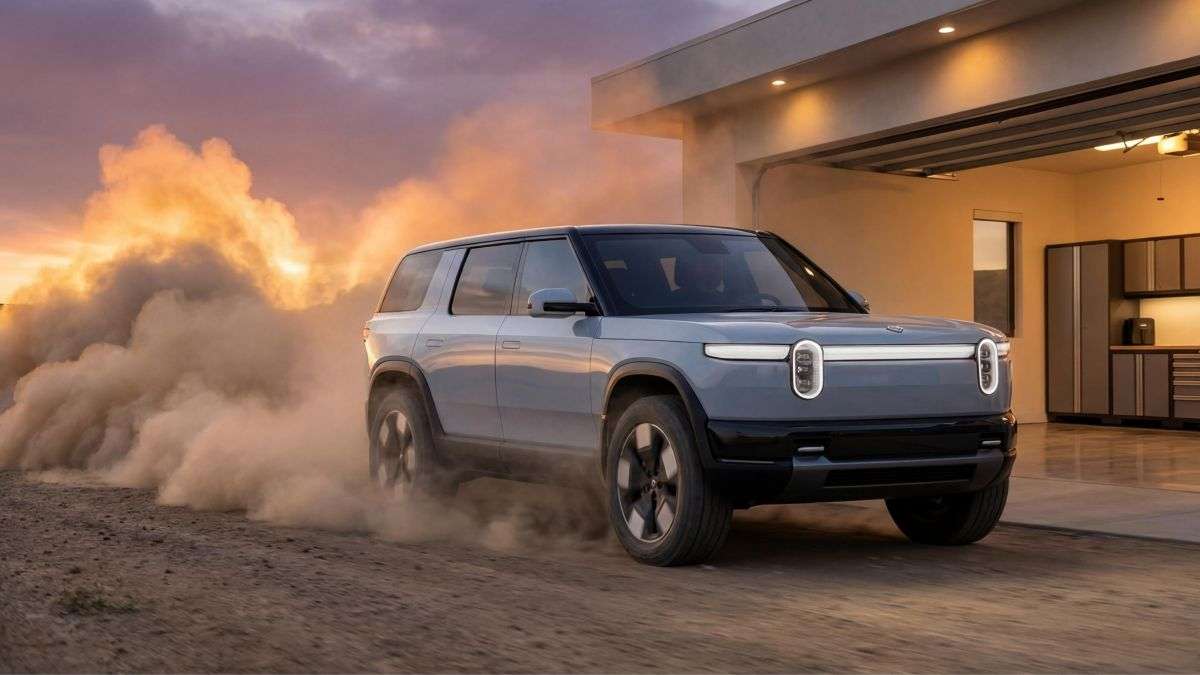
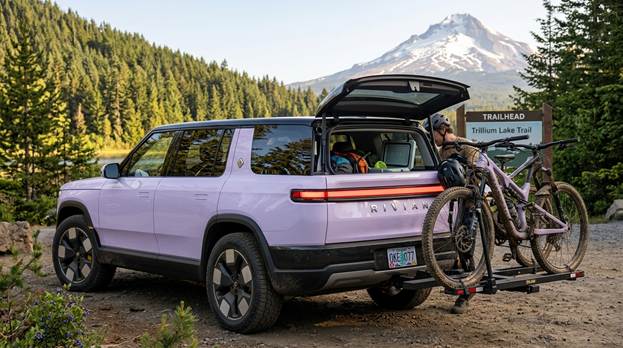
Enter the Rivian R2. While the R1S and R1T were impressive "halo" vehicles that established Rivian as the outdoor enthusiast’s luxury brand, they were too expensive to truly move the needle on Tesla’s volume. The R2 changes that calculus entirely. By bringing that "adventurous" DNA into a more accessible price bracket, Rivian isn't just launching a new SUV; they are launching a direct assault on Tesla’s heartland.
The R2 vs. Model Y: A Battle of Philosophy
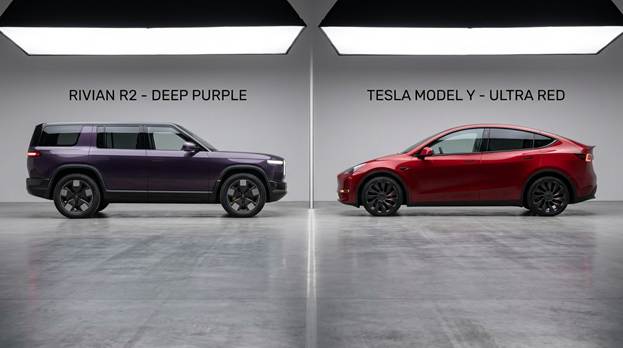
The comparison between the Rivian R2 and the Tesla Model Y is more than just a spec-sheet showdown; it’s a battle of design philosophies. The Model Y is a masterclass in minimalism and manufacturing efficiency. It is sleek, aerodynamic, and—to some—increasingly clinical. Tesla’s focus has always been on the software and the charging ecosystem, often at the expense of traditional automotive ergonomics.
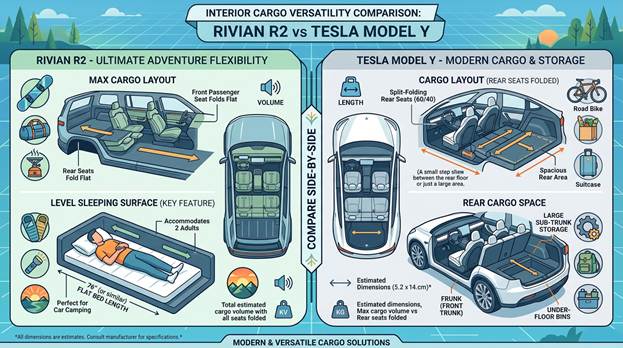
The R2, conversely, leans into what I call "functional personality." It maintains the boxy, rugged aesthetic of its larger siblings but scaled for the suburban garage. Critically, Rivian has listened to the grievances of Tesla owners. The R2 features physical scroll wheels on the steering wheel with haptic feedback and, most importantly, a design that prioritizes utility for people who actually go outside. With new EV models to be excited about in 2026 hitting the pavement, the R2 stands out by offering a fold-flat interior that turns the cabin into a camping space—a feature Tesla’s sloping roofline simply can’t match.
[Image Prompt 1: A side-by-side studio comparison shot of a Rivian R2 in Heritage Blue and a Tesla Model Y in Ultra Red, highlighting the R2's boxy, upright SUV silhouette against the Model Y's teardrop aerodynamic shape.]
Tesla’s Vulnerability: The Perils of Stale Design
Tesla’s greatest vulnerability right now is its aging fleet. The Model Y has seen minor refreshes, but the core design is becoming "old hat." In the tech world, we know that "new" is a feature in itself. Rivian is capturing the "early adopter" crowd that has grown weary of Elon Musk’s polarizing brand and the ubiquity of Tesla on every street corner.
Tesla is also vulnerable because it has focused so heavily on FSD (Full Self-Driving) and cost-cutting that it has neglected the "joy" of the vehicle. The R2 offers a distinct "vibe"—it feels like a tool for exploration rather than a mobile computer terminal. When you look at Rivian's strategic shift toward the mass market, you see a company that is successfully branding "adventure" as a premium but attainable lifestyle, something Tesla’s utilitarian interiors struggle to project.
The Cannibalization of the Tesla Buyer
We are already seeing significant evidence of Tesla-to-Rivian migration. Early data suggests that a substantial portion of R1 owners were former Tesla drivers seeking more utility and better build quality. With the R2, this trickle is set to become a flood.
The "Tesla Refugee" is a real demographic. These are buyers who love the EV lifestyle and the charging convenience but are looking for a brand that feels more grounded and less chaotic. Rivian has successfully positioned itself as the "Anti-Tesla" for people who still want a high-tech vehicle. By maintaining high customer satisfaction scores and a "cool factor" that hasn't been diluted by mass-market saturation yet, Rivian is effectively harvesting Tesla’s most loyal—and bored—customers.
How Rivian Can Chew Deeper into the Market
To truly displace Tesla, Rivian needs to execute on three fronts: manufacturing scale, service infrastructure, and the NACS transition.
- Manufacturing Discipline: Rivian has struggled with "production hell" in the past. To win against the Model Y, the R2 must launch with high initial quality and a clear path to volume.
- The Service Gap: Tesla’s mobile service is a huge advantage. Rivian needs to rapidly expand its "Service Centers" and mobile units to ensure that an adventurous lifestyle doesn't end in a three-week wait for a minor repair.
- Leveraging the Network: Now that Rivian has access to the Tesla Supercharger network, the biggest barrier to entry—charging anxiety—has vanished. Rivian needs to market this aggressively: "The soul of a Rivian with the charging of a Tesla."
Tesla’s Defense: How to Stop the Bleeding
If Tesla wants to protect its customer base, it needs to stop treating the Model Y like a finished product.
- Interior Radicalism: Tesla needs to move beyond the "tablet-on-a-dash" look. Customers are starting to want premium materials and better ergonomics (like the return of actual stalks or more tactile controls).
- Model Y "Juniper" Refresh: The rumored refresh needs to be more than skin-deep. It needs to address the ride quality and road noise issues that often drive buyers toward competitors like Rivian or the Hyundai IONIQ 5.
- Brand De-risking: Tesla needs to decouple the product from the CEO’s personal brand. Many buyers are looking at competitors like Rivian simply because they want an EV without the political baggage currently associated with Tesla.
The Competitive Landscape Beyond Rivian
It isn't just a two-horse race. The 2026 EV market is becoming incredibly crowded. Vehicles like the Chevy Equinox EV are attacking from the bottom on price, while the Lucid Gravity is attacking from the top on range and luxury. However, Rivian remains the most dangerous threat to Tesla because it is the only other "pure play" EV company with a lifestyle brand that people actually feel emotional about.
Wrapping Up
The Rivian R2 represents a pivot point in the EV revolution. For the first time, Tesla is facing a competitor that doesn't just match its tech but exceeds its "cool" factor and utility. Rivian has successfully tapped into a desire for an EV that feels like an outdoor tool rather than a luxury gadget.
Tesla remains the volume king for now, but its vulnerability is growing. To stay on top, Tesla must innovate on comfort and brand perception, while Rivian must prove it can build the R2 at scale without losing its soul. The R2 is the "accessible adventurer" the market has been waiting for, and if Rivian executes, the Model Y's reign as the world's best-selling car may be shorter than Elon Musk anticipates.
Disclosure: Images rendered by Artlist.io
Rob Enderle is a technology analyst at Torque News who covers automotive technology and battery developments. You can learn more about Rob on Wikipedia and follow his articles on TechNewsWord, TGDaily, and TechSpective.
Set Torque News as Preferred Source on Google
Follow us today...