

1. Tesla Semi uptime data fleet operators can't ignore - The number buried in this story is the same one keeping logistics managers awake at night.
2. Why diesel truck maintenance advantage is finally dead - It wasn't range or charging speed. The real reason will surprise even diesel's most loyal defenders.
3. Million-mile battery electric truck real world proof - Real trucks. Real miles. Real fleets. The data rewrites everything critics said was impossible.
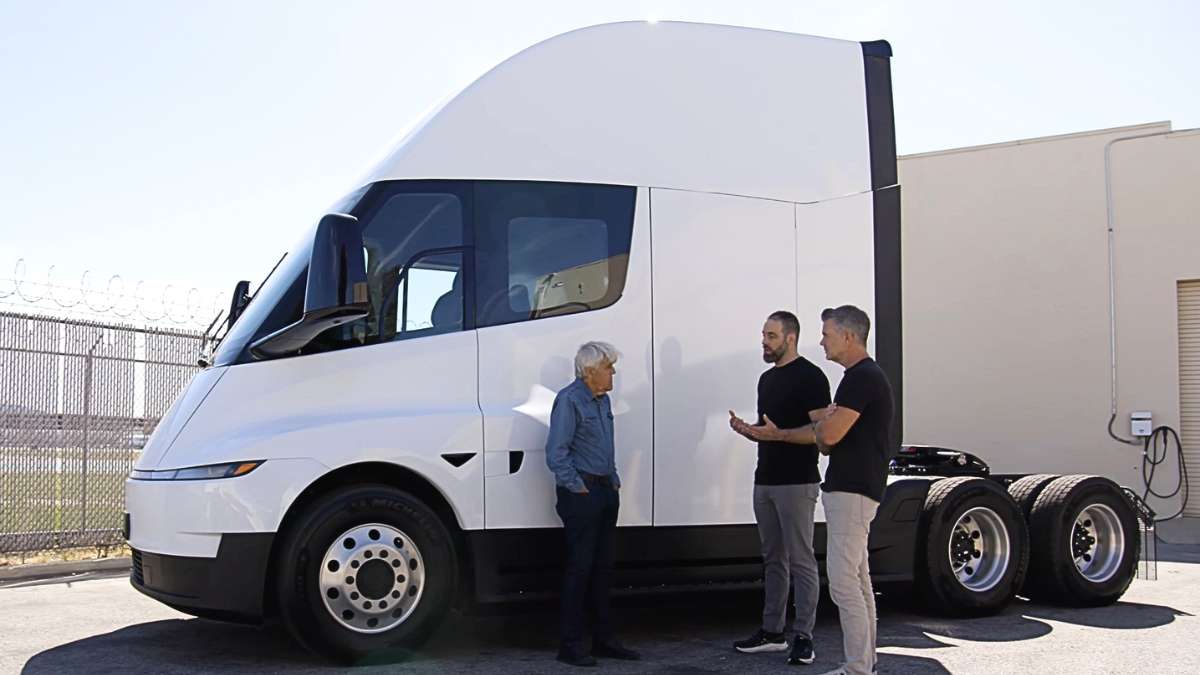
Let me tell you something other automotive outlets missed completely. Yes, the Tesla Semi has a battery engineered to last a million miles. That's a remarkable story. But there's a number buried inside that Jay Leno's Garage episode that should be making headlines everywhere, and it isn't.
That number is 95%.
That's Tesla's reported uptime figure for the Semi. And if you've ever run a trucking fleet, or even spoken to someone who has, you know exactly why that number stops you cold. A truck sitting in a shop isn't a vehicle. It's a very expensive, very heavy paperweight. Every hour offline is a delivery missed, a contract strained, a customer calling someone else next time.
Sawyer Merritt also twitted this news today.
NEWS: Tesla says that there are currently a few hundred Tesla Semis out in the real world that have traveled a combined 13.5 million miles, with one truck that has traveled 440,000 miles. Fleet has 95% uptime: "80% of breakdowns if you have one, are returned back to the customer… pic.twitter.com/JwW0P1EKZB
Advertising
— Sawyer Merritt (@SawyerMerritt) March 23, 2026
Diesel trucks have long carried a strange reputation for being the "reliable" choice. And yes, a diesel engine can be repaired almost anywhere. Any shop, any town, any mechanic with a wrench. That's been the argument for decades. But Tesla just quietly dismantled it. When 50% of Semi breakdowns can be resolved in under an hour, the old "repairability" advantage isn't an advantage anymore. It's a myth on life support.
Semi program chief Dan Priestley confirmed the details on Jay Leno's Garage. The structural battery pack uses Tesla's 4680 cells. Built for heavy loads. Built for punishing daily cycles. Engineered to reach one full million miles in real trucking conditions. Not in a lab. Not in a best-case scenario. In actual freight operations.
And here's what backs that up with real data. A few hundred Tesla Semis have already racked up 13.5 million combined miles on public roads. One truck, just one, has already crossed 440,000 miles. The battery is still performing well. No dramatic decline. No sudden failure. Just steady output, mile after mile. In one remarkable case, a PepsiCo Tesla Semi drove 1,076 miles in a single day with mid-shift charging. Think about that for a second. One electric truck. One day. Over a thousand miles.
Now let's talk about what fleet operators actually care about. Not range. Not horsepower. Money. Running cost on the Tesla Semi sits at just 15 cents per mile. Diesel trucks run close to 50 cents. That's not a small edge. That's a business transformation. The economics show the Tesla Semi is roughly 83% cheaper to drive and haul goods than a standard diesel truck, not even counting the reduced maintenance costs. As we've examined before in the staggering economics of the Tesla Semi, the numbers were always pointing in one direction. The 95% uptime figure just locked in the destination.
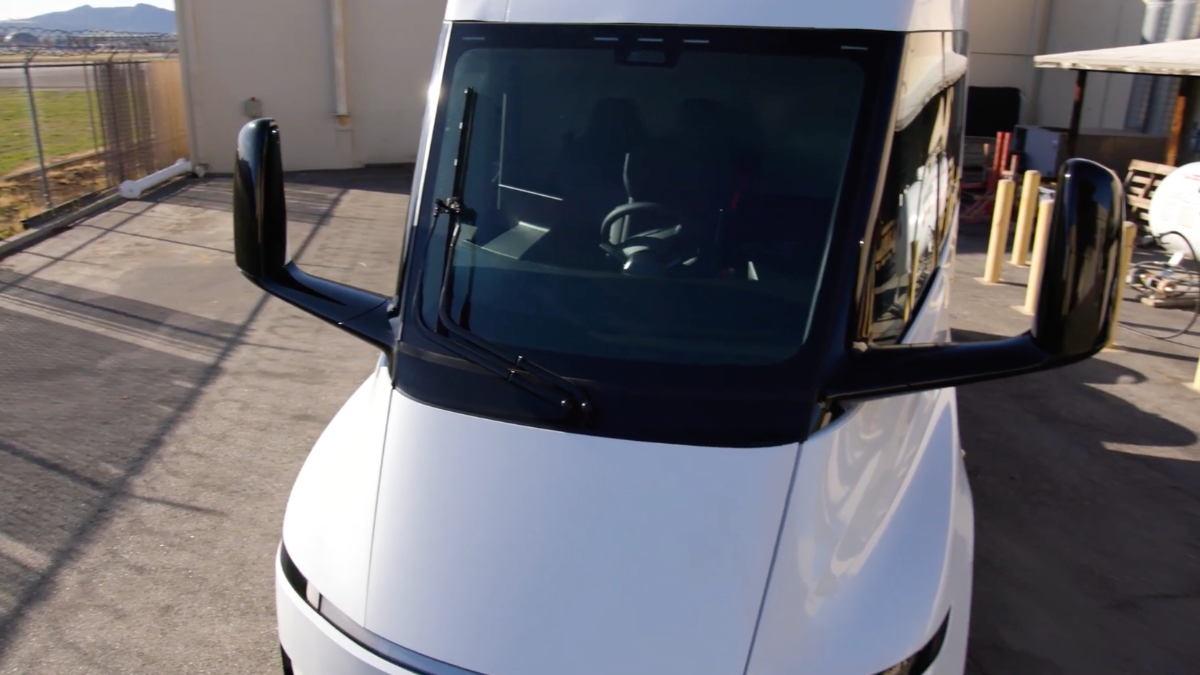
Here's what diesel defenders never want to acknowledge. Maintenance costs on a diesel fleet are brutal. Oil changes. DEF fluid. Fuel filters. Turbo failures. EGR valves. DPF clogs. The list goes on and on. The Tesla Semi has no engine oil. No exhaust system. No transmission fluid. No diesel particulate filter. Fewer moving parts means fewer things failing. As one industry observer noted, no downtime for engine service alone will flow directly to the bottom line for fleet operators. That's not spin. That's accounting.
But the 95% uptime claim goes further than just fewer breakdowns. It means Tesla is getting trucks back on the road faster when something does go wrong. That's a logistics platform, not just a vehicle. Fleet operators don't think like car buyers or Tesla fans. Instead, they think like accountants and logistics planners. They want predictability. They want delivery schedules. They want parts availability. They want service coverage. The Tesla Semi is now speaking their language fluently. And it took a while to get here. Elon Musk's three words about the Tesla Semi this year - "high volume production" - revealed more about its readiness than any launch timeline ever did.
Now let's address charging, because the critics won't let it go. 1.2-megawatt charging. Up to 300 miles of range added in 30 minutes. A trucker can grab food, stretch, make a call, and be back behind the wheel before a diesel driver finishes a full tank-and-coffee stop. The charging anxiety argument was always louder than the reality. Some critics argued the Tesla Semi wouldn't change trucking because most drivers are long haul, but those arguments ignored the enormous and fast-growing short-haul market where the Semi is already thriving.
And here's something worth thinking hard about. The doubts about electric semi trucks have been loud for years. Grid overload. Battery weight. Charging time. Repairability. Every single objection had a deadline built into it - "it won't work until..." Well, the until is here. The trucks are running. The miles are stacking up. The batteries are holding. The uptime is 95%. Tesla's program management has consistently argued that lower energy costs per mile, fewer emissions, less maintenance, and an overall reduction in ownership costs were the real case for the Semi, and the real-world data is now confirming it.
Now let's be honest about one thing. Tesla hasn't solved everything. Consumer vehicle reliability has had its own rough patches, and as a Consumer Reports study revealed, older Tesla models ranked last in used-car reliability - a sobering reminder that real-world durability has to be earned at scale, not just demonstrated in a fleet test. The Semi's commercial results are genuinely impressive. But the company still has work to do proving that engineering excellence flows all the way through every product line, in every market condition, over time.
And yet, that context makes the Semi's 95% uptime even more meaningful. This isn't marketing polish. PepsiCo, one of the first large-scale operators, raved about the trucks in real freight operations, and the performance data backs up the praise. These are accountants and logistics managers speaking, not Tesla fans. They don't celebrate technology. They celebrate what shows up on the balance sheet.
There's a bigger picture here too. The fleet customers who placed deposits for Tesla Semis back in 2017 - companies like Sysco, DHL, UPS, and Ryder - have been waiting nearly a decade for their trucks. That's not a normal situation by any standard. But the operators who stayed patient, who kept watching the data instead of canceling their orders in frustration, are now positioned to deploy the most efficient logistics platform in the history of freight transport. Patience and disciplined research paid off. That's a lesson worth taking into every major decision you make - in business and in life.
Here's the moral underneath all of this. The Tesla Semi teaches us something beyond trucking. The loudest skeptics often hold onto their doubts long after the evidence has moved on. And the people who wait for real data are the ones who make better decisions. Whether you're managing a fleet or buying your next car, the willingness to update your thinking when the facts change is one of the most valuable things you can develop. Diesel's maintenance advantage isn't coming back. The evidence is in. The only question is who acts on it first.
I want to hear from you directly. Drop your answer in the comments below:
- If Tesla can genuinely deliver 95% uptime and resolve half of all breakdowns in under an hour, does that finally bury diesel's so-called "repairability advantage" for good, or do you think real-world fleet operators will find reasons to stay skeptical?
- For everyday drivers watching this Semi story unfold, does a battery engineered to survive a million miles of commercial hauling finally put your personal EV battery anxiety to rest, or are you still holding out for more proof before you'd commit to an electric vehicle?
Tell us where you stand. Your experience matters, and this conversation is worth having.
Images are screenshots from Jay Leno's Garage.
About The Author
Armen Hareyan is the founder and Editor-in-Chief of Torque News and an automotive journalist with over 15 years of experience writing car reviews and industry news. Now based in the Charlotte region (Indian Land, SC, he founded Torque News in 2010, which since then has been publishing expert news and analysis about the automotive industry. He can be reached at Torque News on X, Linkedin, Facebook, and Youtube. Armen holds three Masters Degrees, including an MBA, and has become one of the known voices in the industry, specializing in the landscape of electric vehicles and real-world stories of actual car owners. Armen focuses on providing readers with transparent, data-backed analysis bridging the gap of complex engineering and car buyer practicality. Armen frequently participates in automotive events throughout the United States, national and local car reveals and personally test-drives new vehicles every week. Armen has also been published as an automotive expert in publications like the Transit Tomorrow, discussing how will autonomous vehicles reshape the supply chain, and emerging technologies in vehicle maintenance.
Set Torque News as Preferred Source on Google
Follow us today...







Comments
The tire wear equation will…
Permalink
The tire wear equation will balance out for freight haulers maxing out at 80,000 lbs. Weight and surface contact remain the same. Torque modulation will take care of the rest.
The ongiong concerns relate to the imperfect world where most trucks are produced and operate. Addressing the following may make the option more pallatable than the "devil we know".
A. The BEV weight penalty of 8,000lbs per 250 miles of range.
Reduced cargo capacity = reduced revenue.
B. Grid capability to support on-demand charging
Stable power generation is being taken off-line n favoor of solar & wind.
Large scale solar operations are running into pushback for taking out 1,000s of acres of productive farmland.
Competitive consumers in the form of large scale AI data-centers are competing for reduced stable power sources.
C. Sustainability and impact of battery production.
The LG Chem battery plant in Holland, MI consumes more Natural Gas than the combined use of 2 natural gas power plants in the area.
Mineral resource availability and extraction impacts.
D. Accident site security, cleanup, mitigation, transport and repair.
E. Combustion hazard mitigation and containment.
Uptime is created by…
Permalink
Uptime is created by minimizing maintenance, improving reliability and minimizing refuelling/re-energising time.
It’s still a truck carrying 40 tons so tire and chassis will be the same critical area for maintenance.
We can argue about what we…
Permalink
We can argue about what we believe are the pros and cons, but analysts at major trucking companies will make purchasing decisions based on their assessment of the economics. We'll see what they decide.
This isn't a $435,000 school bus with a range of 85 miles designed for virtue signaling. Tesla has come to market with something they believe offers a solid value proposition, so it would not surprise me to see this succeed.
And what is the field…
Permalink
And what is the field-reported tire cost per mile? I’ve seen competitor BEVs with a 12+ cent per mile tire cost, and that is wear mode only. Hopefully Tesla has figured how to moderate torque output so as to not tear up the tires.
Only one truck travelled 440…
Permalink
Only one truck travelled 440,000 miles and if a customer has one truck then 80% of the time it (broke down truck) is returned after repair within one day. How about remaining 20%? How long does it take? What about fleets with multiple trucks? 95% uptime on what statistical data and how many measured miles on each truck? Jumbled up facts.
95% uptime = 95% on time…
Permalink
95% uptime = 95% on time deliveries. That is not acceptable. I'm responsible for deliveries to 400 stores across 29 states every day and we have a 99ish percent on time record. Semi is amazing. The lower maintenance, "fuel," and utilization are nice. If we're talking Semi always being available and the 5% is for charging time, all is good. If the truck is non-functional 5% of the time? Sorry, that's not good enough. If I missed that part of your update, my apologies.
You misunderstood. No 5% is…
Permalink
In reply to 95% uptime = 95% on time… by DJCJ (not verified)
You misunderstood. No 5% is NOT non-functional time. Watch the Jay Leno's Garage episode that was just released (March 2026). Extremely low maintenance. Super reliable. Mobile service that comes to you if (rarely, if ever) needed. No charging only stops, rather just charge at the mandatory 30 minute break, no extra downtime just to charge. Plus you can plug in and leave, no need to be stand next to it while fueling up like with diesel. Tesla Semi is about to dominate. A really incredible vehicle.
I appreciate the defense,…
Permalink
In reply to You misunderstood. No 5% is… by No-one Seven (not verified)
I appreciate the defense, and you're directionally correct, but there's an even stronger argument worth making here. The reason Tesla's uptime holds up isn't just low maintenance or mobile service, impressive as both are. It's that the Semi's architecture eliminates entire failure categories that plague diesel fleets. No turbocharger failures. No EGR valve issues. No DPF regeneration cycles stranding a truck on the highway at 3am. When you remove those failure modes completely rather than just fixing them faster, your uptime ceiling rises permanently. Mobile service and OTA updates are the safety net, but the real story is that Tesla engineered the truck so that safety net rarely gets called. That's a fundamentally different design philosophy than anything diesel manufacturers are currently offering, and for high-volume commercial operators, that distinction is worth far more than any single uptime percentage.
Great question, and your 99%…
Permalink
In reply to 95% uptime = 95% on time… by DJCJ (not verified)
Great question, and your 99% on-time standard is exactly the bar the industry should hold Tesla to — no excuses. Here's the important distinction though: Tesla's 95% uptime is not a downtime metric the way traditional fleet managers measure it. It measures overall vehicle availability across the entire fleet lifecycle, factoring in scheduled maintenance windows that are dramatically shorter than diesel equivalents. Diesel trucks average roughly 130,000 miles between major service intervals on a good day — the Tesla Semi has no oil changes, no DEF fluid, no DPF regens, no transmission services. The unplanned breakdown events that actually threaten your 99% on-time record are precisely what Tesla has engineered around. Add mandatory 30-minute DOT rest stops that double as full charging windows, and the Semi isn't asking your drivers for a single extra minute off the road. For a fleet your size running 29 states daily, the more relevant number to track as Tesla scales isn't the 95% — it's the percentage of breakdowns resolved without a tow truck. That number is where the real competitive story lives.