
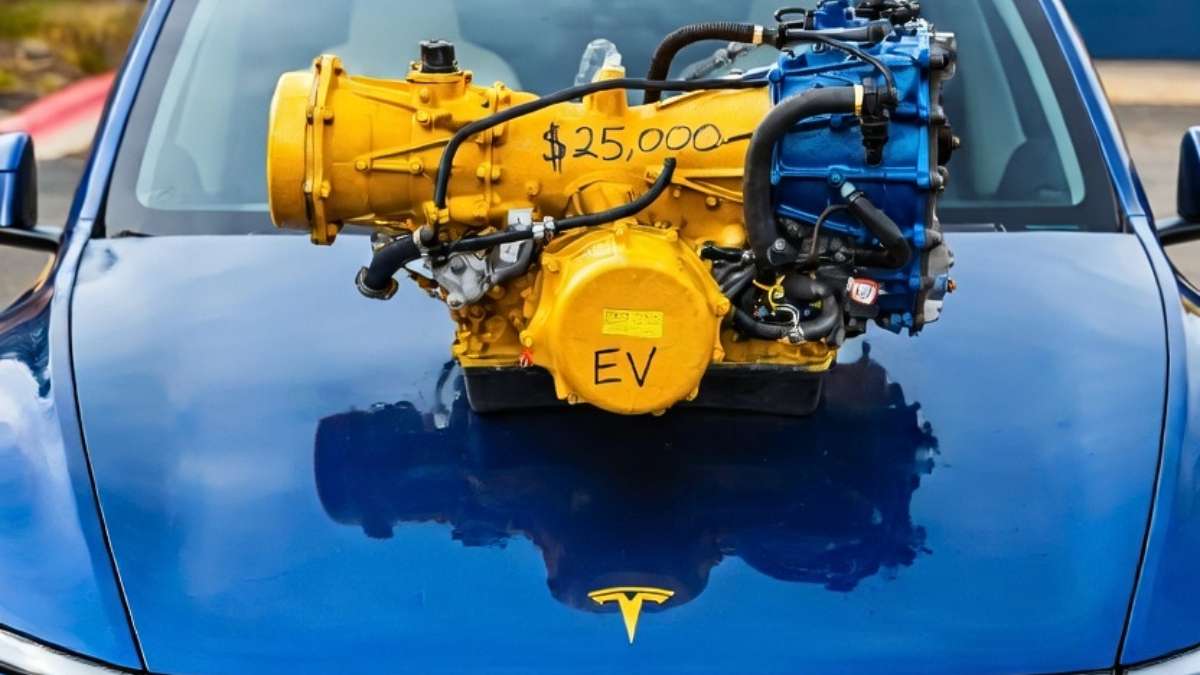

Every single year for the past decade, somebody at a major automaker steps in front of a camera, flashes a big smile, and promises the world an affordable electric car is right around the corner. Twenty-five thousand dollars. Clean. Electric. For the masses. And every single year, that corner seems to get a little further away.
Well, Abdul Abdullah, a Global Trends and Leadership Strategist from Morganville, New Jersey, decided to call that out: loudly, clearly, and with the kind of math that actually holds up. He posted something on LinkedIn this week that deserves a real conversation. Here it is, in full:
"For years, the EV narrative has centered on one promise: 👉 The affordable electric car is just around the corner.
But here's the uncomfortable reality (as of March 2026): The true $25,000 new EV in the US/Europe remains structurally difficult, and borderline unrealistic in the near term.
This isn't a failure of innovation.
It's a matter of economics.
⚙️ The Cost Problem No One Talks About Automakers like Ford and General Motors are constrained: 🔸️Labor costs in the U.S. and Europe are significantly higher 🔸️Battery packs still account for ~30–40% of total vehicle cost (despite global prices dropping toward ~$105/kWh) 🔸️Regulatory requirements add layers of compliance expenses 🔸️Dealer networks introduce additional margin friction
Even with scale, compressing all of this into a $25K price point is a brutal equation.
The cheapest new EVs today start in the high $20,000s/low $30,000s (e.g., 2027 Chevy Bolt ~$28,995; 2026 Nissan Leaf ~$29,990+).
🌏 Why China Is Playing a Different Game Companies like BYD have a fundamentally different cost structure: 🔸️Vertical integration (batteries, components, supply chain) 🔸️Lower labor and production costs 🔸️Aggressive domestic competition driving efficiency
This is why affordable EVs like the Seagull are viable in China (~$8K–$10K), but exports hit ~$26K+ in Europe (after tariffs/adaptations) and aren't feasible at those prices in the US due to high import barriers.
📉 The Strategic Reality Western automakers are making a calculated decision: 👉 Protect margins now, scale affordability later Because rushing into low-cost EVs too early could destroy profitability.
And in today's environment, cash flow > market share.
🔍 What This Means Going Forward 🔸️The "mass adoption" curve may be slower than expected 🔸️Hybrid and ICE vehicles will remain relevant longer 🔸️True sub-$25K affordability likely depends on further battery breakthroughs (~$80/kWh projections) or policy shifts
Bottom line: The $25,000 EV isn't dead. But it's not imminent, and the market is finally waking up to that."
Alright. Let's dig into this. Because Abdullah is right, but the story goes even deeper than what he's written. And if you're someone who's been waiting to buy an affordable EV, you need to hear what's really going on before you make any decisions.
Constraint Number 1: Labor Costs Are Not Going Away
Let's start with the most obvious one, and the one nobody in Detroit likes to talk about on earnings calls.
Building a car in the United States is expensive. A union assembly worker's total compensation package, when you factor in wages, benefits, pensions, and healthcare, can exceed $60 to $70 per hour. That's not a criticism. That's a worker making a good living, which is something worth protecting. But it is an economic reality that sits on top of every vehicle built in America.
Now compare that to what's happening on the other side of the Pacific. China has a large and skilled workforce that translates into lower manufacturing costs, and Chinese groups CATL and BYD together account for more than half of the global battery market share, giving them a structural cost advantage that Western rivals simply cannot replicate overnight.
This isn't about blaming American workers. It's about understanding why the math doesn't work at $25,000 in the U.S. the way it does in Shanghai. You cannot wish away a structural cost gap with a press release.
Constraint Number 2: EV Battery Cost Wall
Here's the number that should be hanging on the wall of every automaker's boardroom: batteries still represent 30 to 40 percent of a vehicle's total cost. Yes, prices have dropped dramatically. But "dramatically lower than they used to be" is not the same as "cheap enough."
Abdullah pegs the current going rate at around $105 per kilowatt hour. The industry consensus is that you need to get to roughly $80 per kilowatt hour before a true $25,000 EV becomes genuinely viable in a Western market without losing money on every car sold. That gap sounds small. It isn't.
And here's something unexpected that most mainstream coverage glosses over: even as battery costs fall, the vehicles themselves are getting heavier, more feature-loaded, and more software-dependent. The cost that drops in one column keeps getting replaced by a cost that rises in another. It's a treadmill, and right now American buyers are not quite at the finish line.
The Toyota bZ5, built through a partnership with BYD in China, starts at around $18,000 in that market. This is roughly the same price as a gasoline-powered Corolla Cross in China. A comparable Tesla Model Y in China starts at nearly double that. But tariffs and adaptation costs make a vehicle like the bZ5 completely nonviable in the American market at anywhere near that price.
Think about that for a moment. The technology to build an $18,000 EV exists right now. The economics to sell it in America do not. That is the wall.
Constraint Number 3: Regulatory and Compliance Costs
This one is less dramatic but equally real. Every vehicle sold in the United States must pass a gauntlet of federal safety standards, emissions certifications, crash testing, cybersecurity requirements, and software compliance protocols. Each of those standards costs money to engineer for, test for, and certify to.
None of that is waste. Safer cars save lives. But when you're trying to compress a vehicle's price to $25,000, every compliance line item bites harder. A luxury automaker building a $90,000 car spreads those fixed compliance costs across a much larger margin per vehicle. A company trying to sell at $25,000 has almost no cushion.
This is also why you see an unusual situation develop in the market: the cheapest EVs available right now in the U.S. are the ones that have been around long enough for their manufacturers to fully amortize those development and compliance costs. The 2024 Chevy Bolt remains one of the most approachable and affordable ways to get into an electric vehicle, built on a platform that has been continually refined since the mid-2010s, giving it a price structure newer platforms simply cannot match yet.
The Bolt and the Leaf exist at their price points because they're old. That's not an insult, but actually a compliment to the engineering teams that kept iterating on those platforms for years. But it does illustrate the problem: the newest affordable EVs tend to be ones designed half a decade ago.
We've written extensively on Torque News about this pricing reality. If you want to understand what some of the most heavily discounted EVs of recent years have actually cost real buyers after incentives and dealer discounts are applied, the numbers tell a sobering story, even discounted, the floor for a new EV with decent range rarely gets below $28,000, and that's before you add taxes and fees.
Constraint Number 4: The Dealer Network Problem
Abdullah identifies this one and it's the most underappreciated of the four. Here's what dealers do to an EV's price: they add a layer of margin between the manufacturer and the buyer that simply doesn't exist in China's direct-sale model.
Now, not all dealers are the problem. Some are outstanding community businesses that add real value through service, financing, and local relationships. But the structural reality is that a traditional dealer network adds cost at the point of sale, and in a segment where you're already fighting for every dollar of margin, that friction matters.
Tesla famously figured this out early and went direct-to-consumer. Rivian is following the same playbook. But Ford and GM, bound by franchise laws and decades of dealer relationships, cannot simply tear down that network. They are selling into a system that adds friction they cannot eliminate.
This is one of the reasons why waiting for an affordable EV has felt like a slow crawl for so many buyers who finally saw a wave of promising new electric vehicles starting to get the pricing right in 2025, but most of those options still sit above $30,000 for a new vehicle with meaningful range and modern features.
Now Let's Talk About China Because This Is Where It Gets Different
Abdullah describes China's advantage as vertical integration, lower labor costs, and aggressive domestic competition. All true. But there's a bigger story underneath that.
China began actively working on EVs in 2001 with its 863 EV Project, two years before Tesla was even founded, and by 2009 had already surpassed the United States to become the world's largest automotive market. Sixteen state-owned companies were mobilized to develop EVs aggressively, with the Chinese government funding and supporting these efforts at a scale that no Western government matched.
That is a 25-year head start. You don't overcome a 25-year head start in a product cycle or two.
China also dominates access to rare earth metals, which are critical components in producing EV batteries. This gives Chinese manufacturers a supply chain advantage that functions like a permanent structural moat, which are the materials needed to build the best batteries are disproportionately controlled by Chinese companies and Chinese government-aligned entities.
And then there's what they're doing with that advantage right now. BYD has launched a vehicle featuring a 10C-rated battery capable of a full charge in just six minutes, using 1,000-volt architecture that effectively eliminates charging anxiety while Western automakers and aging power grids are left scrambling to keep up.
Six minutes. That's not science fiction. That's a car you can buy in China right now.
Meanwhile, in China, about 28 percent of new car sales were electric vehicles last year, compared to roughly 8 percent in the United States - in a country where the average urban resident earns about one-eighth of an average American's income. That comparison should stop you cold for a second. The people who can least afford it are buying EVs at three times the rate of Americans. That is a cultural, political, and industrial achievement that runs far deeper than cheap labor.
And the global picture is shifting fast. The European Union has moved from punitive tariffs of up to 35.5 percent on Chinese EVs toward a managed price floor system, effectively formalizing what analysts are calling "managed competition:" a recognition that Chinese EVs are too competitive to simply wall out, and too numerous to ignore.
Canada has gone even further, slashing Chinese EV tariffs to just 6.1 percent for an initial quota of 49,000 vehicles, with expectations that within five years, more than half of those imported Chinese EVs will be priced under $35,000: a price point that American manufacturers simply cannot currently match.
The walls are already coming down everywhere except the United States. That is not a sustainable position indefinitely.
What This Means If You're Actually Shopping for an EV Right Now
Let me be direct with you, because this is where the rubber meets the road for most people reading this article.
If you're waiting for a brand-new $25,000 EV from a major American brand with good range, a solid warranty, and a dealer near you, then you are going to be waiting a while longer. That vehicle is probably three to five years away, assuming battery costs hit the projections.
What you can do right now is shop smart. The used EV market is producing some genuinely remarkable value. Rapid depreciation has made quality used EVs extraordinarily affordable, with vehicles like the 2024 Chevy Bolt appearing in the marketplace at around $5,000 with a battery that was replaced in 2024 and a warranty good until 2032. That is an unlikeable truth for new-car dealers, but a wonderful reality for budget-conscious buyers.
If you want new, understanding which affordable EVs currently give you the best fuel cost savings over time compared to their gas equivalents is genuinely the most useful calculation you can run before walking into any showroom. The sticker price is only part of the story. Fuel savings, insurance, and maintenance costs change the total picture significantly.
And consider hybrids. Abdullah is right that ICE and hybrid vehicles will remain relevant longer than the EV-only narrative suggests. Toyota, Honda, and Ford's hybrid lineups are delivering real-world affordability right now, today, without making you wait for a battery breakthrough.
The Moral of This Story
Here's what I want you to take away from all of this, and it applies well beyond car shopping.
There's a pattern in how we as consumers, and how companies, and how governments, make big decisions. We tell ourselves a story about what should be possible, and then we get angry when the economics don't cooperate with the story. The $25,000 EV narrative has been exactly that kind of story. The desire was real. The timeline was not.
The most important thing you can do as a buyer, as a voter, or as a human being making any big decision, is to separate what you want from what is actually true right now. Hope is not a plan. And impatience with inconvenient economics doesn't change those economics, but instead, it just leaves you frustrated and potentially making poor decisions.
If you want affordable EVs to exist in America at $25,000, the answer isn't to be angry at Ford or GM. The answer is to understand that it requires battery innovation, smarter policy, supply chain investment, and yes, probably some reexamination of how vehicles are sold in this country. None of that happens overnight. None of it happens because someone demanded it loudly on social media.
Be patient. Be informed. And make the best decision available to you today - not the decision based on a promise that's still three years from being kept.
Two Questions for You
I want to hear from you directly, because your real-world experience matters more than any analyst's projection:
1. If you're in the market for a new or used EV right now, what is your personal price ceiling, and does the current lineup of sub-$30,000 options like the Chevy Bolt or Nissan Leaf meet your needs, or are you still waiting for something better?
2. Do you believe American automakers will genuinely be able to produce a competitive $25,000 EV within the next five years, or do you think the structural cost constraints Abdullah describes are simply too deep to overcome without a major shift in either policy or battery technology?
Drop your answers and your personal experience in the comments below. Every single response gets read, and your perspective helps shape the conversation for thousands of other readers who are asking the exact same questions.
About The Author
Armen Hareyan is the founder and Editor-in-Chief of Torque News and an automotive journalist with over 15 years of experience writing car reviews and industry news. Now based in the Charlotte region (Indian Land, SC, he founded Torque News in 2010, which since then has been publishing expert news and analysis about the automotive industry. He can be reached at Torque News on X, Linkedin, Facebook, and Youtube. Armen holds three Masters Degrees, including an MBA, and has become one of the known voices in the industry, specializing in the landscape of electric vehicles and real-world stories of actual car owners. Armen focuses on providing readers with transparent, data-backed analysis bridging the gap of complex engineering and car buyer practicality. Armen frequently participates in automotive events throughout the United States, national and local car reveals and personally test-drives new vehicles every week. Armen has also been published as an automotive expert in publications like the Transit Tomorrow, discussing how will autonomous vehicles reshape the supply chain, and emerging technologies in vehicle maintenance.
Set Torque News as Preferred Source on Google
Follow us today...







Comments
The 800lb gorilla in the…
Permalink
The 800lb gorilla in the room is the battery. They aren’t yet good enough to make a credible $25K car, at least in this country. Other than that, I think manufacturers can figure out the rest. BYD’s recently introduced Blade 2.0 is the ICE killer we’ve been waiting for. 10min charge in cold weather, 500mile range, 620K mile warranty and low cost since it is derived from LFP chemistry.
Fossil Fuel Vehicles are…
Permalink
Fossil Fuel Vehicles are still more efficient, less polluting and perfected by Americans, just like EV Technology, perfected by America and sold to Asia Years Ago (ask GM and Toyota) China duplicates American and European design, they may enhance appearance, but under that skin is still a copycat, my old fashion V6 is the go to and where America will stay.
This isn't true. Ask AI or…
Permalink
In reply to Fossil Fuel Vehicles are… by Kyle Parsons (not verified)
This isn't true. Ask AI or do some research and you'll find answers like this:
1. Energy efficiency: EVs win by a wide margin
How efficiently energy reaches the wheels
EVs convert ~87–91% of the electricity from the battery into motion
Gasoline vehicles convert ~16–25% of fuel energy into motion (the rest is lost as heat, idling, friction) [epa.gov]
This is why:
Typical EVs achieve 53–140 MPGe
Gasoline vehicles typically achieve 9–57 MPG [energy.gov]
Bottom line: Even after accounting for power‑plant losses, EVs deliver roughly 2–4× more motion per unit of energy than ICE vehicles.
2. Greenhouse gas emissions: EVs are cleaner over their lifetime
$25,000 car of any kind is…
Permalink
$25,000 car of any kind is going to be a myth soon. Base no-option Corolla after destination fees is $24,200.
Used EVs sub $30,000 now…
Permalink
Used EVs sub $30,000 now include the Equinox and Blazer EVs, the Ioniq 5 and 6, Kia EV6 and Niro, and lots of Teslas, among others. So, one is not stuck with the Bolt or Leaf.
Additionally major…
Permalink
Additionally major manufacturers need to look at all their costs and shareholder expectations, how much profit is too much
Armen, for people that know…
Permalink
Armen, for people that know how to Math, the initial price is not the ultimate deciding factor. What’s more important is cost of Ownership over the long term.
Any vehicle kept running for 15 to 20 years or more becomes more valuable the longer it is owned because funds are not needed to replace it with another vehicle. So what if it’s depreciated to zero after 8 years if it still runs for another 12? It has intrinsic value by allowing the owner to not invest in another rapidly depreciating asset sooner than necessary, thus allowing them to invest in long term assets that appreciate over time, thus allowing them to buy a new vehicle outright after that 15 to 20 years, thus eliminating finance and leasing charges, thus allowing them to keep their generational wealth longer and not wasting their money on rapidly depreciating assets every 3 to 5 years.
A cheap $25k car bought every 3 years will cost way more than one good $70k car kept for 20 years and keep the owner behind financially.
A decently made EV, even if it costs more initially, will last far longer than its IC counterpart and save their generational wealth they pass on to their kids.
It’s all about the math