

Reliability is one of the biggest reasons many truck buyers choose a Toyota Tundra in the first place. That's why stories involving major engine failures tend to generate strong reactions, especially when they occur on trucks that are still relatively new.
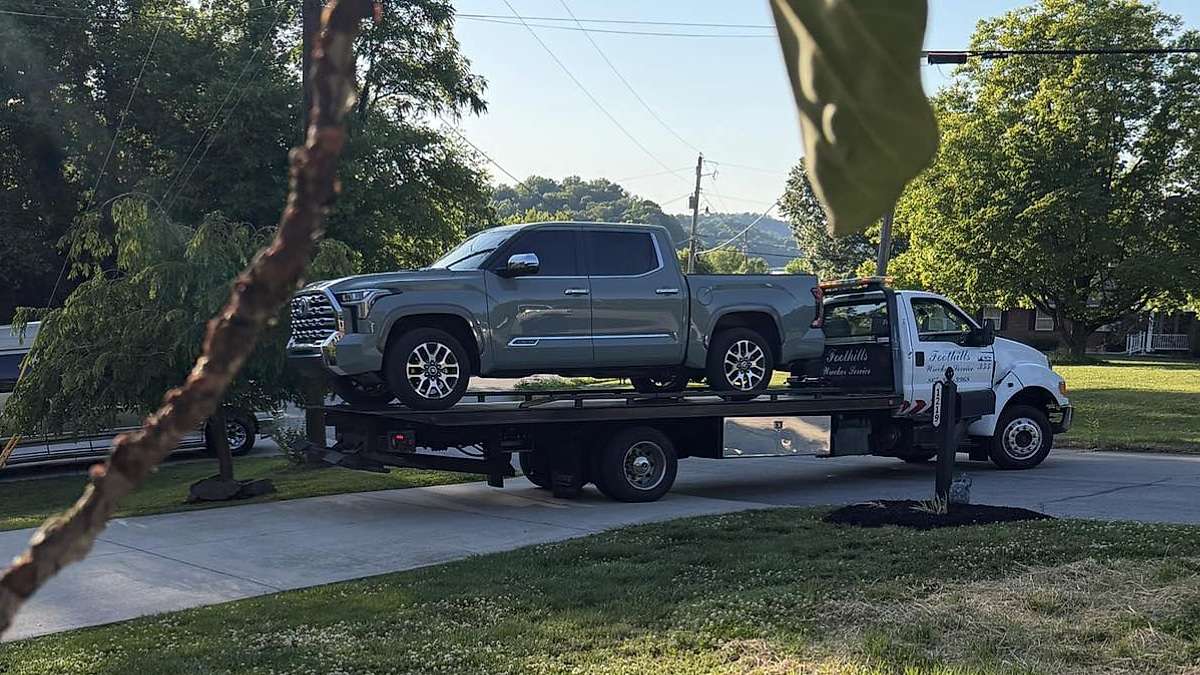
Tiffany Rodgers recently shared her experience in the "2023-2027 Toyota Tundra Owners" Facebook group after her 2024 Toyota Tundra suffered a blown engine at just 30,000 miles. What began as a major mechanical failure quickly evolved into a much larger ownership frustration when she started exploring her options after the truck was repaired. Her story has since sparked discussion among other Tundra owners about warranty repairs, resale value, and whether a major engine issue can continue affecting a vehicle long after it's fixed.
Writing about the situation, Tiffany said:
“There went my 2024 Toyota Tundra 1794 Edition with only 30k miles because of a blown engine.
Toyota has me in a terrible loaner with no ETA on when my truck will be done. Instead of replacing the engine, they decided to rebuild it. I'm told they'll replace 'anything oil touched,' but that's not exactly comforting on a practically new truck.
I went in today to discuss trading it in once repaired. KBB trade value on my truck is around $54,500. Their offer? $45,000.
When I asked why the massive difference, I was told that once the engine repair hits the Carfax, the value will drop to around what they're offering. Honestly WOW. Are you kidding me?
So let me get this straight: They made money on my F-150 trade-in, made money selling me this truck, want to hit me on trade value because of their engine failure, then tried to raise the price of the new Tundra I was looking at above the price listed on their own website until I pulled out the printout I brought with me.
Needless to say, I didn't buy another truck. At this point, I honestly don't know if this is just the dealership or Toyota as a whole, but this entire situation has been unbelievably disappointing.”
When a Warranty Repair Doesn't Restore Confidence
One of the most interesting aspects of this story is the debate between rebuilding an engine and replacing one entirely. From a technical perspective, a properly rebuilt engine can often perform just as well as a replacement engine. Dealerships and manufacturers perform these repairs every day. However, many owners view the situation differently when the vehicle is only a year or two old and has relatively low mileage.
Tiffany's concern appears to be less about the mechanics of the repair and more about trust. If a truck suffers a catastrophic engine failure at 30,000 miles, it's understandable why some owners would prefer a completely new engine rather than a rebuild, even if both options ultimately resolve the issue.
That trust factor has become increasingly important as Toyota continues working through concerns surrounding some of its newer twin-turbo V6 powertrains. We've previously examined how owners have been navigating the ongoing discussion surrounding debris-related engine concerns and Toyota's response to them. While every engine failure has its own circumstances, stories like Tiffany's demonstrate why many owners continue paying close attention to the issue.
The Trade-In Offer That Changed the Conversation
The part of Tiffany's story that may resonate with the largest number of readers isn't necessarily the engine rebuild itself but the question of value.
According to Tiffany, her truck carried an estimated trade-in value of approximately $54,500, yet she says she was offered $45,000. She was reportedly told that once the repair appeared on the vehicle's history report, the truck's value could be affected.
Whether that specific valuation is fair or not will likely be debated. Trade-in values vary significantly between dealerships, markets, inventory levels, and individual buyers. However, the broader concern is understandable.
Many owners worry that a major engine repair can create a stigma around a vehicle, even when the repair is fully covered under warranty and completed correctly. Buyers often scrutinize vehicle history reports closely, and some may hesitate when they see an engine replacement or rebuild listed.
That's one reason discussions about diminished value often emerge after significant repairs. Even when the owner doesn't pay for the repair itself, they may still worry about what it means for future resale or trade-in opportunities.
The Reputation Challenge Toyota Faces
Toyota has spent decades building a reputation for durability. That's exactly why stories involving engine failures often attract outsized attention compared to similar issues at some competing brands.
When buyers choose a Tundra, they expect hundreds of thousands of miles of service with relatively few surprises. For some owners, that expectation was shaped by older generations powered by Toyota's well-known 5.7-liter V8.
As a result, any issue involving the newer turbocharged V6 engines tends to spark comparisons between generations. I've also reported on similar frustrations before, including one owner's experience with a 2025 Toyota Tundra TRD Pro that suffered a blown main bearing before 19,000 miles.
It's important to remember that many owners continue reporting positive experiences with their trucks of course. But still, every highly visible failure story creates another challenge for Toyota as it works to maintain customer confidence.
Fellow Owners Share Their Reactions
Tiffany's post quickly attracted responses from other truck owners who viewed the situation from several different angles.
One of the first broader concerns came from Steve Freed, who wrote:
“Would love to buy a new Tundra but given the V6 turbo engine issues I am keeping my 5.7L V8. 169,000 miles on it and I'm mostly towing and have zero issues. I just maintain tires, brakes, battery and fluid changes. I own 3 Toyotas and 2015 is the newest. Toyota has hurt their reputation with these V6 turbos. Please bring back the tried and true 5.7 V8!”
Steve's comment highlights a sentiment that appears frequently in Tundra discussions. For many longtime Toyota owners, the reliability reputation established by previous generations remains the benchmark against which newer trucks are judged.
Another owner, Grant Gibbs, focused on the financial side of the discussion:
“The resale value is precisely why I bought a used truck that just had the engine replaced under the recall. The dealer I bought it from took it to Toyota for the engine recall before they listed it for sale. Plus, I got a lifetime powertrain warranty through the dealer at no additional cost. I let someone else take the hit driving it new off the lot, not me.”
Grant's perspective offers an interesting counterpoint. While Tiffany worries about the impact a major repair could have on value, Grant sees repaired trucks as opportunities to purchase at a discount while still benefiting from warranty protection.
Finally, Sherin Azmy offered perhaps the strongest reaction:
“Honestly the most 'unbelievable' thing in this story is that you want to buy another Tundra with the same issue. You are facilitating this bad treatment to happen to you and to others.”
While blunt, Sherin's comment reflects yet another growing trend among truck buyers. When owners experience a major problem, some choose to remain loyal to the brand while others decide it's time to explore alternatives.
That debate has become increasingly visible in recent years. I covered an example about an owner who traded a newer Toyota Tundra for a Ram 1500 after becoming frustrated with the ownership experience. Whether owners stay or leave often depends less on the repair itself and more on how the situation is handled afterward.
The Bigger Issue Isn't the Engine
What makes Tiffany's story stand out is that the engine failure and the trade-in offer became intertwined. If the truck is repaired successfully, Toyota may view the issue as resolved. From the owner's perspective, however, concerns can remain. Questions about future reliability, resale value, and confidence in the vehicle don't always disappear once the repair is complete.
In many ways, this highlights a challenge facing every automaker. Fixing a vehicle and restoring customer trust are not always the same thing. As vehicles become more complex and expensive, owners increasingly evaluate not only how manufacturers respond to failures but also how dealerships handle them. Communication, transparency, and customer treatment often shape the ownership experience just as much as the repair itself.
That's why I think Tiffany's story illustrates something we don't talk about enough. Most discussions surrounding recalls and engine failures focus on the repair itself, but owners often worry just as much about what happens afterward.
A manufacturer can replace parts, rebuild an engine, or complete a warranty repair, but confidence is harder to restore. Once an owner starts wondering whether a repair will affect resale value, future reliability, or their ability to trade the vehicle later, the conversation becomes much bigger than the mechanical issue that started it.
I think that's why stories like this resonate with so many readers because they're not just about broken engines. These stories are about whether owners feel protected when something major goes wrong.
Key Takeaways
- Engine failures affect more than repairs: Owners often worry about long-term value and confidence in addition to getting the vehicle fixed.
- Rebuilds remain controversial: Some drivers are comfortable with a rebuilt engine, while others would strongly prefer a complete replacement.
- Vehicle history matters: Major repairs can influence how future buyers perceive a truck, even when the work is completed under warranty.
- Dealership experiences shape perceptions: Communication and trade-in discussions can have a major impact on overall satisfaction.
- Trust is difficult to rebuild: Fixing a mechanical issue doesn't always eliminate concerns about future ownership.
Share Your Thoughts
Have you ever experienced a major engine failure on a relatively new vehicle? Did it change how you felt about the brand afterward?
And if your truck needed a complete engine rebuild under warranty, would you keep it long term or would you start looking for something else?
I'd love to hear your opinions in the comments below.
Ok, please come back tomorrow, or check our Torque News Home Page for more interesting automotive news articles.
About The Author
Aram Krajekian is a young automotive journalist bringing a fresh and analytical perspective to the evolving automotive landscape by reporting on real-world ownership experiences and providing industry analysis. Based in North Carolina, he covers electric vehicles, trucks, and broader automotive trends with a focus on contributing a balanced evaluation. His reporting cuts through brand bias to provide readers with grounded insight into how vehicles perform for everyday drivers beyond marketing narratives.
Aram can be reached on X and LinkedIn for ongoing automotive coverage.
Image Credits
The “2023-2027 Toyota Tundra Owners” Facebook group and Toyota’s gallery, respectively.
Set Torque News as Preferred Source on Google
Follow us today...




Comments
Sometimes you go to Las…
Permalink
Sometimes you go to Las Vegas and you make money but a lot of times you go to Las Vegas and you lose almost everything. Buying a truck car whatever in life you might do really well or things might go south suck sometimes but you know what that's life and you have to deal with it 🙂
This sounds like an article…
Permalink
In reply to Sometimes you go to Las… by Krystal cane (not verified)
This sounds like an article paid for by inclusive minds who want American made promoted over imports. If American made was actually better then we would buy it. Even though they sell more trucks at ford they still haven’t proved they are better. Simply put a man worked for Toyota and for 10 plus yrs at each and Toyota would stop the line if even one bolt was missing ford would not, because that time to them was not cost effective. America is greedy and trick themselves into believing it’s okay because someone else will do it if I don’t. These are lies we tell ourselves when we don’t get what we want in life.
Tundras are built in San…
Permalink
In reply to This sounds like an article… by Abe Miller (not verified)
Tundras are built in San Antonio, Texas.
The Tundra’s are built in…
Permalink
In reply to This sounds like an article… by Abe Miller (not verified)
The Tundra’s are built in Texas.
Thank you for the heads up. …
Permalink
Thank you for the heads up. I guess I wont be conserving Toyota anymore.
Nope Toyota took a good…
Permalink
In reply to Thank you for the heads up. … by Matt Pfister (not verified)
Nope Toyota took a good thing of reliability behind its trucks and ruined it.
Years ago, I was killing…
Permalink
In reply to Thank you for the heads up. … by Matt Pfister (not verified)
Years ago, I was killing time browsing the cars on a dealer showroom floor. The hood was open on a full-sized sedan. When I looked at the engine, I had the same reaction as the old lady in a famous burger commercial where she said, "Where's the beef?" This big, heavy car had a tiny engine with turbo. Most of the engine compartment was empty air space instead of engine. I had to laugh. Expecting a big heavy vehicle to do well with an undersized, turbo boosted, engine made no sense to me. Give me a naturally aspirated (non-turbo) engine for strength and longevity.
The new 3.4 twin turbo motor…
Permalink
The new 3.4 twin turbo motor has more issues tha n the tried and trusted 5.7 v8,albeit consumes less gas,but man,even the new Tacoma has the same issues with the motor.My 2017 Tacoma 3.5 v6 has 146,000 miles and with the regular maintenance,has no problem whatsoever.
My 2024 Tacoma trd sport…
Permalink
In reply to The new 3.4 twin turbo motor… by Donnie (not verified)
My 2024 Tacoma trd sport 2x4 no problems
My 2024 Tacoma trd sport…
Permalink
In reply to The new 3.4 twin turbo motor… by Donnie (not verified)
My 2024 Tacoma trd sport 2x4 no problems
She isnt wrong about the…
Permalink
In reply to The new 3.4 twin turbo motor… by Donnie (not verified)
She isnt wrong about the repair on the carfax but all the tundra trucks in the recall will show a repair on the history, anyone looking to buy a used Tundra unless they live under a rock should know about the engine issues. Im not sure why they are rebuilding the engine, from what ive seen at my shop we replace all the engines.
I bought a used 2023 Tacoma…
Permalink
In reply to The new 3.4 twin turbo motor… by Donnie (not verified)
I bought a used 2023 Tacoma TRD Sport last week. I bought the last year of the previous generation because of the V6 engine and all the extra options that came with it considering it was the last year of that body design. Turbochargers weaken an engine.
The new 3.4 twin turbo motor…
Permalink
The new 3.4 twin turbo motor has more issues tha n the tried and trusted 5.7 v8,albeit consumes less gas,but man,even the new Tacoma has the same issues with the motor.My 2017 Tacoma 3.5 v6 has 146,000 miles and with the regular maintenance,has no problem whatsoever.
I had the oil filter spin…
Permalink
I had the oil filter spin off my 2024 Tundra Hybrid at 24k miles. Dealer naturally blamed it on the place that changed my oil which I'd totally buy had the oil just been changed. Unfortunately for me the oil filter was on the truck for over 9 months and 4,900 miles of driving when it spun off.
Attorney who specializes in these cases had his mechanic look at it and said I didn't have a case against the oil change place because it had been on the truck for so long.
At the time it spun off, I was accelerating from 0-60 in sports mode so I was spiking the oil pressure and the best guess is engine sentiment in front of the filter put enough pressure on the filter to lift it away from its housing. But the hybrids haven't been recalled yet, so it cost me over $30k to replace the engine and left me without a truck for 5 months of winter driving while I waited in line for a replacement engine.
Wish I'd gone ahead and taken my chances with the F-150's 10-speed transmission.
I've worked on countless…
Permalink
In reply to I had the oil filter spin… by Doesn't Matter (not verified)
I've worked on countless makes and models of vehicles. If an oil filter gets plugged up from debris in the oil, the oil pressure from the pump would open the bypass inside the filter, or located on the oil filter housing, and allow the motor oil to bypass the oil filter. Although the motor oil will not be filtered during oil filter bypass mode, at least the engine would still recieve lubrication from dirty motor oil. Dirty or contaminated motor oil is better than no oil at all.
while I am not a mechanic, I…
Permalink
while I am not a mechanic, I am pretty sure that replacing "everything the oil touched" would include the block. so what exactly would they be rebuilding of what they said was true?
I've done two rebuilds…
Permalink
In reply to while I am not a mechanic, I… by Gerald (not verified)
I've done two rebuilds personally on trucks that didn't have the recall. One was flooding the cylinders with oil and damaging the spark plugs. The other was locked up like the recall engines. The second truck, Toyota had me do it the same way this lady described. Basically new short block, bare heads, had a machine shop build the heads, front cover, (oil pump is in it), timing set, cams, lifters, rockers, valve covers, turbochargers and oil pipes. Everything else got transferred over. The first truck was a different story, it just got a new left side head which was still doing fine when it eventually got recalled and replaced.
Have old toyota tacoma 4x4…
Permalink
Have old toyota tacoma 4x4 4dt trd.2002 v6 24 year old. Made in Fremont number plant.motor and transmission made in japan.206,000 miles.made better than.paid out the door 28,000.sad toyota don't care for customers like big 4.
If Toyota wants to keep her…
Permalink
If Toyota wants to keep her as a dedicated customer. I personally think they should give her a brand new truck
I absolutely get it about…
Permalink
I absolutely get it about the violation of trust. I drove jeeps for 47 years despite all of their faults until last summer. My Cherokee needed a new differential had high mileage and it was time to cut bait. My mechanics were very insistent that Toyota was so reliable and well built that I would be much more pleased changing horses. I bought a 25 Toyota Corolla cross in June and it's wildly underpowered got way too much technology on it and the dealerships have largely disappointed me with lackluster customer service. I was actually on a road trip in northern Virginia last summer with less than 4000 Miles on the vehicle when the wipers started to skip during a hard rain. I pulled into a dealership next to the open Bay door approached a service writer and said hey man is it just me or doesn't it look like it's already time for new wipers? He told me he couldn't look at it and he couldn't have anyone else look at it but if I wanted to make an appointment for the next day and get a hotel room I could bring it in. I went to Meineke and got some wiper blades. Can't make this stuff up. So Toyota may have had a good reputation historically but right now they still have a long way to go to prove to me that it was worth the (overpriced) shift.
Toyota is the most overrated…
Permalink
Toyota is the most overrated junk in the history of the automobile.
I recently read the…
Permalink
I recently read the discussion regarding the Toyota Tundra. I own a Toyota Highlander and recently have had a disappointment in dealing with a Toyota Dealership in the Portland Maine area. The car was still in warranty at the time we brought it for evaluation. The dealership placed fresh material to it and after we drove it for a few weeks the problem returned we went to another Toyota dealership and they admitted that they were baffled as to what the problem was. Unknowingly to us we learned that the car was now out of warranty and we would be responsible to pay for the repair, So now we have a car with no air conditioning and summer weather has arrived here in southern Maine. I am disabled and no longer drive. My wife does all the driving for errands etc and also works. There are a lot of arrangements that have to be made to get things done. Also we will have to now pay for the repair as the car is out of warranty, but it wasn’t when we first brought it in! Many times in life things don’t always fall in place to deal with issues. I feel that Toyota should excercise a little “wiggle room”to get this resolved.
Thank you for listening.
Disabled Dr. Steven D. Paul
Portland, Maine area.
So gm same thing with the…
Permalink
So gm same thing with the allison badged 10 speed really a gm ford built tranny valve bodies bad instead of a solution they either diwnload a program to warn you 10 k before it locks up or wait for the same defective valve body to be replaced if available mary bara protects investors and screws over the loyal gm owners research it along with 6.2 gas engine problems the list goes on
Show me a KBB Brick and…
Permalink
Show me a KBB Brick and mortar store and I’ll give you $1000. KBB doesn't buy cars. CarMax. Carvana and a few others do. KBB Doesn’t give consumers a REALISTIC value because the market shifts/changes accordingly. Just because the engine is brand new, the other components such as transmission, transfer case if its 4x4 equipped has had wear and tear. New engine doesnt mean added value.
Had a very similar…
Permalink
Had a very similar experience with a Ford Ranger quad cab except that it was sold with the defect and a promise to fix it. When they couldn't, they devalued the truck by 15k and their excuse was they couldn't sell it with the defect, even though they sold it to me with it. When I attempted to trade it they jacked the new truck 10k over what they had advertised in the paper. I then pulled the add out of my back pocket and called them a bunch of crooks, square in the middle of their showroom, with other customers around. I had to force myself to leave before I drove it through the glass windows and parked it in the middle of the showroom. The defect was the doors on the driver's side was assembled crooked so they didn't line up or close correctly. They body had so much flex that the doors would hit together damaging the paint and making an awful racket over every bump.
there was a recall on that…
Permalink
there was a recall on that engine and new engines were to be installed. I own a 2022 tundra and mine was replaced with a new engine.
Well, that will only…
Permalink
Well, that will only increase the value of my 2017 Limited. Not that I would ever get rid of it. Don’t people do their research when buying a new vehicle, regardless of which badge it wears?
I totally resonate with the…
Permalink
I totally resonate with the owner of the Toyota truck requiring an engine rebuild after 30K miles. My story is a bit different. I purchased a new VW Taos in 2022. A couple years later my wife complained about a strong gasoline smell while driving it. She made it home OK but we didn't want to drive it again without having it checked. The dealer offered no help and so after looking under the car and not finding any leaks, I drove it to the dealer. The service technician almost immediately found a leaky connector under the back seat and demonstrated it was loose. The Fix was to replace the entire fuel line at a cost to me of over $2K. This is a part that should never fail; creates an environmental issue as well as a major personal safety issue. I would certainly never consider buying this brand again.
I bought a 2006 Toyota…
Permalink
I bought a 2006 Toyota Tundra SR5 access cab with a 4.0 liter 6 cylinder engine. Had 4 miles when I drove it out of the dealer. Still own it with 370,430 miles (2026). Very minor issues. 2006 was the best Tundra year.
If the truck is under…
Permalink
If the truck is under warranty and it literally failed, she should insist on a new or remanufactured engine. By letting the dealership rebuild it, they are not going to tear it down. They will only replace what actually failed and continue to leave all the old stressed parts to fail at a much earlier later date, thus, how she lost money on a trade in value. She wouldn't have list a dime had it been either of the other two options. The dealership screwed her with no lube on this deal.