
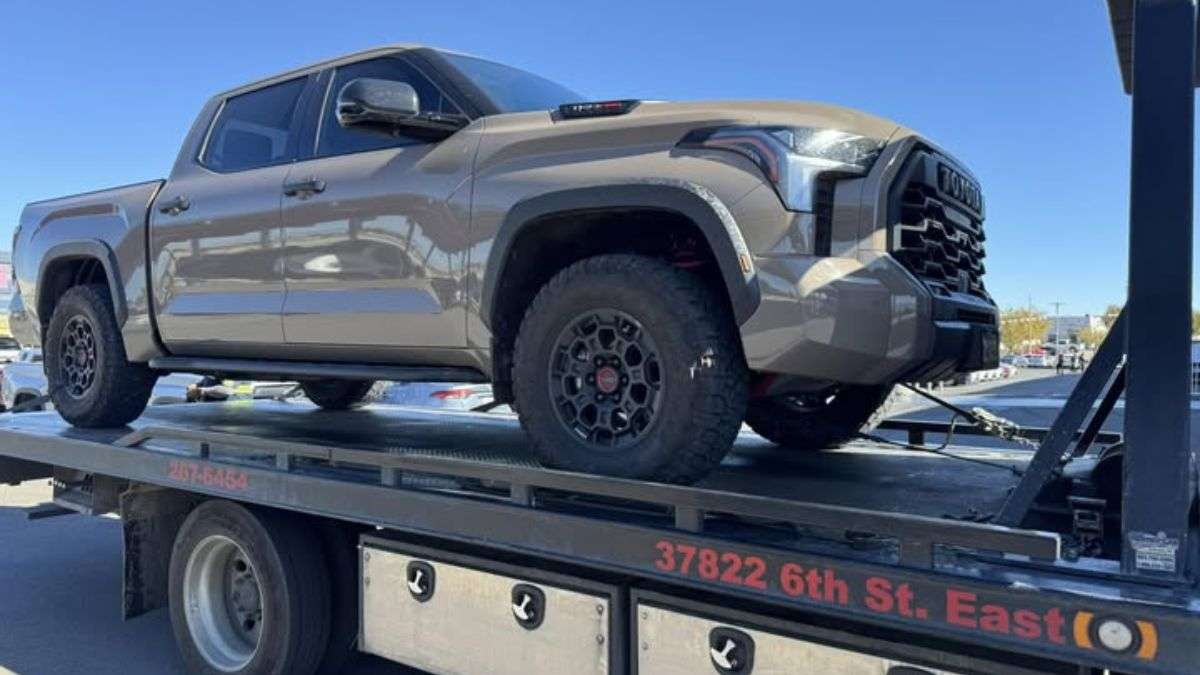

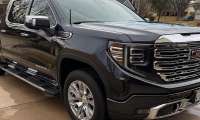
There’s a certain confidence that comes with owning a Toyota, and it's the belief that the truck could outlast you. The image of indestructibility that Toyota has cultivated for decades is why when stories emerge of brand-new trucks facing catastrophic failures, it almost feels surreal. That's why when I came across a post from John JR Ray in the “2023–2026 Toyota Tundra Owners” group on Facebook, it immediately challenged that image that Toyota has built. He shared that his 2025 Toyota Tundra TRD Pro, with less than 19,000 miles and just 10 months on the road, had already suffered a blown main bearing. That's the kind of failure you’d expect on a neglected high-mileage work truck, not one fresh out of the showroom.
Here's how simple he put it: “My 2025 TRD Pro with less than 19k miles and 10 months on the road has a blown main bearing.”
For many Toyota loyalists, these words cut deep. The Tundra’s reputation has always rested on durability and bulletproof reliability, yet in recent years, more owners are sharing similar concerns across forums and Facebook groups.
The post quickly gained traction among the community, with many owners wondering whether this issue could be connected to Toyota’s problems in its newer i-Force and i-Force MAX engines. These concerns have been mounting ever since earlier reports of metal debris, oil starvation, and complete engine failure started appearing in 2022 and 2023 model years.
Connecting the Dots to Previous Failures
To anyone who’s been following the string of Toyota reliability discussions, John’s experience sounds eerily familiar. Many owners have voiced frustration over engine breakdowns in relatively new trucks, like this 2023 Toyota Tundra owner whose truck broke down just nine days after purchase. That case sparked widespread concern about Toyota’s new twin-turbo V6 platform and whether production quality was being compromised in the rush to modernize.
What makes John’s situation even more concerning is that it occurred in the 2025 model year, which should theoretically have benefitted from lessons learned in earlier recalls. Yet, with less than a year of use, this TRD Pro’s failure hints at something more systemic, and it could possibly related to design, oil flow, or material durability.
Community Reactions and Real Owner Concerns
Nathan Paul Gibbs, another member of the Tundra group, summed up the growing skepticism in a way that resonated with many readers:
“This is where everyone’s starting to realize that well yes, there were metal shavings and machining debris in the engines that were in the recall. And that was Toyota‘s excuse, but we’re starting to see that perhaps the design of the engine has a flaw in it as well and based on certain situations, that main bearing was not designed correctly and will fail.”
Nathan’s observation touches on a key concern. If Toyota’s solution was only to clean up early machining issues without addressing a deeper design flaw, then new models like John’s might not be immune from the same fate.
Craig Silva added another perspective to the discussion, highlighting a mixture of frustration and fear shared by many owners:
“Man, this sucks. I have the same 2025 TRD PRO in mud bath, but with $30k in mods, I hope I don’t have these issues. I know it’s still a small percentage of Tundra owners, but the real question is why are 25’s blowing up?”
That comment alone captures the sentiment many Toyota fans are grappling with. The 2025 Tundra TRD Pro isn’t a budget truck, it’s a six-figure machine when fully loaded and modified. For owners who have spent tens of thousands on aftermarket upgrades, the fear of catastrophic engine failure is financially risky.
Donald Pitts chimed in with what sounded like reassurance, saying:
“Toyota will replace the whole engine for a factory recall.”
However, John himself was quick to correct him:
“This model and year haven’t had an engine recall issued yet. The dealership tells me they will be doing a short block rebuild.”
That detail is crucial. It suggests that Toyota’s newest TRD Pro models may not yet be covered by the broader recall umbrella, leaving some owners to navigate warranty claims without official acknowledgment from the manufacturer. The recent story of a 2023 Tundra owner who faced engine failure despite not being part of the recall echoes the same uncertainty. Many customers are left wondering if they’ll receive full engine replacements or partial rebuilds, not to mention whether the underlying issue will resurface.
Understanding What a Blown Main Bearing Means
For context, a main bearing supports the crankshaft, which is one of the most vital components in an internal combustion engine. When it fails, oil flow is disrupted, friction skyrockets, and the engine’s moving parts can seize or warp beyond repair. A “blown” main bearing is typically considered catastrophic, and it typically means a full engine replacement is needed.
This kind of failure is virtually unheard of on Toyota engines under normal maintenance conditions. That’s why cases like John’s are raising red flags. The fact that Toyota dealers are opting for short block rebuilds instead of full replacements may indicate that they’re still assessing the extent of the issue or possibly trying to avoid labeling it as a recall-level defect.
When a brand with a reputation as strong as Toyota starts to see cracks in that armor, it’s newsworthy. As I've been saying, this isn’t the first time owners have shared heartbreaking stories of premature failures either, as seen when a 2022 Tundra owner reported their engine giving out at just 59,000 miles. These are supposed to be trucks built for decades of hard use, yet more and more drivers are finding themselves dealing with unexpected repairs within the first year.
Why This Story Hits Harder Than Most
For many readers, the most alarming part of this story isn’t just that the failure happened, it’s when it happened. For something as major as a blown bearing to appear at 19,000 miles points to either an internal lubrication issue or flawed component geometry.
These are not the kind of issues that can be shrugged as a one off. They often hint at a deeper pattern, which is exactly what Nathan’s comment suggests. The design may have an inherent weakness that under specific conditions (heat, oil viscosity, or RPM stress) accelerates wear.
It’s a frustrating thought for Toyota enthusiasts who’ve long associated the brand with rock-solid engines. And when new trucks are failing at a rate that even loyal fans can’t ignore, it creates a credibility problem that money can’t easily fix.
A Case for Holding Onto Older Trucks
Stories like this one also raise a practical question: are newer trucks becoming too complex for their own good? Between hybrid components, turbocharging, and digital integration, the margin for error seems thinner than ever. For those who’ve driven older models, reliability was often a point of pride. Simpler engines with proven long-term durability sometimes seem more appealing than the latest tech-laden models.
Some owners have even held on to their older Tundras for as long as 276,000 miles before finally upgrading. It’s a powerful reminder that many of the older, naturally aspirated engines are still running strong even after nearly two decades. With the uncertainty surrounding new designs, it’s no surprise that some truck owners are choosing to keep what already works rather than take a gamble on something unproven.
I think this story highlights the delicate balance between innovation and dependability. Automakers are always under pressure to evolve through hybrid powertrains, better fuel economy, or smarter electronics. But sometimes in that rush, the reliability that built brand loyalty gets compromised.
Toyota isn’t anywhere near a downfall, but this should be a wake-up call. The 2025 Tundra TRD Pro stands as a peak of Toyota’s engineering, so seeing a failure like this should prompt some reflection. If Toyota can protect its legendary reliability while continuing to innovate, that’s real progress. And as someone who owns a Camry, I still believe Toyota can make it right by listening to the owners facing these issues firsthand.
Key Takeaways for Truck Owners
- Document everything early. If your truck shows unusual noises, vibration, or warning lights, report it immediately and maintain a record of every service visit.
- Pay attention to patterns. Even if your specific model year hasn’t been recalled yet, keep an eye on owner forums. Many recall expansions begin with consistent community reporting.
- Older doesn’t always mean outdated. The simplicity of previous-generation Tundras may prove more reliable over time than the complexity of newer turbo-hybrid systems.
- Stay proactive about warranty coverage. Don’t assume your dealer will automatically pursue a full engine replacement; push for transparency on what’s being repaired or replaced.
- Engage with the community. Facebook and forum discussions are proving essential for spotting early warning signs others might miss.
Tell Us What You Think
Have you or someone you know experienced a mechanical failure with a newer Toyota Tundra? How was your dealership’s response?
And if you’ve owned older Toyota trucks, do you think they were built better? Or is this just a rough patch for modern engineering?
Don't hesitate to share your opinion in the comments below.
Aram Krajekian is a young automotive journalist bringing a fresh perspective to his coverage of the evolving automotive landscape. Follow Aram on X and LinkedIn for daily news coverage about cars.
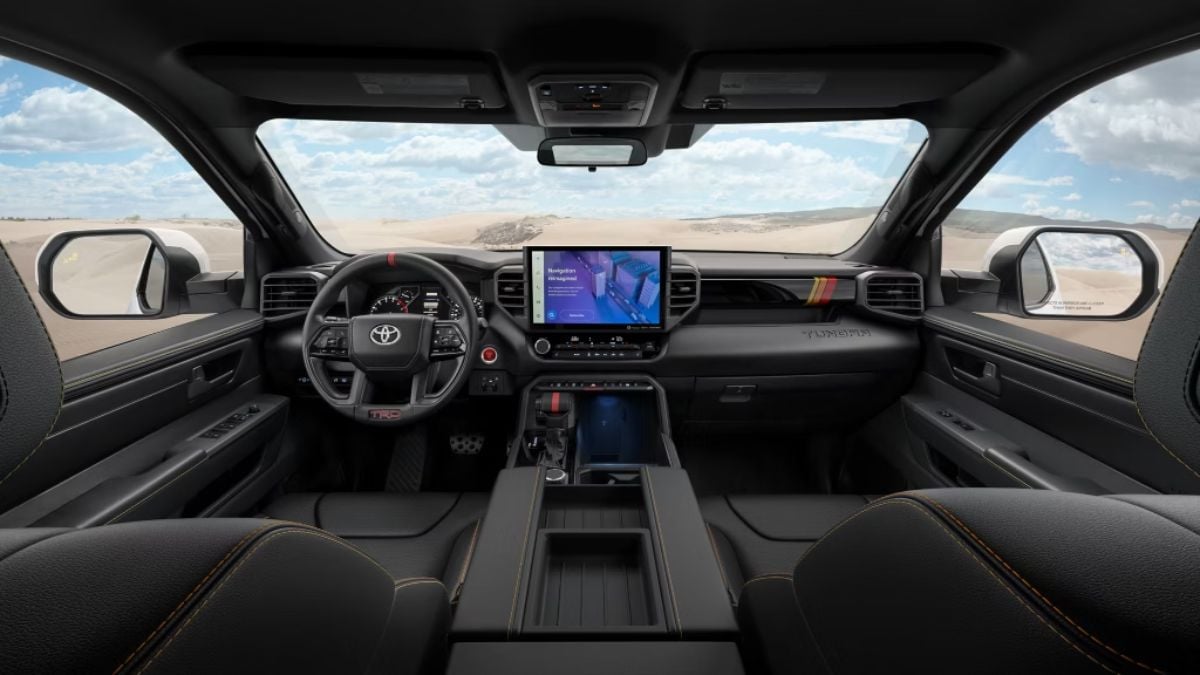
Image Sources: The “2023-2026 Toyota Tundra Owners” public Facebook group and Toyota’s gallery, respectively.
Set Torque News as Preferred Source on Google
Follow us today...




Comments
Well congratulations! Yours…
Permalink
Well congratulations! Yours lasted longer than mine. Been in the shop for 3 months now. Should have kept the RAM with 325,000 miles of smiles on it when I traded it in
OMG.... Just happened! I…
Permalink
It just happened! I have a 2023 Tundra SR5. Owned it for about 25 months and only 20,443 miles. October 13th, en route to work. Started hearing a squealing noise with a rhythmic clicking type noise, low power, and trying to stall out. Now, at the dealership in week 3. Same story, not in the recall grou,p and short block replacement only. What next??? So not happy.
There is no replacement for…
Permalink
There is no replacement for displacement. Go back to 5.7v8. Ram did.
You got that Right ! That's…
Permalink
In reply to There is no replacement for… by Bill (not verified)
You got that Right ! That's why I'm keeping my 2016 Sequoia forever !! It's Built like a Tank ! 💪and only has 95K , I'm the Original Owner, and if it lasts as long as my 2003 V6 Highlander, that now has 425,000
Miles, I'll be Happy ! You Can't Beat the Older Toyotas for Durability & Longevity !
There is no replacement for…
Permalink
There is no replacement for displacement. Go back to 5.7v8. Ram did. I will hold on to my 5.0v8 coyote f150 and buy a crate engine if necessary before I bought this new crap th fee y are selling
Yes there is: Ford 2.3 turbo…
Permalink
In reply to There is no replacement for… by Bill (not verified)
Yes there is:
Ford 2.3 turbo
10 years proven reliable
The EcoBoost engines are…
Permalink
In reply to Yes there is: Ford 2.3 turbo… by L James (not verified)
The EcoBoost engines are widely considered some of the least reliable engines ever made by any brand. I work at a repair shop, all the techs agree on that fact. The Triton engines might be worse though, nobody has anything good to say about those either. All the techs say the same thing: don't buy a Ford.
This is hilarious…
Permalink
This is hilarious. Democratic. And delusional. Your article is so misleading.
I worked for same Toyota Dealership, Thompson, Doylestown PA 37 years. When Toyota has an issue, they Fix it. Relax.
So on point
Permalink
In reply to This is hilarious… by Jeff Hassinger (not verified)
So on point
Jeff you worked at a Toyota…
Permalink
In reply to This is hilarious… by Jeff Hassinger (not verified)
Jeff you worked at a Toyota dealership for 37 years when Toyota was the best.
I didn’t know about all these problems with the 2022-25. I just bought a 2022 SRT5 & the engine was replaced a week before I bought it. Shows 40k miles, now it has approx. 500 miles on this “new” engine but it was put back together like crap. I’ve tightened over 30+ bolts that were not torqued properly.
I’ve had it in the shop twice in the last 45 days. The Texas DMV & BBB has assigned investigators to the
dealership & Toyota. They fooled with the wrong Veteran.
Jeff you worked at a Toyota…
Permalink
In reply to This is hilarious… by Jeff Hassinger (not verified)
Jeff you worked at a Toyota dealership for 37 years when Toyota was the best.
I didn’t know about all these problems with the 2022-25. I just bought a 2022 SRT5 & the engine was replaced a week before I bought it. Shows 40k miles, now it has approx. 500 miles on this “new” engine but it was put back together like crap. I’ve tightened over 30+ bolts that were not torqued properly.
I’ve had it in the shop twice in the last 45 days. The Texas DMV & BBB has assigned investigators to the
dealership & Toyota. They fooled with the wrong Veteran.
I'm a tech at a small Toyota…
Permalink
I'm a tech at a small Toyota dealership.
I'm on my 5th Tundra engine replacement.
Only one was covered by the recall.
The rest are short block and all parts that carry oil. This isn't something the dealerships opt for. Toyota simply can't build enough replacement engines for the failure rate. There is a design flaw and it hasn't been rectified.
My advise is to wait to purchase a Tundra until this is sorted out.
If you own a 22 up Tundra don't plan long road trips.
I guess I’ve been lucky , I…
Permalink
In reply to I'm a tech at a small Toyota… by Jim (not verified)
I guess I’ve been lucky , I have a 2023 tundra 4wd with almost 40k on it . It’s currently on the recall list but others are in front of mine so not at the dealer yet . To date 11/25 I’ve had no issues and I’ve pulled a loaded trailer from ca. to tx and back twice . I realize there are issues with these trucks but I’m sure Toyota will do everything they possibly can to fix the problem and protect there nearly impeccable reputation
Things like a child dying of…
Permalink
Things like a child dying of cancer are called 'heart breaking.' This author calling a failed small truck engine 'heart breaking ' shows he does not know what real suffering is. It's just a box with four wheels, not your child fer crise sakes.
I own a 2001 Toyota Tundra…
Permalink
I own a 2001 Toyota Tundra SR5, 4.7 v8 , 2wheel drive purchased by me in December 2000.
The tundra perform excellent until I reached 62,000 miles when the transmission failed completely.
My tundra always had dealer service done during the warranty period and I always maintained it according to the factory specification.
I was upset when my transmission stopped working and and when I contacted my Toyota dealer about repairing my transmission, I was told I was past the Warranty period and they were not going to repair the transmission.
I contacted Toyota Headquarters) and talk to Customer Service there and let them know. I am a loyal Toyota customer since 1969 and I really wasn’t expecting this kind of poor quality from a brand that I know and loved.
After speaking with Toyota Customer Service they agreed to pay half of the $3000 required to repair my transmission and also gave me about you but $750 to the purchase of any new Toyota in the future. My Toyota dealer contributed $500 towards the replacement of a new transmission.
I now have 320,000 miles on my Toyota tundra.
In 2016 my lower control arm and upper control arm on the left side collapsed on me without warning while I was parked causing more than $5000 of damage.
My insurance company (Allstate) declared my truck totaled, but I was not satisfied with that and I .purchased the truck back from them and repaired it for less thn $3000.00.
In 2019, the upper upper and lower control arms on the right side failed without causing catastrophic damage which did not cause significant damage.
I have not had any major repair issues with my Toyota tundra since those control arm failures.
I intend to ride in my Toyota tundra as long as I am able to keep it running.
My engine has never ever given me any problems and everything else has All worked with almost all original parts intact.
I always get offers of purchase for my tundra, but of course I always refuse because I know the longevity is going to be there.
George, do NOT maintain any…
Permalink
In reply to I own a 2001 Toyota Tundra… by George (not verified)
George, do NOT maintain any new vehicle by mfr specs, especially the widely spec'd 10k oil change interval. Manufacturers are incentivized to compete with published cost of ownwership comparisons, and some, not all, don't care what happens post warranty period, driven by — you guessed it — Wall Street. Even a few sour krauts still practice profit-engineering aka planned obsolence (change your PCV valve AND entire intake manifold at 60-90k: $1700).
Yeah, yeah, I know, synthetics can take the heat, hold more wear metals in suspension longer, etc., but why? And why no break-in change at 500 miles? Remember that? Betcha a lot of those Alabama-built toy engines, with factory-installed beer-can shavings, would go 300k if people did the early break-in change and half the spec'd interval thereafter. I've got the analyses to prove it from three changes before 3k miles: normal wear metals at 500mi were down 70% at 2nd change, down 95% at 3rd change. Hereafter, 3k OCIs. See The Oil Geek (Speed Diagnostics) on Ytube (noncommissioned advice.
They need to bring the hilex…
Permalink
They need to bring the hilex truck to the usa
What they really need to do…
Permalink
In reply to They need to bring the hilex… by Glenn (not verified)
What they really need to do is to product testing with millions of mile to identify said weaknesses. You can tell who did the testing and the others wouldn't. Back in 1964 Ford wanted to show the 289 engine was durable. So as the event goes, they had a Mercury Comet built to go to South America most southern point and return. Alot of the temps did that on a company track, went racing, and factory test stand. It's is sad to have hot sticky plastic on your hands after good money spent on a trusted brand.
I can remember the super…
Permalink
In reply to What they really need to do… by Steve Owens (not verified)
I can remember the super catchy jingle for the 1964 Mercury Comet....." One Hundred Thousand Miles at One Hundred Miles an Hour"! Ford supposedly ran some Comets on an oval race track for 100k miles at 100 miles an hour to show the durability of their 289 motor.
Now they use computer…
Permalink
In reply to What they really need to do… by Steve Owens (not verified)
Now they use computer simulations. Lasts a long time on a computer screen. Don't even have to get dirty. 😂
2022 with 40k miles. On the…
Permalink
2022 with 40k miles. On the highway and engine stalled/died. Had to have it towed 300 miles, at a cost of $750. They replaced the engine, but did not pay for towing.
I follow Toyota very closely…
Permalink
I follow Toyota very closely, and own 3 older ones myself. All of the recalled Toyota engines were assembled in America, by Americans. Toyota Japan however has had no recalls on these same motors anywhere else on the planet. Leave it to Americans to screw up a good thing. Toyota's reputation got blackened because America cannot assemble a Japanese engine correctly.
This is what happens when…
Permalink
This is what happens when trying to do big boy things with a little boy truck.
Super timely article... This…
Permalink
Super timely article... This has been a known issue for over a year. 👍
My 2017 Tacoma had a timing…
Permalink
My 2017 Tacoma had a timing chain guide break off. Not covered by any warranty and 4K+ to repair! I've heard other stories of this degree. Covide costs the big vehicle manufacturers highly skilled engineers and other trades. We are seeing the ripple effect of that loss!
I told Toyota to quit…
Permalink
I told Toyota to quit teaming up with bmw now they adopt bmw shitty bearing issue . Lesson learned
I have a 2004 Tundra with…
Permalink
I have a 2004 Tundra with 67000 miles,I just replaced the timing belt water pump and had the body painted and new trim. It will last my life time. Oh and I bought it new.
I was a proud owner of a…
Permalink
I was a proud owner of a 2022 TRD PRO which had the most reliable internal combustion engine ever produced. Unfortunately I was involved in an accident that was not my fault and the vehicle was totaled. When I went to replace the vehicle it was 2024 and the Gen 4 was just released, it was having catastrophic engine and transmission failures literally within a 100 miles of leaving the dealership. I was a life long Toyota owner, but no more. I purchased a 2024 Raptor Ranger for about the same price. I’m glad I did as this vehicle is AWESOME in every way. I would urge anyone looking to replace their Toyota to look at the Raptor line-up.
Taco dude (owned xrunner…
Permalink
Taco dude (owned xrunner 2009, sr5 4x4 2013, sr5 4x4 2021) turned tundra man in 2022....I got one of the early gen3s....drove it 130k miles with no engine failure in 3 yrs extracting as much power out of the ttv6 while respecting the road....hehehe
(Had some issues with coil packs & throttle body if anything notable, & the initial issue with front shutters was really annoying)
Decided to take advantage of the free engine replacement at 130k, with skepticism.....crossed 146k today its running goooooood!
Love that toyota steps up & covers a $25k repair with 130k miles on the odo at $0 cost to me....they even covered my rental for 2+ weeks during the swap
all in all its a good truck....any man made mechanism can fail at anytime, right?
This is why i still have my…
Permalink
This is why i still have my 2016 tundra crewmax 4x4. Its proven and it seems all auto brands have all went to being poorly designed and built. All these new turbocharged motors seem to be junk. Do to poor design and cheaply built to increase profit at the expense of the consumer. So it is better to buy older models with proven reliability and just fix them. Cause if we quit buying this junk. They will be forced to build quality or go out of business. But all companies have went to cheap made higher prices on everything. So the consumer is getting ripped off from anything they buy.