
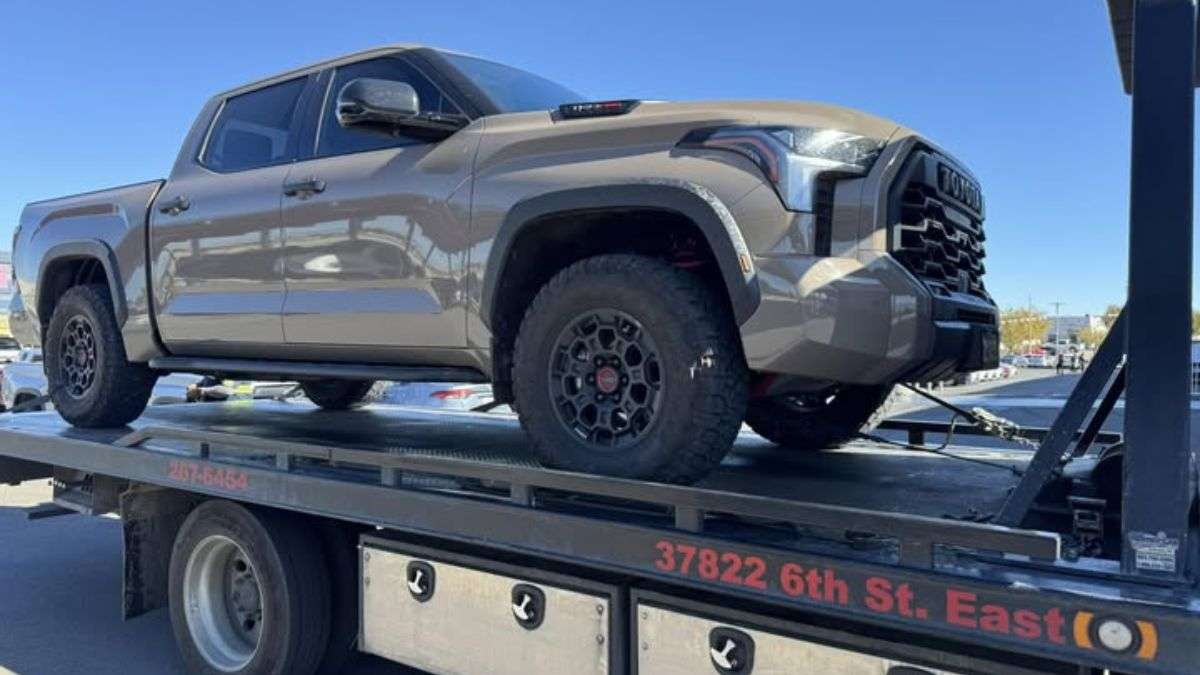

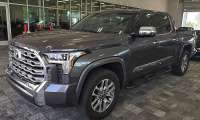
There’s a certain confidence that comes with owning a Toyota, and it's the belief that the truck could outlast you. The image of indestructibility that Toyota has cultivated for decades is why when stories emerge of brand-new trucks facing catastrophic failures, it almost feels surreal. That's why when I came across a post from John JR Ray in the “2023–2026 Toyota Tundra Owners” group on Facebook, it immediately challenged that image that Toyota has built. He shared that his 2025 Toyota Tundra TRD Pro, with less than 19,000 miles and just 10 months on the road, had already suffered a blown main bearing. That's the kind of failure you’d expect on a neglected high-mileage work truck, not one fresh out of the showroom.
Here's how simple he put it: “My 2025 TRD Pro with less than 19k miles and 10 months on the road has a blown main bearing.”
For many Toyota loyalists, these words cut deep. The Tundra’s reputation has always rested on durability and bulletproof reliability, yet in recent years, more owners are sharing similar concerns across forums and Facebook groups.
The post quickly gained traction among the community, with many owners wondering whether this issue could be connected to Toyota’s problems in its newer i-Force and i-Force MAX engines. These concerns have been mounting ever since earlier reports of metal debris, oil starvation, and complete engine failure started appearing in 2022 and 2023 model years.
Connecting the Dots to Previous Failures
To anyone who’s been following the string of Toyota reliability discussions, John’s experience sounds eerily familiar. Many owners have voiced frustration over engine breakdowns in relatively new trucks, like this 2023 Toyota Tundra owner whose truck broke down just nine days after purchase. That case sparked widespread concern about Toyota’s new twin-turbo V6 platform and whether production quality was being compromised in the rush to modernize.
What makes John’s situation even more concerning is that it occurred in the 2025 model year, which should theoretically have benefitted from lessons learned in earlier recalls. Yet, with less than a year of use, this TRD Pro’s failure hints at something more systemic, and it could possibly related to design, oil flow, or material durability.
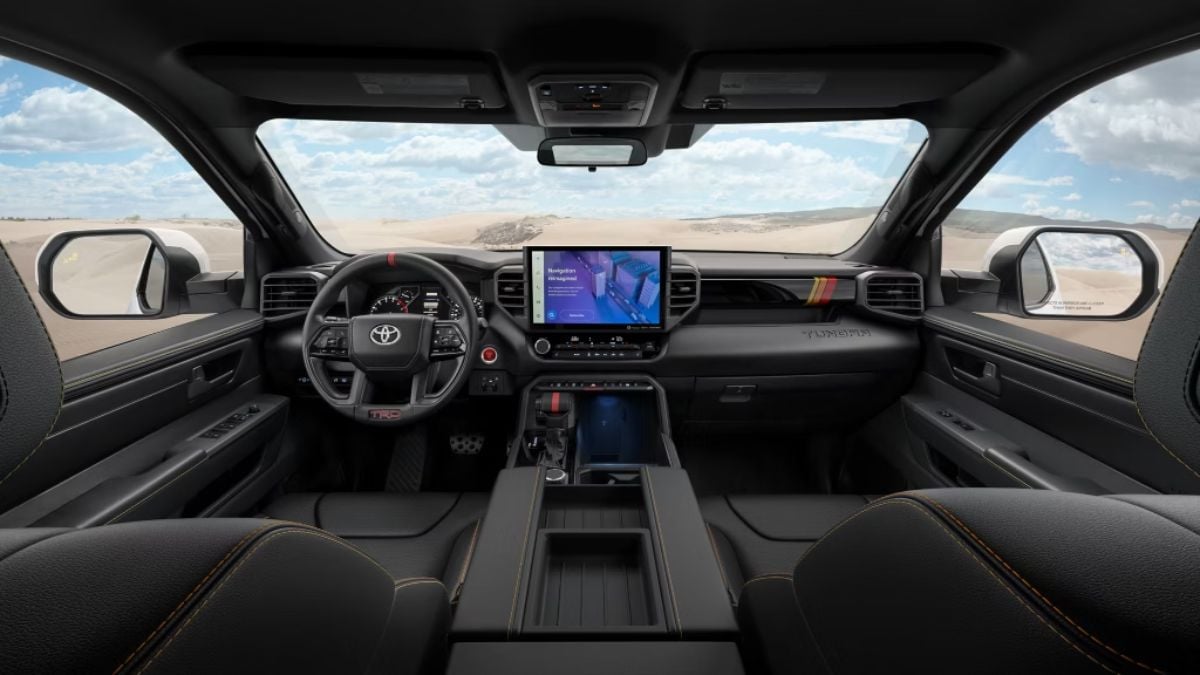
Community Reactions and Real Owner Concerns
Nathan Paul Gibbs, another member of the Tundra group, summed up the growing skepticism in a way that resonated with many readers:
“This is where everyone’s starting to realize that well yes, there were metal shavings and machining debris in the engines that were in the recall. And that was Toyota‘s excuse, but we’re starting to see that perhaps the design of the engine has a flaw in it as well and based on certain situations, that main bearing was not designed correctly and will fail.”
Nathan’s observation touches on a key concern. If Toyota’s solution was only to clean up early machining issues without addressing a deeper design flaw, then new models like John’s might not be immune from the same fate.
Craig Silva added another perspective to the discussion, highlighting a mixture of frustration and fear shared by many owners:
“Man, this sucks. I have the same 2025 TRD PRO in mud bath, but with $30k in mods, I hope I don’t have these issues. I know it’s still a small percentage of Tundra owners, but the real question is why are 25’s blowing up?”
That comment alone captures the sentiment many Toyota fans are grappling with. The 2025 Tundra TRD Pro isn’t a budget truck, it’s a six-figure machine when fully loaded and modified. For owners who have spent tens of thousands on aftermarket upgrades, the fear of catastrophic engine failure is financially risky.
Donald Pitts chimed in with what sounded like reassurance, saying:
“Toyota will replace the whole engine for a factory recall.”
However, John himself was quick to correct him:
“This model and year haven’t had an engine recall issued yet. The dealership tells me they will be doing a short block rebuild.”
That detail is crucial. It suggests that Toyota’s newest TRD Pro models may not yet be covered by the broader recall umbrella, leaving some owners to navigate warranty claims without official acknowledgment from the manufacturer. The recent story of a 2023 Tundra owner who faced engine failure despite not being part of the recall echoes the same uncertainty. Many customers are left wondering if they’ll receive full engine replacements or partial rebuilds, not to mention whether the underlying issue will resurface.
Understanding What a Blown Main Bearing Means
For context, a main bearing supports the crankshaft, which is one of the most vital components in an internal combustion engine. When it fails, oil flow is disrupted, friction skyrockets, and the engine’s moving parts can seize or warp beyond repair. A “blown” main bearing is typically considered catastrophic, and it typically means a full engine replacement is needed.
This kind of failure is virtually unheard of on Toyota engines under normal maintenance conditions. That’s why cases like John’s are raising red flags. The fact that Toyota dealers are opting for short block rebuilds instead of full replacements may indicate that they’re still assessing the extent of the issue or possibly trying to avoid labeling it as a recall-level defect.
When a brand with a reputation as strong as Toyota starts to see cracks in that armor, it’s newsworthy. As I've been saying, this isn’t the first time owners have shared heartbreaking stories of premature failures either, as seen when a 2022 Tundra owner reported their engine giving out at just 59,000 miles. These are supposed to be trucks built for decades of hard use, yet more and more drivers are finding themselves dealing with unexpected repairs within the first year.
Why This Story Hits Harder Than Most
For many readers, the most alarming part of this story isn’t just that the failure happened, it’s when it happened. For something as major as a blown bearing to appear at 19,000 miles points to either an internal lubrication issue or flawed component geometry.
These are not the kind of issues that can be shrugged as a one off. They often hint at a deeper pattern, which is exactly what Nathan’s comment suggests. The design may have an inherent weakness that under specific conditions (heat, oil viscosity, or RPM stress) accelerates wear.
It’s a frustrating thought for Toyota enthusiasts who’ve long associated the brand with rock-solid engines. And when new trucks are failing at a rate that even loyal fans can’t ignore, it creates a credibility problem that money can’t easily fix.
A Case for Holding Onto Older Trucks
Stories like this one also raise a practical question: are newer trucks becoming too complex for their own good? Between hybrid components, turbocharging, and digital integration, the margin for error seems thinner than ever. For those who’ve driven older models, reliability was often a point of pride. Simpler engines with proven long-term durability sometimes seem more appealing than the latest tech-laden models.
Some owners have even held on to their older Tundras for as long as 276,000 miles before finally upgrading. It’s a powerful reminder that many of the older, naturally aspirated engines are still running strong even after nearly two decades. With the uncertainty surrounding new designs, it’s no surprise that some truck owners are choosing to keep what already works rather than take a gamble on something unproven.
I think this story highlights the delicate balance between innovation and dependability. Automakers are always under pressure to evolve through hybrid powertrains, better fuel economy, or smarter electronics. But sometimes in that rush, the reliability that built brand loyalty gets compromised.
Toyota isn’t anywhere near a downfall, but this should be a wake-up call. The 2025 Tundra TRD Pro stands as a peak of Toyota’s engineering, so seeing a failure like this should prompt some reflection. If Toyota can protect its legendary reliability while continuing to innovate, that’s real progress. And as someone who owns a Camry, I still believe Toyota can make it right by listening to the owners facing these issues firsthand.
Key Takeaways for Truck Owners
- Document everything early. If your truck shows unusual noises, vibration, or warning lights, report it immediately and maintain a record of every service visit.
- Pay attention to patterns. Even if your specific model year hasn’t been recalled yet, keep an eye on owner forums. Many recall expansions begin with consistent community reporting.
- Older doesn’t always mean outdated. The simplicity of previous-generation Tundras may prove more reliable over time than the complexity of newer turbo-hybrid systems.
- Stay proactive about warranty coverage. Don’t assume your dealer will automatically pursue a full engine replacement; push for transparency on what’s being repaired or replaced.
- Engage with the community. Facebook and forum discussions are proving essential for spotting early warning signs others might miss.
Tell Us What You Think
Have you or someone you know experienced a mechanical failure with a newer Toyota Tundra? How was your dealership’s response?
And if you’ve owned older Toyota trucks, do you think they were built better? Or is this just a rough patch for modern engineering?
Don't hesitate to share your opinion in the comments below.
Aram Krajekian is a young automotive journalist bringing a fresh perspective to his coverage of the evolving automotive landscape. Follow Aram on X and LinkedIn for daily news coverage about cars.
Image Sources: The “2023-2026 Toyota Tundra Owners” public Facebook group and Toyota’s gallery, respectively.
Set Torque News as Preferred Source on Google
Follow us today...




Comments
These new tundras are less…
Permalink
These new tundras are less worthy than most if not all the competition at this point. Wouldn't touch one. They need a complete redesign asap with acknowledgement, apologies, accountability and then upping the warranty significantly to have a chance at assuring the market. Otherwise if they're not doing anything hoping the warranty expires and then blaming customers when their truck fails...the boycott will continue and all those tundras continue to sit in dealer lots
The problem with this engine…
Permalink
The problem with this engine is the bearing design. There is no tang to hold the bearings in place. Almost all automotive engines have had this “tang” as far back as I can remember. As bearing normally wears this tang keeps the bearing from spinning. The new turbo V-6 does not have this tang. It relies totally on the clamping force of the main caps to hold the bearing in. With natural wear the bearing gets loose. This happens on the front main bearing to start and the bearing walks forward because of the stress of the accessory drive belt-alternator and AC . It walks out enough that it contacts the timing gear & chain on the front of the crank. It then eats up the bearing and puts that metal thru the oiling system. So poor design is the problem. So untill they change the design back to bearings with “tangs” this will continue to happen. By the way I own 2 Lexus and one Toyota. I believe in the Toyota Corperation but this built in engineering failure is not acceptable!
Had my 2005 Tundra for 15…
Permalink
Had my 2005 Tundra for 15 years 265,000 miles then bought a new 2021 Tundra last year they made V8. What a great truck. Hope they start making them better. People are allways going to get lemons. Hopefully in 10 more years ill get another one
I can't comment on the newer…
Permalink
I can't comment on the newer Toyota tundras. My first Toyota tundra was a 2011. It was the flex fuel model. I bought it with 82,000 mi. I drove it to $280,000 mi. Never had any problems except for suspension. The suspension was a result of the previous owner adding a 3 and 1/2 in lift kit that was not correctly installed and stressed tie rods. I eventually had problems with the fuel pump and the fuel pump control. Mechanics could never figure out if it was the actual fuel pump or the controller. It seemed that they couldn't find the correct replacement parts because I had a flex fuel model. Maybe things would have been easier to solve if it wasn't a flex fuel model. Long story short, I don't think driving the truck for $200,000, mi without any major issues was a big deal. I got my money's worth on that old model. Even when I finally sold it at $280,000 mi, I felt the truck was dependable minus the occasional starting issues because of the fuel pump. I now have a 2016. I'm keeping my fingers crossed. Truth be told I'm not going to complain about putting 200,000 mi on a 2011 truck with never having any problems. It was a good purchase. However, I highly doubt I will opt for buying one of the newer models. I guess I'll just have to rebuild the engine on my current vehicle when the time comes. I do not trust the Toyota name anymore in newer model trucks.
Toyota has started…
Permalink
Toyota has started sacrificing reliability for fuel economy it seems. My boss bought a brand new Tacoma Trail Hunter. Styling is meh, they have already had issues with the computer, engine refused to start. I've driven it across town a few times. Tacomas have always had a very tight turning radius, something I consider their best feature. That is no longer true, the Tacoma now reminds me of the Nissan Frontier, which if you work in the industry, is widely considered the worst truck on the road.
I have 2008 4runner limited…
Permalink
I have 2008 4runner limited v6, 360k miles, all I have done is oil change, last year I replaced pads, rotors, calipers, thats it, transmission is just starting rare small skips, I was thinking of getting the new non hybrid 4runner? No?
I own a 23 Tundra TRDPro…
Permalink
I own a 23 Tundra TRDPro with currently 62,000 miles on it with no major problems. I get it serviced every 5,000 miles since new including oil changes. I’m not a fan of smaller turbo engines but it is what it is and I will hold on to this truck as long as I can until they fix the issue or go with a larger engine (V8).
Toyota has not been immune…
Permalink
Toyota has not been immune to other warranty and recall issues
The 5.7 v8 in Tundras had major camshaft breakage problems and became quite un- reliable. Then the rusty frame issue in the smaller Toyota trucks.
Seems no one is immune
Excellent article, objective…
Permalink
Excellent article, objective and useful.
Behind it is the general crapification of financialized western industry, including eastern vassals of Wall Street. It's all about the numbers. Accountants and lawyers oversee evermore-subservient engineers. This is why, under a different socio-political philosophy, China is now leapfrogging monopoly capitalism like a juggernaut.
Yes, the recall is already…
Permalink
Yes, the recall is already out for this exact issue. Its a main bearing issue. Over 100k Tundras and Sequoias have already been recalled in 4 phases to address this issue so new engines can be swapped into the vehicle.
This article is regurgitated diarrhea. If you don't have anything intellectually new to say, find a new career path instead of copying and pasting the same article.
With the troubles these new…
Permalink
With the troubles these new Tundras have had since there introduction. Hope Toyota will bring back at least one of there prior V-8s. These twin turbo charged V-6s just arent reliable. Always liked the Tundras before these changes. Hate there reliability & dependability ratings have fallen. Wont buy one of these new or used.