
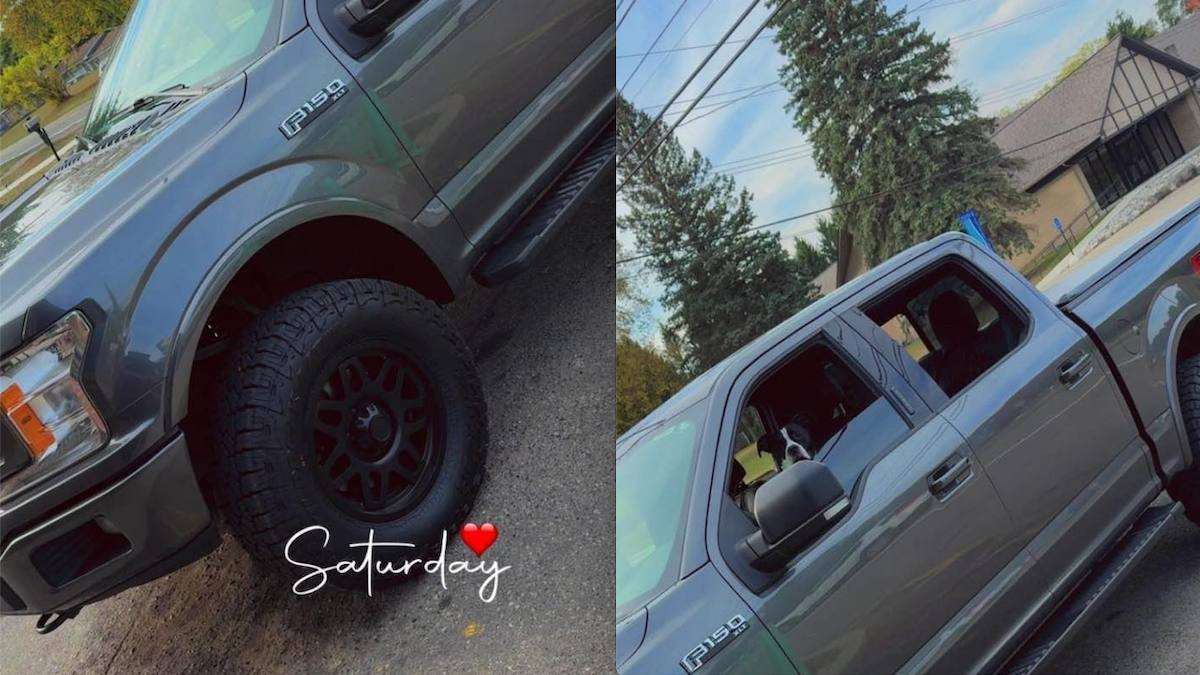

He traded his F-150's smooth factory ride for a 'tough' stance, and now every pothole feels like a back-breaking mistake. It’s what happened to Steve Coffin.
Before I tell his story, imagine spending thousands to give your 2024 Ford F-150 the aggressive, leveled stance of a desert runner, only to find that every pebble on the pavement sends a bone-jarring shock through the cabin. You’ve achieved the "perfect look," but your sophisticated modern pickup now handles with the punishing rigidity of a 19th-century freight wagon.
In my research on the latest Ford suspension trends, I came across a recent post in a Facebook community of Ford truck enthusiasts where Steven Coffin highlighted growing concerns about the unintended consequences of leveling kits and the steep cost of sacrificing ride quality for a rugged aesthetic.
Steven says, “HELP! I have a 2024 Ford F-150 that I put a Bilstein 5100 front strut lift set at max height. The truck already had 1.5” blocks in the rear. So I put 3” blocks on the rear, and the truck looks great, but I’m having a super rough ride, it rides like a ‘lumber wagon’. idk what to do, it’s bad, I have 2” drop down UCAs as well.”
Many F-150 Owners Can Relate
As a journalist with 30 years in the automotive trenches, I have seen every trend from low-riders to the current obsession with "overlanding" setups. The 2024 Ford F-150 is a marvel of engineering, but it is also a delicate balance of spring rates and shock valving. When owners max out a Bilstein 5100 front strut lift, they are often surprised to find that suspension geometry and ride quality problems become their new reality. According to the suspension experts at Shock Surplus, the ride becomes harsh because setting the snap-ring to the highest position increases preload on the coil spring, which effectively "pre-loads" the spring so much that it requires a significant force just to get the suspension to move.
I have tracked this specific issue across various Ford platforms, and in my own reporting, I have noted that even small changes to the factory setup can lead to a scenario where the truck's front end vibrates after a leveling kit installation, a common complaint when CV angles are pushed to their limit.
My Take
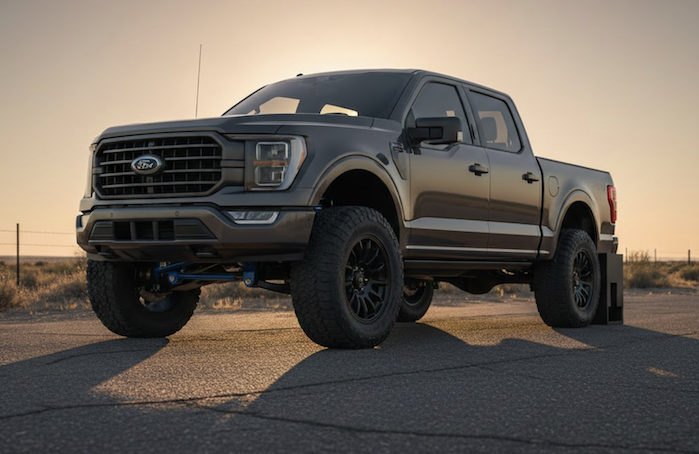
The "lumber wagon" sensation Steven describes results from the suspension losing its "down-travel." When the front strut is fully extended, there is little room for the wheel to drop into a pothole, causing the truck to strike the bump stops. This is corroborated by the technical team at Stage 3 Motorsports, who suggest that the rough ride on a lifted 2024 Ford F-150 is often caused by insufficient droop travel in the upper control arm, which limits the suspension's ability to absorb energy.
I have written extensively about how the pursuit of a taller stance can backfire, noting that the cost of correcting Ford F-150 suspension geometry can quickly exceed the original lift kit price if not done correctly from the start.
The "Industry Secret" Behind the 2024 Chassis
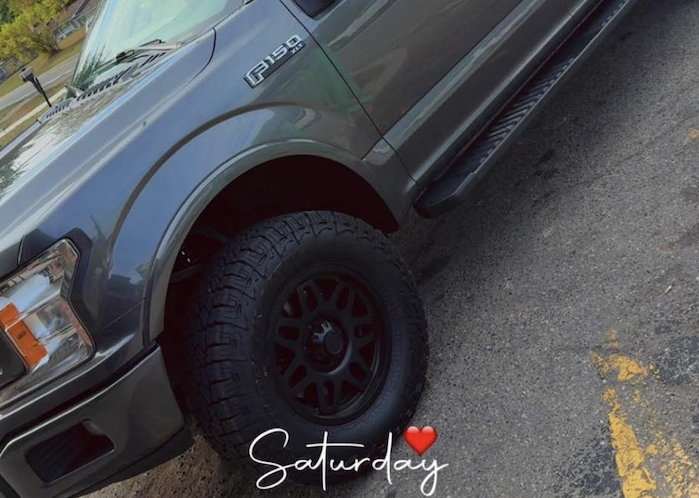
The 2024 F-150 uses a high-strength, military-grade aluminum-alloy body and a fully boxed high-strength steel frame. Ford engineers tuned the 2024 leaf springs and front coils to work in harmony. By adding a 3-inch rear block, Steven has doubled the axle's leverage on the springs. This leads to "axle wrap," where the rear housing wants to twist under acceleration or braking, contributing to that jittery, unrefined feel.
For those seeking the best 2024 Ford F-150 leveling kit for ride quality, the answer is rarely "maxing out" on a budget-friendly strut. True performance comes from tuned coilovers, where lift is achieved by extending the shock body rather than by shimming the spring.
What F-150 Owners Are Saying
The community feedback on this setup is a mix of sympathy and "I told you so." One user on Reddit noted the mechanical reality of the max-height setting, stating, "When you max out the 5100s, you lose all your down travel. Every time you hit a bump, the shock fully extends and stops the wheel from moving down, which feels like hitting a brick wall," which you can read in the full discussion here.
Another owner highlighted how the rear blocks exacerbate the issue, mentioning, "3-inch blocks in the rear are notorious for causing vibrations and a bouncy ride because you’re essentially adding a giant spacer that allows the axle to move in ways the engineers never intended."
Key Takeaways for Truck Owners
- Avoid the "Max Notch": The highest setting on adjustable struts is for aesthetics, not performance. Drop one notch to restore "suppleness."
- Geometry Matters: Even with "drop-down" UCAs, the ball joint angles and CV axles are under stress at 2.5 inches of lift or more.
- Spring Rate is King: If you want a 3-inch lift, invest in a full suspension system with new leaf springs rather than using large blocks.
- Tire Pressure Check: Ensure you aren't running high-load "E-Rated" tires at 50+ PSI, which will make any suspension feel like a lumber wagon.
Final Recommendations
If you find your truck riding like a freight wagon, the fix is simpler than buying more parts. Lower the front Bilstein snap-ring by one position. This will slightly lower the nose but will allow the spring to actually "work." In the rear, swap the 3-inch block for a 2-inch block and add a progressive "Add-a-Leaf." This maintains height while improving load-carrying capacity and ride quality.
Achieve a "Grand Slam" Build
Maximizing the look of your 2024 Ford F-150 should never mean sacrificing the comfort that made you buy the truck in the first place. By understanding the physics of spring preload and the leverage of lift blocks, you can achieve a "Grand Slam" build that looks as good as it rides on the trail.
It’s Your Turn: Have you installed a leveling kit on your Ford truck only to regret the change in ride quality, or did you find the "sweet spot" that retained the factory ride quality? Leave a comment in the red Add new comment link below.
Next Up: Is the Ford F-150 5.0L V8 Engine Still the King of Longevity? After uncovering a shocking case where a 245,000-mile owner finally walked away from the brand, I investigated why some loyalists feel Ford drivers are getting the shaft on $50,000 engine failures despite their high-mileage history. Why This High-Mileage F-150 Owner is Done With Ford.
Denis Flierl is a Senior Reporter at Torque News with over 30 years of hands-on experience in the automotive industry. Having served as a professional test driver and industry consultant for major automakers such as Chevrolet, Ford, Toyota, Honda, and Tesla, Denis provides a "boots-on-the-ground" perspective that goes beyond standard reporting. Since joining Torque News in 2012, he has specialized in cutting through market noise to deliver data-backed analysis and real-world owner stories. His work focuses on navigating the transition to EVs and the shifting automotive market.
Have a tip or question for Denis? > Engage with him directly on LinkedIn for industry analysis, or follow his latest updates on X @DenisFlierl and @WorldsCoolestRides. You can also find his latest car features on Facebook and Instagram.
Photo credit: Denis Flierl via Steven Coffin
Set Torque News as Preferred Source on Google
Follow us today...




Comments
This is an ugly story, but…
Permalink
This is an ugly story, but not uncommon. In the future, leave the lift kit on the shelf.
Live and learn, right?
You're welcome.
Before the lift kit was…
Permalink
Before the lift kit was installed, I would like to know what Mr. Coffin thought was going to happen.