
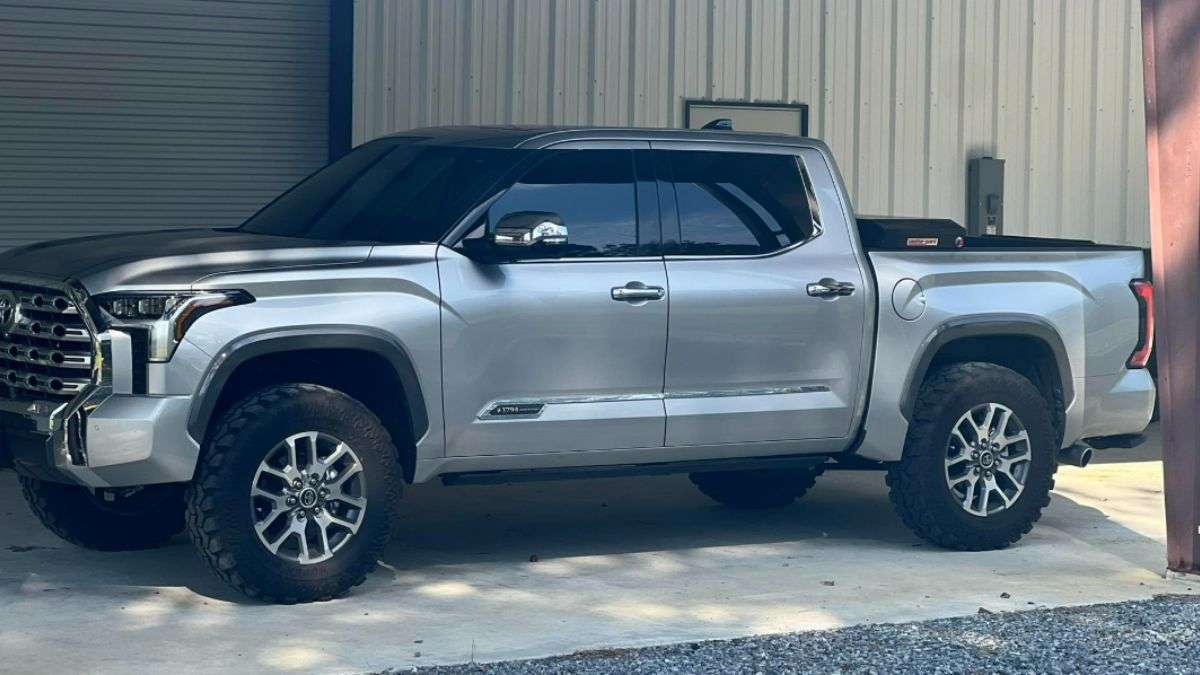

Owning a truck isn’t just about horsepower figures or flashy trim packages, it’s about trust. Trust that when you turn the key, it’s ready for whatever job or journey you have planned. That’s why a recent post in the “2023-2025 Toyota Tundra Owners” group on Facebook from Cale Giddens caught my attention this morning. It carried the weight of loyalty, frustration, and the real-world consequences that happen when a truck isn’t merely transportation but an essential tool for work. Cale’s story highlights a gap in how dealerships sometimes handle breakdowns for working vehicles, and it raises questions about whether Toyota’s ongoing Tundra engine recall truly addresses the full range of potential failures.
Cale explained it like this: “So I had engine failure and wasn’t a part of the recall. I have 2023 1794 regular gas and not the i-FORCE max. 36,127 miles. Favorite truck I’ve ever owned and I’ve had a lot! I liked it so much I bought my wife a Capstone Sequoia in December. I’m really disappointed. Question, I have no idea how long to expect the dealership to get this handled. They offered me a Camry or a RAV4. I use my truck, it’s bed, and it’s tow hitch to make a living. Don’t you think the dealer should offer a TRUCK for the meantime? A car is going to literally do me 0 good.”
If you’ve followed the ongoing Tundra recall coverage, you know that Toyota issued a major campaign addressing potential engine issues in certain 2022 and 2023 non-hybrid models. Cale’s truck isn’t even part of that recall, yet the engine still failed at just over 36,000 miles. This puts his case in a grey area: too new for typical wear-and-tear failures, not included in the recall list, but experiencing the kind of catastrophic problem owners thought the recall was meant to catch.
That uncertainty is exactly why some owners are starting to wonder if the recall net was cast wide enough. I just reported on a Tundra owner yesterday who found metal flakes in the oil of their 2024 Tundra Platinum after just 17,000 miles. It shows that even trucks outside the official recall year can still run into serious problems this early. When you combine that with Cale’s situation, it’s fair to ask whether Toyota might eventually need to expand the recall to cover newer builds.
The Loaner Problem
Cale’s frustration goes well beyond the engine failure itself. Being offered a Camry or RAV4 as a loaner felt like a bad joke when his daily work depends on hauling gear and towing loads. It’s not about luxury touches or creature comforts; it’s about having the right tool that can actually handle the work you need to get done. Without a truck bed and a tow hitch, he’s losing productivity every single day, and that’s a hit no hardworking owner can afford to take.
We’ve seen similar frustration from other owners too, like the Tundra driver whose truck broke down after just nine days of ownership. In those cases, the problem isn’t only the breakdown itself, but the feeling that dealerships sometimes underestimate how vital a like-for-like replacement is when the vehicle in question is a work tool.
What Other Owners Had to Say
Other group members weighed in on Cale’s post too, and their reactions painted a clear picture of shared frustration.
Travis Glodowski commented, “No they definitely should! Fight for yourself. I love my ’25 and had a ’14 before. Definitely my favorite trucks. They are inconveniencing you, so they have to understand we’re trying to make a living to pay for these things.”
Travis’ response hits an important point. Loaner arrangements aren’t just a "favor," they’re part of keeping a paying customer mobile when their vehicle is unexpectedly sidelined.
Matt Sheraw took a more sarcastic angle: “Warn them that you will use either car as a truck and they should fully expect it to be destroyed. Ever see a Camry tow 8k?”
While Matt is certainly kidding, his comment reflects the absurdity some owners feel when offered an unsuitable replacement.
Then there’s Joey Nolen, who admitted the situation makes him think twice about his own purchase: “Kinda makes me want to step back and get 2020 or 2021. I have a 2023 Platinum 32,000 miles. I haven't had any issues. It's the ‘what if’ that concerns me.”
Joey’s take echoes a growing concern among owners of newer Tundras that even without current problems, the possibility of being stuck without a proper replacement vehicle if something goes wrong can make you question your choice.
A Wider Pattern?
As much as this is Cale’s story, it taps into a larger trend in the Toyota truck community these days. For some, the transition to owning a Tundra after years with other brands has been smooth and even transformative. For others, experiences like Cale’s raise doubts about whether Toyota is keeping pace with the expectations its reputation has built.
It’s also worth remembering that Toyota’s reliability image wasn’t built on avoiding every breakdown, as no manufacturer can claim that. It was built on consistent performance, transparent fixes when issues arise, and customer service that feels proportional to the investment owners have made. When an owner like Cale has already doubled down on the brand by buying a second Toyota for his family and feels let down, it’s a signal worth paying attention to.
Loyalty Can't Go Forever
Some long-time truck owners even say experiences like this have permanently reshaped their loyalties. Just look at the story of a driver who was loyal to Chevy until a Tundra completely changed their perspective. Even if this case outcome was a win for Toyota, these turning points often come down to how a brand handles the moments when things go wrong.
From my perspective, Cale’s experience underscores a key reality: a dealership’s policy can make or break a customer’s perception of the brand, sometimes even more than the repair itself. For a truck owner who depends on their vehicle to work, a sedan loaner is more than just inconvenient.
I think manufacturers and dealers alike need to acknowledge that truck customers often have fundamentally different needs than car buyers. While it would be naive of me to say that every dealership should keep a fleet of brand-new trucks on standby, having at least a few loaners that can match the owner's actual vehicle for cases like this could go a long way toward preserving loyalty.
Key Takeaways
- Engine failures can happen even outside of official recall groups. Don’t assume your truck is immune just because it’s not listed in a recall.
- Loaner suitability matters. If your vehicle is a work tool, make it clear to your dealer that an equivalent replacement is necessary for you to maintain your income.
- Document everything. When negotiating for a suitable loaner or repair timeline, keep a paper trail of conversations and promises.
- Community experiences can guide your expectations. Reading real-world accounts from other owners can help you prepare for potential issues before they happen.
Share Your Thoughts
Have you ever been in a situation where your dealership offered you a replacement vehicle that was completely unsuited to your needs?
And if you’re a 2022+ Tundra owner, has your truck been running smooth? Or have you dealt with frustrating engine issues?
I'd love to hear about your experiences in our comments below.
Aram Krajekian is a young automotive journalist bringing a fresh perspective to his coverage of the evolving automotive landscape. Follow Aram on X and LinkedIn for daily news coverage about cars.
Image Sources: The “2023-2025 Toyota Tundra Owners” public Facebook group and Toyota’s gallery, respectively.
Set Torque News as Preferred Source on Google
Follow us today...






Comments
I have a 2023 Tundra that…
Permalink
I have a 2023 Tundra that was not part of the engine recall but the engine seized up at 25k miles and had a catastrophic failure. Because it wasn’t under recall, they didn’t a warranty repair and only replaced the short block. Really nervous about owning this truck…. They certainly didn’t cast a wide enough net for the recall and I hope it gets brought to light so they fix it. This could literally kill their reputation.