

Your owner's manual says 10,000 miles, but your engine’s survival might actually depend on ignoring it.
In my three decades of covering the automotive industry, I have never seen a divide this wide between what the corporate brochure promises and what the local service bay actually does. This week, a discovery by a 2024 Toyota Tundra owner has pulled the curtain back on a "shadow policy" that should have every i-FORCE owner on high alert.
Imagine this: You’ve meticulously followed Toyota’s 10,000-mile maintenance manual to protect your $70,000 investment, only to pull out of the dealership and realize the service department just "rewrote" the rules on your windshield. You’re left staring at a return date that is thousands of miles sooner than promised, wondering if the engineers finally realized what the master techs have known all along.
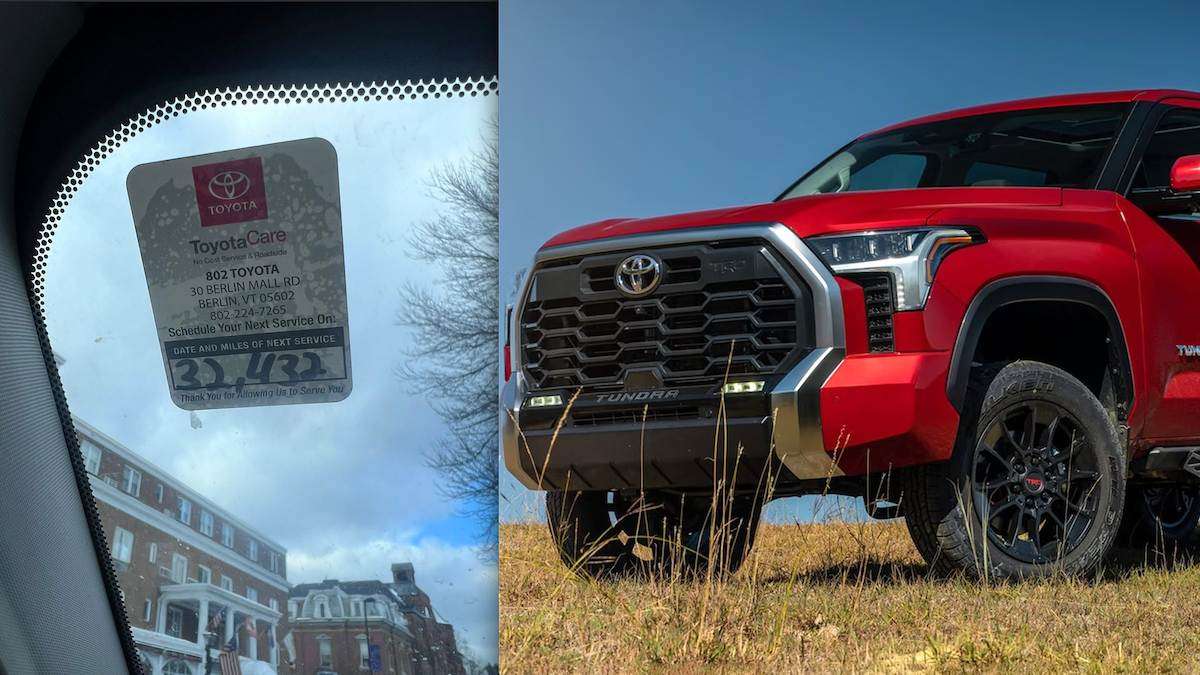
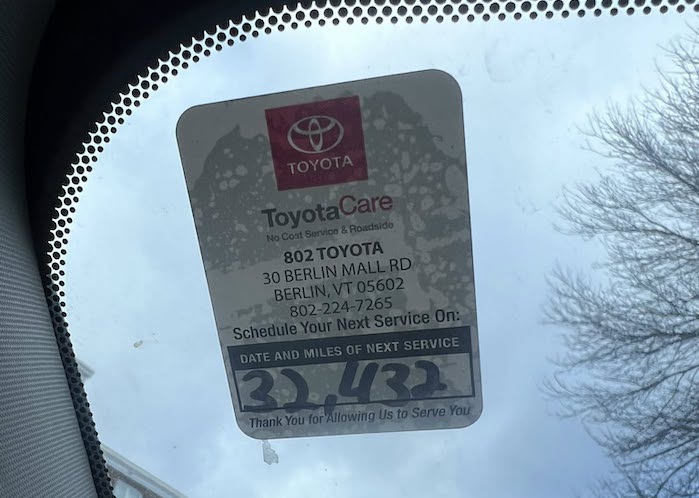
In my ongoing research into the reliability of the i-FORCE powertrain, I recently came across a revealing post in the 2023-2026 Toyota Tundra Owners Facebook community. There, owner Damian Roman highlighted a growing rift between Toyota’s official maintenance schedules and the reality of the service bay. Roman, who just took his truck in for routine maintenance, was stunned by a subtle but significant change on his windshield:
Damian says, “Has Toyota quietly changed the oil change intervals on the Tundra to 5k? I just had an oil change today and noticed the sticker for the next oil change is saying it’s in 5,000 miles.”
The 10K "Marketing Myth”
Because, as any Master Tech will tell you, a $20,000 engine replacement isn't worth a $75 'scheduled' savings.
One Toyota Master tech I talked to recently said, “Heat is the enemy of turbos, and old oil is the catalyst for disaster.”
Another says, ”As a mechanic who has seen the inside of these twin-turbo V6s, that 5,000-mile sticker isn't just a suggestion, it's a lifeline. Here is the mechanical truth that Toyota corporate isn't putting in the glossy brochures."
While Toyota’s marketing team loves to brag about 'low cost of ownership' with 10,000-mile oil changes, the boots-on-the-ground reality is shifting. Dealers are quietly slapping 5,000-mile stickers on these new Twin-Turbo V6s. Why?
What I Tested
To understand why this is happening now, I went back through my 30 years of technician-led research. While the official manual suggests 10,000 miles is sufficient, "practical, real-world advice becomes valuable" when you are dealing with the high-stress environment of a twin-turbocharged engine, as noted by the experts at Toyota of Knoxville, who explain that severe service often requires a shorter interval.
I have covered this disconnect extensively, specifically noting that the 10,000-mile interval is a "risky gamble" for anyone planning to keep their truck for its full expected lifespan.
My Personal Take
I believe the "10k interval" was never about engine longevity; it was a marketing move to lower the advertised "cost of ownership." However, Master Technicians across the country are now seeing the fallout, confirming that "metal debris in filters and pans during early changes" is a documented reality that justifies a 5,000-mile limit - Reddit r/Camry Master Tech Advice.
In my own analysis of recent V6 failures, I pointed out that even replacement engines are suffering because "the fix is only as good as the installation" and the care taken with the oil.
"Severe Duty" Is the Norm
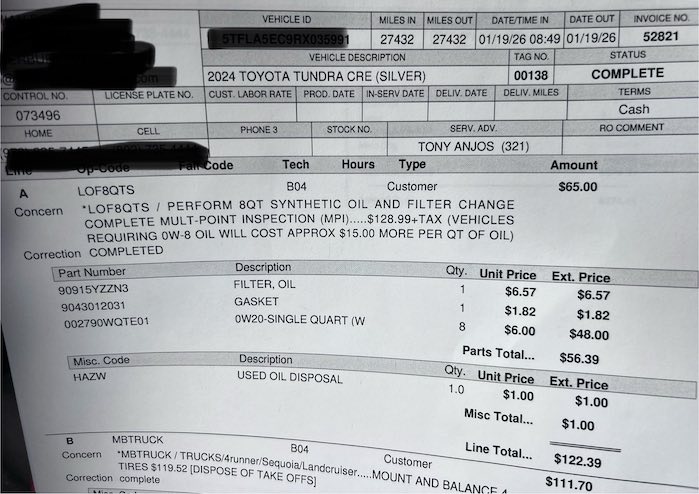
The "fail" here isn't just mechanical; it’s a failure of transparency. Toyota’s V35A twin-turbo 3.4-liter V6 is a sophisticated piece of machinery that generates immense heat. Heat is the natural enemy of oil. When you push that oil to 10,000 miles, you are asking the lubricants to perform under conditions they weren't truly designed for in a "severe duty" world, which, let's face it, describes how most of us use our trucks.
The i-FORCE 3.4L Twin-Turbo V6 changed the maintenance math forever.
In my three decades of tracking powertrain evolution, I have seen many technologies come and go, but the physics of heat never change. The move from the naturally aspirated 5.7L V8 to the i-FORCE 3.4L Twin-Turbo V6 changed the maintenance math forever. When you are running a 10,000-mile oil interval on a turbocharged engine, you aren't just pushing the limits of the lubricant; you are risking the "lungs" of your truck.
The primary issue is thermal degradation caused by the turbos themselves. These units spin at speeds exceeding 100,000 RPM and are powered by glowing-hot exhaust gases. The oil’s job is twofold: it must lubricate the high-speed bearings and carry away that intense heat. When you shut off your engine after a highway haul, the oil sitting in those turbo lines is subjected to "heat soak." Over 10,000 miles, this process causes the oil to oxidize and break down, creating carbon deposits or "coke."
I have seen how these microscopic deposits eventually restrict oil flow to the turbo bearings. If that flow is compromised, you aren't just looking at a turbo failure; you are looking at potential metal contamination throughout the entire engine block. Furthermore, these V6 engines suffer from higher rates of fuel dilution, where unburnt gasoline seeps past the piston rings into the crankcase. This thins out the oil, stripping away its ability to protect those vital main bearings.
By the time you hit 7,000 or 8,000 miles, that oil is often a cocktail of fuel, carbon, and depleted additives. In my 30 years in the service departments, I've interviewed countless Master Techs. The mechanical truth is simple: oil is cheap, but turbos and long-blocks are not. A 5,000-mile interval is the only way to ensure that the lifeblood of your Tundra stays thick enough and clean enough to handle the heat.
What Tundra Owners Are Saying
The community isn't waiting for a corporate press release to change their habits. One user on Reddit noted the severity of the situation, stating, "I'm not risking a $20k engine replacement over $80 in oil," which you can read in the full discussion here.
Another owner highlighted the new design's vulnerability, noting, "You really need good oil to maximize the life of turbos," in this Reddit thread.
Key Takeaways
- Ignore the Marketing: The 10,000-mile interval is for ideal lab conditions, not real-world towing or idling.
- Trust the Sticker: If your dealer is putting a 5,000-mile sticker on your windshield, they are doing you a favor by protecting your warranty and engine.
- The "Turbo Tax": Twin-turbos create heat soak that degrades oil faster than naturally aspirated V8s.
- Cheap Insurance: An $80 oil change every 5,000 miles is the best way to avoid a $20,000 engine swap.
Will the New-Gen Tundra Ever See 300,000 Miles?
The era of the "bulletproof" 10,000-mile oil change is over for the modern turbocharged truck. If there's even a chance your new-gen Toyota Tundra will last 300,000 miles as the old 5.7L V8s did, you must adopt a more aggressive maintenance schedule. The dealers are already signaling the change; it's time for owners to follow suit.
We Want To Hear From You: Has your dealer quietly changed your service sticker to 5,000 miles, or are they still pushing you to the 10,000-mile limit? Click the red link below to write your comment and join the community in sharing experiences.
Next Up: I recently uncovered a disturbing account from a Tundra owner whose replacement engine suffered a catastrophic breakdown on the highway just 6,200 miles after installation, which you can read in my full report, "I Already Had My 2022 Tundra SR5 Engine Replaced Under Toyota's Recall; Now 6K Miles Later, Here We Are."
Denis Flierl is a Senior Reporter at Torque News with over 30 years of hands-on experience in the automotive industry. Having served as a professional test driver and industry consultant for major automakers such as Chevrolet, Ford, Toyota, Honda, and Tesla, Denis provides a "boots-on-the-ground" perspective that goes beyond standard reporting. Since joining Torque News in 2012, he has specialized in cutting through market noise to deliver data-backed analysis and real-world owner stories. His work focuses on navigating the transition to EVs and the shifting automotive market.
Have a tip or question for Denis? > Engage with him directly on LinkedIn for industry analysis, or follow his latest updates on X @DenisFlierl and @WorldsCoolestRides. You can also find his latest car features on Facebook and Instagram.
Photo credit: Denis Flierl via Damian Roman
Set Torque News as Preferred Source on Google
Follow us today...







Comments
I knew from the onset of…
Permalink
I knew from the onset of purchasing my '24 Tundra limited TRD OR 4x4 that the 10,000 oil change schedule would never hold up. When I hit 3,500 miles, I went to the dealer where I purchased my Tundra and asked them to do a break-in oil change. I had the contract oil changes available, so it shouldn't have been a problem. But the service mrg at the dealer declined my request stating he would only do it at the recommended 10k mark. If I wanted it done, I would have to pay out of pocket for it. I left the dealership, and found another dealer close by and explained the situation. They were more than happy to accommodate me. They said my contracted oil changes were mine to use as I wanted with no hassle. I then got another change at 5k. Recently the dealer I switched to, sent me an official Toyota email advising me to change my oil every 5K miles just like my previous Tundra's I have owned. Even my wife's '23 Lexus ES300 (non-turbo) calls for 5k oil changes. This same dealer I switched to is also the same dealership that fixed the radiator shroud problem that may have been a factor in the future. Can't say enough for them as they have addressed every concern I have had about my 3rd gen Tundra.