
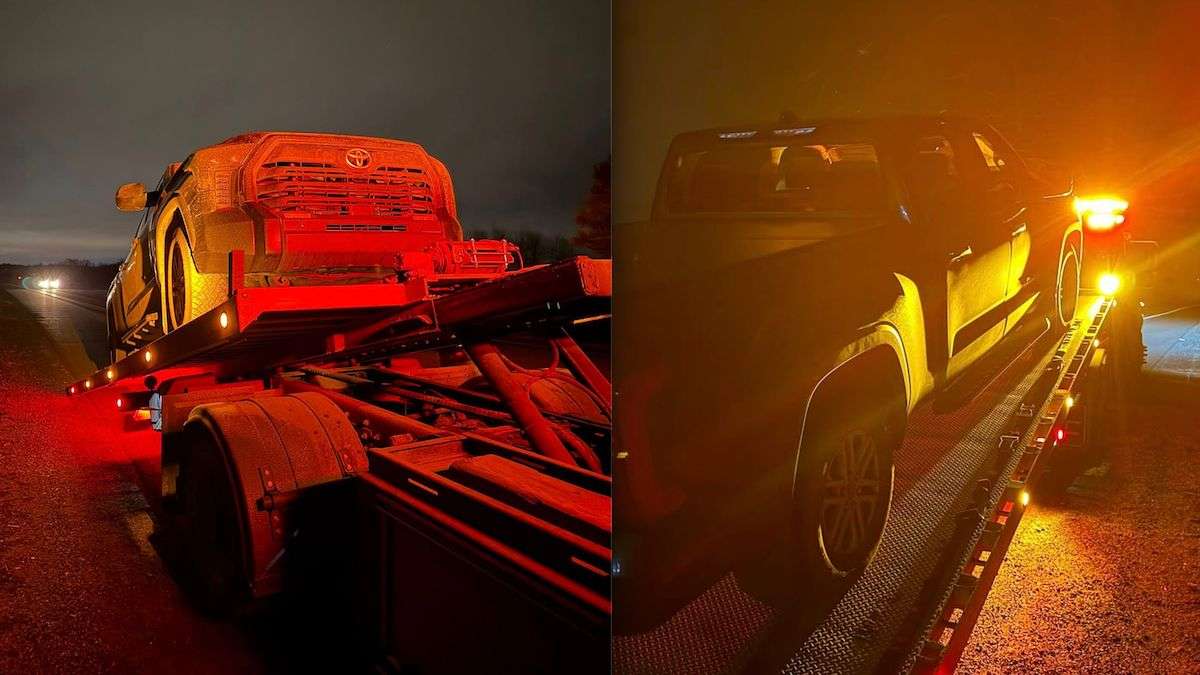

Smoke filled the cabin, and the engine seized, but the truly alarming part of this highway breakdown is that it happened on the brand-new Toyota Tundra replacement motor meant to prevent this exact problem.
In my extensive research into the ongoing Toyota Tundra V6 saga, I uncovered a disturbing account from owner Tristan Corriveau, whose 'fixed' 2022 SR5 suffered a catastrophic breakdown on a Quebec highway. Despite having a replacement engine installed just 6,200 miles prior, Corriveau reported smoke in the cabin, intense knocking, and a seized motor, signaling that even the recall remedy may not be foolproof."
Tristan Corriveau on the 2023-2026 Toyota Tundra Owners Facebook page says,
"My 2022 Tundra SR5 engine has already been replaced with Toyota's recall notice. It's the first time in my life that this has happened to me. Broke down on Quebec 40 west highway. Smoke in the cabin, plus a strong burning smell. Intense knocking noise. Does not start now. The engine was replaced at 76,000 miles. I've driven 6,200 miles since then, with an oil change also done. Here we are, it's DOA."
Now It's Round Two
The narrative surrounding the third-generation Toyota Tundra has been dominated by a single, persistent storyline: the V35A-FTS engine recall. For thousands of owners, the promise of a factory-backed engine replacement was the light at the end of the tunnel, a definitive fix for the machining debris issue that plagued the 2022 and 2023 model years.
We were told that the new "short block" assemblies were clean, precise, and free of the manufacturing defects that caused main bearing seizures. However, a disturbing new report from a Canadian owner suggests that even the "fixed" trucks may not be safe from catastrophic failure. When a replacement engine dies just 6,200 miles after installation, we are forced to ask if the remedy is actually working or if owners are being sent back onto the highways with ticking time bombs.
The Nightmare Scenario of a Failed Remedy
Drawing on my extensive coverage of Toyota's reliability trends, Tristan's account represents the absolute worst-case scenario for the brand's image. A recall is supposed to restore confidence; instead, this failure shatters it. The symptoms described, smoke filling the cabin, a burning smell, and the dreaded "intense knocking noise," are classic indicators of a catastrophic rotating assembly failure.
In the original recall, these symptoms were caused by machining debris that blocked oil passages and starved the main bearings. Seeing the same failure mode occur on a replacement engine suggests one of two terrifying possibilities: either the replacement blocks are still suffering from quality-control issues, or the complex installation process required to swap these engines is leading to fatal technician errors.
Other users in the same Facebook thread and across the Tundra community are echoing similar concerns, with a growing number of owners expressing anxiety about the longevity of their replacement motors. I have observed a distinct shift in sentiment. Initially, owners were relieved to get a new engine. Now, stories like Tristan's are creating a wave of skepticism.
Owners are questioning if the dealership technicians, who are often rushed and overwhelmed by the volume of recalls, are correctly seating components and clearing oil coolers of old debris. You can read more about the complexities of these failures in my report, My 2023 Toyota Tundra's Engine Started Knocking at 30K Miles, and I'm 2 Months Outside the Recall, Now the Dealer Says I Can't Get a New Engine. The fear is that the "cure" is proving to be just as risky as the disease.
Why The Tundra Recall Was Issued
To understand the gravity of a replacement engine failing, we must revisit why Toyota issued the safety recall in the first place. The original defect was not a design flaw but a manufacturing error that has had massive repercussions:
- Machining Debris Contamination: During the specified production period, machining waste and debris were not adequately cleaned from the engine block before assembly.
- Main Bearing Seizure: This leftover debris could dislodge and travel through the oil system, eventually becoming trapped in the main bearings, causing them to seize and fail.
- Loss of Motive Power: As bearings fail, the engine can knock, run roughly, and eventually stall completely while driving, resulting in a total loss of power.
- Safety Hazard: The NHTSA highlighted that a sudden engine stall at highway speeds increases the risk of a crash, necessitating the recall.
The "Do Over" Goes Wrong
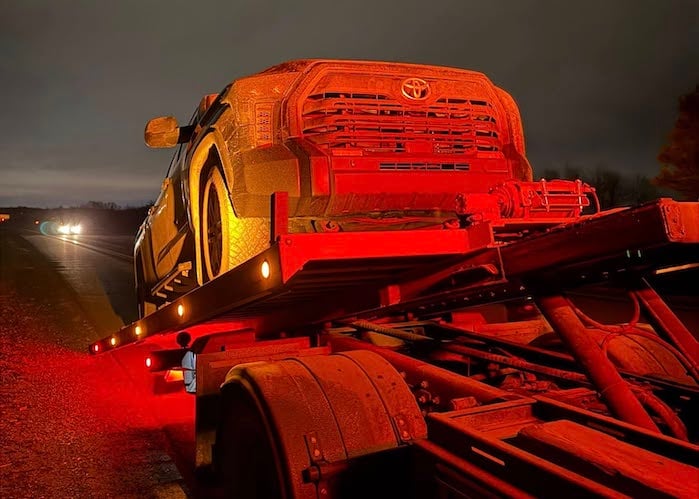
Tristan's situation is particularly damning because he followed every rule. His original engine lasted 76,000 miles—a respectable distance that suggests he maintains his vehicle well. After the recall replacement, he drove only 6,200 miles and even performed an oil change in that short interval. Yet, the result was a dead truck on the Quebec 40 highway.
In my analysis, a failure at such low mileage on a new block points heavily toward an installation error or a "lemon" replacement part. When a dealership replaces a short block, they must transfer heads, turbos, and cooling components. If the technician failed to flush the oil cooler lines or the turbochargers from the previous engine's failure, old debris could have instantly destroyed the new bearings.
Other members of the thread noted this possibility, speculating that residual metal shavings from the first engine might have been hiding in the reused components, waiting to destroy the new block. It is a harsh reality I discussed in another case: an owner moved from a domestic brand to Toyota only to face immediate issues.
You can see the parallel in my story, I Dumped My Chevy Silverado Money Pit for This 2023 Toyota Tundra. Now, 2 Weeks Later, My New Tundra is Being Recalled and is getting a New Engine. The frustration is palpable when a brand known for bulletproof reliability fails to execute the fix for its own mistake.
What This Means For All Tundra Owners
The implication of Tristan's story extends far beyond his single truck. It casts a shadow over the entire recall process. If Toyota cannot guarantee the reliability of the replacement engines, the resale value of these trucks will plummet further. Owners are currently in a state of limbo, wondering whether their "fixed" truck is actually reliable enough for a cross-country trip or for towing a trailer through the mountains. A replacement engine should reset the clock on reliability, not start a countdown to another breakdown.
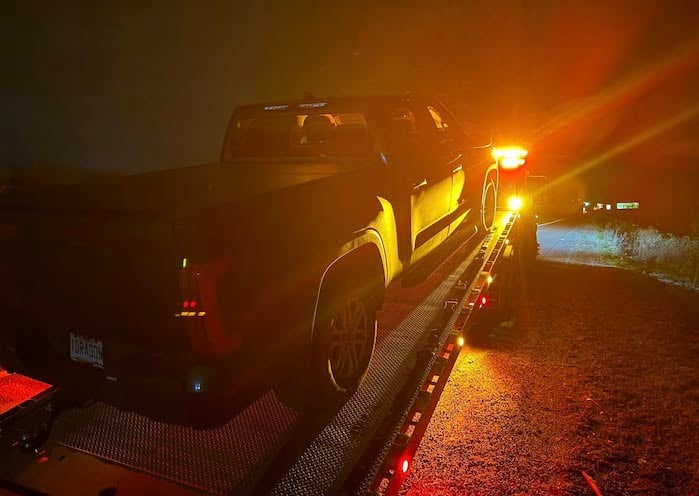
We are seeing a pattern in which the complexity of the repair may exceed the capacity of some service centers. A "cab-off" repair or a short-block swap is major surgery. As I detailed in a recent report, the invasiveness of these repairs is shocking to many owners. For a deeper look at what this repair entails, read: My 2024 Toyota Tundra 27K In Is Getting a Short Block and New Turbos, But the Strange Thing Is, They Removed the Cab To Do It. When you remove the cab and tear down the powertrain, the margin for error is nonexistent. A single loose bolt, a pinched wire, or a dirty oil line can result in exactly what Tristan experienced: smoke, knocking, and a dead engine.
Toyota must urgently investigate these post-recall failures. If debris is indeed hiding in reused parts like oil coolers or turbo lines, the service bulletin may need to be updated to require replacing all oil-contacting components, not just the block. Until then, owners like Tristan are left stranded. The emotional and financial toll of a vehicle sitting in the shop for months is significant.
I covered the agonizing wait times owners face in my article, My 2022 Toyota Tundra Has Been at the Dealer for 30 Days for Engine Failure, and Now It's Another Month to Get My New Engine, and exposed the painful reason why.
For now, Tundra owners should remain vigilant, listen for knocking, and demand a thorough flush of all systems if their engine is replaced. The "fix" is only as good as the installation.
It's Your Turn
Have you had your Tundra engine replaced with Toyota's recall notice? What was your experience? If so, click the red Add New Comment link below and let us know.
I'm Denis Flierl, a Senior Torque News Reporter since 2012, bringing over 30 years of automotive expertise to every story. My career began with a consulting role with every major car brand, followed by years as a freelance journalist, test-driving new vehicles, which equipped me with a wealth of insider knowledge. I specialize in delivering the latest auto news, sharing compelling owner stories, and providing expert, up-to-date analysis to keep you fully informed.
Follow me on X @DenisFlierl, @WorldsCoolestRides, Facebook, Instagram and LinkedIn
Photo credit: Denis Flierl via Tristan Corriveau
Set Torque News as Preferred Source on Google
Follow us today...







Comments
This real issue is that…
Permalink
This real issue is that there are no locator tangs on the main bearings, which allows them to almost lock in place. Every engine failure we've had has been due to spun bearings. NOT Technican error. Toyota needs to stop screwing the techs and the customers.
I'm at 70k miles and just…
Permalink
I'm at 70k miles and just had my Tundra engine replaced even though I never had any problems out of it. As soon as we got our first cold weather I noticed a ticking sound, maybe a lifter, when the engine is cold. My previous engine never made that sound.
Yes. 2024 Tundra engine…
Permalink
Yes. 2024 Tundra engine failed at 65,000 miles. Oil changed every 5,000 and first oil change done at 500. Toyota said my engine is covered under expanded recall. They informed me today they want to install a new short block engine. I’m afraid it will die on me like the last engine did. I think Toyota is trying to minimize their issues and sweep this problem under the rug. I’ve lost confidence in the brand.
I knew that the switch from…
Permalink
I knew that the switch from V8 to a turbo engine equipped Tundra was a disaster in the making. Especially when Toyota kept the 10,000 mile oil/filter change interval. Oil is cheap, but in this case at 6,5K miles, the engine grenaded itself.