
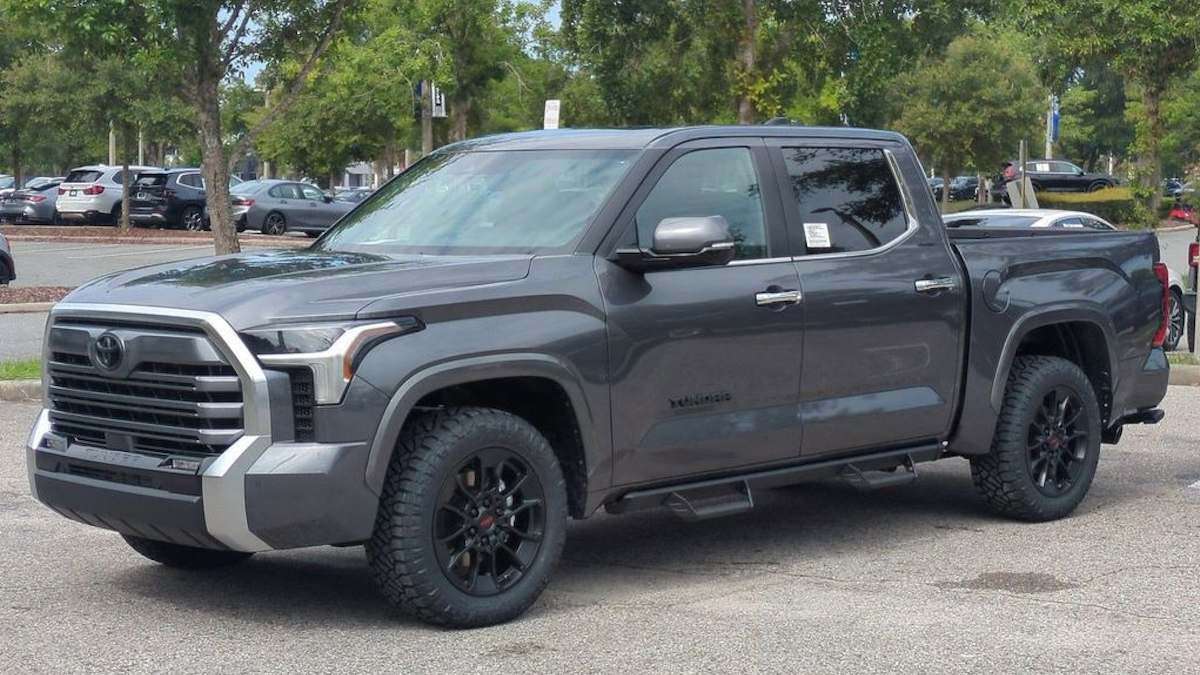

Is Thomas Forthofer's decision to bypass Toyota's 10,000-mile oil change recommendation and switch to a 5,000-mile interval a wise insurance policy against potential Tundra engine issues, or an expensive overreaction?
The debate over extended oil change intervals rages on in the truck world, but for one brand-new 2025 Toyota Tundra owner, the answer is clear: better safe than sorry. This decision is fueled by reports of ongoing engine reliability concerns with the new Tundra V6 design, which I've covered extensively in this space. The need for owners to be proactive is a major theme highlighted in my report about an owner's 2024 Tundra that lost oil pressure and began knocking at 54k miles.
Thomas Forthofer, posting on the 2023-2026 Toyota Tundra Owners Facebook page, sparked a lively discussion by outlining his plan to ignore the manufacturer's official recommendation of 10k oil changes despite his dealer's persistence.
"I'm bringing my 2025 Toyota Tundra Platinum in for its first service. It's due for the media screen recall, so I thought, why not give it an early oil change at 1,500 miles and do the recall at the same time? The dealer tried hard to convince me to do 10,000-mile oil changes."
Just Look at the History
The heart of Forthofer's concern lies in the history of the Tundra's powertrain, which has seen some documented issues in earlier model years. While the 2025 model is the latest iteration, the memory of those problems clearly influences his maintenance strategy.
"It just seems excessive to wait 10,000 miles for a first oil change on an engine that is known to have problems in earlier years. I can't control the issues it might have in the future, but if I can give it an early oil change, I will. I plan on sticking to 5,000 miles after the first early oil change. I'm not taking Toyota's recommendation for 10k."
Forthofer's move to an early 1,500-mile first change, followed by a switch to a 5,000-mile synthetic oil change interval, is a common practice among seasoned mechanics and conscientious owners, especially for turbocharged engines like the Tundra's twin-turbo V6. His concerns are backed by widespread reports of engine issues with the new Tundra generation, which continue to raise serious questions about the long-term durability of the Toyota Tundra.
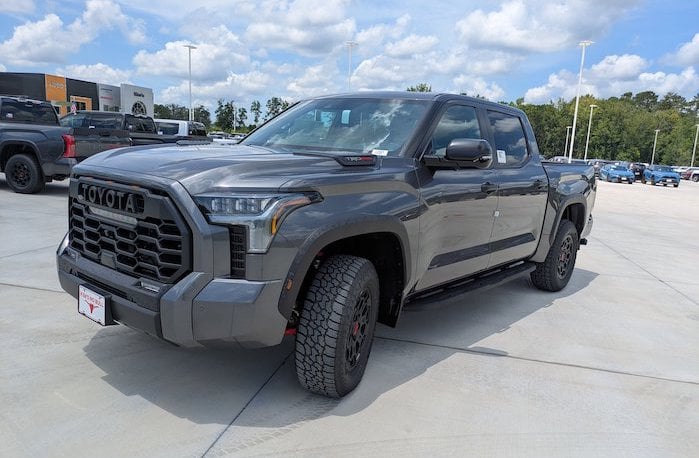
Tundra Owner Anxiety Is Real
The twin-turbocharged V6 engine (known as the i-FORCE) that powers the current generation Tundra (2022-2025) has been the subject of several high-profile issues and recalls, which directly inform Forthofer's decision to play it safe with his oil changes:
Major Engine Recall: Toyota issued a significant recall affecting hundreds of thousands of 2022-2023 Tundra and Lexus LX vehicles for a manufacturing defect. The issue was attributed to "machining debris" left in the engine block during production. This debris could damage crankshaft bearings, causing engine knocking and potential engine failure. In many affected cases, Toyota's remedy has been to replace the entire engine.
I covered the severity of the ongoing problem in my story, which highlights how engine problems, even in non-recalled years, are fueling the debate over Toyota Tundra i-FORCE V6 maintenance.
Continued Failure Reports: While Toyota stated the machining debris issue was resolved for later production models (including the 2025 model year), owner reports suggest engine failures, including spun main bearings, have persisted in trucks outside the original recall years. This is why many owners are choosing the best oil change interval for long-term Toyota Tundra reliability over the factory recommendation.
I documented the extreme end of this spectrum in this report about the lingering uncertainty that motivates many owners to adopt more rigorous maintenance schedules.
The 10K Mile Dilemma
Automakers like Toyota have been moving to longer oil intervals (often 10,000 miles) for years, supported by the use of advanced synthetic oils. However, the online community remains skeptical. Forthofer's choice of an early 1,500-mile first change is a strategic move to flush out initial metallic break-in contaminants.
The decision to choose a 5,000-mile vs. 10,000-mile Tundra oil change is often rooted in common sense rather than factory specs. Turbocharged engines, like the Tundra's, place significantly more thermal stress on the oil, which can break down the oil's additives faster than in naturally aspirated engines, making 10,000 miles a risky gamble for those who plan to keep their truck for the expected lifespan of a Toyota Tundra.
For Thomas Forthofer, the slight added cost of more frequent oil changes is a small price to pay for peace of mind and, potentially, extended engine life. His post is a loud signal that many Tundra owners are willing to spend the extra money to go against the factory recommendation, viewing the oil change as cheap insurance against a potential engine failure. This is especially true for those concerned about maintaining their 2025 Tundra engine warranty while being proactive.
Tundra Owners Speak Out
The sentiment expressed by Thomas Forthofer is echoed across various online platforms, showing a consensus among a large segment of Toyota Tundra owners that shorter oil change intervals are a necessary precaution.
- YouTube: "Oil is the blood of the engine. 10k is just asking for problems down the road. I do 5k full synthetic like a religion on my 2023. I'm not risking a $20k engine replacement over $80 in oil."
- Reddit (r/ToyotaTundra): "Dealer tried to upsell me on 10k service, I politely declined and asked for a 5k. They noted it as 'Customer Preference for Severe Driving Conditions.' Which, in a way, is true—I plan on actually using my truck to tow and drive it hard!"
- Quora: "The initial 1,000 to 2,000-mile oil change is critical to get all the manufacturing gunk and seating debris out. If you skip that, you're circulating microscopic metal dust for 10k miles. That's where the damage starts. I changed mine at 1,500 and now follow 5,000."
Conclusion
Thomas Forthofer's proactive decision to perform an early, 1,500-mile oil change and stick to a 5,000-mile interval on his new 2025 Toyota Tundra Platinum is a rational response to the documented reliability issues with the new twin-turbo V6 engine, reflecting a widespread desire among new Toyota Tundra owners to prioritize engine longevity over marginal cost savings.
By going against the 10,000-mile factory recommendation, he is investing in the long-term health of his truck, providing an extra layer of protection against issues like internal debris and oil degradation in a high-stress, turbocharged motor.
What Would You Do?
Given the history of the i-FORCE V6 engine, is a 5,000-mile oil change interval a mandatory measure for all 2023-2026 Toyota Tundra owners seeking maximum engine life, or are you comfortable trusting the factory's 10,000-mile recommendation? Click the red Add New Comment link below and let us know.
I'm Denis Flierl, a Senior Torque News Reporter since 2012, bringing over 30 years of automotive expertise to every story. My career began with a consulting role with every major car brand, followed by years as a freelance journalist, test-driving new vehicles, which equipped me with a wealth of insider knowledge. I specialize in delivering the latest auto news, sharing compelling owner stories, and providing expert, up-to-date analysis to keep you fully informed.
Follow me on X @DenisFlierl, @WorldsCoolestRides, Facebook, Instagram and LinkedIn
Photo credit: Denis Flierl via Toyota
Set Torque News as Preferred Source on Google
Follow us today...







Comments
Never go 10,000 miles on an…
Permalink
Never go 10,000 miles on an oil change. They just want to get it out of factory warranty and then when it blows up well sorry about your luck but it's on you
That's why I will never buy a new vehicle from any dealer that wants a 10,000 mile oil change interval. I am an old retired mechanic call me stupid if you want to but I know better.
I couldn't agree more and I…
Permalink
In reply to Never go 10,000 miles on an… by Ronnie Durham (not verified)
I couldn't agree more and I believe your doing the most dollar effective maintenance by doing it early!!! Who cares what some else thinks!
I was always told that you…
Permalink
In reply to Never go 10,000 miles on an… by Ronnie Durham (not verified)
I was always told that you didn't want to do an early oil change as this was the break in period for the motor. Doing so could prevent the rings from seating and cause the engine to perpetually burn oil. After this period you can change on the manufacturers schedule or sooner.
YEp. I bought new in 14. …
Permalink
In reply to Never go 10,000 miles on an… by Ronnie Durham (not verified)
YEp. I bought new in 14. Did the first oil change at 1000km. Every 6000km for first 100000km. Now i do them every 8000km. Oil still looks good and doesn’t burn a drop. I have 190k km hoping to get it to 500k km before trying to find a 2021. Lol.
100% agree they want cars to…
Permalink
In reply to Never go 10,000 miles on an… by Ronnie Durham (not verified)
100% agree they want cars to be thrown away. Just like car brands calling for transmission to be lifetime part with no service interval. Yet the actual transmission manufacturer gives a service interval. If you're spending 60-80k for a truck why wouldn't you change the oil at a shorter interval. It's easy protect your investment. It's definitely not going to hurt it to have fresh oil
Agree, I do 5000 mile oil…
Permalink
In reply to Never go 10,000 miles on an… by Ronnie Durham (not verified)
Agree, I do 5000 mile oil changes and I’m lucky enough to have the Tundra bullet proof 5.7l engine. There is that other factor, the oil filter life as well. Do the 5000 mile change, you won’t regret it.
Here in lies the problem…
Permalink
In reply to Never go 10,000 miles on an… by Ronnie Durham (not verified)
Here in lies the problem. Did you not buy the truck. Is it not your truck. If you want to change the oil and filter every damn week, why is it the dealers business to convince you not to. Obviously I’m being extreme in my comments but it is your truck, and the damn dealer needs to respect your wishes.
I agree!! Never go 10k miles…
Permalink
In reply to Never go 10,000 miles on an… by Ronnie Durham (not verified)
I agree!! Never go 10k miles with an oil change no matter what the dealership says. I have a 2019 frontier and have always done 5k mile oil changes. It has a bit over 200k miles on it and it still has the same umph it had when new. I always get a 10k miles oil filter and change it out with every oil change!
If the math is right I have invested around $1800 in oil and filters, (I change my own oil) which would mean it would only be $900 if I went every 10k miles. I'll gladly pay $900 for peace of mind, because it'll be way more expensive to have my engine fixed or replaced.
It's pay me now or pay me…
Permalink
In reply to Never go 10,000 miles on an… by Ronnie Durham (not verified)
It's pay me now or pay me later. Full synthetic gives you best chance of long engine life and can go 10,000 miles between oil changes. If you still have a warranty you will pay dearly if you DON'T make documented oil changes. Pick your poison!
Well you’re just a clown. To…
Permalink
In reply to Never go 10,000 miles on an… by Ronnie Durham (not verified)
Well you’re just a clown. To knowingly by a truck known to have engine issues early on is just wild.
Well you’re just a clown. To…
Permalink
In reply to Never go 10,000 miles on an… by Ronnie Durham (not verified)
Well you’re just a clown. To knowingly buy a truck known to have engine issues early on is just wild.
Thank you. I plan to have my…
Permalink
In reply to Never go 10,000 miles on an… by Ronnie Durham (not verified)
Thank you. I plan to have my 2024 Bronco oil changed at 5000 mile intervals.
1,500 Miles ??? Too Long! …
Permalink
1,500 Miles ??? Too Long! You Paid $60K on the Truck with 4 miles on the odo, Damage Done at 1,500 . I'm Oil Religious with Quality and Additives, I have a Ford Ranger I4 DOHC 2.3. Got it New with a 3 on the odo, Picked it up drove a Week put 100 miles on it. Back to the dealer with MY Racing Oil CORRECT VISCOSITY for my area and had them Change it, As I left I said See you at 1,000 ! Then at 5,000 and so on. Make sure the Correct amount of ZDDP is in the Oil you buy, Most have 600ppm for CAT protection. Lucas has ZDDP to put in but Calculate so you put Correct, Don't Excede 1400ppm . Your Lifters and Tappets Cylenders with be Nice and Quiet. At 50K add Lucas Oil Additive in the White bottle.
Thank me Later...
Yes he is doing the right…
Permalink
Yes he is doing the right thing, changing the oil at five k and every 5 for optimal performance and saving his engine , I change my oil on my 2016 Corolla every 5 k
I can't even imagine oil…
Permalink
I can't even imagine oil changing at 10000 miles, who comes up with this garbage. For instance if you make alot of short trips you should change your oil more often if not then change at longer intervals, 5000 should be the most, and even with turbos they tell you to take better care of that engine than normal, where has common sense gone anymore?
I agree change the oil at…
Permalink
In reply to I can't even imagine oil… by Ron (not verified)
I agree change the oil at the 5000 mile if u have too do it your self my 2023 tacoma recommend oil change at 10,000 mile i refuse to go that many mile so i do my self at 5000 and i keep all my receipts
We have a 21 camry. We do…
Permalink
We have a 21 camry. We do every 5k. Factory recommends 10k. I know they claim the synthetic oil will hold up and not lose lubrication properties however, the reality of things is the oil filter itself hasn't really changed much and you do get dirt in your motor filters can plug and or lose flow, then they bypass and you are circulating dirt through your engine. I had a friend back in high school used to run full synthetic mobile one in his pickup. He would run the oil 12k but every 3 to 4,000 miles he take the oil filter off and put a new filter on and add enough oil to top it off. Oil is cheap, filters are cheap, engines are not. I think some of the modern 10k oil change requirements are driven by overall environmental impacts ratings.. at 10K intervals you're using a lot less oil lot less environmental impact.. the car will still last past the engine warranty that's all the manufacturers care about.. not getting 200,000 - 300,000 miles out of the original motor...
I have always stuck to the…
Permalink
I have always stuck to the 5000 mile change procedure. 2 Toyotas that I owned went into 300k miles +. I have always used synthetic oil also. Every new car I bought new also had first oil change at 1500 miles. Better safe than sorry. I also had a new Nissan PU and used synthetic in it. When I sold it at 135k, the buyer wanted a
compression test. The shop that did it was amazed that the compression was still same as a new one.
Check out The motor oil geek…
Permalink
Check out The motor oil geek channel. If you are planning on keeping a brand new vehicle absolutely change engine oil between 500 and 750 miles again by 3000 and every 4 to 6 thousand there after. You'll be amazed at how much metal will be glimmering in 500 mile oil. Get it out!
I tried the 1500 then 5k oil…
Permalink
I tried the 1500 then 5k oil changes with my 2023 Tundra Platinum.
Engine still crashed at 14K miles. I traded it off and now drive a Ford. Last Toyota for me FOREVER! Good luck guys.
10k mile engine oil service…
Permalink
10k mile engine oil service is absurd and I would never under ANY circumstances comply to that interval. If anything, I'd never exceed 5k only if ALL my driving was highway miles. I'm semi retired and both my dailies , combined don't see 6k. Every 6 months, regardless of mileage, they always see a service with a full syn oil, at the very minimum. It's cheap insurance. My long distance cross-country trips are usually on my Harley bagger, and at mid trip, even at 1500-2000 miles it gets a oil service. These extended intervals are insane.
Why would the dealer not…
Permalink
Why would the dealer not want to change the oil. Wanting to change the engine after warranty expires. I changed my oil at 2500 miles on my new 2017titan. The dealer didn't try to charge my mind. I would find another dealer.
Dealers don’t own your…
Permalink
Dealers don’t own your vehicle; you do. Always change your first oil after 500-2599 miles and then 5-10k afterward depending. Their priority if the capitalist profit motive, no need to blame them for it just realize what it is. Our world is based on capitalism. On the other hand, what is “reasonable” profit? That is entirely different question…..
manufacturers figured out…
Permalink
manufacturers figured out along time ago that the make more money selling parts than they do selling the actual product, so as long as it makes it past the warranty period, they are covered. its a real shame!
10k is just stupid in my…
Permalink
10k is just stupid in my opinion! 5k and full synthetic mobil1 in my car since new . Kia Sportage w 2.4L
10000 miles interval oil…
Permalink
10000 miles interval oil change is a recipe for desaster in long term for an engine (even 10000 km interval is too long). Especially for turbo engines. I am always recommending maximum 5000 miles oil change interval if you want to keep your engine as long as possible.
Oil is cheap, engines are…
Permalink
Oil is cheap, engines are not. I do my oil changes on our 2019 Tundra at 5,000 miles. So, either 20 oil changes every 100,000 miles or 10 at 10,000 mile intervals. You won’t miss the extra $100 every 6 months or so, but you will get sticker shock if your engine needs replaced!
Oil cahnges are cheap; new…
Permalink
Oil cahnges are cheap; new engines are not! OR, buy another brand of truck and safe????
I bought a used 2018 Rav4 in…
Permalink
I bought a used 2018 Rav4 in April with 87K miles on it...I'm going to change the oil in Dec and it will barely have 89K miles on it....after that I'll change it once a year even though we only drive about 2500 miles per year. Clean Air filter and clean oil are important.
Where is the data to support…
Permalink
Where is the data to support more frequent oil changes? The Tundra V6 issue had nothing to do with oil change frequency. Owner comments in this article reveal reducing oil change frequency is based on a “feeling” or the so called “peace of mind”. It’s their money but I think we need some independent scientific confirmation.