
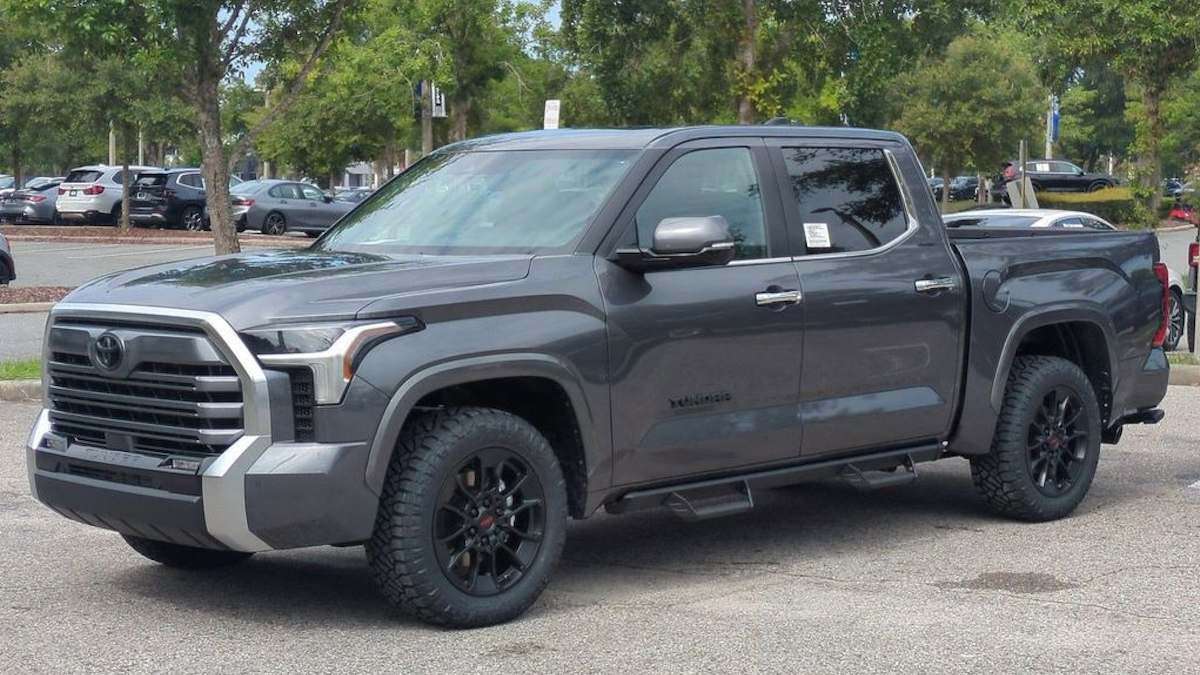

Is Thomas Forthofer's decision to bypass Toyota's 10,000-mile oil change recommendation and switch to a 5,000-mile interval a wise insurance policy against potential Tundra engine issues, or an expensive overreaction?
The debate over extended oil change intervals rages on in the truck world, but for one brand-new 2025 Toyota Tundra owner, the answer is clear: better safe than sorry. This decision is fueled by reports of ongoing engine reliability concerns with the new Tundra V6 design, which I've covered extensively in this space. The need for owners to be proactive is a major theme highlighted in my report about an owner's 2024 Tundra that lost oil pressure and began knocking at 54k miles.
Thomas Forthofer, posting on the 2023-2026 Toyota Tundra Owners Facebook page, sparked a lively discussion by outlining his plan to ignore the manufacturer's official recommendation of 10k oil changes despite his dealer's persistence.
"I'm bringing my 2025 Toyota Tundra Platinum in for its first service. It's due for the media screen recall, so I thought, why not give it an early oil change at 1,500 miles and do the recall at the same time? The dealer tried hard to convince me to do 10,000-mile oil changes."
Just Look at the History
The heart of Forthofer's concern lies in the history of the Tundra's powertrain, which has seen some documented issues in earlier model years. While the 2025 model is the latest iteration, the memory of those problems clearly influences his maintenance strategy.
"It just seems excessive to wait 10,000 miles for a first oil change on an engine that is known to have problems in earlier years. I can't control the issues it might have in the future, but if I can give it an early oil change, I will. I plan on sticking to 5,000 miles after the first early oil change. I'm not taking Toyota's recommendation for 10k."
Forthofer's move to an early 1,500-mile first change, followed by a switch to a 5,000-mile synthetic oil change interval, is a common practice among seasoned mechanics and conscientious owners, especially for turbocharged engines like the Tundra's twin-turbo V6. His concerns are backed by widespread reports of engine issues with the new Tundra generation, which continue to raise serious questions about the long-term durability of the Toyota Tundra.
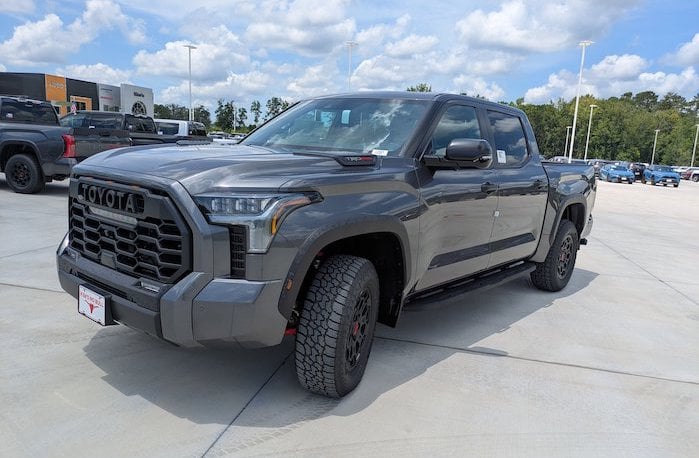
Tundra Owner Anxiety Is Real
The twin-turbocharged V6 engine (known as the i-FORCE) that powers the current generation Tundra (2022-2025) has been the subject of several high-profile issues and recalls, which directly inform Forthofer's decision to play it safe with his oil changes:
Major Engine Recall: Toyota issued a significant recall affecting hundreds of thousands of 2022-2023 Tundra and Lexus LX vehicles for a manufacturing defect. The issue was attributed to "machining debris" left in the engine block during production. This debris could damage crankshaft bearings, causing engine knocking and potential engine failure. In many affected cases, Toyota's remedy has been to replace the entire engine.
I covered the severity of the ongoing problem in my story, which highlights how engine problems, even in non-recalled years, are fueling the debate over Toyota Tundra i-FORCE V6 maintenance.
Continued Failure Reports: While Toyota stated the machining debris issue was resolved for later production models (including the 2025 model year), owner reports suggest engine failures, including spun main bearings, have persisted in trucks outside the original recall years. This is why many owners are choosing the best oil change interval for long-term Toyota Tundra reliability over the factory recommendation.
I documented the extreme end of this spectrum in this report about the lingering uncertainty that motivates many owners to adopt more rigorous maintenance schedules.
The 10K Mile Dilemma
Automakers like Toyota have been moving to longer oil intervals (often 10,000 miles) for years, supported by the use of advanced synthetic oils. However, the online community remains skeptical. Forthofer's choice of an early 1,500-mile first change is a strategic move to flush out initial metallic break-in contaminants.
The decision to choose a 5,000-mile vs. 10,000-mile Tundra oil change is often rooted in common sense rather than factory specs. Turbocharged engines, like the Tundra's, place significantly more thermal stress on the oil, which can break down the oil's additives faster than in naturally aspirated engines, making 10,000 miles a risky gamble for those who plan to keep their truck for the expected lifespan of a Toyota Tundra.
For Thomas Forthofer, the slight added cost of more frequent oil changes is a small price to pay for peace of mind and, potentially, extended engine life. His post is a loud signal that many Tundra owners are willing to spend the extra money to go against the factory recommendation, viewing the oil change as cheap insurance against a potential engine failure. This is especially true for those concerned about maintaining their 2025 Tundra engine warranty while being proactive.
Tundra Owners Speak Out
The sentiment expressed by Thomas Forthofer is echoed across various online platforms, showing a consensus among a large segment of Toyota Tundra owners that shorter oil change intervals are a necessary precaution.
- YouTube: "Oil is the blood of the engine. 10k is just asking for problems down the road. I do 5k full synthetic like a religion on my 2023. I'm not risking a $20k engine replacement over $80 in oil."
- Reddit (r/ToyotaTundra): "Dealer tried to upsell me on 10k service, I politely declined and asked for a 5k. They noted it as 'Customer Preference for Severe Driving Conditions.' Which, in a way, is true—I plan on actually using my truck to tow and drive it hard!"
- Quora: "The initial 1,000 to 2,000-mile oil change is critical to get all the manufacturing gunk and seating debris out. If you skip that, you're circulating microscopic metal dust for 10k miles. That's where the damage starts. I changed mine at 1,500 and now follow 5,000."
Conclusion
Thomas Forthofer's proactive decision to perform an early, 1,500-mile oil change and stick to a 5,000-mile interval on his new 2025 Toyota Tundra Platinum is a rational response to the documented reliability issues with the new twin-turbo V6 engine, reflecting a widespread desire among new Toyota Tundra owners to prioritize engine longevity over marginal cost savings.
By going against the 10,000-mile factory recommendation, he is investing in the long-term health of his truck, providing an extra layer of protection against issues like internal debris and oil degradation in a high-stress, turbocharged motor.
What Would You Do?
Given the history of the i-FORCE V6 engine, is a 5,000-mile oil change interval a mandatory measure for all 2023-2026 Toyota Tundra owners seeking maximum engine life, or are you comfortable trusting the factory's 10,000-mile recommendation? Click the red Add New Comment link below and let us know.
I'm Denis Flierl, a Senior Torque News Reporter since 2012, bringing over 30 years of automotive expertise to every story. My career began with a consulting role with every major car brand, followed by years as a freelance journalist, test-driving new vehicles, which equipped me with a wealth of insider knowledge. I specialize in delivering the latest auto news, sharing compelling owner stories, and providing expert, up-to-date analysis to keep you fully informed.
Follow me on X @DenisFlierl, @WorldsCoolestRides, Facebook, Instagram and LinkedIn
Photo credit: Denis Flierl via Toyota
Set Torque News as Preferred Source on Google
Follow us today...






Comments
I would be shocked if there…
Permalink
I would be shocked if there isn't a 5,000 mi. interval in the owner's manual for 'Special Operating Conditions' which includes 'frequent trips under 5 miles' or 'low speed driving for long distances' or other conditions which basically describes normal use for a huge segment of the American public.
Every vehicle I've ever owned has such caveats for oil change and/or transmission service. The fact that you don't mention this aspect of vehicle ownership is rather strange.
5k changes for me. 61k miles…
Permalink
5k changes for me. 61k miles on my 24,so far so good.
Changing oil at 1500 miles…
Permalink
Changing oil at 1500 miles does nothing in my opinion. Although 10k would probably work, I stick to a 7500. The oil is not the problem, it's the filter that needs to be changed. Im on the fence about thd new Tundras, and probably will keep my 08, and get the Land Cruiser.
The oil isn't the problem,…
Permalink
The oil isn't the problem, it is the new high compression turbo engines that is the problem. I have changed my oil with full synthetic every 10k on my naturally aspirated Toyota V8's and V6's and have no issues to report. They are all clean burning, with only about a quart of oil consumption over 10,000 miles, quiet motors and all of mine are almost at 300,000 miles...The new high compression turbo engines are disposable motors, not built like the old days. An earlier oil change won't hurt, but ultimately if the engine tolerances and hot spots are the problem it won't matter what you do to try to save it
I just bought a new Frontier…
Permalink
I just bought a new Frontier. I dogs an oil change at 500 miles and will be doing every 3000 miles after that. Pretty much everything will be done at half the recommended service intervals. I don't care if I'm spending more on oil and other fluids. The total I'll be spending on extra fluids is FAR cheaper than having to replace an engine, transmission, differential or transfer case. I plan to keep this truck for many, many years.
The scariest part of this is…
Permalink
The scariest part of this is that your even at the dealership for an oil change. Eventually this will bite you in the ass. Change your own oil, it will save you time and money. It's the most responsible thing you can do for your truck. These techs are under experienced and one will eventually make a bonehead mistake, wrong oil, underfill, no oil, strip drain plug, if it's possible to f*** up eventually one of them will do it.
Even more, with a truck you can just roll right under and drain the oil. No Jack or any risk involved. 30 min job max depending on how long you let it drain before refill.
This Tundra specific engine…
Permalink
This Tundra specific engine issue directed me to another brand!
I bought a 2022 Challenger…
Permalink
I bought a 2022 Challenger RT new and drag racing on Hot rod power tour at five tracks oil was changed in that vehicle every 3500 miles. And after it was totaled by someone hitting me in the rear end I was in need of a small pickup Hyundai Santa Cruz 2.4 non-turbo automatic. The dealership tech tried his best to get me to go with a 10,000 mile oil change. At 1500 miles I had my first oil change ,their severe duty mileage is 5,000 I will use that program. With a full synthetic that Hyundai recommends.
Only makes sense to change…
Permalink
Only makes sense to change it early since they already admit there could be debris in the engine. I'd do a couple 1500mi changes to start with and 5k intervals. Not as believe in 10k intervals. Being a professional is why. Seen a lot in 45 years. I know a guy that does 3k intervals with Amsoil which is costly but his stuff purrs.
First I do not like the…
Permalink
First I do not like the thinner oils like 0w-16, second they have reduced the zinc anti-wear package from what it used to be in most brands of oils, third there seems to be some kind of orchestrated conspiracy against 10w-30 Pennzoil total Synthetic at least in my area, central Arkansas, at Wal-Mart because it can't be found there but can be found at other auto stores but for around $15 more a 5 quart jug.
I too would opt for the 5k change interval after I had an oil analysis done and possibly a 3k interval on a turbo boosted engine. A prioritized stream of oil is fed constantly c to the turbos bearings because they run very hot. Don't listen to the dealers, all they're concerned with is that there truck and car line up meet the government mandated CAFE standards. They know that we the consumers won't most likely see any issues till after the engine is no longer covered by the warranty.
As I understand it there are two kinds of crude oil found in the U.S., , asphaltIc and parriifin based oils that are refined from a parrifin base crude are better because it is a better oil to begin with. These crudes are found in the Pennsylvania, Ohio, Kentucky, New York areas and possibly Indiana. For the oils refined from natural gas I have used Pennzoil for the last 8 years, 10w-30 and have had NO problems in my 2017 Ram 5.7 Hemi.
I would Never go 10K on an…
Permalink
I would Never go 10K on an oil change on any engine ! Except maybe my lawn mower !😂 Being a Machinist and Mechanic for over 40 years, the cheapest insurance to longevity is frequent oil changes. My 2003 Highlander (bought new) has 425K and I change the oil "Religiously" at 5K and Always use a Toyota Oil Filter, never Aftermarket Auto parts store crap. Same goes for my 2016 Sequoia, & new RAV4.
Modern oil doesn't break…
Permalink
Modern oil doesn't break down in 10,000 miles, but does get dirty with fine particles or carbon and metal. The regular oil filter is a coarse filter on a bypass system, designed to allow most of the oil to bypass the filter when pressure is high, to prevent blowing out the filter. Some oil goes through the filter, some goes around the end of it when the spring in the filter is compressed. Toyota could innovate with a larger or parallel filters to not allow as much unfiltered oil through the engine. Even better, they could add a separate oil polishing system, to filter out fine particles with a separate filter so the oil stays clean for 10,000 miles or more, even up to 25,000 miles. A separate filtering system with an on-board electric pump could even allow DIY oil changes without going under the truck by adding "clean" and "dirty" oil tanks under the hood. Even better, it could maintain the oil at the proper level automatically. All you would have to do is change the filter, refill the clean oil tank, and empty the dirty oil tank.
As a Toyota tech that worked…
Permalink
As a Toyota tech that worked at a Toyota dealership during the time of the 3.5 (3.4) turbo intro and through the recall. The recall was 100% due to machine debris - metal shavings inside the engine casting. Newer models should not have this problem. However there is absolutely nothing wrong with changing the oil more often. Definitely even better for the first oil change due to engine break in period. Good move for him, hopefully he has good luck moving forward.
No dealer of any new engine…
Permalink
No dealer of any new engine manufacturer could convince me not to drive gently and smoothly, stay away from red line revs, and do my first oil and filter change between 1k-1.5k miles. This will always be my break-in routine. After that I base it on driving conditions and oil color/feel on the dipstick.
On a vehicle with known issues, even after a manufacturer as good as Toyota says issue fixed, I would err on the side of caution. Especially a gasoline powered twin turbo truck that might tow or drive dusty dirt roads or sandy environments I do air filters more frequently as well as oil.
I would highly recommend this and other iForce owners use a magnetic drain plug for a while at least and inspect it at each change.
A top quality oil filter (K&N, Mobil 1, or Wix XP) and proper weight full synthetic for certain.
My two cents.
I completely agree with what…
Permalink
I completely agree with what he's doing.
You're SUPPOSED to change the oil @ 1K miles on a new motor. I run full synthetic and change oil at 5K. All this new ultra low weight oil isn't for longevity. It's to reduce emissions and marginally increase horsepower for the EPA.
Better safe than sorry. You pay 50K + for a good vehicle. Oil changes are cheap insurance.
Not only synthetic oil is…
Permalink
Not only synthetic oil is recommended, but like GM, maybe Dexos rated as well.
"The decision to choose a 5…
Permalink
"The decision to choose a 5,000-mile vs. 10,000-mile Tundra oil change is often rooted in common sense rather than factory specs."
While it's easy to say lots of things, there are reasons why they extend oil change intervals today over cars from the 70s and 80s... And oil analysis shows the condition of the oil, where the so-called "common sense" does not. Hence, it's not of the same principle.
If an engine is going to fail and quicker oil change intervals help, then the oil is breaking down prematurely, from excessive heat buildup, or is generating sludge. All of these are seen in the color of the oil. If the color is visible as medium brown, then it's generally good, and is not a contributing factor to engine failure. However, too thin an oil viscosity will cause engine damage, if that particular engine has clearances too great for the oil used, at the temperature it's used in.
Keep in mind that while thinner oils are easier to pump, they don't always give the protection the individual engine needs in its unique conditions.
To say the first oil change is to flush out debris is silliness, given the oil filter catches such debris, regardless of the interval. It's to get the original oil out, which is typically designed to allow quicker wear of the piston rings to get them seated quicker than a slicker oil, for maximum efficiency as soon as possible. This oil is less stable at operating temperature, so it breaks down quicker, which is where engine wear begins.
Ferrari recommended a procedure to tune the oil viscosity to their engine needs, based upon ambient temps. This is the most prudent way to create the longest lived engine, but is not usually conducive for the average car owner.
When the EPA gets off car manufacturers backs for forcing conditions not possible, then manufacturers will be able to create vehicles that suffer a minimal loss in efficiency for sake of longevity. In theory, a 0w30 oil is not going to suffer noticable parasitic losses over 0w20, nor will 0w40... But longevity is far greater with slightly heavier oil. It is a guarantee that the late mileage owner will reap the benefits, where many simply don't care to consider...
Essentially, while some smaller engines are gone with 0w20, it's not the best oil for all of them, and understanding what's going on inside the engine would help everyone make the right decision, regardless of what planned obsolescent manufacturers would have you believe.
He's the one paying for it…
Permalink
He's the one paying for it you change the damn oil when he tells you to change the damn oil and don't worry about why.
With that said I don't know about the newest Toyotas but anything built in the last 15 years they're designed to run on 020 they're designed to go 10,000 miles on the oil change and people who do that routinely get $250,000 miles out of their vehicle with that said those are not known to have engine issues in those model years not like the newest one and they didn't have turbos that's a deciding factor turbo is equal sooner oil changes more frequently
By the way if you put a…
Permalink
By the way if you put a thicker oil in an older Toyota that's designed for 0-20 that will degrade the motor 100% that's a fact.
American trucks that tell you that run 020 are doing it for emission reasons only and it's better to put the 5:30 or 5:40 in those
It is common knowledge to…
Permalink
It is common knowledge to change your 1st change as low as 500 miles. Gets all metal shavings out plus dirt flys bugs from factory. I once had a new log splitter oil filter was plugged to up with metal shavings. Scared me ! You are absolutely right to change your oil at lower than 10k. Abner Yokum, (Real McCoy)
What would i do? Not buy…
Permalink
What would i do? Not buy that truck
I own a 2012 Corolla with…
Permalink
I own a 2012 Corolla with the dependable, tried and true, 1.8 literally 4 banger. These engines haven't been known for any widespread issues, yet I change my oil every 5K. Have 180K on it and never a single problem.
Personally, I would not take…
Permalink
Personally, I would not take my vehicle to that dealership if he's trying to convince you to wait until the 10,000 mile oil service change, because that dealership will probably charge you and will not do the service. It is a cold world out here! These places do not want your vehicle to last and they want every bit of your mighty dollar!
He's 100% correct. I bought…
Permalink
He's 100% correct. I bought a 2025 Rav4 and opted for the 5k oil change. A Tundra is a no brainer. Truth is Dealerships hate oil changes because there is like to no (Toyocare) money in them. They rather use their time slots for bigger jobs. If anything I would advise any Toyota truck owner to purchase the oil filter adapter. It's pricey but it makes an excellent Christmas gift. Once you have the adapter you can use and generic oil filter and bring it to any shop you want. Choose your shop wisely though.
I change the oil in my 2023…
Permalink
I change the oil in my 2023 Toyota 4 Runner at 5,000 miles. The oil viscosity has changed.when you do change the oil at 5,000, even then you can actually feel and hear the difference. Everything is quieter and runs smoother and easier.
Dealers make money selling…
Permalink
Dealers make money selling vehicles, changing oil at 10k intervals helps them sell more.
Yes I agree with his 5000…
Permalink
Yes I agree with his 5000 mile oil change interval for the reasons you mentioned. Turbo engines run hotter and cause oil breakdown due to thermal stress. I was a mechanic for many years and although oils have improved significantly, the only way to actually verify the oil change interval is to send the used oil out for lab analysis after that 5000 interval. If it shows no significant sign of degradation, then increase the interval to 7500 and repeat testing. Only a true lab test will tell if a 5000 mile change is warranted.
I have a 2024 Ford F150 with…
Permalink
I have a 2024 Ford F150 with th 5.0 coyote v8. Changed the oil after 500 miles with Full Synthetic pennzoil ultra platinum and every 4000 miles since and have 24,000 miles on it. Went away from turbo engines due to heat generated by these engines. My previous 2016 with 3.5l twin turbo overheated when towing first time with it. Came home took out the single row, and put a new 3 row all aluminum radiator and larger intercooler. Solved the problem but shouldn't have to do that with a new truck which should be designed to tow without overheating. Never follow the manufacturers recommended oil change interval. I'll continue to change every 4000 miles
I have a 2024 Ford F150 with…
Permalink
I have a 2024 Ford F150 with th 5.0 coyote v8. Changed the oil after 500 miles with Full Synthetic pennzoil ultra platinum and every 4000 miles since and have 24,000 miles on it. Went away from turbo engines due to heat generated by these engines. My previous 2016 with 3.5l twin turbo overheated when towing first time with it. Came home took out the single row, and put a new 3 row all aluminum radiator and larger intercooler. Solved the problem but shouldn't have to do that with a new truck which should be designed to tow without overheating. Never follow the manufacturers recommended oil change interval. I'll continue to change every 4000 miles
Everyone talks about the oil…
Permalink
Everyone talks about the oil only and not the filter. Part of the 10k issue is the filter is usually starting to bypass by 5k so not filtering the oil allowing contaminants to damage the engine.