
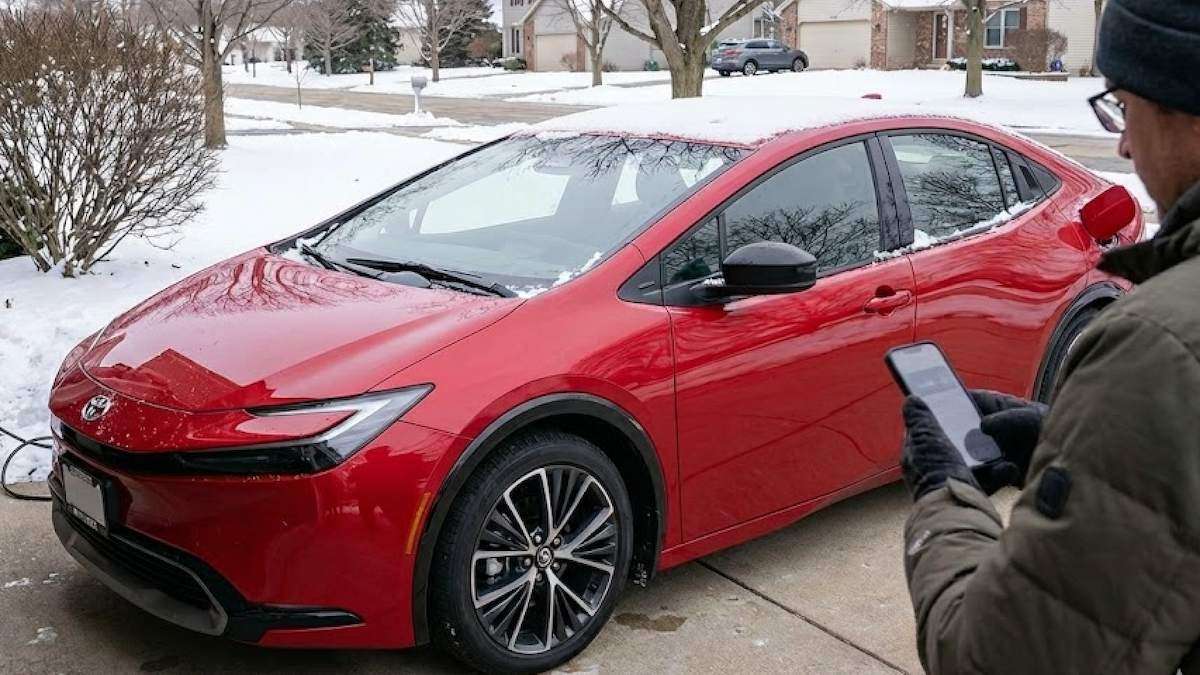

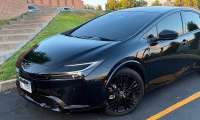
Before you trade in your reliable hybrid for the new "sexy" Toyota Prius, you need to see why this owner admits he should have kept his old car after facing a $2,000 repair bill and a battery that quits in the cold.
Key Takeaways
- Cold-Weather Performance Drop: Owners report that "sports car acceleration" disappears in freezing temps (below 10 °C), forcing the car into hybrid mode even with a full battery.
- 12-Volt Battery Reliability: The 12-volt battery can fail within a year, and the integrated windshield technology makes replacement costs excessively high ($2,000+).
If you are considering the new 2024 Toyota Prius Prime, you need to look past the spec sheet and listen to what owners are experiencing after the "new car smell" fades. I have analyzed a detailed one-year ownership report that highlights a growing tension between Toyota’s conservative engineering and the expectations of modern EV drivers.
The owner is discussing a full year of living with the 2024 Prius Prime, covering everything from its surprising summer range to frustrating software glitches and winter performance drops.
The “Sports Car” That Doesn't Like The Cold
Remi Mason, a member of the Toyota Prius 5th Gen Facebook Club, recently shared a comprehensive summary of his time with the vehicle. His experience is a mix of genuine excitement and puzzling disappointments.

Pros:
"The electric motor is incredibly strong, acceleration feels almost like a sports car, and it’s easy to leave other vehicles far behind. The EV range consistently exceeds the official specifications; in summer, I often get more than 90 km on a full charge. The car also drives very smoothly, with excellent stability, and the cabin is impressively quiet.”
This matches what we often hear about the Prime in ideal conditions. It is punchy, efficient, and refined. However, the narrative shifts drastically when the temperature drops.
Cons:
"For reasons I still don’t fully understand, when the battery is full, but the temperature is −10°C or lower, the electric motor hardly works, forcing the car into hybrid-engine mode. Even in normal temperatures, the electric motor sometimes shuts off briefly, and the car runs only on the hybrid engine.”
Other users in the same discussion are echoing similar concerns. It appears that Toyota’s software is aggressively protective of the battery system, prioritizing longevity over performance in a way that can catch drivers off guard. When you buy a Plug-in Hybrid (PHEV) with 220 horsepower, you expect that power to be available. But in deep winter, the car seems to revert to a standard hybrid personality to shield the battery from cold stress.
For more context on how electric powertrains struggle in these conditions, read my report: I Just Picked Up the First EV of My Life Today. I Bought the Max Range GMC Sierra Denali, But Now I’m Feeling a Bit Of Anxiety, Never Owning an EV Before. It explains why battery chemistry fights against you when the mercury falls.

Why Toyota's 2024 Prius Prime Was Made
- Bridging the Gap: Toyota built the Prime to offer a "best of both worlds" solution—EV driving for daily commutes and a gas engine for long road trips without range anxiety.
- Performance Rebranding: The 5th generation was designed to shed the "slow hybrid" image and add significant horsepower to attract younger, performance-oriented buyers.
- Aerodynamic Efficiency: The sleek, low-slung shape minimizes drag to maximize highway MPG, though this compromises interior headroom and cargo space.
- Tech Integration: It serves as a showcase for Toyota's latest safety and driver-assist features, integrating them directly into components like the windshield.
The 12-Volt Battery and Software Headaches
Beyond the cold weather performance, Mason points out a reliability issue that is becoming all too common in modern hybrids: the 12-volt battery.
“The 12-volt battery is also unreliable; mine died completely in under a year of normal use, though it was replaced under warranty. The software is another weak point. To prevent 12-volt drain, the dealer disabled the long post-shutdown headlight delay, but not long after, the system somehow reset itself, and the headlights started staying on again.”
He is not alone. Chip Rudolph, another community member, noted that his battery also had to be replaced under warranty. He praised the structural solidity of the Gen 5 compared to his wife’s Gen 3, but highlighted that the new tech seems to have introduced new vulnerabilities.
“Android Auto/Bluetooth connectivity also fails one or two times out of ten. The “B” driving mode is inconsistent; sometimes regenerative braking is strong, sometimes very weak, with no clear reason.”
This inconsistency is what frustrates owners the most. A car that accelerates like a sports car one day and refuses to engage EV mode the next, or resets its own headlight settings, erodes confidence.
For a deeper look at how even dealership staff are reacting to these trade-offs, check out my recent story: I Went Into the Dealer Looking For a 2024 Honda CR-V Gas Model, and I Left With a 2026 Honda CR-V Hybrid Sport
The Hidden Costs
The owner also highlights the practical downsides of the Prius’s new aggressive design. The "cool factor" comes with a price tag, literally and figuratively.
“DIY maintenance isn’t easy either. The front jacking point sits too far inward for most regular jacks to reach. And one serious drawback for anyone living in cold regions with gravel on the roads: the front windshield contains so many integrated features (heating elements, safety cameras, etc.) that a single stone chip can result in a $2,000+ replacement cost, which feels excessive.”
“The cargo space is extremely limited; anything slightly bulky just won’t fit.”
This is the reality of modern vehicle complexity. The windshield is no longer just glass; it is a lens for the safety systems. The low ride height improves aerodynamics but complicates basic maintenance. Mason concludes his report with a sentiment that is tough for Toyota enthusiasts to hear:
The Conclusion: "Overall, the car drives nicely, but if I had known about all these issues beforehand, especially given the high purchase price, I probably would have kept my old Gen 3 Prius. It was far more economical and practical.”
The Growing Pains
The 2024 Prius Prime represents a massive leap forward in styling and performance, but stories like Remi’s reveal the growing pains of this evolution. Toyota has successfully shed the "boring" label, yet in doing so, it has introduced complexities that the older, simpler generations never had to deal with.
The Gen 3 Prius was an appliance; it worked, it was spacious, and it was cheap to fix. The Gen 5 is a machine that wants to be driven, but it demands more from its owner in terms of patience with software and potential repair costs.
The cold weather behavior is particularly telling. It underscores a philosophical divide: Toyota’s engineering remains deeply conservative. They will cut power to the electric motor to protect the battery pack at -10°C, ensuring the car lasts 15 years. However, to a driver who just bought a "220 horsepower" car, that feels like a failure. It is not broken; it is just being careful. But that carefulness conflicts with the "Prime" promise of electric capability.
Ultimately, the Prius Prime is objectively a better car than its predecessors in terms of dynamics and safety. But as Mason points out, for the pragmatic owner who values cargo space, cheap windshields, and "start-and-go" simplicity in sub-zero weather, the old ways might still be the best.
For another perspective on how high-tech EV ownership can go wrong during road trips, read: A Tesla Model 3 Owner Gets Taken For An Unexpected Ride From the US to Canada (By Accident), Says, “I Wasn’t Paying Attention, and FSD Took the Wrong Exit.”
Next Up: I take a look at the Tesla Cybertruck and how one owner reached his breaking point. Read my report on how a Model 3 Performance owner traded his "fragile" car for the stainless steel truck after $17k in road damage: “Fed Up" After $17k in Road Damage, This Tesla Model 3 Performance Owner Traded His "Fragile 3P" For a Cybertruck.
It’s Your Turn: Click the red link below to write your comment and join the community in sharing experiences.
With over 30 years of industry experience, Denis Flierl brings an insider’s perspective to Torque News, where he has been a Senior Reporter since 2012. Before picking up the pen, Denis consulted for the automotive industry's biggest brands and honed his skills as a test driver. He cuts through the noise to deliver the latest auto news, compelling owner stories, and the expert analysis necessary to navigate today's changing automotive market.
Have a tip or question? Follow me on X @DenisFlierl and @WorldsCoolestRides, or connect with me on Facebook, Instagram, and LinkedIn.
Photo credit: Denis Flierl
Set Torque News as Preferred Source on Google
Follow us today...



Comments
But you lose all the space…
Permalink
But you lose all the space the previous models had.
I guess Toyota figures that…
Permalink
I guess Toyota figures that if you want space you can buy a RAV 4 hybrid or Venza (do they still make that?). I think there's also a hybrid option for the Corolla Cross.
I drive my 2nd gen as if…
Permalink
I drive my 2nd gen as if these things are true about it.
He says he gets 90km (56…
Permalink
He says he gets 90km (56 miles) per charge???? What is this a golf cart lol
Calling a Prius a sports car…
Permalink
Calling a Prius a sports car is the funniest shit ever