
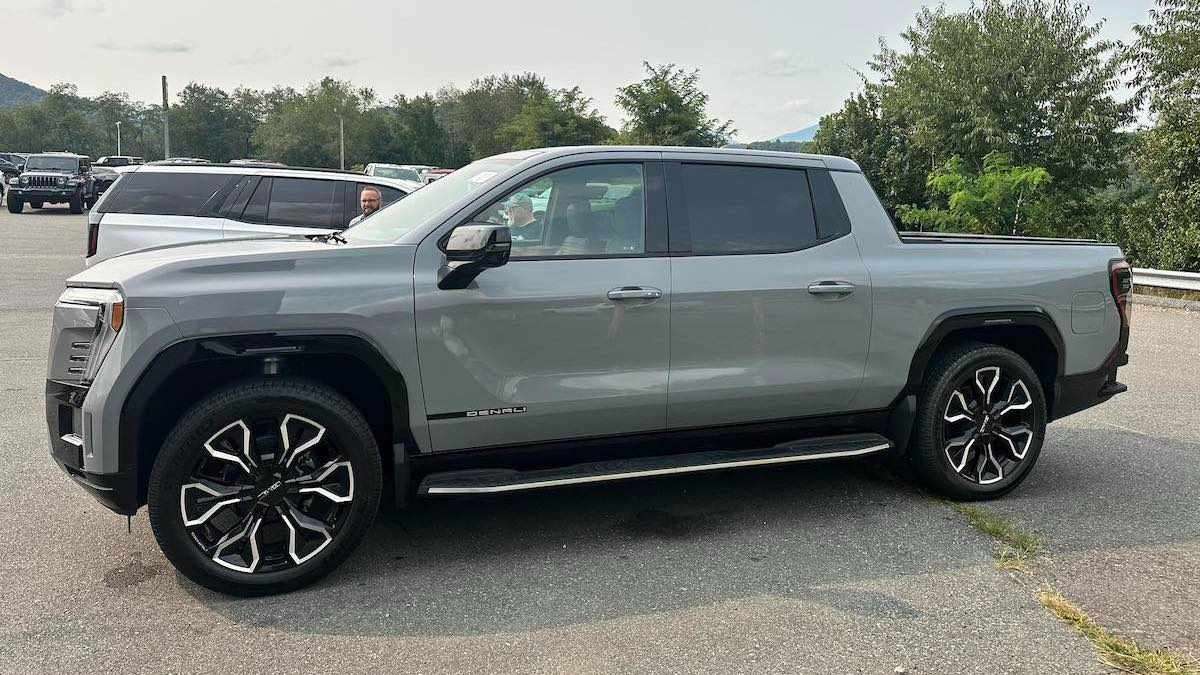

Imagine buying your first EV, and it's a top-of-the-line GMC Sierra Denali pickup. It's a lot of money, and now you're unsure if you made the right decision.
New EV owner Jerry Knowles has anxiety about his new GMC Sierra Denali. This report dives into the real-world experiences, challenges, and learning curve of first-time EV buyers on the road ahead.
Jerry Knowles on the GMC Sierra EV Group Facebook page says,
"I just picked up the first EV of my life today. I bought the max range 2025 GMC Sierra Denali. I'm still feeling a bit of anxiety, having never owned an EV before. Everyone tells me in a few months it will all be good."
Jerry's recent post on the GMC Sierra EV Group Facebook page perfectly captures the feeling that countless new electric vehicle owners experience, and he's not alone.
That feeling he has is completely natural. It's what we in the industry call "range anxiety," but it's often more psychological than practical. We've spent a lifetime conditioned to think about refueling our vehicles in a specific way: when the tank is low, you go to a gas station.
With an EV, that entire paradigm shifts.
Your home becomes your "gas station," and that change requires a mental reset. The good news is, his instincts are correct—in a few months, it will all feel second nature. In the meantime, let's explore how to get you there faster.
It's Not About the Tank, It's About the Cord
The first step in overcoming range anxiety with the GMC Sierra EV or any electric vehicle is to stop thinking about your battery as a gas tank. Instead, think of it like your smartphone battery. You charge it every night, and it's always full when you wake up. The same applies to your new EV. With a Level 2 home charger, you can easily top off the battery overnight, ensuring you start every day with the vehicle's full, capable range.
The vast majority of your driving will be done within your daily commute and errands, and for those, the GMC Sierra Denali's impressive range is more than sufficient.
What About Road Trips?
When it comes to longer journeys, a little planning goes a long way. Let's talk about GMC Sierra EV long-distance travel tips. The key is to shift your mindset from a single, long fuel stop to shorter, more frequent "power breaks." Stop for 20-30 minutes at a DC Fast Charging station to grab a coffee, take a bathroom break, or enjoy a quick bite to eat. This isn't wasted time; it's a new, more integrated way of traveling.
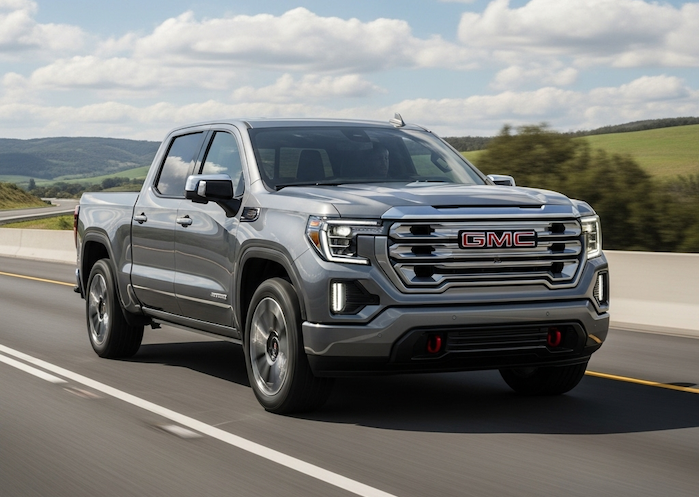
For those longer trips, you need a solid plan.
That leads us to another key to owning an EV: planning an electric vehicle road trip. Many new EV owners are surprised to learn that planning an EV road trip is easier and more reliable than they think.
The truck's native navigation system is smart enough to factor in charging stops along your route. Additionally, third-party applications have become incredibly robust, providing real-time information.
This brings me to a crucial piece of advice: know your apps.
The best apps for finding EV charging stations are essential for any EV owner. Apps like PlugShare, Electrify America, and ChargePoint provide detailed maps of charging locations, information on connector types, charging speeds, and real-time availability.
They also include user reviews, which are invaluable for knowing if a station is reliable. Using these tools gives you a huge advantage and removes the guesswork from long-distance travel.
What About Charging Costs?
One of the most significant financial benefits of an EV is the reduced cost of "fueling." People often ask, What is the cost of charging a GMC Sierra EV at home? The answer depends on your local electricity rates, but on average, charging at home is significantly cheaper than buying gasoline.
You can often take advantage of off-peak electricity rates, charging at night when demand (and cost) is lowest. This is one of the most effective ways to save money over the vehicle's lifetime.
Beyond cost, you can take steps to maximize your truck's performance. When it comes to maximizing the life and performance of electric truck batteries, it's all about adopting smart habits. Using regenerative braking efficiently is a game-changer; it turns deceleration into free energy, sending it back to your battery.
Also, preconditioning your cabin while the vehicle is still plugged in reduces the strain on your battery once you're on the road. Extreme temperatures, both hot and cold, can impact battery performance, so preconditioning is particularly important in those conditions.
DC Fast Charging
For Jerry and other new owners, a common question is about charging speed. What is the real-world GMC Sierra EV charging speed and time? DC Fast Charging (DCFC) is where the magic happens for long trips.
While your home Level 2 charger provides a steady top-up overnight, DCFC stations can add hundreds of miles of range in a short period. The Sierra EV is designed to accept high charging rates, allowing for a significant charge in approximately 20-40 minutes, depending on the station's power output and your battery's state of charge.
The charging speed isn't linear—it's fastest when the battery is low and tapers off as it gets full. This is a deliberate safety measure to protect the battery, which is why it's more efficient to charge from 10% to 80% and then continue your journey rather than waiting for a full 100% charge.
What's Next?
Jerry's feeling of anxiety is just a temporary phase. As with any new technology, it takes time to get used to it. He chose the 2025 GMC Sierra Denali. It's a powerful, capable truck, and he'll find that its electric drivetrain offers a level of performance and low-cost ownership that a gas truck can't match.
In The End
The charging infrastructure is expanding daily, and you're joining a community of owners who are happy to share their knowledge and support. As you drive more, you'll naturally learn your truck's rhythms, how it performs in different conditions, and how to use the charging network to your advantage.
Your "gas station" is now everywhere you are, and that's a freedom that EV owners find hard to beat.
Now It's Your Turn
Are you a new EV owner? What advice do you have for buyers who are reluctant to leap into an electric vehicle? If so, click the red Add New Comment link below and let us know.
Check out my EV truck story: I Didn’t Buy a Sierra or Lightning EV Even With Better Truck Stuff Than Cybertruck, and Tesla Isn’t Luxurious Like Denali or Higher F-150 Trims, But CT’s Eco Is Hands Down Better
I am Denis Flierl, a Senior Torque News Reporter since 2012. My 30+ year tenure in the automotive industry, initially in a consulting role with every major car brand and later as a freelance journalist test-driving new vehicles, has equipped me with a wealth of knowledge. I specialize in reporting the latest automotive news, covering owner stories, and providing expert analysis, ensuring that you are always well-informed and up-to-date. Follow me on X @DenisFlierl, @WorldsCoolestRides, Facebook, and Instagram
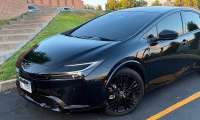
Photo credit: Denis Flierl via Jerry Knowles
Set Torque News as Preferred Source on Google
Follow us today...



Comments
Get in and drive. Don't…
Permalink
Get in and drive. Don't overthink it. When you get home, plug it in. Treat it like your rechargeable electric electric toothbrush. Brush your teeth, put the rechargeable toothbrush back into the charger until next time. Easy peasy.
We bought Model Y shortly after it came out and love it.
My first EV is a used MINI…
Permalink
My first EV is a used MINI SE. I figured one way to get over range anxiety is to start with a car that has a range of about 100 miles!
It works. I love my short range EV. It does take some planning for road trips, but it can be done, even in rural Michigan. 😃
This is a routine thing. I…
Permalink
This is a routine thing.
I took two road trips within a month of buying. Anxiety gone.
A great way to offset cost…
Permalink
A great way to offset cost when installing a fast home charger is to check with your electricity provider. I received an $800 rebate which totally paid for mine, as I installed it myself.
Good luck. Not an EV guy but…
Permalink
Good luck. Not an EV guy but my son has a Tesla that he loves but he definitely has range issues on occasion. I have another friend who has an EV but also has an ICE vehicle for long trips. Seems completely ridiculous & totally impractical but each to their own. I hope your love it as that's a really nice vehicle.
What is he 3 years old…
Permalink
What is he 3 years old having to post stuff like this?,
Go back to bed grumpy old…
Permalink
In reply to What is he 3 years old… by Darth (not verified)
Go back to bed grumpy old Man.
The moral of the story. If…
Permalink
The moral of the story. If you use a truck to do truck things don't go EV. A 16 hour road trip (24 with sleep) turns into 3-4 days. Just not worth it. If its used to go to an office or the grocery store sure its great. Also, forget towing for distance. It's a waste of 70k. Which all new vehicles are.
If you're going to write an…
Permalink
If you're going to write an article about range anxiety and a specific vehicle, it would be helpful to mention the actual range of that vehicle.
Edmunds tested it at 507 miles. More than any other EV I've heard of. If you still have anxiety with a larger range than a tank of gas will get you, I dunno, maybe you should talk to a doctor not a car dealership.
Get the Tesla monthly…
Permalink
Get the Tesla monthly charging membership, and charge as low as $0.30/kWh after 10pm or 11pm at night. For a 200kWh battery, it would cost around $60 for 300 miles of range on a Hummer EV.
We purchased a 2024 Honda…
Permalink
We purchased a 2024 Honda Prologue Elite as our first EV. The car is great and has a number of upscale features like heated/cooled seats, heated steering wheel, 360 camera, and an awesome Bose audio system. Honda offered a free level 2 charger and installation credit. It doesn’t get any easier than plugging in at home. The range of 300miles when fully charged is accurate. To preserve longevity of battery, 80% max is recommended for daily usage. After 4000 miles we’ve never once had to pay to charge the battery outside the home. Even on vacation we used a 120V aftermarket cable to top off the battery at the hotel while we were at the beach. It took 2 days, but was like getting free gas! It’s a shame that the $7500 incentive is being eliminated because more people won’t get to experience a true game changer. Any naysayers do yourself a huge favor and just take a test drive. The whisper quiet ride, instant acceleration, regenerative braking and one pedal driving might just change what you think about EV’s. If you already have solar on the house, it’s a no brainer. Other than tire rotations, there is also basically zero maintenance- no oil changes or transmission fluid, no antifreeze or air filters and even brakes are rarely used.
First call your electric…
Permalink
First call your electric company see if they will install your charger for free, make sure you buy the correct brand of charger. Sign up for electric rate discounts. Down load apps. Finally learn how to use ABRP to check your long trips routes. Yes initially this will be painful for you but in 3 months it will be second nature. Make sure you buy adapters for ccs and nacs both level 2 and 3.
We bought a lightly used…
Permalink
We bought a lightly used Chevy Silverado 1500 WT after previous experience with the hybrid Chevy Volt. (Never owned an all electric vehicle). We drove from the Central Midwest to the CA coast the following day. Hubby had mapped charge stations, downloaded apps for a couple different platforms. The trip went remarkably well, really two (of 3) days of driving later 'Range Anxiety' virtually disappeared, and the return trip was made easier by acquisition of the converter that allowed access to Tesla charge stations. The Phillips 66 in Battle Mountain charged a jawdropping amount to tank up, but we'd skipped a prior stop and lacked juice to continue to the next probable stop. One charger in SLC was annoying as neither the dispense station not the tech we called to ask could advise what we were paying/kwh. We are seniors and did fine with most of the tech end but needed to call at another place as their (new) equipment wouldn't talk to the vehicle and needed a tech reset from afar. Smooth other than those minor annoyances. its nice to plug in and walk away, for comfort stop, snack or more coffee! efficiency rating vs fuel in both time and dollars, are in my opinion superior!
Pilots are very familiar…
Permalink
Pilots are very familiar with planning trips with limited energy refill points. Also weather is a factor. Also motorcycle riders needed to be a bit more prudent than 30 gallon SUVs weather and terrain Also considerations. Keep in mind velocity is a large multiplier (squared) so slowing down can extend range dramatically.
"Keep in mind velocity is a…
Permalink
In reply to Pilots are very familiar… by James Kotalik (not verified)
"Keep in mind velocity is a large multiplier"
This
If i keep my wife's Niro at 60mph that 239 mile range turns into 300.
Great article and perfectly…
Permalink
Great article and perfectly captured every feeling and thought I’ve had about this purchase. You’ve made me feel more comfortable with my decision. Thank you for picking up my post and expanding upon it.
Owning a ev is use less…
Permalink
Owning a ev is use less considering America can not sustain all on electricity they do nothing for the climate or the earth but leave craters on our earth for lithium sorry and as for towing a joke battery will not last pulling a trailer and to waste time having to stop and charge on vacation and lose personal time nope and if you are towing there is no set up for you to charge while attached to the trailer so again nope all ev vehicle are useless and the dumbest looking vehicles on the planet ...