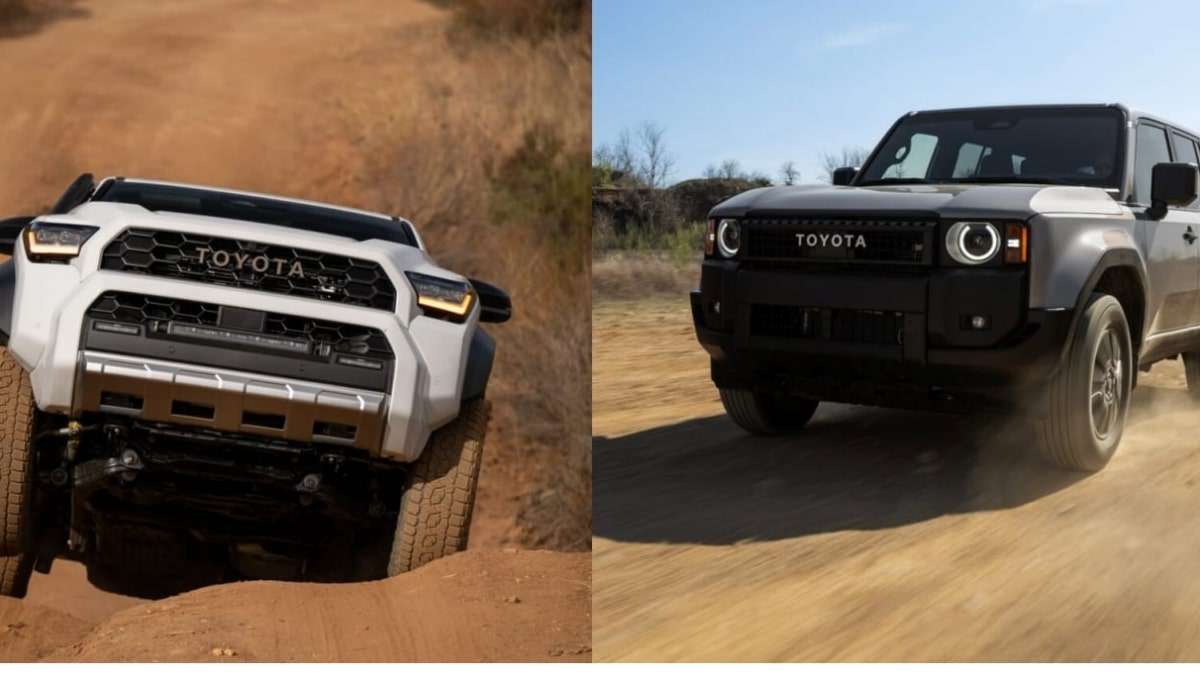

Toyota has long traditions in off-road vehicles, with the Land Cruiser and 4Runner being some of the most iconic SUV nameplates. With both models having been redesigned recently, they are more comparable than ever before, despite scoring two distinctively different design languages. They ride on the same body-on-frame architecture and even feature the same powertrain.
Many owners also have similar complaints from the two models (more on those in a bit). But things get interesting when we look at the prices, which are clearly favoring the 4Runner. This begs the question: Are you getting more for your money with the 4Runner than with the Land Cruiser? Let’s look at the facts.
The Land Cruiser has a much higher starting MSRP, but you aren’t really getting a whole lot more than with the Land Cruiser
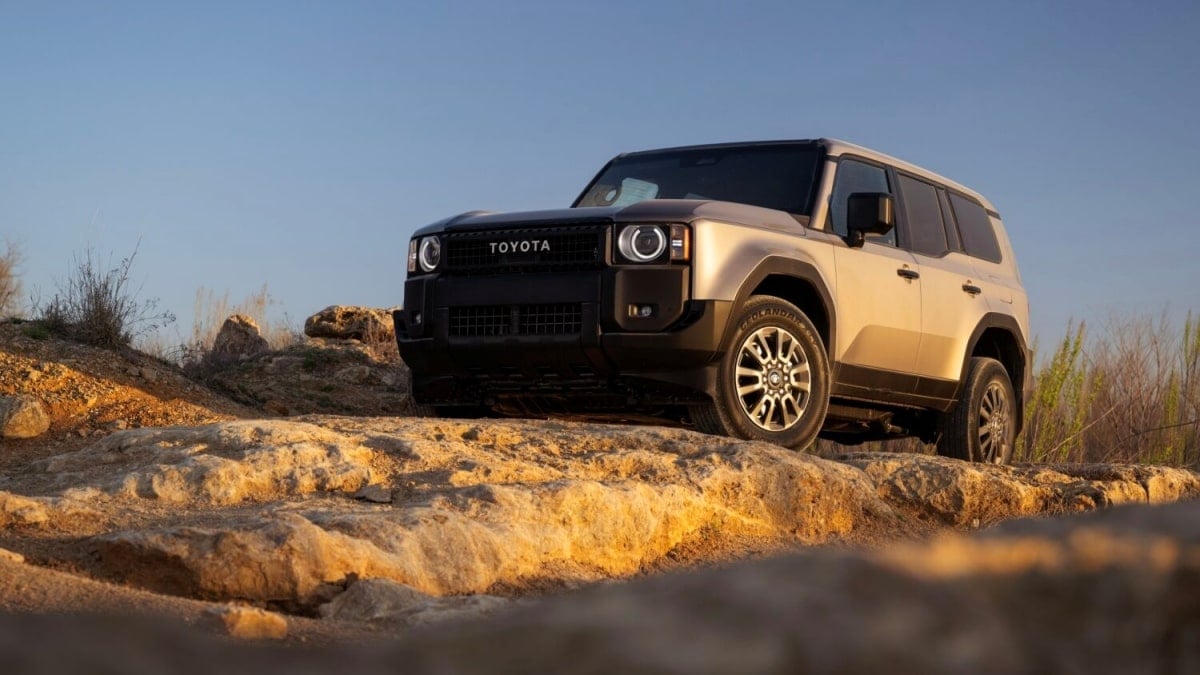
The 2026 Toyota 4Runner starts at $43,065 (for the base SR5 trim), and tops out at $59,695 for the range-topping Limited trim. Meanwhile, the Land Cruiser J250 starts at $58,695 for the base, 1958 trim, and $63,540 for the higher trim (there are only two). Essentially, you can get a fully-spec’d 4Runner for the same price as a base Land Cruiser.
Comparable off-road capabilities, with the 4Runner edging out in certain aspects
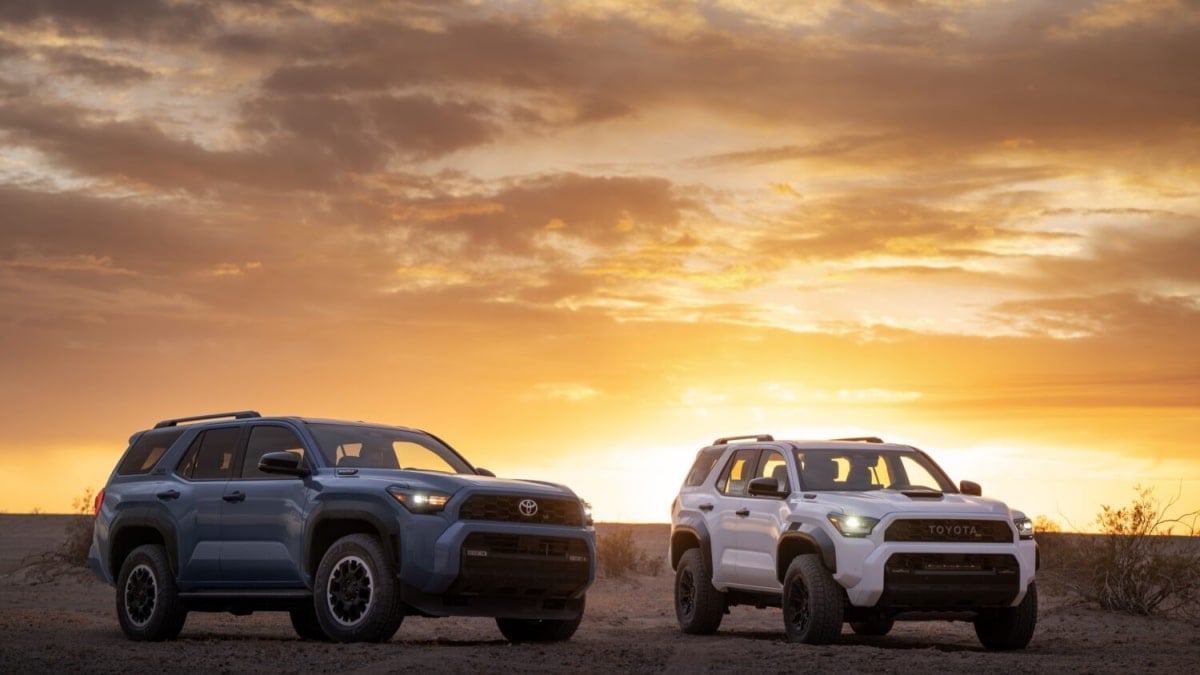
It is worth noting that the 4Runner’s off-road capabilities are heavily dependent on which trim you go for. Any 4Runner that’s TRD Off-road ($51,485 starting MSRP) and higher trims features significantly more ground clearance - up to 9.2 inches - compared to the SR5 and TRD Sport models (8.1 inches).
This translates to approach, breakover, and departure angles of 32-33/ 24-25 / 24 degrees, respectively, for the more off-road-oriented 4Runner models. The SR5’s breakover angle goes down to around 19 degrees. By the way, if you want a truly rugged Toyota 4Runner, the fifth-generation is still available at reasonable prices and packs up to 9.6 inches of ground clearance, from the factory.
The Toyota Land Cruiser provides more consistent figures as the off-road capability is near-identical between the two trims available. The LC J250 comes with a ground clearance of 8.7 to 8.8 inches, but owners love modifying their Land Cruisers to improve this and other aspects of their SUV. Approach, breakover, and departure angles are 31-32/ 22/ 25 degrees. The base 1958 trim has a lower approach angle of around 30 degrees.
The Land Cruiser gets full-time four-wheel drive while the base 4Runner models get part-time four-wheel drive. Higher 4Runner trims get the Land Cruiser 4WD system. The Stabilizer disconnect mechanism (SDM) is standard on the Land Cruiser, but optional on the 4Runner, and it allows for better chassis articulation during off-roading.
In terms of powertrains, the 4Runner gives you a choice
Both the 4Runner and Land Cruiser can be had with the 2.4-liter i-Force Max hybrid powertrain that packs 326 horsepower and 464 pound-feet. With this powertrain, both SUVs can tow up to 6,000 pounds. The Toyota 4Runner can also be had with a non-hybrid version of the 2.4-liter turbo-four. It comes with 278 horsepower and 317 pound-feet. In this configuration, the towing capacity drops to 5,000 pounds. Both SUVs use the same eight-speed automatic.
Related story: Underpowered and Underequipped, Toyota Land Cruiser J250 Still Manages To Get Ahead Of The Competition
Which SUV has the more functional interior?
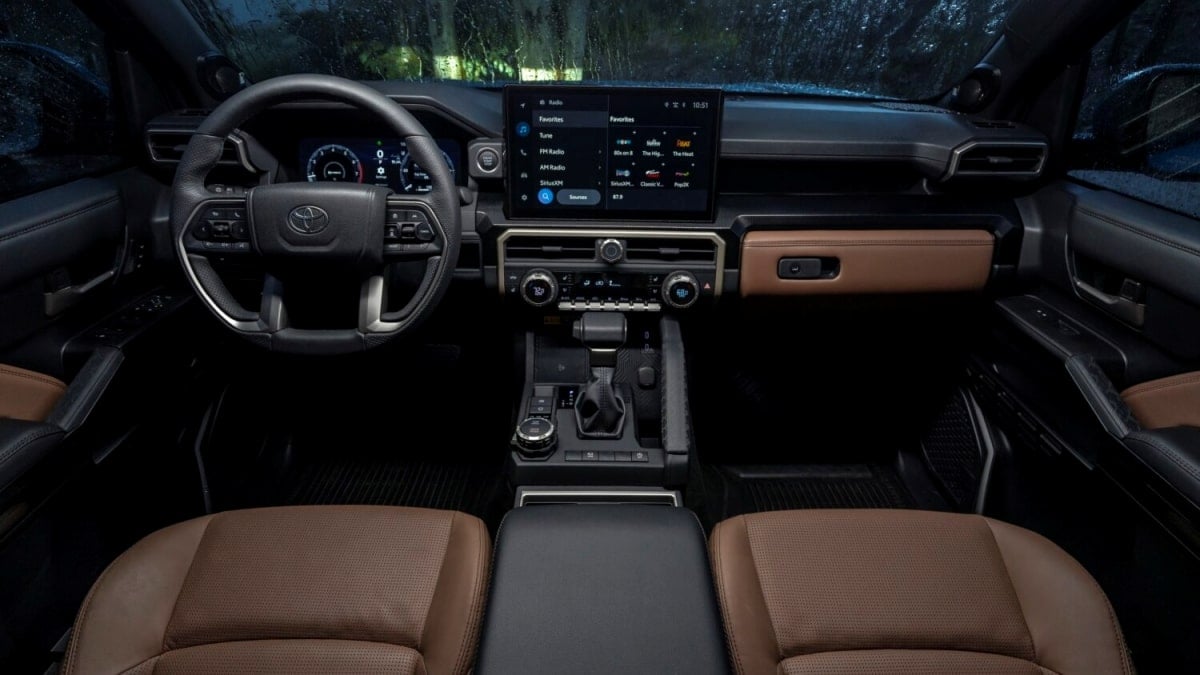
The interior materials are criticised on both the Land Cruiser and 4Runner, due to the two models’ extensive use of hard plastics inside the cabin. Some Land Cruiser owners also complain about excessive road noise.
You would think that because of its boxy design, the Land Cruiser would have more headroom, but actually, the two Japanese SUVs are quite evenly matched. The 4Runner has the option of third-row seats, which brings total passenger capacity to seven, while the Land Cruiser’s cabin caps you at five (unlike its GX J250 twin). The latter is more utilitarian than family-oriented.
Related story: Someone Is Asking $67,000 For A 2024 Toyota 4Runner, And This Foreshadows A Grim Future For The Company's SUV Models
Toyota Land Cruiser J250 interior dimensions
-
Front headroom:39.3-40.1 inches
-
Rear headroom: 38.5-39.3 inches
-
Front legroom: 41-42 inches (estimated)
-
Rear legroom: 36.7 inches
-
Cargo space behind rear seats: 46.2 82.1 cubic feet
-
Maximum cargo space: 82.1 cubic feet
Toyota 4Runner (Sixth generation) interior dimensions
-
Advertising
Front headroom:39.3 inches
-
Rear headroom: 38.6 inches
-
Front legroom: 41.7 inches (estimated)
-
Rear legroom: 34.8 inches (32-34 inches with optional third row, 29 inches on third row)
-
Cargo space behind rear seats: 12.1 cubic feet with third-row on, 44.8-48 cubic feet (non-hybrid), 42.6 cubic feet (hybrid)
-
Maximum cargo space: 84.4-90 cubic feet (non-hybrid), 82.6 cubic feet (hybrid).
Which to get
Toyota somehow managed to create two SUVs that feature the same mechanicals and yet are substantially different. The Land Cruiser J250’s most appealing features are the boxy design and more standard off-road equipment. The 4Runner looks smaller, but is actually similarly sized in most aspects.
Its interior is more flexible and oriented towards larger families, although the third-row is one of the most cramped in the segment. In hybrid guise, they tow the same, but one starts at over $15,000 less. Where would you put your deposit? Share in the comments below.
Related stories:
-
The Toyota Land Cruiser FJ Is Here, And It's Cuter Than We Thought
-
This Is The Ultimate Toyota Land Cruiser Pickup Truck, And You Can't Have It Just Yet
-
I Like The Toyota 4Runner, But Here's Why The Honda Passport Could Be The Better SUV
Image source: 2026 Toyota Land Cruiser, 2026 Toyota 4Runner
Set Torque News as Preferred Source on Google
Follow us today...