
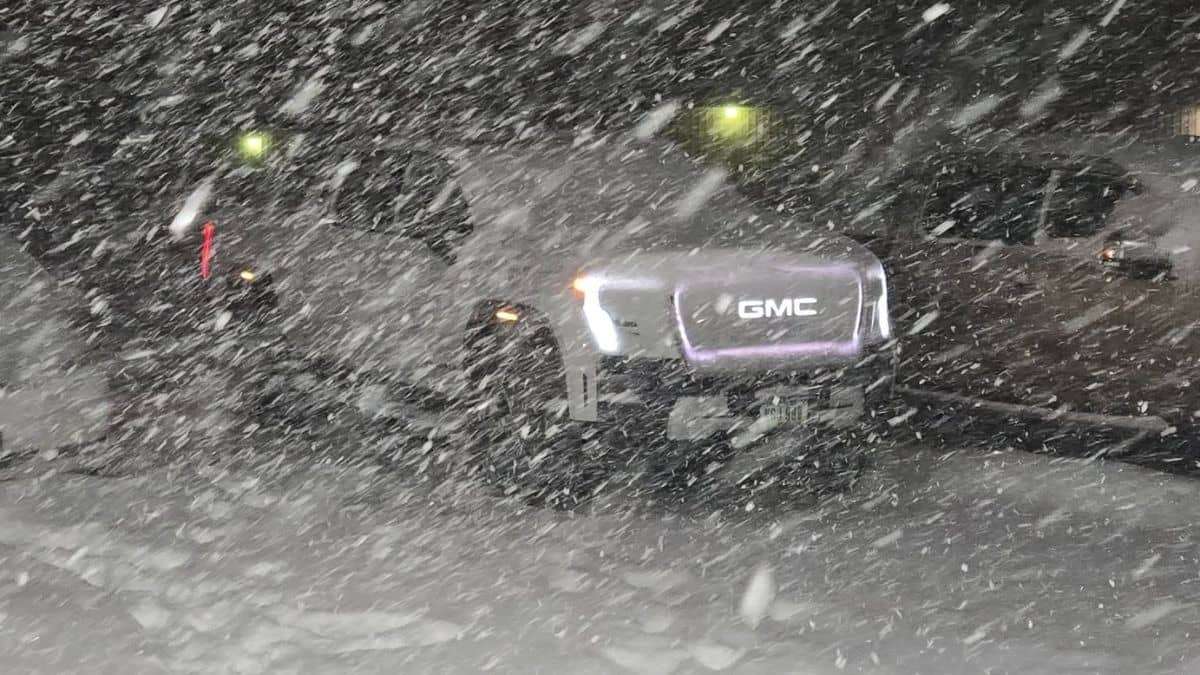

Winter remains one of the most scrutinized stress tests for electric vehicles, especially when it comes to full-size trucks. Cold temperatures, heavy snow, reduced traction, and energy consumption all collide at once, creating a scenario where skepticism tends to rise quickly. For many shoppers, it's not range charts or marketing claims that build confidence, but simple, uneventful stories from owners who drove through real storms and came out the other side without problems. While spending time reading through real-world ownership discussions in the “GMC Sierra EV Owners” group on Facebook, I came across a post by Kevin Cruz that captured this kind of quiet reassurance perfectly. Kevin shared his experience driving his GMC Sierra EV through a winter storm that dropped between 8 and 10 inches of heavy, wet snow, and his takeaway was refreshingly straightforward.
Here’s how Kevin described it in his own words: “I had no issues with a winter storm. It handled well with 8–10 inches of wet snow. I couldn't resist sharing a photo. Those front LEDs are head turners for sure.”
What makes Kevin’s post notable is not just the absence of problems, but the conditions themselves. Wet snow is often more challenging than dry powder, adding weight, reducing traction, and testing all tires and drivetrain control. For a large electric truck to move through those conditions without incident reinforces the idea that EV trucks are not just urban commuters with beds, but legitimate all-weather vehicles when properly equipped.
Why Winter Performance Matters More for Electric Trucks
Trucks are judged differently than sedans or crossovers. Buyers expect trucks to work when conditions are poor, whether that means towing, hauling, or simply getting through bad weather without hesitation. The Sierra EV carries decades of GMC truck expectations, and winter performance plays a major role in whether owners feel confident relying on it year-round.
One advantage EV trucks bring into winter driving is weight. Large battery packs lower the center of gravity and add mass over the axles which can significantly improve traction in snow. Combine that with instant torque that is precisely controlled by software, and EV trucks can feel remarkably composed when accelerating on slippery surfaces.
Kevin’s experience reflects that balance. The truck did not need drama or heroics to make its point. It simply worked, which is often the most reassuring outcome for owners navigating winter roads.
Lighting, Visibility, and Confidence in a Storm
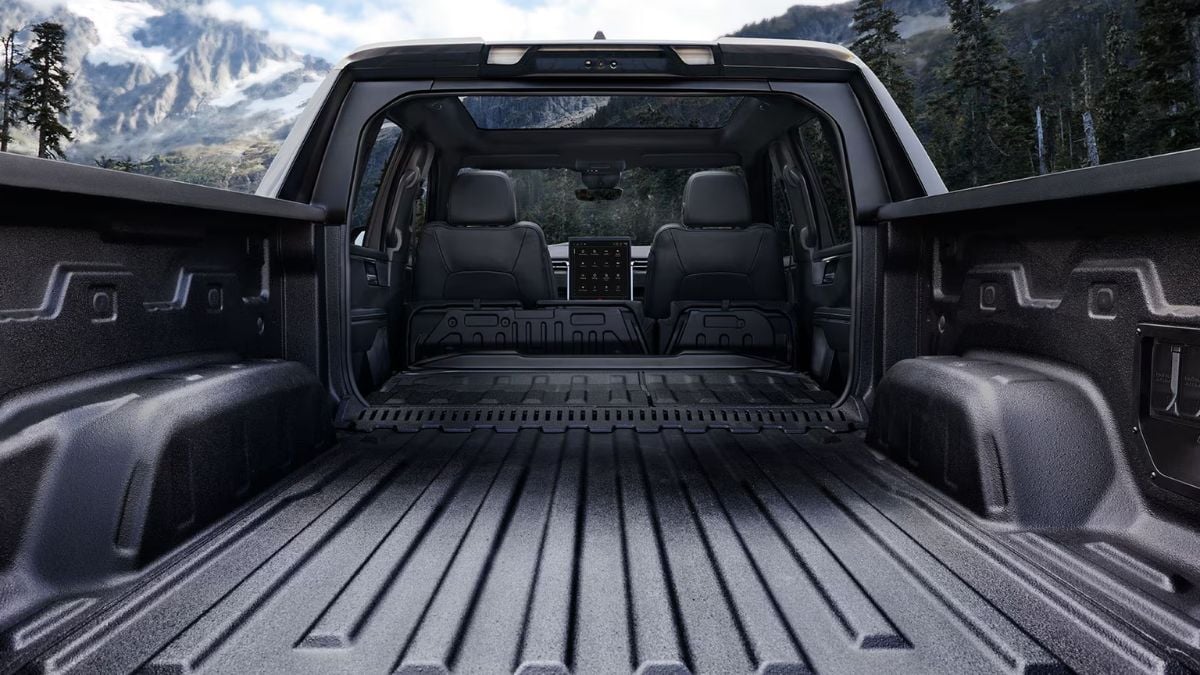
Kevin also mentioned something that may seem minor at first glance but becomes more important during harsh weather: lighting. The Sierra EV’s front LED lighting stood out in the storm, both visually and functionally.
In snowy conditions, visibility plays a huge role in driver confidence. Strong, well-placed lighting improves awareness, helps drivers see road edges, and ensures the vehicle itself is more visible to others. That design presence is part of why some owners say the Sierra EV feels like a natural evolution of GMC’s truck identity rather than a radical departure, echoing sentiments shared by drivers who believe they will likely remain GMC customers for life after buying a Sierra EV and experiencing its range, space, and everyday capability.
Cold Weather Isn’t Always Perfect for EVs
It's important to acknowledge that cold weather can still introduce challenges for electric vehicles. Battery efficiency decreases in low temperatures, which can reduce range and increase energy consumption. Charging speeds may slow if the battery is cold-soaked, and extended exposure to extreme temperatures can test thermal management systems.
These realities came up in the comments under Kevin’s post, offering valuable contrast. Caleb Fields shared, “Mine went into ‘turtle mode’ due to cold weather. I guess they can't be left out in the cold too long. It was below 0°F for a couple of days straight and we left it outside.”
Luc Woolsey responded with a very different experience, saying, “That's odd. I drove mine at -45° last winter without issues. It doesn't fit in my garage so she's out there all winter. 18 feet of snow, extreme temps, and not a single problem.”
Taken together, these comments highlight an important truth about EV ownership. Conditions, usage patterns, and individual circumstances matter. Extreme cold can challenge any vehicle, but outcomes can vary widely depending on how long a vehicle sits, how it is driven, and how its systems manage temperature.
Headlights, Snow Buildup, and Real-World Use
Another practical question raised in the comments focused on lighting performance in snow. Jeremy Jenkin asked, “Did you have any problems with snow accumulation on the headlights which reduced output? The LED headlights don’t melt snow as fast as the old filament lights.”
Kevin replied, “I did not, but the snow was heavy enough that I had to turn the fog lights on.”
This exchange underscores how modern vehicle design introduces new considerations without necessarily creating deal-breaking problems. LED headlights may behave differently in snow, but supplemental lighting and thoughtful driving adjustments often address those concerns in real-world scenarios.
Efficiency also came up as a point of curiosity. Vlad Predescu asked, “What is the efficiency in the cold/snow? Were you getting more than 1.6 kWh?” Kevin responded, “I'm getting 1.4–1.6 in town.”
Those numbers align with what many EV truck owners report during winter driving. Cold weather, snow-covered roads, and cabin heating all draw additional energy, but steady in-town driving can still produce predictable results. For many owners, this level of efficiency remains acceptable when weighed against the benefits of all-weather capability and daily usability.
How Real-World Use Shapes Long-Term Confidence
Stories like Kevin’s help fill in the gaps between specifications and ownership reality, similar to how other owners have described the Sierra EV Denali as one of the best vehicle purchase decisions they have made after living with it day to day. Prospective buyers often worry about how an electric truck will behave when conditions are less than ideal, especially if they are transitioning from heavy-duty gas or diesel trucks. Seeing real owners navigate snow, cold, and daily tasks without issues helps ground expectations, much like stories from drivers who were initially concerned about towing before being impressed by how the GMC Sierra EV handled towing heavy loads with confidence.
This kind of confidence-building experience mirrors feedback from Sierra EV owners who have praised the truck for its range, space, and everyday practicality, including drivers who were hesitant to move on from heavy-duty trucks but found reassurance in the Sierra EV’s instant torque, towing capability, and Super Cruise technology.
What This Says About Real-World EV Truck Reliability
I think Kevin’s post is a good example of why uneventful ownership stories matter more than dramatic headlines. Electric trucks are often judged by their worst-case scenarios, but everyday reliability in challenging conditions is what ultimately builds trust. When an owner drives through a winter storm and simply reports that everything worked as expected, that quiet success says a lot.
At the same time, the mixed experiences shared in the comments are just as valuable. They remind us that EV ownership is not one-size-fits-all, and extreme conditions can expose differences in usage, environment, and system behavior. That balance between confidence and realism is where honest conversations about EV trucks should live.
Key Takeaways
• Real-world winter driving matters. Calm, uneventful performance in heavy snow often builds more confidence than marketing claims or test-track numbers.
• EV trucks bring unique advantages. Battery weight and a low center of gravity can improve stability and traction when roads are slick.
• Cold weather still requires awareness. Range, efficiency, and charging behavior can change in winter, making preparation and realistic expectations important.
• Owner experiences vary. Temperature extremes, storage conditions, and driving habits can all influence outcomes.
• Balance beats hype. Honest owner stories help shoppers evaluate EV trucks fairly without exaggeration or fear.
What Do You Think?
Have you driven an electric truck through heavy snow or extreme cold? How did it perform for you?
And do real-world winter stories like this make you more confident in EV trucks? Or do you still have concerns about cold-weather reliability?
Don't hesitate to share your thoughts with us in the comments below.
Aram Krajekian is a young automotive journalist bringing a fresh perspective to his coverage of the evolving automotive landscape. Follow Aram on X and LinkedIn for daily news coverage about cars.
Image Sources: The “GMC Sierra EV Owners” public Facebook group and GMC’s gallery, respectively.
Set Torque News as Preferred Source on Google
Follow us today...



Comments
They're heavy in the right…
Permalink
They're heavy in the right weight distribution (low CG) and have excellent torque management. As long as the tires are decent, there's no reason they shouldn't do well.
Ed you’ve highlighted the …
Permalink
In reply to They're heavy in the right… by Ed Simmons (not verified)
Ed you’ve highlighted the 'secret sauce' of EV capability. While the sheer mass of the Sierra EV—roughly 9,000 lbs—might seem daunting, having that weight concentrated in the battery pack between the axles creates a center of gravity that keeps the tires planted much better than a front-heavy, unloaded gas truck.
The real game-changer, as you mentioned, is that torque management. Unlike a mechanical 4WD system that has to react to slip, the dual-motor setup can adjust power at the millisecond level. When you pair that precision with a low CG, you get exactly what Kevin experienced: a heavy-duty workhorse that feels surprisingly light on its feet, even in the slush.
There is one huge draw back…
Permalink
In reply to Ed you’ve highlighted the … by Armen Hareyan
There is one huge draw back no one talks about it seems road closures due to massive pile up what do you do for power in that situation? Can't walk to a gas station to fill up, assume for a sec your stuck on the highway for 3 days as seems to happen every winter now these EVs become coffins instead of respite from the weather
Nobody is arguing the fact…
Permalink
Nobody is arguing the fact that a 9,000lb 4wd truck won't handle well in the snow or on winter roads. The whole EV winter argument is that in winter temps the phantom battery drain and significantly reduced range if not consistently plugged in every day which cant be denied with a sunshine and roses EV article.
I've had my Chevy Silverado…
Permalink
I've had my Chevy Silverado EV through November of last year here in KY. With ice, snow, heat and cold never an issue. It warns me of icy driving conditions and adjusts. My truck performed without incident and though my range dropped about 10 miles that was about it. I won't ever go back to gas powered because my truck just works!
I've had my Chevy Silverado…
Permalink
I've had my Chevy Silverado EV through November of last year here in KY. With ice, snow, heat and cold never an issue. It warns me of icy driving conditions and adjusts. My truck performed without incident and though my range dropped about 10 miles that was about it. I won't ever go back to gas powered because my truck just works!