
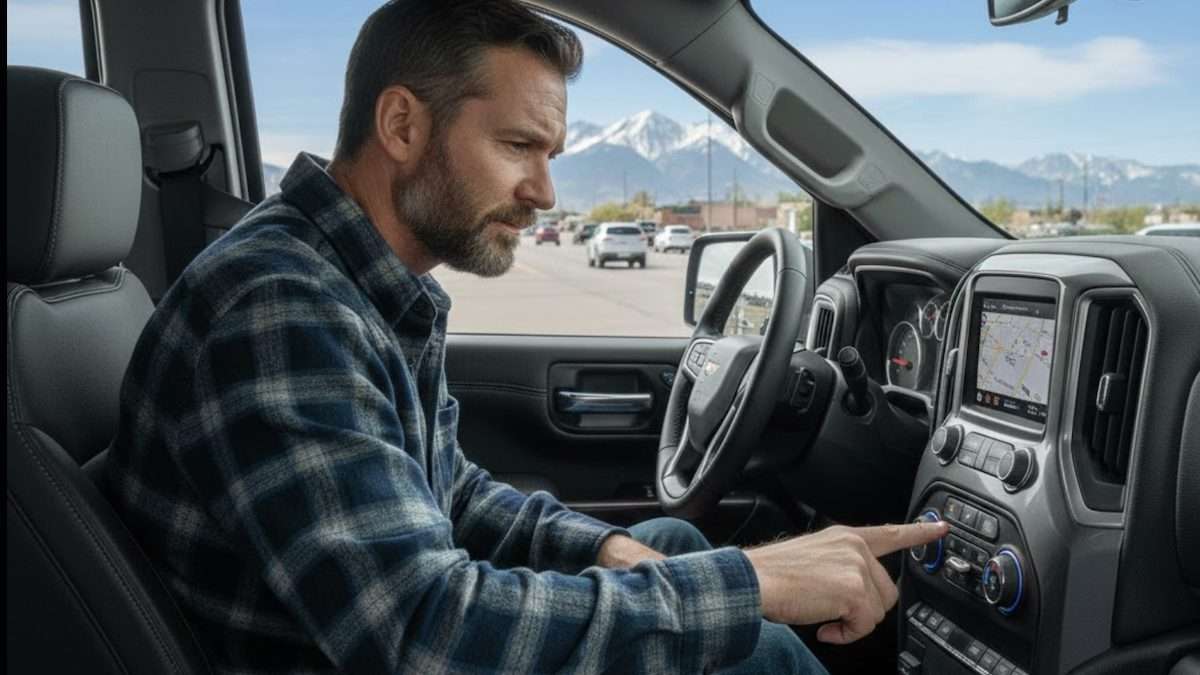

With the EPA officially abolishing stop-start incentives as of February 12, 2026, the era of the "un-killable" engine shutdown is over, and Chevy Silverado owners are first in line for the fix.
Imagine that you’ve just dropped $60,000 on a 2025 Silverado only to have the engine cut out at every stoplight, a "feature" that has owners like Don Swayne calling for an immediate software intervention now that federal mandates have officially shifted. In my research on recent GM owner sentiment, I found a trending post in a Facebook community for Chevy and GMC enthusiasts in which Don Swayne highlighted mounting frustration with the auto stop-start system and the urgent need for a manufacturer-led "kill-switch."
Don says, “I can’t stand the auto stop-start system on my 2025 Chevy Silverado. Now that Trump is rescinding the "Auto-Stop" requirement at the EPA, I hope GM will issue a software update to at least give us control over this feature. It’s the worst feature on my truck.”
In my 30 years covering the Detroit Three, I’ve seen regulatory shifts come and go, but I have never seen a federal policy change provide such an immediate opening for a manufacturer to win back owner loyalty. On February 12, 2026, the EPA officially signed the largest single deregulatory action in U.S. history, and at its core was the "auto stop-start" feature. For over a decade, you’ve been forced to live with an engine that "dies" at every red light, all so car companies could chase what EPA Administrator Lee Zeldin recently called a "climate participation trophy."
My Take: The $2,400 Loophole Is Gone
For years, General Motors and others didn't include a permanent "off" switch because of "off-cycle credits." These were regulatory points that yielded an average of $2,400 in compliance savings per vehicle. If a manufacturer set the system to "ON" by default every time you turned the key, they received the credit. If they gave you a permanent "OFF" button, they lost millions.
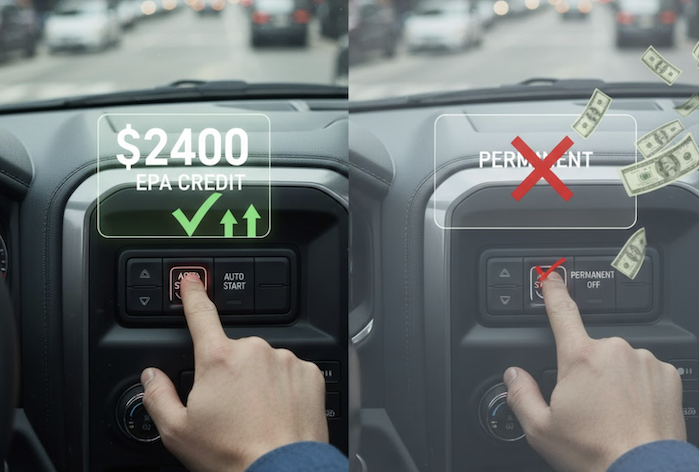
But as of yesterday, the Trump EPA abolished these credits entirely. According to an official statement from the EPA Press Office, the agency has eliminated the "government-created concept that let auto manufacturers meet federal standards on paper by adding features like the almost universally hated start-stop feature." You can read the full EPA final rule announcement here.
This brings us to the three main questions every truck owner is asking right now:
Who? The Trump Administration and EPA Administrator Lee Zeldin.
How? By rescinding the 2009 Greenhouse Gas Endangerment Finding and all associated off-cycle credits.
Why? To restore "consumer choice" and lower the cost of new vehicles by over $2,400 on average.
What Silverado Owners Are Saying
The frustration isn't just limited to Facebook. On Reddit, the community is discussing the technical toll this takes on the hardware.
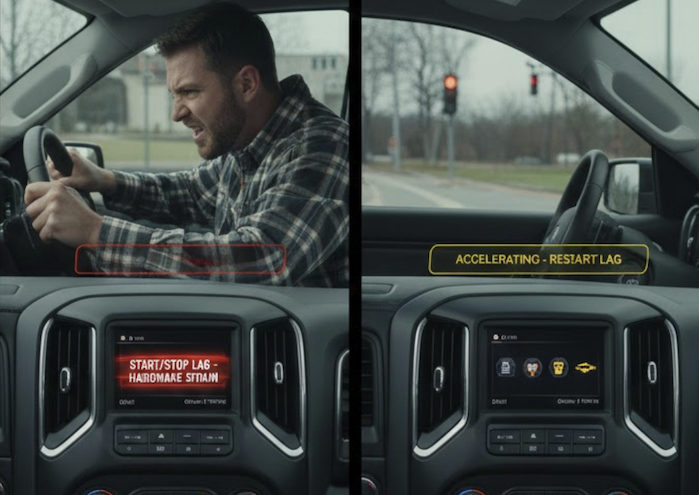
One user on Reddit noted the severity of the situation for those trying to bypass it manually, stating, "For me its when you forget to simply press it, come to a stop and then punch it to go and it randomly stops the motor for a split second, the restart lags and beats on the hardware since not synced up with your throttle position," which you can read in the full discussion here.
Another owner highlighted the new design's vulnerability and the high cost of components, noting, "Your replacement starter will be more expensive than the gas you saved," as reported in this Reddit thread.
This sentiment aligns with my previous reporting that Silverado owners face significant repair costs due to complex engine management systems that prioritize incremental fuel gains over long-term reliability.
My Analysis
1. Battery Drain is Real: These systems require expensive AGM (Absorbent Glass Mat) batteries. Constant cycling can reduce their lifespan by 30-50% in high-heat or extreme-cold environments, as we have here in Parker, Colorado.
2. The "Starter" Myth: While GM uses "hardened" starters for these trucks, they are not invincible. A standard starter might see 2,000-5,000 starts in its life; a stop-start vehicle hits that in a single year of city commuting.
3. Software is the Solution: GM already has the code. Vehicles in "Tow/Haul" mode often automatically disable stop-start. Delivering a "Permanent Off" toggle via an Over-The-Air (OTA) update is technically simple now that the EPA handcuffs are off.
Is a Software Update Coming?
I’ve spent 30 years talking to service managers, and I can tell you that they know we hate this feature. I’m optimistic about a software update because GM is pivoting toward an "intelligent assistant" model for its vehicles. In fact, GM recently announced a major software overhaul that will allow for 10 times more OTA update capacity by 2028.
But owners like Don Swayne don't want to wait until 2028. They want it for their 2025 models today. As I discussed when covering why some Chevy owners are ditching their trucks for older models, the complexity of modern software is often the primary "pain in the ass" for the average driver.
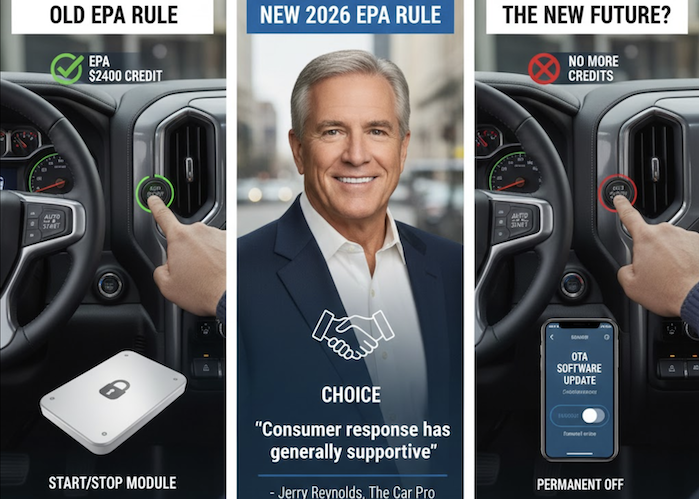
A verified expert in the field, Jerry Reynolds (The Car Pro), recently noted that while the EPA doesn't require the feature, the removal of credits means carmakers are no longer rewarded for fitting them as standard. Reynolds emphasized that "consumer response has been generally supportive, with many expressing relief that a feature long viewed as intrusive may soon become optional."
Key Takeaways for My Readers
- The Law Has Changed: As of February 2026, there is no longer a federal financial incentive for GM to force auto stop-start on you.
- Consumer Pressure Works: The EPA cited "countless Americans" who advocated for this change. Now that the government has moved, the pressure shifts to the manufacturers.
- Watch Your Warranty: While many owners use "eliminator" kits, a factory software update is the only 100% safe way to kill the feature without risking your powertrain coverage.
- Reliability Over Efficiency: The focus in Detroit is shifting from "climate participation trophies" back to "Durability and Choice."
My Recommendations
If you are like Don and can't stand the engine cutting out, here is my expert advice. First, use the "Manual" shifting trick (put the truck in 'L' and select the highest gear) to temporarily disable the system without spending a dime. Second, contact your dealer and ask specifically whether there is a "Technical Service Bulletin" (TSB) pending for a software toggle.
I’ve seen this play out before, specifically when GM had to address major transmission shudder issues with a software re-flash. If enough owners demand it, the update will come.
I also recommend checking my report on why the 2026 Silverado might be the most reliable truck in a decade if GM follows through on these deregulatory promises.
GM Needs To Deliver
The "Auto Stop-Start" era is officially in decline. With the Trump EPA clearing the regulatory path and owners reaching a breaking point, the ball is now entirely in General Motors' court to deliver the software "kill-switch" their customers are begging for.
How About You?
Now that the EPA has officially removed the financial incentives for auto stop-start systems, do you think GM has a responsibility to release a software update for current 2025 Silverado owners? Would a permanent "off" switch make you more likely to stick with the Chevy brand for your next truck? We want to hear about your experience on the road. Leave a comment in the red "Add new comment" link below and join the conversation.
Next Up: As we watch how GM responds to these new federal guidelines, it is important to keep an eye on other major shifts happening under the hood of the world’s favorite pickup. I’ve been digging into some concerning trends regarding long-term durability that every owner needs to see. Check out my latest deep dive, Why Chevy Silverado Owners Are Facing Massive Repair Bills, where I break down the high cost of engine management failures and what you can do to protect your investment.
Denis Flierl is a Senior Reporter at Torque News with over 30 years of hands-on experience in the automotive industry. Having served as a professional test driver and industry consultant for major automakers such as Chevrolet, Ford, Toyota, Honda, and Tesla, Denis provides a "boots-on-the-ground" perspective that goes beyond standard reporting. Since joining Torque News in 2012, he has specialized in cutting through market noise to deliver data-backed analysis and real-world owner stories. His work focuses on navigating the transition to EVs and the shifting automotive market.
Have a tip or question for Denis? > Engage with him directly on LinkedIn for industry analysis, or follow his latest updates on X @DenisFlierl and @WorldsCoolestRides. You can also find his latest car features on Facebook and Instagram.
Photo credit: Denis Flierl via Gemini
Set Torque News as Preferred Source on Google
Follow us today...



Comments
I absolutely think Start…
Permalink
I absolutely think Start/Stop qualifies for one of the dumbest things manufactures were coerced into doing to chase fuel efficiency CAFE targets. Instead of having to turn off start/stop every time I drive, it would be great if manufacturers did a firmware upgrade to turn it off by default.
I currently own a 2012…
Permalink
I currently own a 2012 Silverado and want a newer one but I will not buy one until they offer one without the start stop feature!
I want GM to default the…
Permalink
I want GM to default the stop/start to OFF when the vehicle starts for my 2025 Silverado. If I want it on I can use the switch on the dash but I doubt I would.
I hate this feature and…
Permalink
I hate this feature and would like to have turned off if a software update is approved and provided by GM. Whoever came up with this idea must have had his idiot hat on that day.
You don't have to be a rocket scientist to know the wear and tear on engine, starter, trans. and so forth that this feature is working against.