
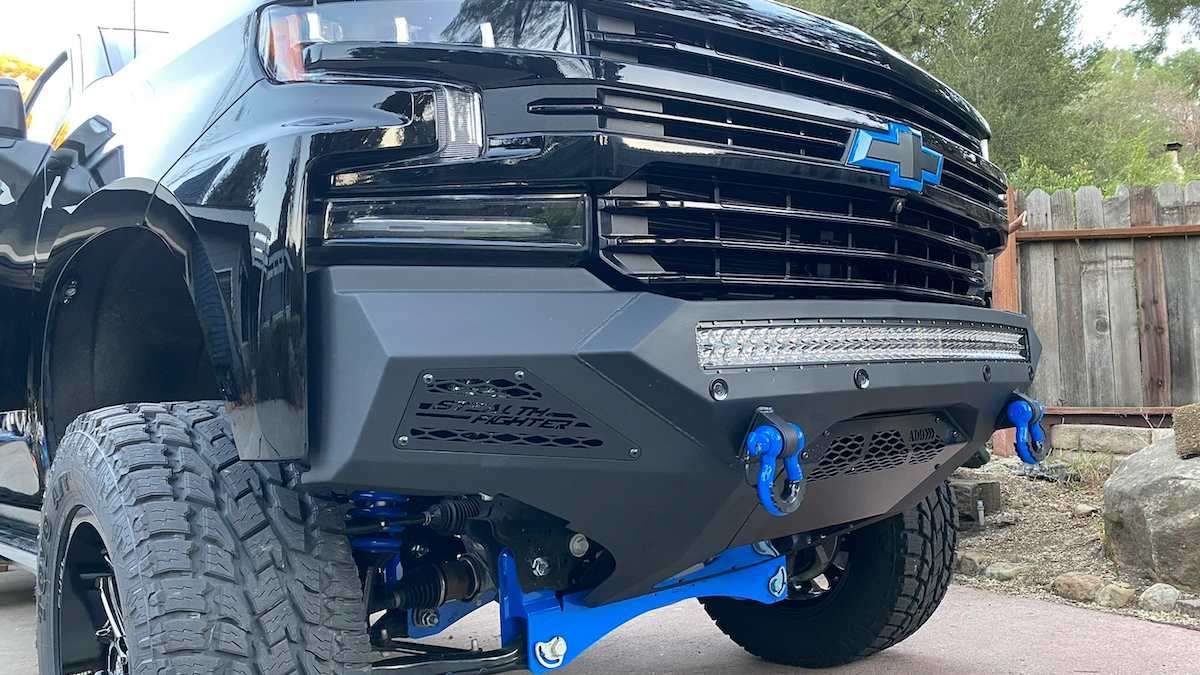

Find out why meticulous care wasn't enough to prevent this nightmare Silverado engine failure, and the difficult ultimatum this owner now faces.
A Chevy Silverado owner recently shared a nightmare scenario where, despite meticulous maintenance, his truck suffered catastrophic engine failure at just 140,000 miles. In my extensive research, I have tracked these specific powertrain issues to help owners decide if expensive repairs are worth the cost when the worst happens. What would you do?
It is the moment every truck owner dreads. You turn the key, expecting the familiar roar of your V8, but instead, you are greeted by a racket of metal-on-metal noises and a dashboard lit up like a Christmas tree. Kyle Mlodzik recently faced this exact scenario on the 2019 - 2026 Chevy Silverado & GMC Sierra Owners Facebook page.
Kyle says, "So it finally happened. My Chevy Silverado, after all of its scheduled maintenance and meticulous work, seems to have shit the proverbial bed at 140k."
As someone who has been involved in the automotive industry for over 30 years, I have seen this story play out more times than I care to count. It is a heartbreaking situation because 140,000 miles on a modern truck should not be a death sentence. Yet, for many Silverado owners, that mileage marker is the danger zone where the Chevy Silverado's high-mileage engine reliability is tested to its absolute limit.
The Infamous Cylinder 4 Nightmare
Kyle describes the diagnosis he received from the shop: "Tons of codes, and they keep telling me something with cylinder 4, timing chain throwing a rod or something."
In my experience analyzing General Motors powertrains, the specific mention of "cylinder 4" combined with "tons of codes" often points to the infamous lifter failures in the Active Fuel Management (AFM) or Dynamic Fuel Management (DFM) system. When these lifters collapse, they can bend pushrods, damage the camshaft, and cause misfires that throw the computer into a panic.
However, if the mechanic suspects it is "throwing a rod," we are looking at a catastrophic bottom-end failure. This distinction is critical because it changes the financial equation entirely. I recently covered a similar story: a Chevy Silverado owner says, at "100K in", he replaced the top end, transmission, and now there are suspension issues. He says, "I drove a Cyberbeast, and now I'm obsessed." In that case, the owner faced a cascade of failures that led him to question whether keeping the truck was financial suicide.
Maintenance Wasn't The Issue
One of the most frustrating aspects of Kyle's story is that he did everything right. He notes that the failure occurred despite the Chevy Silverado maintenance schedule being followed perfectly. It proves that mechanical sympathy only goes so far when dealing with potential engineering weaknesses.
Early in the ownership experience, paying for quality service is usually enough to keep these trucks on the road. For example, another owner I documented recently debated the high cost of dealer service. In my report, a Chevy dealer quoted him $799 for transmission service on his Silverado. "That's Outrageous", he says, but he bit the Bullet and had them do it anyway. "If it craps out later," I concluded, sometimes paying a premium for maintenance is necessary to preserve your warranty. But for Kyle, at 140k, the warranty is long gone, and the preventative maintenance did not prevent the disaster.
Kyle continues, "Is it worth replacing? However, they don't know for sure unless they take off the valve covers. What would you do?"

What Should Kyle Do Now?
Kyle is at a pivot point. The shop cannot confirm if it is a top-end lifter issue or a bottom-end rod failure without teardown labor, which costs money. If it is just lifters, you might get away with a $3,000 to $4,000 repair. If it is a sign of a thrown rod in Chevy trucks, he needs a new engine.
The cost to replace Chevy Silverado engine assemblies right now is staggering. A remanufactured 5.3L or 6.2L crate engine can run between $6,000 and $9,000 installed. If the truck is worth $15,000 in good condition, he's teetering on the edge of a total loss.
In my article, I explored the mindset behind buying and maintaining high-mileage trucks, after a Chevy Silverado 2500 broke down so often that the owner bought a stripped-down 1500. I argued that mileage is just a number if the maintenance is good. But in Kyle's case, the GM Active Fuel Management problems may have rendered that maintenance moot.
Now For the Hard Truth
If I were in Kyle's boots, I would authorize diagnostic labor to remove only the valve covers. If they find a collapsed lifter and the camshaft is still serviceable, fix it and sell the truck immediately. The trust is gone.
However, if the bottom end is compromised, do not replace the engine unless you plan to drive the truck for another 100,000 miles to amortize the cost.
Is it worth replacing a Silverado engine just to trade it in? Absolutely not. You will never recoup the $8,000 investment on a trade-in. You are just throwing money away.
If the engine is toast, it might be time to cut losses. Many owners are jumping ship entirely. I documented one such case in I Dumped My Chevy Silverado Money Pit for This 2023 Toyota Tundra. Now, 2 Weeks Later, My New Tundra is Being Recalled and is getting a New Engine. While the Tundra had its own recall, the owner felt better supported by the manufacturer than he did with his Chevy.
Key Takeaways
- Diagnosis is Key: Do not authorize a complete engine swap until you confirm it is not just a top-end lifter failure.
- The 140k Cliff: Chevy Silverado high mileage engine reliability often drops off after the 100k mark due to AFM/DFM lifter fatigue.
- Do the Math: If the repair exceeds 50% of the truck's current market value, it is rarely a sound financial decision to fix it.
- Maintenance isn't Magic: Even meticulous fluid changes cannot prevent mechanical fatigue in complex parts like lifters or rod bearings.
What Silverado Owners Are Saying
The community reaction to Silverado cylinder four misfire and lifter failure issues is often a mix of sympathy and frustration. Here is what other owners are saying across the web:
Reddit (r/ChevyTrucks): "If you refuse to perform diagnostics... don't drive with a misfire, you can nuke your cat converter. There's also the possibility that AFM has caused lifter failure or the lifter has ground down the cam lobe... GM never improved on AFM with the newer DFM, as my sis's 2021 Tahoe has had three engine replacements by 128k miles."
YouTube (Comments on GM Lifter Failure): "Owners describe sudden engine failures requiring $8000-$15000 replacements that GM refuses to cover outside warranty... a massive class action lawsuit alleges GM knowingly sold vehicles with dangerous fuel management systems that fail without warning."
Quora: A common sentiment regarding the 5.3L V8 is that while the engine block is bulletproof, the "tech" bolted to it is the Achilles heel. One user noted, "The issues boil down to the 8-speed transmission and the DFM system, be prepared for a potential $4k repair bill around 60k miles."
Wrap It Up
Kyle asks, "What would you do?" My advice is to stop the bleeding. If the valve covers come off and reveal a simple lifter failure, fix it cheaply and get out of the vehicle. If the rods are knocking, sell it as-is to a mechanic who wants a project, or part it out. Throwing $9,000 at a truck with 140,000 miles that has already betrayed you once is a gamble I would not take.
Tell Us What You Would Do
Would you spend $8,000 to replace an engine in a truck with 140,000 miles, or would you cut your losses and move to a different brand? Let us know in the comments below.
I'm Denis Flierl, a Senior Torque News Reporter since 2012, bringing over 30 years of automotive expertise to every story. My career began with a consulting role with every major car brand, followed by years as a freelance journalist, test-driving new vehicles, which equipped me with a wealth of insider knowledge. I specialize in delivering the latest auto news, sharing compelling owner stories, and providing expert, up-to-date analysis to keep you fully informed.
Follow me on X @DenisFlierl, @WorldsCoolestRides, Facebook, Instagram and LinkedIn
Photo credit: Denis Flierl via Kyle Mlodzik
Set Torque News as Preferred Source on Google
Follow us today...




Comments
Well you could trade trucks…
Permalink
Well you could trade trucks as soon as it hits 60k? Try a different brand? I used to be a die hard GM guy, I went to a different brand. I have been glad I did change brands but I'm not going to say what I changed to as if someone takes my advice, they may have different results. Trade when the value of your existing truck is decent and when the new trucks go on sale. I refuse to buy a used truck unless I know the seller well. Anymore a low mileage used truck could be a ticking time bomb and it's there for a reason. Also do research, there is a lot of good honest info out there and there are some decent brands out there. Don't depend upon hearsay and personal experience advice from people who are only loyal to one brand.