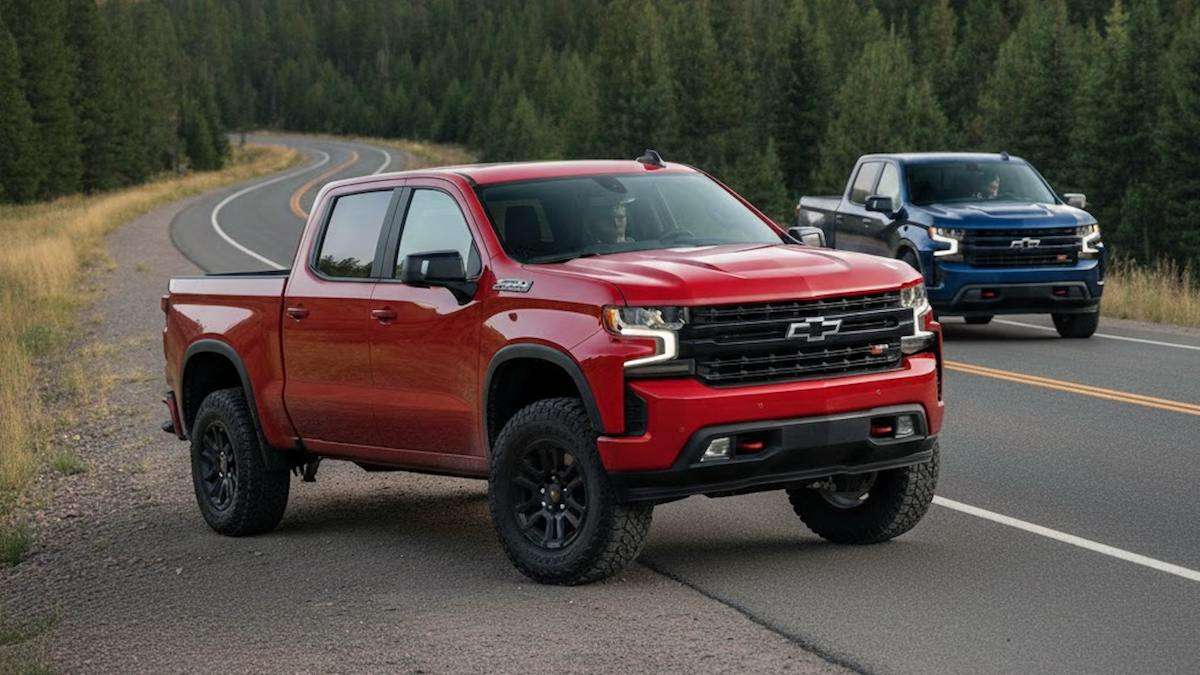

One owner’s viral question is exposing the hidden cost of choosing the Chevy Trail Boss’s rugged stance over the Silverado’s legendary smooth ride.
In my research on Chevy truck trends, I recently found a recent post shared in a Facebook community of Silverado and Sierra enthusiasts where Brett Mazzeo from Pennsylvania highlighted growing concerns about the ride quality of the 2026 Trail Boss and the literal price of choosing off-road style over highway comfort.
Brett says, “I’m close to getting my 2026 Chevy Silverado Trail Boss 5.3, and I should have it by next week. Has anyone here regretted getting the Trail Boss over an LT or RS? I know it doesn’t drive as smooth, but I love the way it looks.”
Brett's question is one I hear often in my decades of covering the Detroit Three:
This hits on the "Who, How, and Why" of the current 2026 Silverado market. Who is this affecting? Primarily the "pavement princess" crowd and weekend warriors who want the aesthetic of a lifted truck but spend 99% of their time on Interstate 25. How is it happening? It comes down to the mechanical trade-off between the Trail Boss’s specialized suspension and the more refined setups found on the LT or RST. Why does it matter? Because a $60,000 mistake is a heavy burden to carry for the next 72 months of financing.
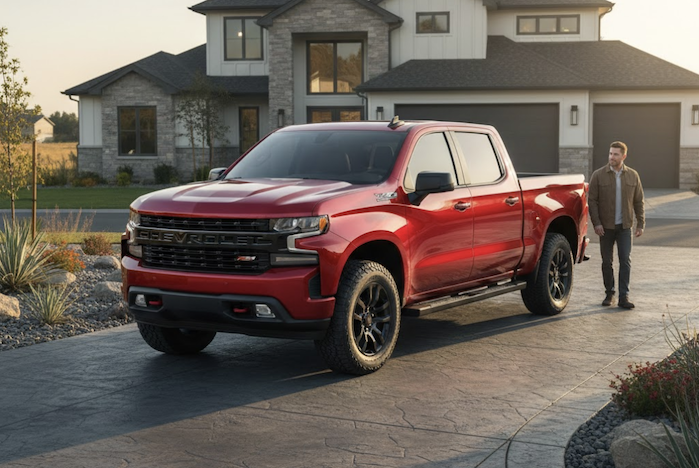
From My View: The 2-Inch Lift Dilemma
From my view, the Trail Boss is one of the best-looking trucks on the road today. I’ve spent three decades evaluating everything from the old square bodies to the latest EV pickups, and I can tell you that Chevy nailed the "factory custom" look. But that look comes with a technical cost. The 2026 Silverado Trail Boss features a factory 2-inch suspension lift, Z71 off-road hardware, and Rancho monotube shocks. While those Ranchos are great for soaking up a rutted trail in the Colorado backcountry, they have a different valving profile than the standard shocks on an LT.
I’ve documented these nuances before, specifically in my report on how some owners feel the 5.3L V8 remains a "ticking" risk as long as the DFM hardware is part of the package, which complicates the buying decision when you’re already worried about ride quality. You aren't just buying a lift; you are buying a specific mechanical ecosystem that prioritizes "digressive" valving—meaning it’s stiff at low speeds to prevent body roll, but can feel "chattery" on concrete highway expansion joints.
3 For The Road
1. The Tire Factor: The Trail Boss usually ships with Goodyear Wrangler Duratracs. These are "aggressive" all-terrains. The noise floor in the cabin is significantly higher than an LT on all-season tires.
2. The Center of Gravity: A 2-inch lift raises your center of gravity. Even with the Z71 rear lockers and stiffened springs, you will feel more "lean" in cloverleaf exits than you would in an RST.
3. The Payload Trade-Off: Soft off-road suspensions often have a lower effective "comfort" payload. When you max out the bed, the Trail Boss can feel more "squatty" than a standard LT.
My Take
My take is that most buyers are actually looking for the RST’s street performance but want the Trail Boss’s "tough guy" vibe. If you spend your time on the highway, the RST or even a well-equipped LT is objectively the better tool. David Gluckman of Edmunds recently noted during a first drive that while the Trail Boss styling is top-tier, the drivability, while tolerable, isn't the best of the bunch compared to non-lifted trims.
I’ve seen this play out in many different ways over the years. In another investigative piece I wrote, I looked at how owners are choosing between the Silverado LT and the LT Trail Boss based on their specific needs for dirt road stability versus highway refinement, and the consensus is often that "cool" wears off after the tenth hour of a cross-country road trip.
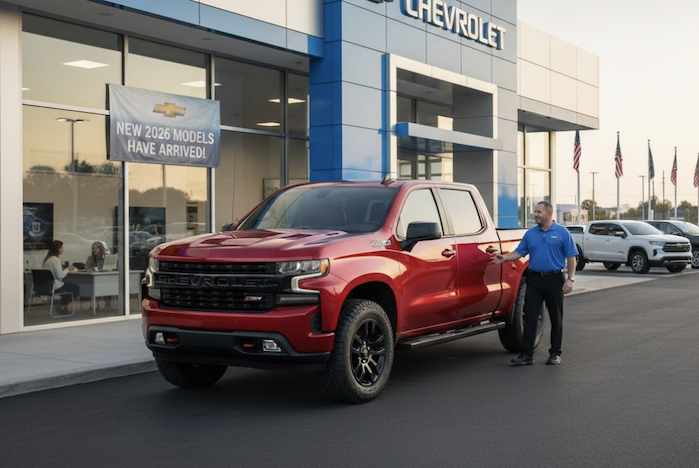
Community Technical Feedback
To get the real story, you have to look at the communities where these trucks live every day. One user on Reddit noted the severity of the situation for those who don't actually go off-road, stating, "Get the RST, save yourself the money if you're not doing any off roading. That's what I would have done if I could go back," which echoes the regret Brett is fearing.
Another owner on Reddit highlighted the specific suspension feel, mentioning, "The rancho shocks are crap, if you find the stock shocks to be too soft... you could always spend $1000-$2000 and have far superior shocks than ranchos," found in a recent 2026 model year discussion.
The Technical Truth About the Rancho Shocks
Let’s talk shocks for a second. The Rancho shocks on the Trail Boss are a twin-tube design. In my 30 years, I’ve found that twin-tubes are susceptible to "fading" if you really push them, but for the average buyer, the issue is "stiction." Because they are designed to handle the extra weight of a lift and bigger tires, they don't always react as quickly to small, sharp bumps.
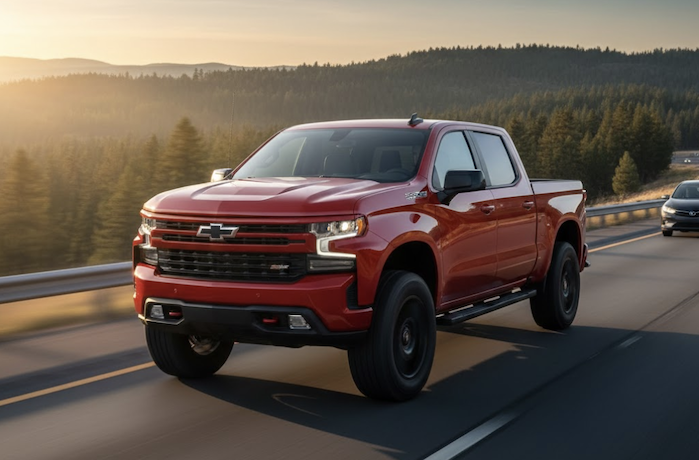
In my previous coverage of the 2026 lineup, I highlighted how buyers are weighing their next truck purchase based on whether they need the TurboMax torque or the traditional V8 rumble, and the suspension is just as critical as the engine choice. You can’t look at the truck in a vacuum. If you get the 5.3L V8 like Brett, you have a heavy engine paired with a stiff off-road suspension. That is a recipe for a "trucky" ride. If that’s what you want, great. If you’re expecting a Cadillac with a bed, you’re in for a surprise.
Even American Trucks experts suggest that while these systems are robust, the Rancho two-inch system is really for someone who wants that additional height without a total custom overhaul, yet they admit it has a specific "feel" that isn't for everyone.
Key Takeaways for 2026 Buyers
- Test Drive Both: Never buy a Trail Boss without driving an LT or RST back-to-back on the same stretch of highway.
- Understand the "Lift Tax": You will pay more at the pump. The 2-inch lift and M/T tires create more aerodynamic drag and rolling resistance.
- The Interior is Identical: Unless you step up to the LT Trail Boss, the interior doesn't change much from the standard trims. You are paying for the "under-the-skin" hardware.
- Resale Value is High: If you do regret it, the Trail Boss currently holds its value better than almost any other trim because the "look" is so in-demand on the used market.
The "Unseen" Cost of the Trail Boss
I also want to point out that it isn't just about the ride. It’s about the long-term maintenance of a lifted vehicle. I’ve written extensively about how keeping a Silverado reliable for high-mileage use requires a strict adherence to maintenance schedules, especially when you add the stress of a lift kit. A lifted truck puts different angles on your CV axles and ball joints. While Chevy engineers this at the factory to be within spec, it is still more "stress" than a stock-height truck.
Do You Value "Looks" or "Feel" More?
Choosing between the 2026 Silverado Trail Boss and a smoother-riding LT comes down to one question: Do you value how the truck looks from the outside or how it feels from the inside? If you love the aggressive stance and plan to hit the trails, the Trail Boss is a factory-warrantied masterpiece that saves you the headache of aftermarket mods. However, if your daily "off-roading" is just the gravel parking lot at the job site, you might find yourself among those who regret trading a supple highway ride for a 2-inch lift.
What Would You Do?
Is the aggressive "factory custom" look of the Trail Boss worth the sacrifice in ride quality, or would you rather have the smoother highway manners of an LT or RST? If you have recently taken delivery of a 2026 model, I would like to hear about your experience. Do you regret the lift, or is it exactly what you expected? Please leave a comment in the red "Add new comment" link below, and let’s start the conversation.
About The Author
Denis Flierl is a 14-year Senior Reporter at Torque News and a member of the Rocky Mountain Automotive Press (RMAP) with 30+ years of industry experience. Based in Parker, Colorado, Denis leverages the Rockies' high-altitude terrain as a rigorous testing ground to provide "boots-on-the-ground" analysis for readers across the Rocky Mountain region, California EV corridors, the Northeast, Texas truck markets, and Midwest agricultural zones.
A former professional test driver and consultant for Ford, GM, Ram, Toyota, and Tesla, he delivers data-backed insights on reliability and market shifts. Denis cuts through the noise to provide national audiences with the real-world reporting today’s landscape demands.
Connect with Denis: Find him on LinkedIn, X @DenisFlierl, @WorldsCoolestRides, Facebook, and Instagram.
Photo credit: Denis Flierl via Gemini
Set Torque News as Preferred Source on Google
Follow us today...