
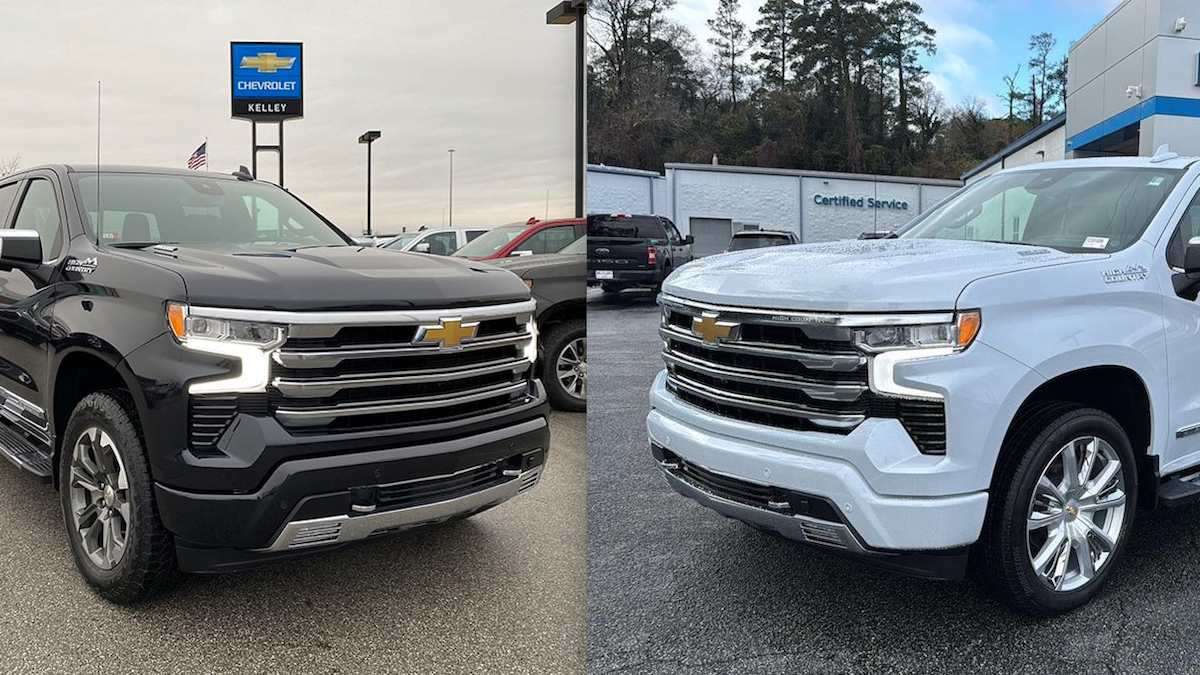

Before you sign the papers on that shiny new 2026 Silverado upgrade, you need to know if Chevy finally killed the "ticking time bomb" under the hood or if you're just trading one lifter nightmare for another.
Imagine finally deciding to treat your wife to the ultimate upgrade, a brand-new 2026 Chevy Silverado, hoping the fresh warranty will finally banish the "lifter-ticking" ghosts of the past. You pull into the driveway, but instead of pure excitement, you’re looking at the engine bay with a skeptical eye, wondering if you just traded a reliable 2023 for a shiny new ticking time bomb.
Gary Blaine on the 2019 - 2026 Chevy Silverado & GMC Sierra Owners Facebook page says:
“I want to trade in my wife’s 2023 Chevy for a 2026 Silverado with a 5.3L, but I’m hearing there are still lifter issues with the 5.3s. The only reason I’m trading a 2023 for a 2026 is the warranty, but I may buy an extended warranty if I can’t work a decent deal.”
This hesitation is perfectly rational because, as independent reports suggest, the Chevy Silverado 5.3L V8 lifter failure remains the most critical issue affecting these engines, with the Dynamic Fuel Management (DFM) system continuing to show "alarming rates" of mechanical trouble. In my own deep-dive investigation into these powertrain pitfalls, I’ve found that even with religious maintenance, GM didn’t make a junk design disappear, leaving many 5.3L and 6.2L owners wondering if their trucks are destined for the shop before the first 30,000 miles.
Consumer advocacy groups have highlighted that V8 engine reliability concerns are a top reason for the Silverado's checkered reliability ratings history. Dealing with these machines daily, I’ve shared stories of owners like Ron, who said goodbye to his rig because losing trust in the product simply wasn't worth the stress of national backorders on critical engine components.
Is the 2026 Silverado a Safe Bet?
I have spent three decades under the hoods and in the driver’s seats of GM’s most famous trucks. I’ve seen the "bulletproof" GMT400 models of the '90s cross the 400,000-mile mark, and I’ve seen the modern T1XX platform struggle to make it to its first spark plug change. The dilemma Gary faces, trading a 2023 for a 2026 solely for a warranty, is the new reality of truck ownership.
The 5.3L EcoTec3 V8 is a mechanical marvel on paper, but the Dynamic Fuel Management (DFM) hardware is its Achilles heel. This system uses specialized "collapsing" lifters that can deactivate cylinders in 17 different patterns. While great for EPA ratings, the constant cycling of oil pressure required to keep these lifters functioning creates a high-wear environment. When a lifter fails, it doesn't just "tick"; it often collapses entirely, potentially bending a pushrod or "grenading" the camshaft.
Why the 2026 Might Not Be the "Fix" You're Hoping For
While GM has made incremental improvements to the lifter design and oil flow passages for the 2026 model year, the fundamental architecture remains the same. You are still buying a truck with complex valvetrain hardware that is inherently more prone to failure than a traditional fixed-lifter V8.
Extended Warranty vs. New Trade-In: If Gary's 2023 Silverado is running perfectly, trading it in for a 2026 might actually be a lateral move in terms of reliability. You are essentially paying a "new truck tax" just to reset a clock that might still be counting down to the same mechanical failure. In many cases, a high-quality, exclusionary extended warranty on the 2023 model is a more fiscally responsible move than taking the massive depreciation hit on a 2026 trade-in.
Recommendations for 5.3L Owners
If you are determined to get into a 2026 or if you decide to keep your 2023, follow these steps to maximize your engine's life:
1. Ignore the Oil Life Monitor: GM might say you can go 7,500 miles or more, but for these DFM engines, you should change your oil every 3,000 to 5,000 miles. Clean oil with high-quality detergents is the only way to prevent sludge buildup that can cause lifters to stick.
2. The Electronic Disabler: Many owners swear by DFM disabler modules. These plug into the OBD-II port and keep the engine in 8-cylinder mode 100% of the time. While it won't remove the mechanical failure points, it stops the constant "cycling" that accelerates wear.
3. The "Mechanical Delete": If you are out of warranty and face a failure, don't just replace the lifters with OEM parts. Consider a full mechanical DFM delete kit that replaces the specialized lifters with standard ones and uses a non-DFM camshaft. It’s the only way to truly "kill" the problem.
Key Takeaways
- The 2026 5.3L is not a redesigned engine; it is an evolution of the L84 architecture with the same DFM risks.
- Warranty resets are the primary motivation for trading up, but the mechanical risk remains persistent.
- Maintenance is mandatory, not optional. Shortening oil change intervals is your best defense against 2026 Silverado engine problems.
- Extended warranties are often cheaper than the depreciation on a new truck trade-in.
What Silverado Owners Are Saying
The community sentiment is a mix of frustration and "brand loyalty fatigue." Here is what owners are reporting on the ground:
"Mine seems to have just got this issue today... 2019 Silverado with the 6.2L engine. Dealership clocked me at $4K, saying there's a mechanical misfire... I'm wondering if I get this repaired; are the rest just going to fail anyway?" underdressed76 via Reddit
"Under 50,000km my trail boss collapsed a lifter, took out a pushrod, camshaft... now at 90,000km my lifter tick is back and getting louder. With religious early quality oil and filters changes." brandomountainman via Reddit
"The 2023 5.3 does have issues... I serviced my truck every time on time at Chevrolet... $9300 to change all lifters." Ok-Reputation-8673 via Reddit
Your Best Move In 2026
Trading a 2023 Chevy Silverado for a 2026 model might give you a fresh bumper-to-bumper warranty, but it won't necessarily give you a more reliable engine. The 5.3L V8 remains a "ticking" risk as long as the DFM hardware is part of the package. Unless you simply want the newer interior or updated tech, your best move might be to protect your current 2023 with a robust extended warranty and a strict 3,000-mile oil change schedule.
It's Your Turn: Would you trust a new 2026 Silverado with your hard-earned money, or have the lifter issues finally pushed you to look at the Tundra or F-150? Click the red link below to write your comment and join the community in sharing experiences.
With over 30 years of industry experience, Denis Flierl brings an insider’s perspective to Torque News, where he has been a Senior Reporter since 2012. Before picking up the pen, Denis consulted for the automotive industry's biggest brands and honed his skills as a test driver. He cuts through the noise to deliver the latest auto news, compelling owner stories, and the expert analysis necessary to navigate today's changing automotive market.
Have a tip or question? Follow me on X @DenisFlierl and @WorldsCoolestRides, or connect with me on Facebook, Instagram, and LinkedIn.
Photo credit: Denis Flierl
Set Torque News as Preferred Source on Google
Follow us today...







Comments
If general motors went back…
Permalink
If general motors went back to the solid lifter 5.3 and refined the fuel delivery system they couldn't keep up with the demand for new trucks. Uniform compression in a combustion engine gives it eternal life
Yet more evidence that…
Permalink
In reply to If general motors went back… by Raylyn Olson (not verified)
Yet more evidence that Amerixan made vehicles are junk and should just be avoided at all costs.
My 5.3 lifters have been…
Permalink
My 5.3 lifters have been lifting since 2006 with no issues. And I wait until the maximum oil change interval and usually a quart low with no issues.
I have a 2008 Chevy Express…
Permalink
In reply to My 5.3 lifters have been… by Jscott1000 (not verified)
I have a 2008 Chevy Express conversion van with a 5.3. It currently has 520,000 on it. The van don't have active fuel management or Dfm and work great. They need to stop using complex designs.
I want to trade meth for PCP…
Permalink
I want to trade meth for PCP 🤣🤣🤣🤣🤣😗
I am 68 years old and was…
Permalink
I am 68 years old and was raised in a Chevrolet household. I passed on the Silverado for this reason and switched to the Ram truck. Pushing 100,00 miles and zero issues. Still yearning for a chevy though. Maybe 2027.
Talk about beating a dead…
Permalink
Talk about beating a dead horse, this all overhyped BS. Look at the actual percentage of failures and ignore the squeaky wheels out there. I have a 2018 5.3 with 250K miles with no lifter issues, which is about the same point my 2004 had so much ring blowby that the truck became scrap metal. The percentage of failures is overall very low and blown out of proportion.
I own a 2017 Chevrolet…
Permalink
I own a 2017 Chevrolet Silverado with 5.3L engine. It has 72000 thousand miles and is starting to lifter tick the first 30 seconds after starting. Why hasn't the NTSB issued a recall for this blatant mistake. It's feels like the elephant in the room that no one can see. Or maybe it's time for a class action suit to hold General Motors liable for their incompetence.
I bought a 2025 Silverado…
Permalink
I bought a 2025 Silverado 1500 High Country 3.0L diesel. I love it. It is quiet, a great ride, responsive and I get 29 mpg. I highly recommend it.
I would absolutely not trade…
Permalink
I would absolutely not trade in your 2023 for a 2026 with any potential for lifter issues, it would make a lot more sense to wait till probably September when the 2027 models come out with the new V8s 5.7L and 6.6L these issues have been known in the newer versions of the ecotec 3, they will have certainly resolved this issue, you'd probably also end up with a lot more power don't scare yourself into thinking you need to do something urgently.
Need to get the name of a…
Permalink
Need to get the name of a shop who can do the DFM delete....I am in Greenville, SC.