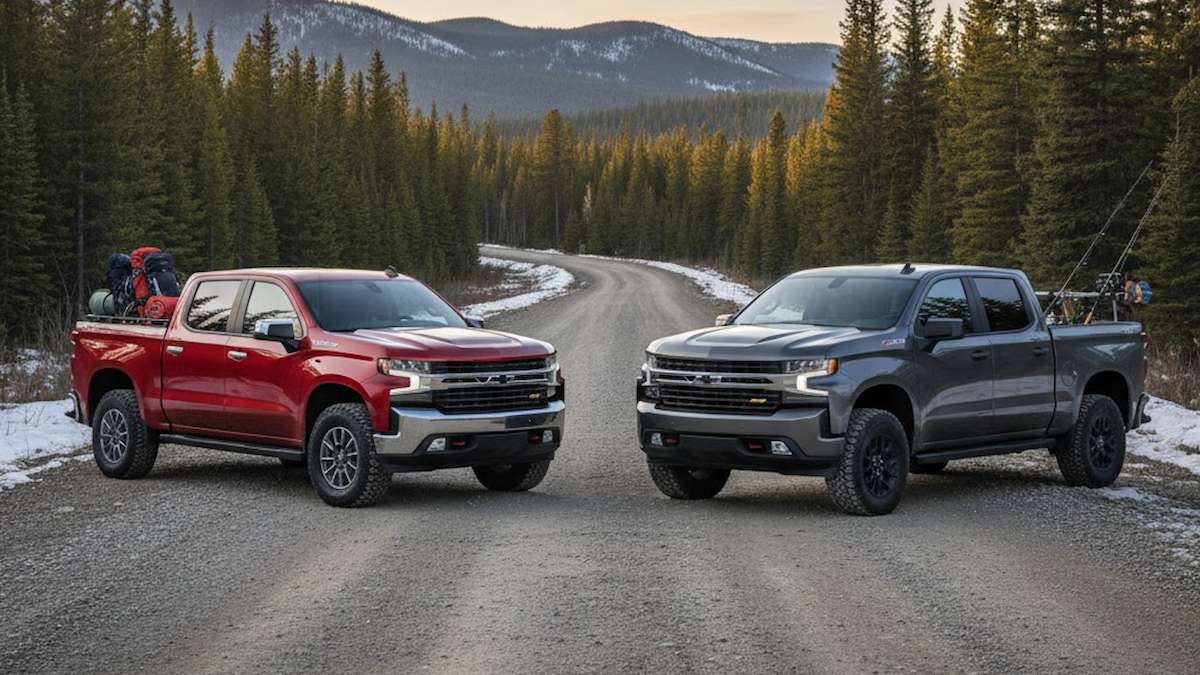

This $60,000 2026 Chevy Silverado decision comes down to one hidden reality about towing in the Midwest.
In my latest investigation into Chevrolet reliability, I came across a recent post shared in a Facebook community for 2019-2026 Chevy Silverado and GMC Sierra owners, where Ryan Ross Gall highlighted the difficult choice between trim capability and the steep fuel costs of navigating Midwest winters. First, imagine you are gearing up for an ice fishing trip across a frozen lake, but you have to decide whether that aggressive Trail Boss stance is worth losing 3 MPG on every mile of the highway drive there.
Ryan says, “2026 Chevy Silverado RST vs Trail Boss. I'm looking at getting a Silverado in either the RST or Trail Boss trim. Leaning towards the 2.7 TurboMax. If I were to go with the RST, I would install a leveling kit. Just wondering if anyone has any input on either? 90 percent of my driving is on highways or in town. I'm from the Midwest, snow, gravel roads, hunting, fishing, ice fishing out on the lakes, and light off-road use. Occasionally, I travel to Montana and Colorado for hiking and camping trips and get off the beaten path. Just wondering what the real-world performance and fuel economy differences are between the two trim levels, with the Trail Boss being higher, and is there a significant ride quality difference between them? I don't tow much. I have a single axel trailer that I may haul my 8x8 argo on, maybe an ice castle fish house, enclosed trailer at most.”
I have spent over 30 years covering the automotive beat, and if there is one thing I have learned, it is that a truck's spec sheet rarely tells the whole story once you hit the gravel roads of the Midwest or the high altitudes of the Rockies. Ryan's dilemma is one that I see hitting my inbox almost daily: Should he go with the street-savvy 2026 Chevy Silverado RST or the factory-lifted Trail Boss?
Ryan is looking at the 2.7L TurboMax engine, and he is a perfect example of the modern truck owner. He spends 90 percent of his time on the highway or in town, but the other 10 percent is spent ice fishing on frozen lakes, hunting, and navigating the unpredictable Midwest snow. He is not a heavy hauler, but he needs a rig that won't leave him stranded when he gets "off the beaten path" in Montana or Colorado.
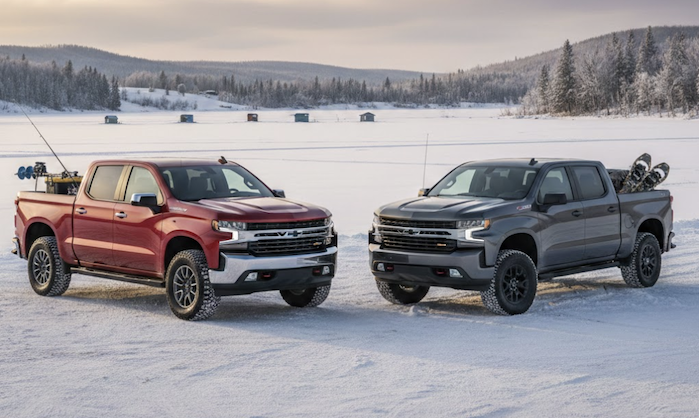
From My View: The 2.7L TurboMax Reality Check
The first question we have to answer is Who is this truck actually for? Chevy designed the 2.7L TurboMax to be the "sensible" choice, but it is anything but boring. With 310 horsepower and 430 lb-ft of torque, it out-muscles the 5.3L V8 in torque. I have found that this engine is the "sweet spot" for folks like Ryan who want the efficiency of a smaller displacement without sacrificing the grunt needed to pull an 8x8 Argo or an ice castle fish house.
However, there is a catch. In my previous reporting on how the 2.7L TurboMax stacks up against the 3.0L Duramax, I noted that while the 2.7L is a "smooth devil" for city commuting, its fuel economy is highly sensitive to aerodynamics and weight. This brings us to the "how": how much does that Trail Boss lift actually cost you at the pump?
My Take on the 3 MPG Penalty
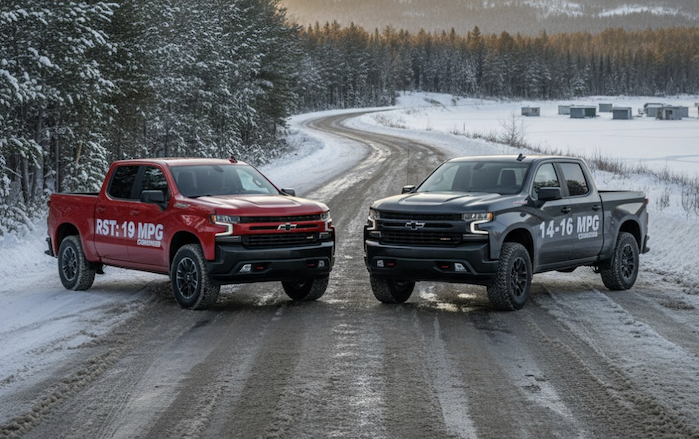
If you choose the RST, you are looking at an EPA-estimated 21 MPG on the highway. If you opt for the Trail Boss, that number drops significantly. Why? It is not just the 2-inch factory lift; it is the aggressive Goodyear Wrangler Territory MT tires and the increased wind resistance.
According to verified testing by CarBuzz, the 2026 Silverado RST achieves a combined 19 MPG, whereas the Trail Boss variants often struggle to stay out of the mid-teens in mixed driving. One owner on Reddit noted the reality of this trade-off, stating, "TB technically has better range (though it's nominal and potentially even non-existent since the RST seems to perform well in highway only range tests)," which you can find in the full discussion here.
What You Need To Know
1. The Lift Logic: A factory lift on the Trail Boss is "set and forget," but an aftermarket leveling kit on an RST allows you to keep the smoother street tires for better MPG while gaining the ground clearance you need for snow.
2. The 8-Speed Factor: The 2.7L TurboMax is exclusively paired with the 8-speed automatic. While some miss the 10-speed found in the V8s, the 8-speed is specifically mapped to keep this turbo in its power band.
3. Midwest Durability: The TurboMax features a fully forged bottom end and diesel-inspired internals. It was built to take the abuse of cold Midwest starts and heavy turbo loading.
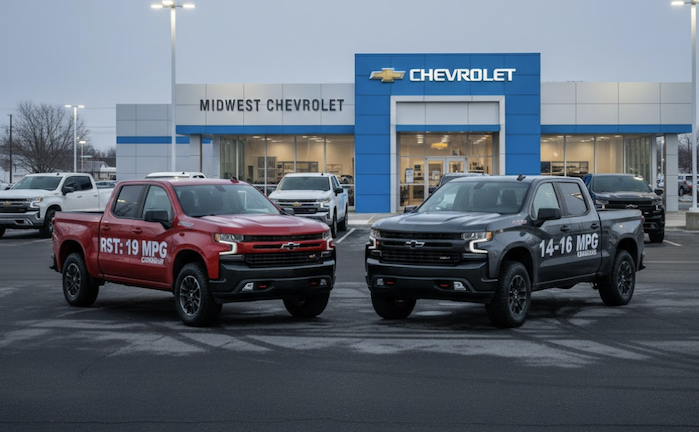
Why the RST with a Leveling Kit is the Smart Play
The final question is Why? Why would I recommend the RST over the purpose-built Trail Boss for a Midwest hunter and fisherman? It comes down to ride quality and versatility. The Trail Boss uses Rancho monotube shocks that are great for soaking up big hits off-road, but they can feel "busy and bouncy" on the highway.
In my investigation into common Silverado suspension complaints, I’ve found that owners who spend 90 percent of their time on pavement often regret the Trail Boss's stiffer off-road tuning. By choosing the RST, Ryan gets the "street-inspired" aesthetics and a more composed highway ride. When he adds a high-quality leveling kit, he gets the look he wants without the permanent fuel economy penalty of the Trail Boss’s heavy-duty off-road tires.
As noted by Jonathan Elfalan at Edmunds, the Silverado tracks straight on the highway, but "midcorner bumps can upset the Silverado pretty easily" in certain trims. The RST’s suspension is generally more forgiving for the "in-town" driving Ryan does most.
Observations From Owner Communities
The community's voice is loud in this debate. One user on Reddit highlighted the practicality of the RST for street use, stating, "Go with the RST, that's more of a 'street' style ride... Can't go wrong with either," which you can read in the full discussion here.
Another owner pointed out the hidden costs of the rugged look, mentioning, "Those tires are more expensive, wear down faster, add extra wear to other drivetrain components, make more road noise, and hurt gas mileage," found in this Reddit thread.
Key Takeaways
- RST for the Win: For 90% highway/city driving, the RST provides superior ride comfort and better fuel efficiency.
- The 2.7L is Enough: Don't let the "four-cylinder" label scare you; the 430 lb-ft of torque is plenty for light trailers and Midwest snow.
- Leveling Kit Strategy: Adding a leveling kit to an RST offers the ground clearance for ice fishing without the "Trail Boss tax" at the gas station.
- Warranty Peace of Mind: The TurboMax often comes with a better 100,000-mile powertrain warranty than the V8s, underscoring Chevy’s confidence in this specific block.
My Advice on Reliability
I’ve followed the evolution of the L3B engine closely. In my report on why the 2.7L TurboMax is becoming a reliability favorite, I explained that because it lacks the complex lifters found in the V8s, which have a history of failure, it is actually the simpler, more robust choice for long-term ownership.
A report from Preston Hood Chevrolet substantiates this, noting that the TurboMax engine is designed like a diesel, utilizing a forged steel crankshaft and iron cylinder liners to handle high loads. This is the kind of engineering that matters when you are 50 miles deep in the Montana backcountry.
Avoid the "Highway Penalty"
For a Midwest owner like Ryan who balances daily commutes with weekend adventures on the ice or in the woods, the 2026 Silverado RST with the 2.7L TurboMax is the clear winner. You get 21 MPG on the highway, a more comfortable "street" ride for the family, and the ability to adjust ground clearance with a leveling kit. The Trail Boss is a fantastic tool, but unless you are spending more than half your time in the dirt, the "highway penalty" just doesn't make sense for your wallet or your comfort.
Which Truck Would You Buy?
This is the ultimate $60,000 question: Would you take the refined RST and bank the fuel savings for your next fishing trip, or is the rugged "set and forget" factory lift of the Trail Boss non-negotiable for your lifestyle? I want to hear from my fellow drivers in the Midwest and Rocky Mountain regions. Does the 3 MPG penalty matter when you are staring down a foot of fresh powder? Please leave your thoughts by clicking the red “Add new comment” link below.
The V8 Lifter Crisis
If you are leaning toward a V8 instead of the TurboMax, you need to read my deep dive into why this 2026 Chevy Silverado buyer is right to be "scared" of V8 lifter issues, but warned that the TurboMax transmission is the real hidden trap. I pull back the curtain on why skipping the lifter drama might just land you in a different kind of mechanical headache if you aren't careful.
Denis Flierl is a 14-year Senior Reporter at Torque News and a member of the Rocky Mountain Automotive Press (RMAP) with 30+ years of industry experience. Based in Parker, Colorado, Denis leverages the Rockies' high-altitude terrain as a rigorous testing ground to provide "boots-on-the-ground" analysis for readers across the Rocky Mountain region, California EV corridors, the Northeast, Texas truck markets, and Midwest agricultural zones.
A former professional test driver and consultant for Ford, GM, Ram, Toyota, and Tesla, he delivers data-backed insights on reliability and market shifts. Denis cuts through the noise to provide national audiences with the real-world reporting today’s landscape demands.
Connect with Denis: Find him on LinkedIn, X @DenisFlierl, @WorldsCoolestRides, Facebook, and Instagram.
Photo credit: Denis Flierl via Gemini
Set Torque News as Preferred Source on Google
Follow us today...