
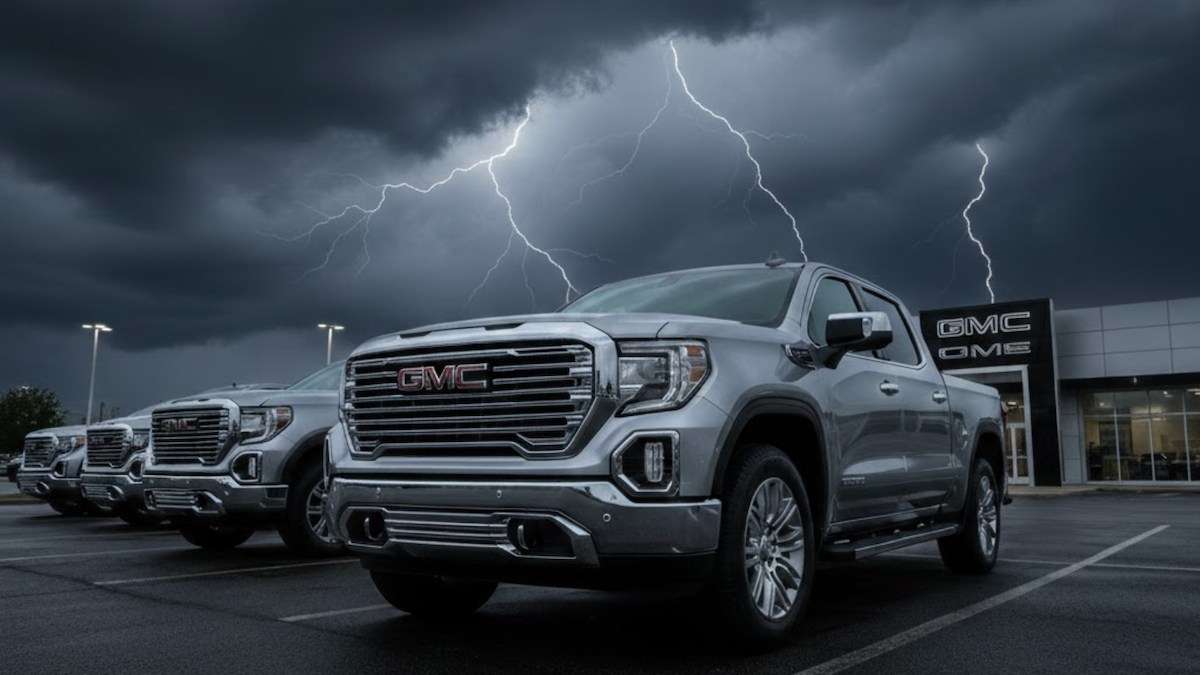

When a lifelong GMC loyalist walks away from a 2026 order, you know the V8 crisis has reached a point of no return.
In my ongoing research into GM’s 6.2L engine failures, I came across a recent post shared in a Facebook community of 2019 - 2026 Chevy Silverado and GMC Sierra owners. Rex Porter, responding to Rocky Rocco Stephens regarding GM’s massive 597,571 vehicle recall, highlighted the deep-seated anxiety facing new truck buyers today.
“I’m out,” Rex shared, noting he had just canceled his order for a brand-new 2026 Sierra SLT 6.2. “Breaks my heart to have to do that,” he wrote, “but I ain't going down this massive recall road that so many others have. It’s just too risky.”
In my 30 years of covering the automotive industry, I’ve seen my share of recalls. I’ve seen the "oops" moments that require a simple software flash and the major mechanical blunders that require a trip to the dealer for a bolt replacement. But what I am witnessing right now with the 2026 GMC Sierra 1500 and its 6.2L L87 V8 engine is something else entirely. It’s a crisis of confidence that has finally hit a breaking point for the very people who keep General Motors in business.
Rex's sentiment is backed by cold, hard numbers from federal regulators; as reported by Seeking Alpha, the National Highway Traffic Safety Administration (NHTSA) recently opened a formal review after receiving 36 owner responses alleging engine failure in vehicles that were supposed to have been fixed under the prior recall action.
My own investigation into the matter further underscores the severity of the situation, as I’ve found that GM’s handling of engine issues with the L87 has left many owners with more questions than answers, now watching their odometer with a sense of dread.

The heart of the issue is the L87 6.2L V8 engine, which for years was the crown jewel of the GM truck lineup. However, as noted by the experts at CarBuzz, many automotive insiders are not surprised the oil thickness fix didn't work and are warning that GM must get on top of this quickly before the damage to their brand reputation becomes permanent.
I have seen this exact scenario play out hundreds of times over the last few years, and I’ve previously reported that concerns about the 2019–2026 GMC Sierra engines are the single biggest story dogging GM's half-ton trucks today because the sophisticated yet flawed technology simply cannot overcome the underlying manufacturing defects.
The "Dark Turn"
This brings us to the "Dark Turn" in this saga. If you thought the 2025 recall was the end of the story, the reality on the ground says otherwise.
The National Highway Traffic Safety Administration (NHTSA) has recently opened a formal Recall Query (RQ26001) after reports surfaced that the "fix" isn't working. I am now seeing data on owners who had the recall service performed; they got the thicker oil, the new cap, the "all clear,” and their engines still blew up shortly after.
The "Dark Turn" is this: The industry is beginning to realize that the contamination and machining issues at the Tonawanda Propulsion plant may be deeper and more systemic than GM admitted. We aren't just looking at a "bad batch" of parts; we might be looking at a fundamental failure in the assembly process that has bled into the 2026 production cycle. When the NHTSA opens a query into a "fixed" problem, it usually means the manufacturer's solution was insufficient.
The Word That Keeps Coming Up
When I track these cancellations, the word that keeps coming up is "Trust." For years, GM told us that 0W-20 oil was mandatory for the Dynamic Fuel Management (DFM) system to work. They said the tight tolerances of the lifters required that thin oil. Now, facing a multi-billion-dollar engine-replacement bill, they suddenly claim 0W-40 is fine? It’s a reversal of engineering logic that smells like a desperate attempt to push failures out of the warranty period.
If you are sitting on an order for a 2026 GMC Sierra or Chevy Silverado with the 6.2L V8, you need to ask yourself one question: Do you trust the "fix"?
My Advice: Why 2026 is the Year the Music Stopped
- Avoid the 6.2L L87 for now: Until the NHTSA closes RQ26001 and we see if a secondary, more permanent recall is issued, the 6.2L is a gamble I wouldn't take with my own money.
- Look at the 3.0L Duramax Diesel: If you need the Sierra's towing power, the baby Duramax has proven to be the much more reliable choice in this current generation.
- Demand a "Buy Back" or Extended Warranty: If you already own one of these trucks, do not settle for just an oil change. Demand a written 100,000-mile powertrain extension from your dealer.
- It’s a sad day for GMC, but in this business, Experience tells me that when the feds start questioning the solution, the problem is far from over.
What about you? Are you sticking with GM through this 6.2L crisis, or have you joined the ranks of those cancelling their orders? Let me know in the comments; I'm tracking this story closely.
Next Up: If you think the cancellation of a 2026 order is a dramatic end to the GM story, wait until you read about the owners who are already deep into the ownership cycle and fighting to keep their trucks on the road. While some are heading for the exits, others are sharing their experiences with high-mileage failures, offering a glimpse of what 2026 buyers might face three years down the road.
In a recent report, I looked at a longtime GMC owner who reached a breaking point, proving that it hurts to say it, but some loyalists are officially done with GM and are now conflicted between a Ford F-150 and a Ram 1500. It is a must-read for anyone currently weighing their options in the full-size truck market.
Denis Flierl is a Senior Reporter at Torque News with over 30 years of hands-on experience in the automotive industry. Having served as a professional test driver and industry consultant for major automakers such as Chevrolet, Ford, Toyota, Honda, and Tesla, Denis provides a "boots-on-the-ground" perspective that goes beyond standard reporting. Since joining Torque News in 2012, he has specialized in cutting through market noise to deliver data-backed analysis and real-world owner stories. His work focuses on navigating the transition to EVs and the shifting automotive market
Have a tip or question for Denis? > Engage with him directly on LinkedIn for industry analysis, or follow his latest updates on X @DenisFlierl and @WorldsCoolestRides. You can also find his latest car features on Facebook and Instagram.
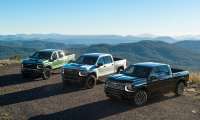
Photo credit: Denis Flierl via GMC
Set Torque News as Preferred Source on Google
Follow us today...




Comments
I have a 2023 Silverado…
Permalink
I have a 2023 Silverado Denali 6.2 with 38 thousand miles Had the oil fix done at 33 thousand miles. Have been a loyal customer for over 40 years. We currently own 1 corvette 2 camaros 1 Acadia and my GMC Sierra. Can't sell it out right which i always do. Won't get a good trade so do I wait until the next generation engine comes out in 2027 or buy a dodge???
I think I should be given retail price for trade and get employee pricing for a new truck. I would be satisfied with that and would not break the bank for GMC. YOUR THOUGHTS
After an 6.2 engine failure,…
Permalink
After an 6.2 engine failure, left us stranded 1000 miles from home, we changed our recent order to a diesel motor and so far have been very impressed with the pick up speed and especially gas mileage.
Not buying any domestic…
Permalink
Not buying any domestic product till they are confident enough with their products to offer a 10 year 100,000 mile warranty. .
Prices have doubled and quality down the tubes
That's how sheaughty they have become.
For various reasons, all the…
Permalink
For various reasons, all the major US automakers over-invested billions of dollars in EV development. Some of that money came from engine plant maintenance. On top of that, inflation in build cost led to decisions that degraded quality. Ford GM, and Stellantis are now investing more in their engine plants but I hope it's not too late.
Even after addressing quality issues, they will be left with an enormous overhang of public perception that may cost them dearly in market share.
The real issue is GM’s…
Permalink
The real issue is GM’s solution to the 6.2L V8 recall. Even with a recall inspection that claims the engines are ok. It begs the question; Why did GM decide to change the oil filler cap with a higher viscosity oil requirement? This solution appears to be a bandaid placed upon a more serious engine issue. I remind you that the 6.2L engine was originaly designed to operate on 0-20W Dextros oil.
Today’s engines are suppose to be designed and manufactured to very tight tolerances. So, does this GM latest recall requirement imply that the 6.2L is sub-par in holding tight tolerance design?
I have driven and still own the tried and true GM 5.3L V8 which uses 0-20W oil. Makes for customer concerns.
We have been wanting to by a…
Permalink
We have been wanting to by a new Chet or GMC Big SUV but with the engine issue we are reluctant to pull that trigger. I have a 2019 Silverado and it has the 10 speed transmission issue and I have been lucky to be babying it.
As a 40 year GM loyalist do we move on to another brand or wait for 2027 or 2028?
Since I was a little kid i…
Permalink
Since I was a little kid i loved chev/ gmc vehicles.cars,trucks They built trust in me. Sure , they had small issues.but always fixable till now! I won't buy gm products anymore except older models with less problems. Couldn't you make cheaper and more reliable vehicles with less tech.(roll up windws,key locks.less modules, no turbo . I suppose those days are gone now. Too bad gm. Steve
I own a 2024 Denali Ultimate…
Permalink
I own a 2024 Denali Ultimate with the 6.2l with 30k miles on it. I brought it into the dealer yesterday to have it checked and to no surprise mine failed the test. When the service manager told me I immediately thought they were going to try and push the oil change on me. He told me that I am getting a new, not remanufactured engine and a 150k warranty. This is and was the only option in my mind that I would settle for. Hopefully the new engine is worthy of a full trouble free life. I assume GM is starting to realize that our trust in them has been broken and in order to repair that trust they are now placing the 150k warranty on the new engine. Now how are they going to make up for the depreciation factor when I want to trade or sell it?
Well good article; MY STORY…
Permalink
Well good article; MY STORY; I traded a 2022 GMC DENALI 1500 truck on recall list with 75,000 miles w no major issues except oil level consumption low before next oil change for a new 2025 DENALI BLUE 1500 ULTIMATE in June 2025! Got a great trade in price and discount with a fantastic to work with local dealer. LANDERS GMC MISSISSIPPI; The truck has 18,000 miles now and I love it! Am I concerned about the engine I was assured was fixed? OF COURSE & what sane person wouldn’t be? But so far so good ; the feds looking into is like a fox guarding a chicken house ! GM has stepped up and done something rarely seen? Admit a problem , pay to fix it , and offer a 100,000 mile extended warranty to BOOT! THE GOVERNMENT REGULATIONS OF ENGINES SHOULD BE INVESTIGATED IN MY HUMBLE OPINION?
I went the way of foreign cars for years BUT NOW I AM USA manufacturers all the way & for praying & working for smaller FEDERAL GOVERNMENT ! as RONALD REAGAN ONCE SAID?
“ the nine most terrifying words in the English language are: I’M FROM THE GOVERNMENT & I’M HERE TO HELP. “