
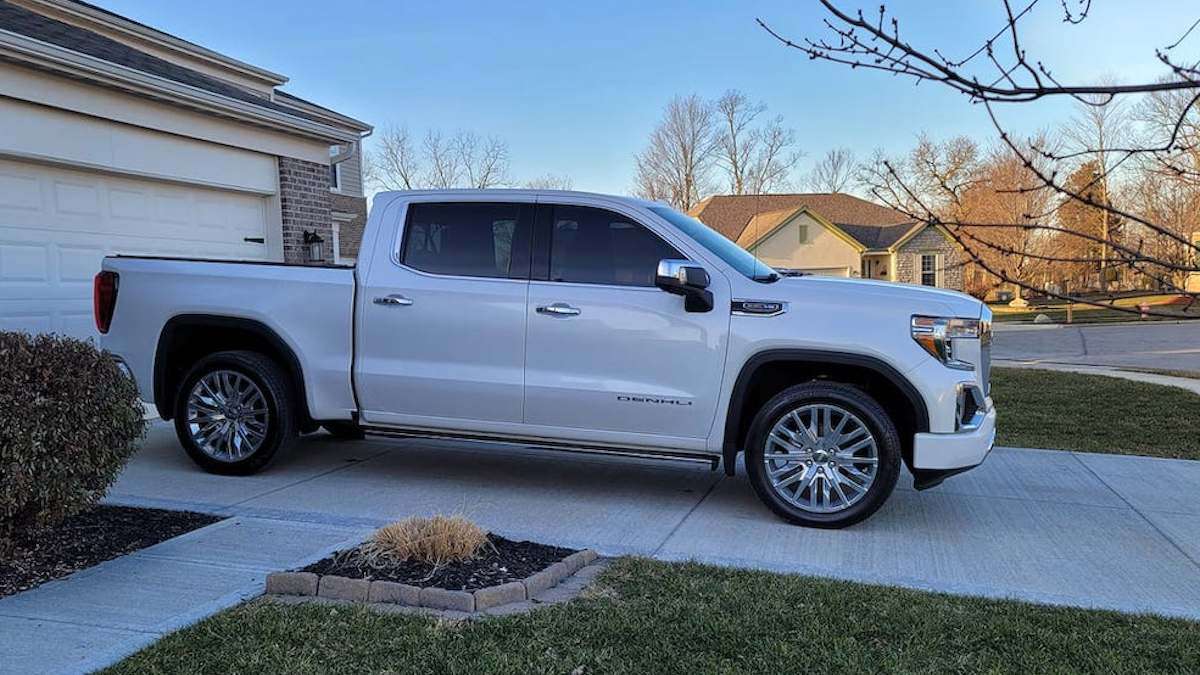

Will this lifelong GMC Sierra enthusiast finally find peace with a Ford, Ram, or Toyota after losing all faith in GM's engines?
Eric Witt on the 2019 - 2026 Chevy Silverado & GMC Sierra Owners Facebook page says,
"I have a question. As a GMC Sierra truck guy, it hurts to say, but I’m done with GM. I’ve completely lost faith in these GM engines. I'm going to switch to another truck brand, but now comes the hard part, it’s touch-and-go. I’m conflicted between the Ford F-150, Ram 1500, and Toyota Tundra.”
Switching from a brand you've been loyal to for years is never easy, but when reliability becomes a gamble, loyalty has to take a back seat.
Eric's dilemma isn't just about buying a new truck; it's about regaining confidence in your daily driver and protecting your hard-earned money. As the senior reporter at Torque News, I've seen this exact situation play out hundreds of times over the last few years, especially with late-model GM trucks. You're not alone, buddy.
Let's dive into the options—Ford, Ram, and Toyota—and break down which brand offers the best path forward after your experience with GM's engines.
The Engine Reliability Crisis: Why You're Making the Right Call
First, let me validate your pain point. The decision to switch brands is justified. Concerns about the 2019–2026 Chevy Silverado and GMC Sierra engines—specifically the 5.3L and 6.2L V8s equipped with Dynamic Fuel Management (DFM) and Active Fuel Management (AFM)—are the single biggest story dogging GM's half-ton trucks today.
For those of you reading who might not be familiar with the issue Eric is referencing, the sophisticated yet flawed technology behind DFM/AFM relies on complex lifters to deactivate cylinders to improve fuel economy. Unfortunately, the mechanical complexity and oil pressure demands on those lifters often lead to premature failure, scarring the camshaft, and sometimes resulting in catastrophic engine failure, even at low mileage.
I've covered this extensively, and the consensus is that a full mechanical delete of the system is the only permanent solution —an outrageous proposition for a nearly new truck owner. Therefore, your question—best pickup truck for a former GMC Sierra owner to switch to—is timely. You're wisely drawing a line in the sand, and we'll look for a platform you can trust.
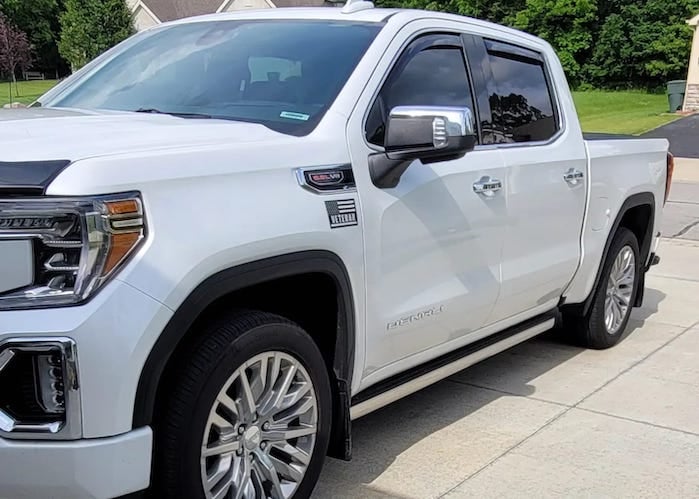
For a deeper dive into this issue, you can check out my previous report: My Chevy Silverado is Garbage, Left Me On the Side of the Road, Not Even 30K.
Candidate 1: Ford F-150—The Capability Benchmark
Ford is the volume leader for a reason: they offer a dizzying array of options and generally lead the segment in max towing and payload. This is a workhorse first and foremost, wrapped in an aluminum body that resists rust.
When you look at the F-150, you have a critical choice: the proven 5.0L Coyote V8, or the EcoBoost twin-turbo V6.
The V8 Option: The 5.0L V8 is a strong, naturally aspirated engine, but it doesn't offer the low-end torque or fuel efficiency of the EcoBoost. It's the safe, conventional choice, but it sometimes battles its own issues, like oil consumption in certain model years.
The EcoBoost (3.5L/2.7L): These V6 engines are absolute monsters when it comes to performance and towing. However, the twin-turbo setup introduces complexity (turbos, intercoolers, vacuum lines) that you must maintain meticulously. The key difference between the Ford F-150 EcoBoost and the Ram Hemi is long-term dependability. The EcoBoost generally wins on raw capability, but the maintenance schedule is strict.
The PowerBoost Hybrid: If you are considering the Ram's eTorque system (which we'll cover next), Ford's PowerBoost is the legitimate hybrid competitor. The PowerBoost (combining the 3.5L EcoBoost with an electric motor) is a powerful, capable engine, and the Ram 1500 eTorque hybrid system long-term ownership review doesn't quite stack up to the PowerBoost's performance and the incredible versatility of the Pro Power Onboard generator feature. If you want capability and useful hybrid tech, Ford wins here.
Takeaway: If your primary concern is max towing, payload, and the best available technology (like Pro Power Onboard and BlueCruise), the F-150 is the technically superior, capability-focused choice.
Candidate 2: Ram 1500—The Comfort King
The Ram 1500 wins the interior battle hands down. Ram pioneered the "luxury truck" segment, and even its lower trims feel more upscale than competitors. The driving experience is where the Ram truly shines, thanks to its standard four-corner coil-spring rear suspension (or optional air suspension). It glides over bumps where the Ford's leaf springs feel decidedly truck-like.
For your need to switch from a problematic engine, the Ram has recently transitioned to the new 3.0-liter Hurricane twin-turbo inline-six engine, replacing the venerable 5.7L Hemi V8 (and its accompanying eTorque mild-hybrid system).
The Hemi/eTorque: While the Hemi V8 offered incredible sound and power, it also had its own long-term concerns, notably exhaust manifold bolt failures and the complexity of the eTorque system. Given that your priority is reliability, focusing on the new platform is key.
The Hurricane I6: This new turbocharged inline-six, standard in 2025/2026 models, delivers powerful performance (420 hp / 469 lb-ft in the base tune) and promising efficiency. Inline-six engines are inherently balanced and simple, which could signal a return to greater long-term durability, but it's still a new engine.
The question of choosing the most dependable full-size truck after GM DFM failure often comes down to the powertrain's mechanical simplicity. While the Ram excels in comfort, its recent engine change warrants scrutiny of long-term reliability.
Takeaway: If comfort, interior refinement, and a superior daily driving experience are your top priorities, the Ram 1500 is your winner.
Candidate 3: Toyota Tundra—The Durability Standard
Ah, Toyota. For years, the Tundra has been the default choice for buyers prioritizing long-term, trouble-free ownership above all else. However, the 2022 redesign, while necessary, changed the formula entirely. Toyota ditched the legendary, naturally aspirated V8 for a standard twin-turbo 3.5-liter V6 (i-Force) and an optional hybrid version (i-Force MAX).
The New Tundra: An Uncharacteristic Reliability Question
The current Tundra is a massive leap forward in comfort, styling, and technology. It's powerful, utilizing the V6 to produce 389 hp and 479 lb-ft of torque (or 437 hp and 583 lb-ft in the hybrid). Like the Ram, it uses a coil-spring rear suspension (on higher trims) for a smoother ride than the Ford.
However, the question of long-term durability is no longer a simple affirmation. Toyota introduced complexity (twin turbos) to gain power and efficiency, sacrificing the simplicity of the old V8. Early models had some wastegate issues, but a much more serious and pervasive concern has since emerged: engine failure.
Reports and lawsuits concerning the 2022 and 2023 Tundra models, particularly the i-Force V6, point to a serious defect involving machining debris or a similar flaw that can lead to catastrophic engine failure, sometimes at extremely low mileage.
Check out my story for more information: My 2022 Toyota Tundra Has Been At the Dealer For 30 Days for Engine Failure and Now It's Another Month to Get My New Engine.
However, Toyota is working to address the issue. Still, the immediate result is a severe and uncharacteristic blow to the brand's legendary reputation for reliability.
The Takeaway: Toyota doesn't risk its reputation lightly, and it is working to rectify these issues through warranty repairs and replacements. For a former GM owner looking to switch to the most dependable brand, Toyota was the traditional answer, offering unparalleled peace of mind. That peace of mind, however, is now significantly diminished by the reality of a potentially flawed engine design in the first two model years.
What the Community is Saying
Eric's frustration resonates with many others. I pulled these quotes directly from the Facebook group to show you just how many GMC owners are currently making this same calculus:
- Kyle Lahey - Honestly, this is the question I asked myself this week. GM has gone too far in prioritizing profits over reliability as a marketing strategy. The fact that even Allison is tired of GM refusing to build a reliable transmission was the last straw for me after the failure of crankshafts in the 6.2, the repeated lifter failures in the 5.3, the refusal to implement dual injection or port injection to fix the carbon valve buildup, etc, the list goes on and on at this point. I'll be looking at a Ford 7.3 for my next truck.
- Dylan Brown - If I were looking for a full-size, I'd go with a Ram with the 3.6 or 5.7, or I'd get a Ford with the 5.0 Coyote.
- Alex Vera - My brother bought a Tundra yesterday. Rides smoothly and has a good amount of power. It's a 2025, so I don't know the reliability of the new motor.
Conclusion:
This is the exact conversation happening in garages and forums across the country. It's a battle between capability (Ford), comfort (Ram), and dependability (Toyota).
The best advice I can give is to take a long test drive in the Ford F-150, Toyota Tundra, and the Ram 1500, pay attention to the ride quality, and check the payload sticker. Your choice should ultimately be based on which truck you feel is built to last.
It's Your Turn
Which of the three primary powertrains—Ford EcoBoost, Ram Hurricane, or Tundra i-Force—gives you the most confidence for long-term ownership? Let us know in the comments below!
I'm Denis Flierl, a Senior Torque News Reporter since 2012, bringing over 30 years of automotive expertise to every story. My career began with a consulting role for every major car brand, followed by years as a freelance journalist test-driving new vehicles—equipping me with a wealth of insider knowledge. I specialize in delivering the latest auto news, sharing compelling owner stories, and providing expert, up-to-date analysis to keep you fully informed.
Follow me on X @DenisFlierl, @WorldsCoolestRides, Facebook, and Instagram
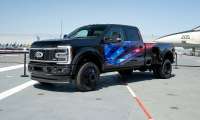
Photo credit: Denis Flierl via Eric Witt
Set Torque News as Preferred Source on Google
Follow us today...




Comments
You're discussing…
Permalink
You're discussing reliability issues of the 5.3L's DOD and in turn recommending the Ford eco-boost? The only modern Ford engine in a truck worthy of being called reliable is the 5.0. I currently have a 2013 1500 5.3L with 149k miles, this truck rarely sees a daily driver duty, it either hauls or pulls my equipment trailer daily to weekly. I do maintain it well with mobil 1 full syn 5w-30 every 5k miles, but this truck is 100% original except for the alternator. Today's vehicles with all of their technology need maintained with high quality lubricants and on a regular schedule. If you neglect any of them, you will find their failures.
11 burban had 160k before it…
Permalink
In reply to You're discussing… by Mike (not verified)
11 burban had 160k before it ate a lifter. 4k$ later, dod deleted in its entirety, it runs great @200k miles. watch out for Ford, way too many recalls after eliminating all their senior engineers. ram would be my choice. Toyota needs a few more years on their v6
2011 Silverado, deleted dod…
Permalink
In reply to 11 burban had 160k before it… by terry stein (not verified)
2011 Silverado, deleted dod at 40,000, has 310,000, runs as new, good oil, trans. Fluid, different. Fluid, maintain your trucks people, on time, everything then drivers forever, regular maintenance keeps good shit alive, not the quick lube shit (cheap China oils etc)
Correct you must use premium…
Permalink
In reply to You're discussing… by Mike (not verified)
Correct you must use premium fuels 91octain or better , premium oils changed every 7500miles & use a upper cylinder lube over 3 or *4 fill ups. I have a 16 Silverado 150k, and never had a problem ever. I have heard hundreds of ppl have problems on FB and the only thing I can think of is because of neglect or not using premium lubricants. Like Amsoil or mobile 1 only. I wouldn't even use to or trust pennsoil or Valvoline.
The Ford 3.5 EB doesn't need…
Permalink
In reply to Correct you must use premium… by Mike (not verified)
The Ford 3.5 EB doesn't need or call for 91 octane. It runs great on 87
Assuming you have the 5.3L,…
Permalink
In reply to Correct you must use premium… by Mike (not verified)
Assuming you have the 5.3L, it has a compression-ratio of 11:1. That's not high enough to truly "mandate" running 91 octane. If you're not towing anything, going up hills, in extreme heat, or stomping on the throttle, 87 or 89 is acceptable. All that matters is you're not experiencing pre-detonation (aka pinging, etc) at your engine's comp-ratio. If you're not, higher octane fuels aren't doing anything for you except igniting your banks funds on fire.
The 2.7 historically has…
Permalink
In reply to You're discussing… by Mike (not verified)
The 2.7 historically has been the most reliable engine in the F-150. The 5.0 has cylinder displacement also. Just like the Ram 1500. And the Toyota is still dealing with engine failures and an update recall was issued last week.
Ford hands down, my 2015…
Permalink
In reply to You're discussing… by Mike (not verified)
Ford hands down, my 2015 with 200k never saw a shop. My 2013 tundra was a pos, oil leaking at 30k, and the v8 was weak. My 1999 Silverado 5.3 was decent, but gm is a complete rust bucket, brake and fuel lines rusted out and like clock work, transmission went out at 150k. The Ford ecoboost engines are incredible, my 2025 3.5 Powerboost is awesome, 430 hp, 4x4 is more powerful than the competition and gets 24 mpg. Ford forever for me, albeit they are running into some minor quality issues. One thing I noticed, Ford stands behind their name, they will recall and fix their issues. My 2013 corolla has paint coming off everywhere, Toyota will not fix it, they say it's over 3 yrs old. My previous 2015 f150 paint was excellent and had zero rust, thanks to the Aluminum body.
I too had issues with…
Permalink
I too had issues with Chevrolet, GMC , on their handling of my 2017 transmission/ reared differential issue.
Just a lot of playing out the issue over a 2 month period.
I finally just realized they were not serious about helping me out other than offering a coupon to purchase a new Chevrolet/ GMC truck.
I got a used Nissan Titan and don’t regret it.
Stay away from the Ram 5.7 .
Exhaust manifold bolts snap and repair is covered by warranty 1 time before warranty expires.
Exhaust manifold is too thin and expands and contracts causing bolt failure.
They have had this issue since 2009.
As an 80 year old who grew…
Permalink
As an 80 year old who grew up with GM vehicles and owned GM products most of my life.
Our current vehicle is a 2025 Blazer Premier. Trucks are a different story. My last GM truck was a 1995 3500 Crew Cab. We had a camper and had an engine failure on a vacation trip.
subsequently it was I our local dealer 3 times. Purchased a Dodge Ram 1500 in 1997. Drove it trouble free untill 2013. Brought a new Dodge Ram 1500 Bighorn in 2013 and has been a great trouble free vehicle and is still in my driveway in 2025.
Why would you ignore the GM…
Permalink
Why would you ignore the GM 3.0l diesel. No recall, great mileage, and top of the category towing for a half ton?
Don't purchase. If and when…
Permalink
In reply to Why would you ignore the GM… by Steve (not verified)
Don't purchase. If and when the coolant control valve fails its a two month back order. Just don't purchase GM and the world will be a better place
Absolutely agreed. I love…
Permalink
In reply to Why would you ignore the GM… by Steve (not verified)
Absolutely agreed. I love my 3.0
The 3.0 oil burner has…
Permalink
In reply to Why would you ignore the GM… by Steve (not verified)
The 3.0 oil burner has plenty of its own problems, with timing chains and crankshaft/thrust bearing. Then you have the rubber belt that drives the oil pump, which requires scheduled replacement and is sandwiched between the block and transmission.
I have 120k on my 2016 ram…
Permalink
I have 120k on my 2016 ram 1500 pentastar. It's been entirely trouble free. It's never been back to the dealership since I drove it off the lot. I change the oil a lot, like every 4 thousand miles, using mobil1 and OEM filters. Yea that's a lot of oil changes, but no ticks!
I have 208,000 on my 2001…
Permalink
In reply to I have 120k on my 2016 ram… by Douglas Polentz (not verified)
I have 208,000 on my 2001 gmc 6.0 Trouble Free expect to get 350,000 out of it!
I have 208,000 on my 2001…
Permalink
In reply to I have 120k on my 2016 ram… by Douglas Polentz (not verified)
I have 208,000 on my 2001 gmc 6.0 Trouble Free expect to get 350,000 out of it!
I llike the AFM. I get…
Permalink
I llike the AFM. I get incredible fuel economy on the highway. The next truck will probably be an HD and I will miss the fuel economy.,
Having worked with Ford over…
Permalink
Having worked with Ford over the last year on warranty issues, I would never buy a Ford.
Only ever had sierra dmax…
Permalink
Only ever had sierra dmax diesels and they have been good to me, bit I currently have a 2016 sierra hd because I'm concerned about reliability of a new one ..
I hear you! I had a 2008 GMC…
Permalink
I hear you! I had a 2008 GMC 5.3, it burned 2 quarts every 5k miles.. I bought a 2019 GMC 5.3 and it had lifter failure at 88k miles. I also am a Lexus guy(Toyota). If they hadn’t discontinued their V8 I’d be driving a tundra right now.
Buy a Ram like mine Great…
Permalink
Buy a Ram like mine Great powertrain & air suspension blows them all in the water.
Blows them in the water?…
Permalink
In reply to Buy a Ram like mine Great… by Add Griffin (not verified)
Blows them in the water? This sounds like a Ram owner 😂
If dependability is truly…
Permalink
In reply to Buy a Ram like mine Great… by Add Griffin (not verified)
If dependability is truly the core ... Then the choice is simple. Move up to a Ram 2500 with the Cummins.... It will not blink at 400,000 plus miles if you do the oil change and maintenance as scheduled....and that's under load ... without load as a driver and occasionally pulling or carrying load ... Your going 500,000+ and it will yawn.... The I6 ... 6.7L Cummins is a bullet proof monster.... If you have to stay with 1/2 ton... Then I would also take my chance on the newer Hurricane in the Ram as inline motors give you the best chance for longevity with their balance and design....it has now been out for 4/5 years to work out the bugs...
I left the GM camp after 25…
Permalink
In reply to Buy a Ram like mine Great… by Add Griffin (not verified)
I left the GM camp after 25 years of buying only Gm products. Had a lifter drop ruin my 6.2 engine, stranded the family on the side of hiway for hours until tow truck showed up. Anyways I didn’t buy new this time around, bought a 2011 6.2 f150 92,000 kms and absolutely love it. Saved a pile of cash got a reliable truck and will not be buying a Chevrolet / GM product again.
My next new purchase will be f350 platinum.
All of the new trucks are…
Permalink
All of the new trucks are garbage. So just pick the one that you find the most appealing.
I am also trying to decide…
Permalink
I am also trying to decide on what to replace my 2018 Silverado 1500 6.2 with. My truck has always been well maintained, with using the correct A/C Delco oil filter, correct oil and always using premium fuel. Bent a pushrod at 80k miles, cost $5k to fix. Broke a pushrod at 93k miles, and it destroyed the engine. $13k to fix. I own four high performance German cars as well and the are much cheaper to own than my Chevy truck. Never thought that would happen.
I am also trying to decide…
Permalink
I am also trying to decide on what to replace my 2018 Silverado 1500 / 6.2 with. My truck has always been well maintained, with using the correct A/C Delco oil filter, correct oil and always using premium fuel. Bent a pushrod at 80k miles, cost $5k to fix. Broke a pushrod at 93k miles, and it destroyed the engine. $13k to fix. I own four high performance German cars as well and they are much cheaper to own than my Chevy truck. Never thought that would happen.
Get a RAM or one of the…
Permalink
Get a RAM or one of the Fords. While no truck is perfect, any of their engine choices would be an improvement over the GM or Tundras. The problem with catastrophic engine failures is that they are catastrophic - it is not something fixed with a software update. For me personally, I would go with the RAM I6 Hurricane or the 2.7l V6 in the F150. The option is to wait until 2026 - I understand GM might ditch the cylinder deactivation with some of the relaxed Trump administration rules. That would be refreshing - at their core, the 5.3 and 6.2L V8 could be reliable.
The answer is simple and…
Permalink
The answer is simple and that is what I have on order. All 2026 Ram 1500's come with a 10 year 100k mile (160k km) powertrain warranty. Not transferable, but if you plan on keeping the truck it's a simple decision. Even if you're not intending to keep it for that long, it's a no-brainer when you consider Ram has that much faith in the powertrain.