
For decades, the automotive industry suffered from a chronic condition known as "Not Invented Here" (NIH). If a gear, a piston, or a radio wasn't designed in-house, it was treated with the suspicion normally reserved for a check-engine light on a Friday night. But as cars transform from mechanical beasts into mobile data centers, this insular philosophy is hitting a brick wall.
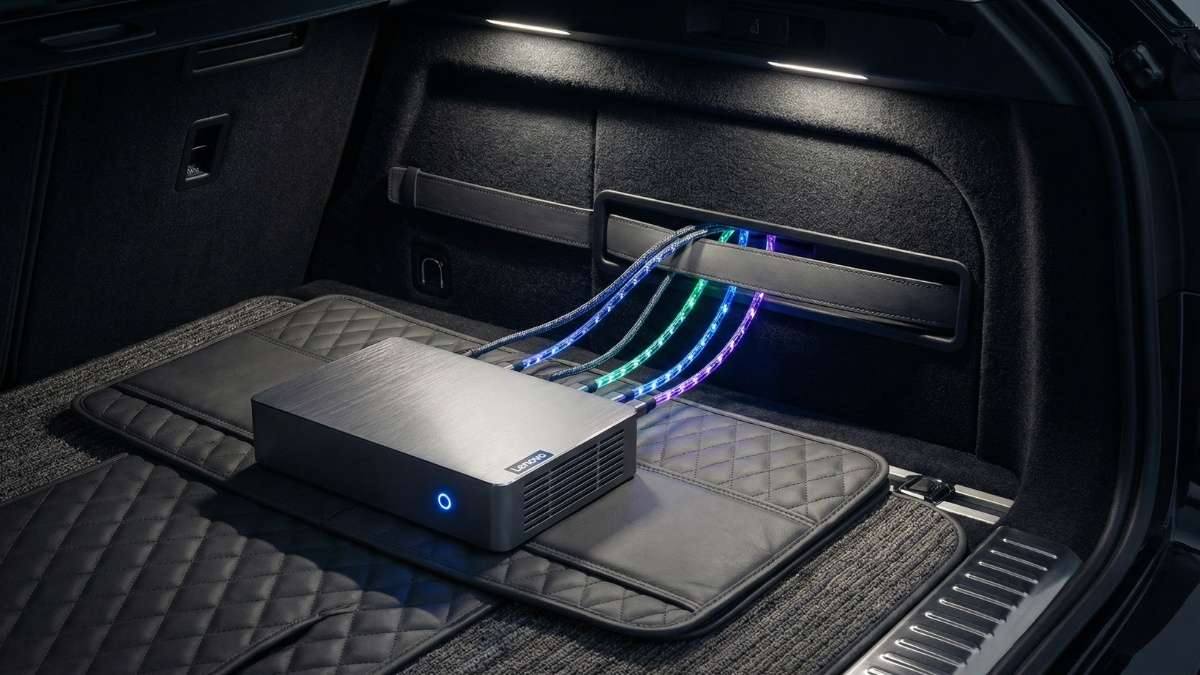
The recent announcement of the Lenovo Auto AI Box—a dedicated in-vehicle computing platform built on the NVIDIA DRIVE AGX Thor—is more than just a spec bump. It’s a survival kit for automakers who are realizing they are much better at bending steel than they are at training multimodal large models (MLMs).
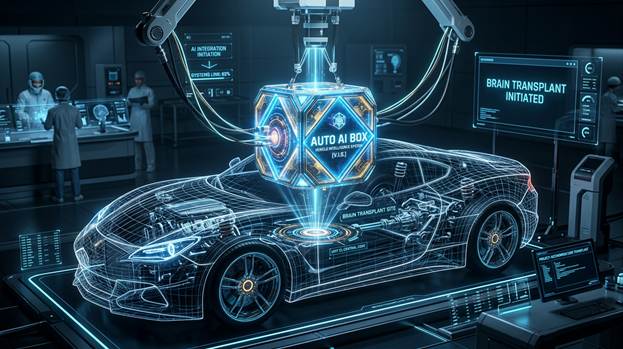
The Complexity Crisis: Why Your Car Needs a Packaged Brain Most automakers currently don't know how to properly provision and protect high-order AI. Trying to build a custom AI stack from scratch is like trying to build a smartphone out of car parts—it’s going to be bulky, buggy, and remarkably bad at its job. The Auto AI Box is a packaged solution that provides:
- Thermal Sanity: High-end AI generates heat that would melt a standard dashboard. Lenovo’s expertise in liquid-cooled server racks means your AI assistant won't overheat just because you asked for a witty remark in traffic.
- Security Isolation: By using the safety-certified NVIDIA DriveOS, the system keeps the "conversational partner" far away from the "steering and braking" parts of the car.
- Plug-and-Play Integration: It doesn't require a total redesign of the electrical architecture. It’s a scalable pathway that lets OEMs focus on the user experience while Lenovo handles the heavy silicon lifting.
Building Better, Cheaper, and Safer If this technology were used broadly, it could lead to a massive reduction in automotive build costs. Standardization is the enemy of the "NIH" syndrome but the best friend of your wallet. When every automaker stops trying to reinvent the wheel (or the neural network), the economies of scale for hardware like the Auto AI Box kick in.
Higher safety for drivers is the real win. A centralized AI engine can process multimodal inputs—voice, vision, and context—to anticipate needs before they become emergencies. Imagine a car that doesn't just slam on the brakes, but understands why you're distracted and adjusts the cabin environment to bring your focus back to the road.
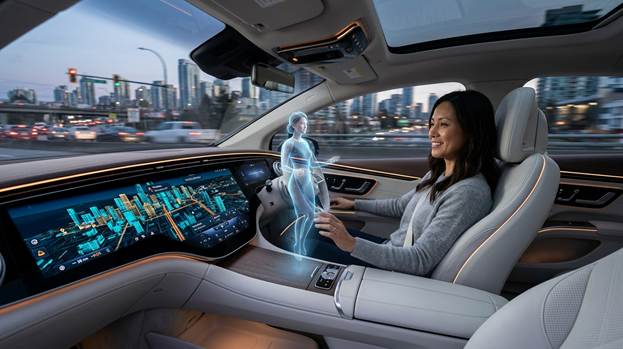
Who is Open to the "Proudly Found Elsewhere" Model? The companies most open to this are the "New Power" players and legacy brands going through a strategic mid-life crisis. Volvo, which has already moved its EX60 to a core-computing model using NVIDIA and Google Gemini, is a prime example. Other brands like Polestar and even Mercedes-Benz (who famously pivoted from "NIH" to "Proudly Found Elsewhere") are leading the charge. These companies realize that a partnership with a vendor that understands "Pocket to Cloud" infrastructure is far more valuable than a proprietary, mediocre voice assistant.
Lenovo’s Path to Victory Lenovo is the ideal vendor for this because they already live at the edge. To be successful, they must cultivate the ecosystem around ArcherMind’s FusionOS 4.0. If developers find it easier to build apps for the Lenovo platform than for a proprietary OEM system, the platform becomes the de facto standard. Lenovo's advantage is its ability to offer a "Personal AI Twin" that follows you from your ThinkPad to your car, creating a seamless digital life that legacy car companies simply can't replicate.

Wrapping Up The Lenovo Auto AI Box isn't just about making cars smarter; it's about making them more efficient to build and safer to drive. By curing the "Not Invented Here" syndrome with a dose of NVIDIA-powered reality, Lenovo is providing the foundation for the next generation of transportation. The winner in the AI race won't be the one who builds the loudest engine, but the one who provides the most capable brain.
Disclosure: Images rendered by Artlist.io
Rob Enderle is a technology analyst at Torque News who covers automotive technology and battery developments. You can learn more about Rob on Wikipedia and follow his articles on TechNewsWord, TGDaily, and TechSpective.
Set Torque News as Preferred Source on Google
Follow us today...