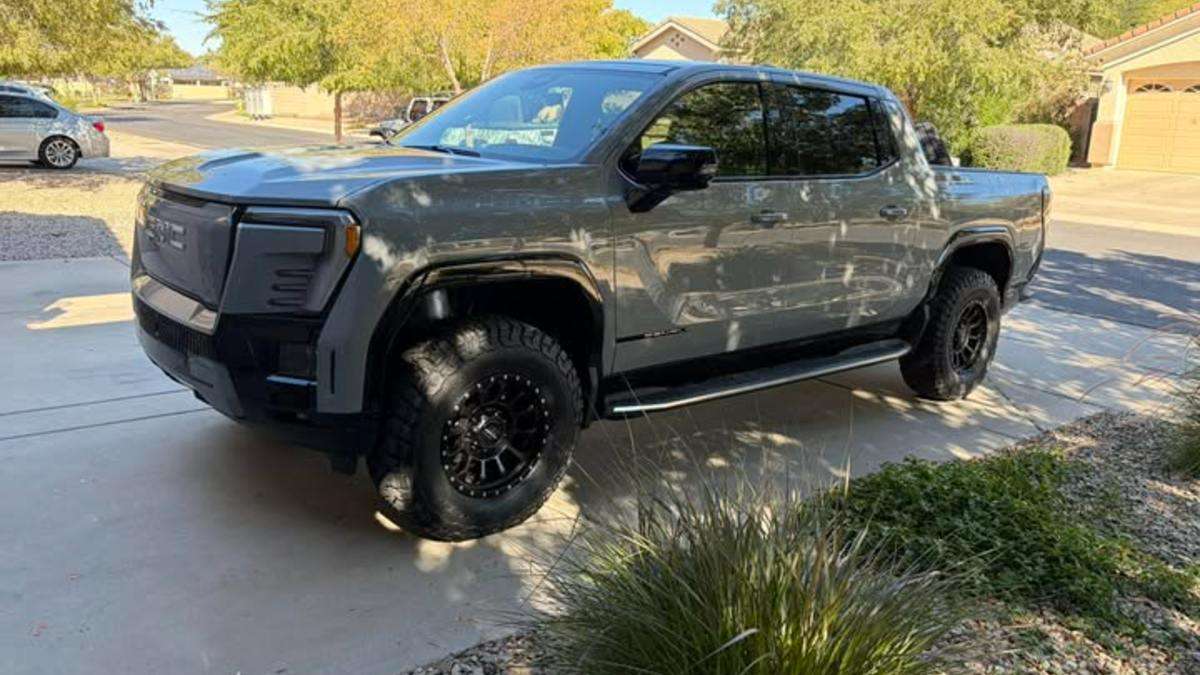

Sometimes a vehicle comes along that redefines what drivers expect from a truck. I’ve read plenty of posts about new EVs, but every now and then, one stands out because it doesn’t sound rehearsed or overly promotional, it just sounds real. While scrolling through the “GMC Sierra EV Group” on Facebook this evening, I came across one of those posts from Joseph Grooms, whose enthusiasm immediately caught my attention. His words didn’t just describe a truck; they reflected a genuine sense of surprise and satisfaction that’s hard to fake. He explained how his GMC Sierra EV Denali had completely changed his perception of what an electric truck could be, calling it the best decision he’s ever made when it comes to buying a vehicle.
“I don’t post much but I wanted to share my experience with this truck. It is by far the best decision I have made for a vehicle purchase. Do not hesitate and get yourself one if you are on the fence. This truck was rated for 479 miles and I ended up getting 552. It exceeds all of my expectations. The only thing I was not a fan of was the 24 inch rims. I fixed that issue pretty quick though.”
Joseph’s enthusiasm is the kind of genuine owner feedback that tells you when an automaker has truly done something right. His real-world range of 552 miles compared to the official 479-mile rating is an impressive testament to the efficiency of GMC’s electric platform. That’s nearly a 15% increase over rated range, which is something that even the most optimistic EV owners rarely achieve. It also speaks volumes about how factors like driving behavior, terrain, and wheel size can make or break your mileage.
Why Range Numbers Don’t Tell the Whole Story
Range ratings, while important for comparison, don’t always reflect what drivers actually see day to day. EVs calculate range based on lab-tested cycles like the EPA’s, which may differ from real-world conditions. But when owners like Joseph surpass those numbers by over 70 miles, it proves that under the right conditions, EV trucks can do far better than expected.
That improvement also hints at how GMC has engineered its massive battery pack and advanced energy management system. The Sierra EV uses an 800V architecture which allows for faster charging and more efficient energy recovery during deceleration. For a truck this size, those gains are meaningful.
The Wheel Factor
Joseph did mention that he didn’t love the factory 24-inch wheels though. For many owners, large wheels look good but sacrifice ride comfort and range. Bigger rims mean heavier rotational mass and less tire sidewall to absorb bumps, all of which can lower efficiency. By swapping to smaller wheels, Joseph likely improved both comfort and real-world performance. This is a move many seasoned EV owners often recommend.
I think this is where experience and experimentation go hand in hand. Even small changes like tire size or pressure can swing energy use by a few percentage points. That may sound minor, but over hundreds of miles, it can truly make the difference between anxiety and confidence.
Community Reactions and Shared Enthusiasm
Joseph’s post quickly drew attention in the Sierra EV community, with several owners and enthusiasts chiming in.
Kelly Reid responded enthusiastically, saying:
“Yes EV’s are awesome. My Cybertruck has been the best vehicle I’ve ever owned. The previous Model Y was awesome as well! Hard to beat the Tesla self-driving. It was the main reason I stayed with Tesla along with other reasons! Sweet ride.”
Kelly’s perspective highlights something interesting: the EV truck market isn’t just about range or power but about ecosystems. Tesla still dominates with its autonomous tech and proven reliability, but the GMC Sierra EV represents a more traditional, luxury-focused take on the electric pickup. Both appeal to different audiences, and stories like Joseph’s show how far legacy automakers have come in catching up.
Next came Greg Mills, who simply added:
“I agree with you 100%.”
That kind of concise affirmation might not sound dramatic, but it reflects how positive Sierra EV owners are becoming in online communities. The narrative around GMC’s electrified lineup is shifting from skepticism to satisfaction, especially as more real-world range stories surface. It’s a refreshing contrast to the early EV days, when disappointment often outweighed excitement.
Then came Tony Oleynik, who offered a dose of realism:
“That’s a nice truck! Put 100,000+ miles on it then let us know how good of a truck it is.”
Tony’s comment sets up an important point, and it's one that deserves deeper discussion.
Long-Term Reliability and the GMC Legacy
As impressive as the Sierra EV’s performance has been so far, long-term reliability remains a fair question. GM has faced heavy criticism for quality consistency in recent years. Some owners have voiced frustration about durability in models like the Silverado and Sierra 1500. One longtime GMC and Chevrolet owner recently shared that after decades of loyalty, quality concerns have made it harder to stay confident in GM’s trucks.
Electric platforms, however, offer a chance at redemption. Fewer moving parts, fewer fluids, and simplified drivetrains can mean fewer mechanical failures over time. But that doesn’t automatically guarantee reliability. It takes strong battery chemistry and software stability for these trucks to prove themselves. It's something that Tesla, for instance, has proven its maturity. We’ve even seen examples like a 2022 Tesla Model 3 surpassing 200,000 miles with its original battery pack. The question now is whether trucks like the Sierra EV can match that kind of long-term dependability.
In fairness, GMC’s EV engineering does inspire optimism. Their Ultium platform, shared with vehicles like the Hummer EV and Cadillac Lyriq, is built for both performance and longevity. Early data from GMC’s internal testing has shown minimal battery degradation even after tens of thousands of miles. Combine that with software updates and predictive maintenance tools, and we could see a shift in how people perceive American-built electric trucks.
How It Compares to Rivals
When comparing the 2026 GMC Sierra EV Denali to rivals like the Ford F-150 Lightning, several distinctions stand out. Ford’s top Lightning trims currently deliver between 320–340 miles of range depending on configuration. The Sierra’s 479-mile rating (and Joseph’s 552-mile real-world result) puts it far ahead in efficiency for its size and weight. GMC’s focus on aerodynamic shaping and advanced regenerative braking appears to pay off, particularly during highway cruising.
Towing capacity also matters to many buyers, and early tests show GMC’s figures are competitive. As one owner described towing a boat with their Sierra EV, the truck handles load stress confidently thanks to instant torque delivery from its dual motors. Even under heavy demand, the ride remains composed. It's something that traditional gas trucks still struggle with due to shifting gears and delayed torque response.
Interestingly, many new buyers admit that they approached electric trucks cautiously. One first-time EV driver said in another story that after test-driving the Sierra EV, they realized it wasn’t just a gimmick, it was a more capable daily driver than expected. That kind of firsthand conversion is exactly how perceptions begin to shift.
A Shift in the EV Truck Mindset
I think what stands out most about this story is how it captures the turning point we’re in right now. For years, EV trucks were seen as novelties, and they still kind of are in reality. The Sierra EV Denali is challenging that narrative though. It delivers comfort, range, and performance in one package that feels both futuristic and familiar. I’ve noticed how quickly traditional truck owners are becoming advocates once they experience real results for themselves. The transition isn’t about abandoning what trucks used to be; it’s about redefining what they can become.
There’s still room for improvement, especially when it comes to affordability, charging access, and long-term service support. But if stories like Joseph’s continue to emerge, the shift toward electric trucks might not be driven by policy or hype, it might simply be driven by proof.
Key Takeaways for Readers
- Real-World Range Can Surpass Expectations: Joseph’s 552-mile drive shows that efficiency often comes down to smart driving and setup choices.
- Wheel Size Matters: Swapping out larger wheels can dramatically improve comfort and range in EVs.
- Reliability Still Needs Proving: GMC has an opportunity to redefine trust through the durability of its Ultium platform.
- Competition Is Heating Up: With Ford and Tesla pushing innovation, GMC’s long-range Denali shows traditional brands can evolve just as quickly.
- The Conversation Is Changing: EV trucks are no longer experiments, they’re becoming practical tools for real owners who demand results.
Join the Discussion
Have you driven or test-driven an electric truck like the GMC Sierra EV or Ford Lightning? What surprised you most about the experience?
Or if you still prefer gas-powered pickups, what would it take for an EV to finally convince you to switch?
Share your thoughts and stories in the comments below.
Aram Krajekian is a young automotive journalist bringing a fresh perspective to his coverage of the evolving automotive landscape. Follow Aram on X and LinkedIn for daily news coverage about cars.
Image Sources: The “GMC Sierra EV Group” public Facebook group and GMC’s gallery, respectively.
Set Torque News as Preferred Source on Google
Follow us today...