

There is a certain confidence that comes with buying a brand-new full-size truck, especially one wearing a Trail Boss badge. These trucks are marketed as tough, dependable, and ready for years of hard use. So whether that means commuting or towing, your truck should be there for you when needed. For many buyers, part of that confidence comes from the idea that major mechanical problems should be a distant concern, not something that shows up before the first set of tires is worn down.
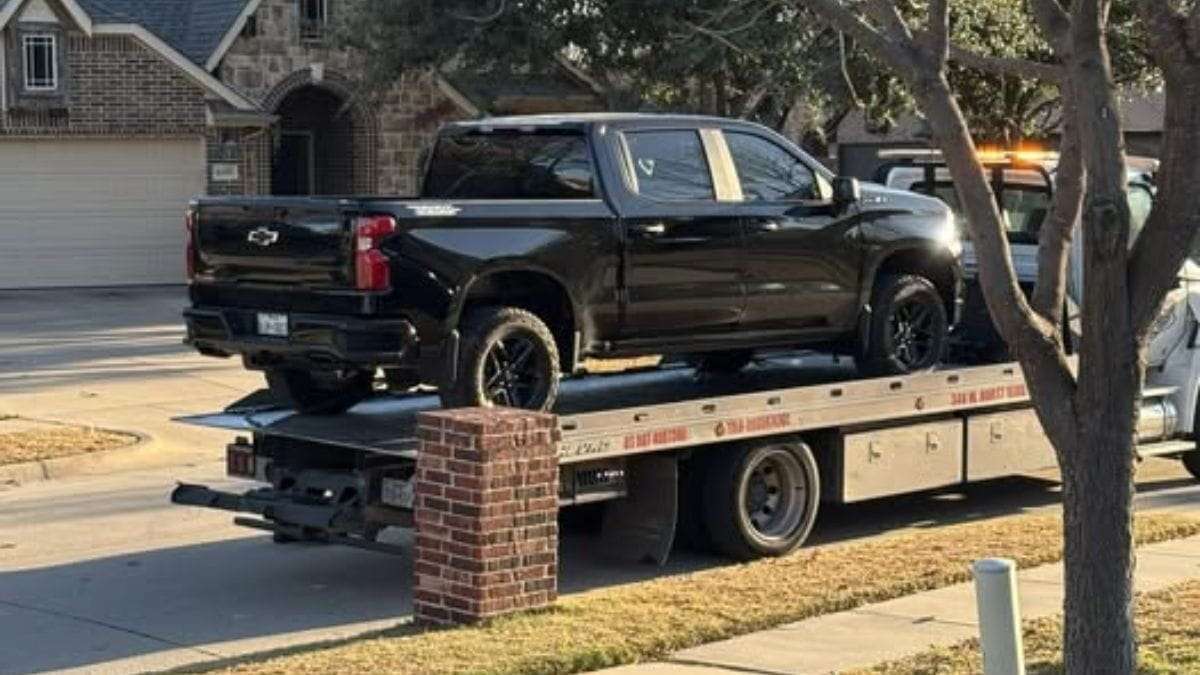
That confidence can fade quickly when real-world ownership does not match expectations. In a recent post shared within the “Chevy Silverado Z71 Trailboss Owners” Facebook group, Karl Thomas described how his 2024 Chevrolet Silverado Trail Boss with the 5.3-liter V8 and just 12,000 miles suddenly went into limp mode and completely lost reverse, leaving the truck barely usable. To make matters worse, the dealer confirmed that an early scan points to a transmission issue but said they will not be able to properly diagnose it until next week, despite the truck being nearly new and meticulously cared for.
Here’s how Karl described the situation in his own words: "I have a 2024 Model with the 5.3L engine at 12k miles. It went into limp mode and does not reverse. It’s been at the dealer since Saturday and they said they won’t get to it until next week, but a quick scan indicated a transmission issue. It’s pretty bad when you take awesome care of your new truck and it has these issues at 12k miles.”
When a Nearly New Truck Becomes Barely Drivable
What makes Karl’s experience so unsettling is not just that something went wrong, but how severe the failure appears to be at such low mileage. Limp mode is designed as a protective measure, limiting power to prevent further damage, but losing reverse altogether is a major functional loss. For a full-size pickup that many owners rely on daily, that effectively sidelines the vehicle.
At just 12,000 miles, most owners are still well within the honeymoon phase. Oil changes are routine, nothing feels worn, and the truck should be performing exactly as advertised. When a transmission-related issue surfaces this early, it raises immediate questions about quality control, software calibration, and whether modern drivetrains are becoming more sensitive than buyers realize.
The fact that the dealer cannot even properly look at the truck until the following week adds another layer of frustration. While warranty coverage may ultimately apply, downtime matters. A truck sitting at the dealership with no clear timeline can quickly turn excitement into anxiety, especially when early scans already suggest something as serious as a transmission problem.

The 5.3L V8 Reputation and Why This Stings
The 5.3-liter V8 has long been viewed as one of Chevrolet’s most proven engines. It has powered countless Silverados over the years and built a reputation for being a safe, dependable choice. That reputation is part of what makes Karl’s situation so jarring. When buyers choose the 5.3L, they often do so to avoid uncertainty, not invite it.
That said, modern trucks are no longer just engines and gears. They are rolling networks of sensors, control modules, and software logic. A transmission issue today can be mechanical, electronic, or a combination of both. Sometimes a valve body, solenoid, or software fault can trigger limp mode even if the hard parts are not catastrophically damaged. Until the dealer performs a deeper diagnosis, owners are left waiting and wondering.
This sense of uncertainty is something many GM owners have voiced in recent years. We have seen stories from drivers who say long-term ownership experiences ultimately shaped their loyalty, such as one Silverado owner who explained why they decided they would never buy a different truck again after how their Silverado held up over years of real-world ownership. It's a reminder that long-term reliability stories still exist even as newer cases raise concerns.
Dealer Delays Add to the Stress
Even when a vehicle is under warranty, delays can feel unacceptable to owners who depend on their trucks. Service departments are often backed up, parts can be on backorder, and complex diagnostics take time. Still, being told that a nearly new truck with a possible transmission issue will sit for days before being inspected is not what most buyers expect.
For Karl, the frustration is amplified by the care he has taken with the truck. His comment about taking “awesome care” of the vehicle reflects a common sentiment among owners who follow maintenance schedules closely and treat their trucks with respect. When something major fails anyway, it can feel like effort and responsibility weren't rewarded.
Community Reactions Highlight a Bigger Pattern
Karl’s post quickly drew responses from other Silverado owners, and their comments help place his experience in a broader context.
Michael Marlow summed up a growing sense of skepticism with a blunt observation: “It happens to all of them. Nothing is built with quality anymore.”
His comment reflects a wider belief among some consumers that modern vehicles, while advanced, may not be as robust as their older counterparts.
Others shared far more detailed personal experiences. Dave Hoshal did not hold back, writing, “Hold on tight; the worst is yet to come. My 2020 Trail Boss is a complete piece of crap. It has thousands in warranty work and is constantly at multiple dealers! It just turned 51,000 Km’s and I avoid driving it. I rely on my ‘98 Ford Ranger with 453,000 Km’s for something reliable to drive!”
Dave’s comparison between a modern Trail Boss and a decades-old Ranger is striking. It taps into a nostalgia many drivers feel for older trucks that, while less refined, seemed to just keep going. Whether that perception is fully fair or not, it speaks volumes about how reliability problems can permanently reshape brand trust.
Chris Manske offered perhaps the most cautionary tale of all: “I had a 2020’s transmission that went out at 9,500 miles. It had a big jerk on the highway and got left for dead. But it was a big headache from day one. The alternator went out and cost $700 and then $300 for a new battery for a truck I only had for 2 days and 100 miles on it. But after all that running around crap with GM and dealership scams, I’ll never buy another Chevy. PS: It took 8 months for a new transmission and then I got rid of it.”
Chris’s story underscores how early failures can snowball. One issue leads to another, downtime stretches into months, and patience eventually runs out. For readers, these stories add weight to Karl’s concern because they show that his experience is not entirely isolated.
Ownership Experiences Change Buying Decisions
Stories like these help explain why some long-time GM customers eventually walk away. We have previously covered how repeated unresolved issues can push owners to swear off new GM products entirely, such as one recent case detailing how a 2025 Chevy Silverado ZR2 suffered an engine failure at just 2,500 miles, showing how quickly confidence can erode when major problems appear early in ownership.
While a Silverado Trail Boss and a Corvette are very different vehicles, the common thread is not the product itself but how problems are handled. Communication, repair timelines, and transparency often matter just as much as the mechanical failure.
That's why looking at Karl’s situation, what stands out most to me is how early this problem appeared and how quickly confidence can unravel when answers are slow to come. I think modern trucks are walking a fine line between impressive capability and overwhelming complexity. Buyers are getting more power, better fuel efficiency, and advanced technology, but they are also inheriting systems that can fail in less predictable ways.
I do not think this means every new Silverado is destined for trouble, nor do I think it is fair to write off an entire brand based on one case. At the same time, I believe manufacturers need to recognize that early-life failures hit harder than anything else. When a truck with 12,000 miles is already sidelined, owners naturally start questioning long-term reliability, resale value, and whether their loyalty was misplaced.
For younger buyers especially, stories like Karl’s influence future decisions. Trust is built slowly and lost quickly, and in an era where information travels fast through online communities, every unresolved case carries weight beyond just one owner.
Key Takeaways for Truck Owners
- Early warning signs matter: Limp mode and loss of reverse should never be ignored, especially at low mileage.
- Dealer communication is critical: Clear timelines and updates can make a difficult situation more manageable.
- Modern complexity cuts both ways: Advanced systems bring benefits, but they can also introduce new failure points.
- Community feedback is valuable: Owner forums often reveal patterns that individual buyers might not see alone.
How About Your Experience?
Have you ever experienced a major drivetrain issue in a vehicle that was still practically new? How was it ultimately handled?
And if you own or are considering a Silverado Trail Boss, do stories like Karl’s change how you think about long-term reliability and dealer support?
Don't hesitate to share your thoughts with our community in the comments section below.
Aram Krajekian is a young automotive journalist bringing a fresh perspective to his coverage of the evolving automotive landscape. Follow Aram on X and LinkedIn for daily news coverage about cars.
Set Torque News as Preferred Source on Google
Follow us today...







Comments
All these problems would not…
Permalink
All these problems would not be happening if GM had not abandoned Old School Technology. GM has abandoned customers who do not want all these so called technological add ons. If you buy a new vehicle now you have to accept all these add ons that come with it. My reply to buying a new vehicle is simply No Thank You!!!!
In addition Harley Earl, Ed Cole, Bill Mitchell would be ashamed of what GM has become.
‘97 K-1500 WT needed…
Permalink
‘97 K-1500 WT needed rebuiltrans at 107000 miles. Good for another 100k. Cost me 5 months payments on a new one. I’m happy.
Trade In That 2024 Chevy…
Permalink
Trade In That 2024 Chevy Trail Boss Truck...As Soon As Possible...GM Is " General Mistakes"....Chevrolet is " Cracked Heads, Every Valve Rattles, Oil Leaks Every Time"...C.H.E.V.R.O.L.E.T. Go Get A Ford F250..6.8 or 7.3 Gasoline V8....
My 2020 Silverado Crew cab w…
Permalink
My 2020 Silverado Crew cab w/5.3L V-8 engine developed a serious problem at just over 32,000 miles and just beyond the drivetrain warranty. The truck was experiencing a stuttering effect as if driving on rumble strips. The answer was to replace the torque converter. I’m optimistically hopeful that this will resolve the problem with no further issues.
Look it up.. 450,000 trucks…
Permalink
Look it up.. 450,000 trucks recalled for transmission problems and Over a million trucks with engine problems... Buyer beware
It's nothing new I've had…
Permalink
It's nothing new I've had hundreds of Hondas coming with less than a hundred miles with check engine lights and other various problems
On that transmission, with…
Permalink
On that transmission, with those symptoms, it's likely to need a valve body. ("Non serviceable" electronics built-in.)
The dealer delay is simply too few transmission techs who are backed up with too many transmission problems.
The next stage of the problem is likely back order parts due to high demand and multiple supply chain issues that the parts and service industry has been facing for several years now.
Blame the dealers all you want, our hands have been tied so long it has become the new normal.
And you can blame GM too, but know this- it's not just GM...
Industry wide crapification. Short-term profit at any cost.
And it's not just automotive.
...where are you pulling…
Permalink
...where are you pulling info from? Dependable engine only comes after replacing the AFM with a delete kit. Owned 2 Silverados both had lifter issues. Its going to be a good while before I get back into a Silverado again.
Transmission failure at 53…
Permalink
Transmission failure at 53,000 miles on our 2020 Chevy Silverado despite being properly maintained. Out of warranty as the 5 yrs are up. Thank heavens we had an extended warranty. Have been waiting for 6 weeks for a new one from GM with an unknown expected date of delivery. Truck is sitting on a dealer's lot 500 miles from our home where we were stranded.
Bought a 2019 vehicle low…
Permalink
Bought a 2019 vehicle low tech on purpose. Keeping it simple
I am currently putting my…
Permalink
I am currently putting my 2019 Silverado 1500 with a 5.3 back together after tearing into the engine because of a failed lifter. I'd rather have a reliable engine instead of the junk DFM they put into it to squeeze a little more MPG out of it. I bought a truck, not an eco box. Any money I may have saved and then some has been lost to fixing the truck because of that system.
Every truck make designed…
Permalink
Every truck make designed trucks to fail. No more 200,000 or 300,000 trucks. They hope it last till warranty expires. Most likely 30,000 miles.after that it on your dine. Steal ship don't care.they got your hard earned money. 70 80 thousand dollars.no thank you.
Same thing happened to me…
Permalink
Same thing happened to me last year around this time. It ended up being the valve body. It took nearly 6 weeks to get my truck back. Make sure you call GM and work to get a loaner, get approved for a rental car, etc. This process is not easy and can get costly with rental car fees and the length of time it's going to take to get reimbursed.
1 year later I'm back at the dealership for a transmission update that requires actual parts and the parts have to be ordered. Stay encouraged
Best wishes!!
My 2016 Chevy 1500 Silverado…
Permalink
My 2016 Chevy 1500 Silverado has 111,471 miles on it transmission is out. Dealer had it for a week told me they can change out the transmission for $8k or test into to it and May cost me $10k. I’ve had a 2003 Chevy Silverado with over 250,000 miles and only what I call minor repairs. If I let let the dealer fix it will I have the same issue before another 100k miles?
I have a 2024 Silverado, my…
Permalink
I have a 2024 Silverado, my fuel control module went bad at 17,000 miles and left me stranded. Got lucky and my local dealer had the part in stock and got it back in less than 24 hours.
While being an older Chevy…
Permalink
While being an older Chevy fan, i've had Ford the last 20 years, they all suck at some point but Chevy has really dropped the ball, dont see going back any time soon, Fords eat more gas but they're Ford Tough
2024 gmc sierra denali…
Permalink
2024 gmc sierra denali. Started having transmission issues at 25,000 miles shaking & stuttering between 20 mph to 50 mph. Clunky shift between reverse & drive. Waiting for the lock up.
😁 I own a 2006 Chevrolet…
Permalink
😁 I own a 2006 Chevrolet Silverado 1500 V8 and I have had absolutely NO problems. I have the last of the good ones. 😁
Truck was taken in on a…
Permalink
Truck was taken in on a Saturday, which are tupically very busy. Service centers don't operate on Sunday. Quit being so dramatic about the "next week" isht. Remember, you are not the only one with a vehicle in the service yard.
Hopefully the dealer is at…
Permalink
Hopefully the dealer is at least giving him a loaner vehicle while it's in the shop.
I have a 2020 Trail Boss,…
Permalink
I have a 2020 Trail Boss, bought it brand new in April of 2020. 71,000 on the motor and transmission and have had no issues with my truck at all. Just luck of the draw I guess but I will buy another in few years.
I have a 2021 Silverado 5.3L…
Permalink
I have a 2021 Silverado 5.3L with 8 speed transmission with 95,000 miles and transmission is shot. I’ve done all factory recommend fluid changes and didn’t make a difference. Can’t stand when a manufacturer has know problems and yet push repair costs off to customer rather than issuing a recall.
I have a 2024 Silverado…
Permalink
I have a 2024 Silverado Trail Boss and at 11,800 miles it would not go in reverse. I had it towed to the dealership where they informed me that I experienced a software failure.20 minutes later I was back on the road. Twelve days later it did it again, but I was able to drive out going forward. As I was driving to the dealership it went in to limp mode. I made it to the dealership and after changing the valve body and solenoid I was on the road again while this took about 5 business days. It's been about 2000 miles since then with no issues. I have a 2000 Silverado that I bought new with no issues today. I would rather drive it.
The 5.3l Chevy engine is…
Permalink
The 5.3l Chevy engine is always in limp mode compared to the Ford 3.5l Ecoboost, ha!
Just purchased a 2026…
Permalink
Just purchased a 2026 Silverado Trail Boss w/5.3 V8. My anxiety just peaked after reading these stories. Hope my truck doesn’t turn “lemon yellow” in the future. I only have 300 miles so far.
I have a 2024 Chevrolet…
Permalink
I have a 2024 Chevrolet Silverado and a few days after buying it , it had to be towed and would not start. I was devastated as to think a problem like this could happen to my favorite brand. But I realized it was a computer software issue , still does not make it any easier. It took about 3 days to get my truck back and the communication was not the best either from the service manager. I now have said , I will never buy again from that dealership and am looking at buying another brand possibly a Toyota or Ford but what are you going to do when you become uncertain about what is going to happen to the truck and myself again ?
Sad to hear people's troubles
Permalink
Sad to hear people's troubles
These days often find in the…
Permalink
These days often find in the interior of moving parts such as engines and transmission parts not put together properly, dropped tools, foreign objects etc. The quality is just not there due to many factors . Could even be less skilled workers, cheap labour, robotics etc. Get milled shavings from machining substandard cheaper sourced parts dropped into sensitive precision areas.
For me it has always been…
Permalink
For me it has always been Mom, apple pie and CHEVROLET. I HAVE 2002 Z71 SILVERADO 1500 5.3. I bought new from kenly Chevrolet. Chevy changed the look of front end 2003 fugly. This truck has towed boats trailers never a problem . 1 tune up 112k 1 starter 1 fuel pump 200k this week water pump and thermostat. Not bad but the clear coat went bad. GM knows they failed tried to get Chevy to take some acceptance noda. 2012 my son buys a new Chevy 1500 Z71.this was so bad the vehicle would fail to start. Towed 4 times to dealer last pick up went to get gas won't start. This time towed back to dealer and he got lemon lawyer. They blamed his professional installed radio. Now with the lawyer they had to get serious about diagnosing the problem. Computer was cutting the truck off. System failure 6 months of time. He also received over 5 grand from lawyer who settled case with GM. THIS GM IS NOT THE SAME SINCE THEY GOT A BAILOUT.
GM products might as well be…
Permalink
GM products might as well be made in China...they're literally that bad yet the Auto Workers Union demanded more money.
Here's an idea, your pay should be based on the quality of your workmanship...at this point all those lazy, good for nothing workers need to either give back the money or get replaced with robots. Its sickening how bad GM products have become.