
In its latest analysis of the U.S. battery-electric vehicle market, Cox Automotive estimates that BEV market share in late 2025 fell back to the same level as 2022, calling it “the Q4 collapse.” Having passed 10% share briefly, EVs only accounted for 5.8% of the U.S. market for the period of October, November, and December. Cox offers the best data and analysis of the U.S. auto market, and we rely on it for our work. Let us analyze the Cox forecast while sincerely saying that we respect the group immensely.
With the market share cut almost in half during Q4, it would seem as if EVs were about to go extinct in the marketplace. After all, the Nissan Ariya, Ford F-150 Lightning, Volkswagen ID. Buzz, RAM REV, and some other EVs, as well as five plug-in hybrid-electric vehicles, have now been canceled. Many more models that were planned for the U.S. market were killed before launch. Does this signal the end of EVs?
Stephanie Valdez Streaty, director of Industry Insights at Cox Automotive doesn’t think so. She says, “Rather than signaling a retreat from electrification, this shift marks a structural transition toward a market increasingly driven by consumer choice. While 2026 will bring challenges, momentum remains grounded in market maturation: expanding model availability across price points, improving charging reliability, and continued advances in battery performance and cost.”
This is a bold stance. Breaking it down into three sections, we see things in a different light.
1) A Market Driven By Customer Choice - What Ms. Valdez Streaty means here is that the ominous EV mandates have now been lifted. Similarly, the massive front and back-end taxpayer-funded subsidies that EV manufacturers were enjoying have now ended, and will not return for the foreseeable future. Now, EVs must sell to the masses at closer to market prices. Our take is that manufacturers will continue to slash EV capacity and models for the simple reason that they are unprofitable. Two EV models make up more than 35% of the entire BEV market in America for a reason. Automakers have been slow rolling EV production to keep from going completely broke.
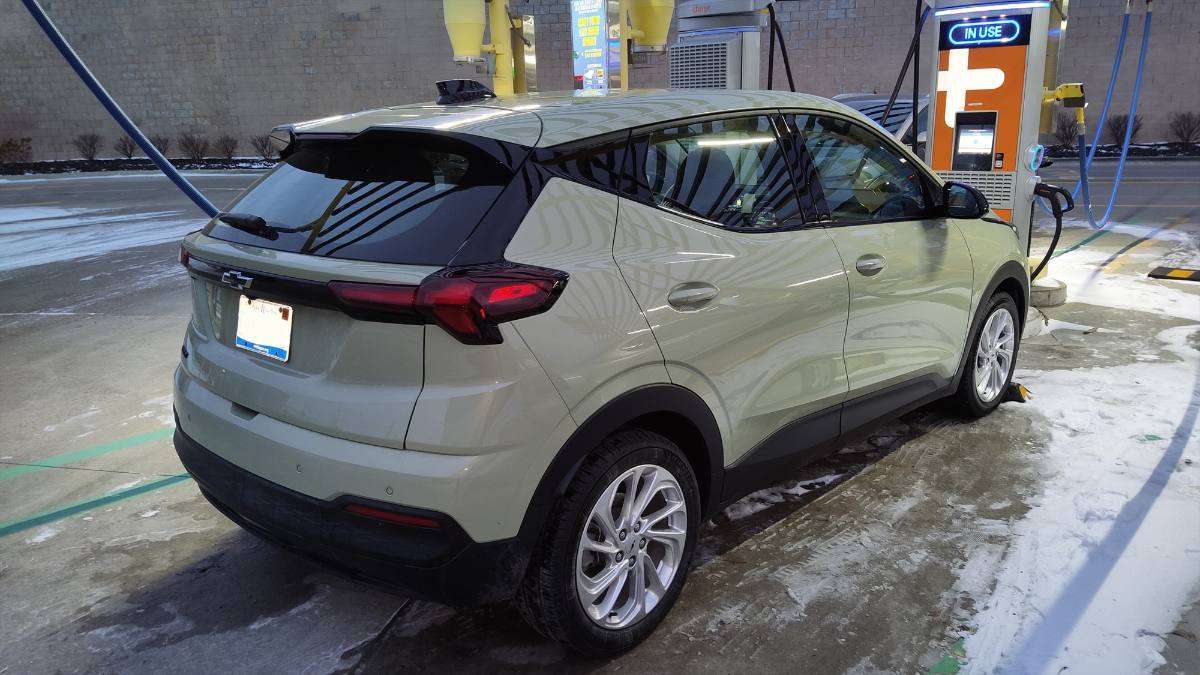
2) Expanding EV Model Availability - Ms. Valdez Streaty is referring to new models entering the marketplace in 2026. From our point of view, there is only one model coming to market that has any hopes of selling at 5,000 units per month or more. That is the revamped Chevy Bolt. The Leaf never left the marketplace, so it’s not a new entry. We also think that the Leaf offers some hope for a decent volume EV. Aside from these two newly updated models, we see zero new EVs maintaining a rate of delivery of 5,000 units per month in 2026. Ford’s new, smaller EV truck is not scheduled to be launched until 2027. Slate’s low-cost EV truck/SUV isn’t scheduled to arrive until late 2026. And will likely be a bit late.
3) Improving Charging Reliability and Advances in Battery Performance and Cost. - Here, Cox is both right and wrong. Charging in America has gotten better. Ford, for example, stepped up big-time and added a massive number of EV chargers. And battery energy density will go up, and cost per kWh of storage will decline as time passes. But there is no battery technology being rolled out right now that will have a major impact on deliveries in 2026. And better chargers didn't help in 2025.
Our Prediction For EVs In 2026
We see the actions manufacturers have already taken as a sign that they want to abandon EVs for the most part. Yes, they say otherwise, but GM dropped BrightDrop, Ford the Lightning and its Escape PHEV, RAM the REV, and VW its award-winning ID. Buzz. If these large-scale players are convinced EVs have a future, why drop these models? And it’s not just killed off unprofitable nameplates. Manufacturers are closing factories and canceling battery partnerships.
We think EVs have a future, but 2026 will be a tough year for EVs. It’s easy to sit back and say EVs will do well in the long run. Sure. They likely will. But what about 2026? Cox signed off its most recent market analysis by saying, “The automotive market in the U.S. is more than 100 years old. Change takes time.’ It is a little bit unsettling to us that Cox doesn’t seem to count the U.S. market EVs that began in 1891 as part of the “long run.” EVs are now in their fourth century in America, and the modern era of EVs, which began with the GM EV1 and the Toyota RAV4 EV, turns 30 in 2026.
Cox is on the record saying that EV market share in 2026 will be 8%. That’s the same level it was at in late 2023. We predict they are about two points high and that EV market share in the U.S. this coming year will look more like 2022. Time will tell.
John Goreham is the Vice President of the New England Motor Press Association and an expert vehicle tester. John completed an engineering program with a focus on electric vehicles, followed by two decades of work in high-tech, biopharma, and the automotive supply chain before becoming a news contributor. He is a member of the Society of Automotive Engineers (SAE int). In addition to his fourteen years of work at Torque News, John has published thousands of articles and reviews at American news outlets. He is known for offering unfiltered opinions on vehicle topics. You can connect with John on LinkedIn and follow his work on his personal X channel or on our X channel. John employs grammar and punctuation software when proofreading, and he sometimes uses image generation tools.
Top of page image courtesy of Ken K.
Set Torque News as Preferred Source on Google
Follow us today...