

When an automaker’s CEO steps away from polished press releases and posts raw prototype photos directly to social media, I pay attention. Not because I take executives at their word, but because after more than 15 years covering the auto industry, I have learned that where and how leaders communicate often signals how serious a project really is.
That is exactly why Jim Farley’s recent X post about Ford’s upcoming mid-size electric pickup matters. This was not a vague teaser or a glossy reveal. It was a hands-on look at engineers deep in the weeds, working on what Farley himself called “one of the most audacious and important projects in Ford’s history.”
Farley wrote:
“An early peek at our brilliant team working on the Universal Electric Vehicle project – one of the most audacious and important projects in Ford’s history. American innovation is how we compete and win against China and the rest of the world.
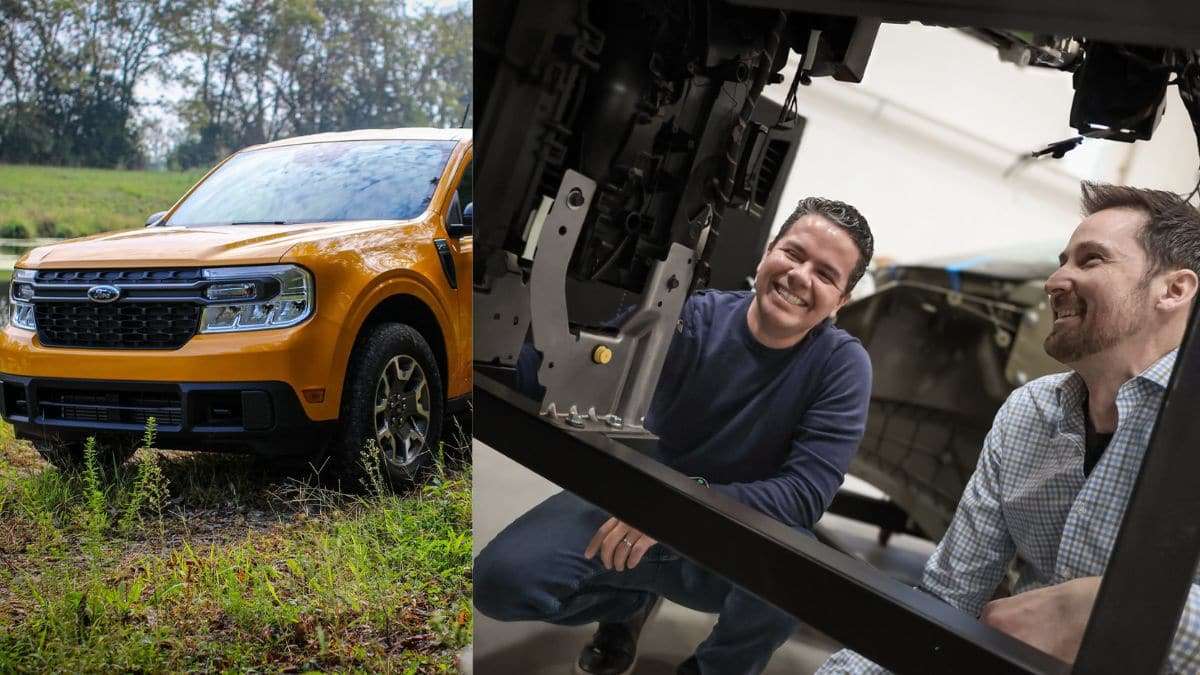
➡️ The team is spending countless hours getting every last drop of aero efficiency on the mid-size electric pickup.
➡️ The best part is no part, but the second-best part is one that serves multiple functions.
➡️ A Ford team member working on the front end of a prototype – one of the hundreds of prototypes the team has designed and developed to shape the face of the truck over the last few years.
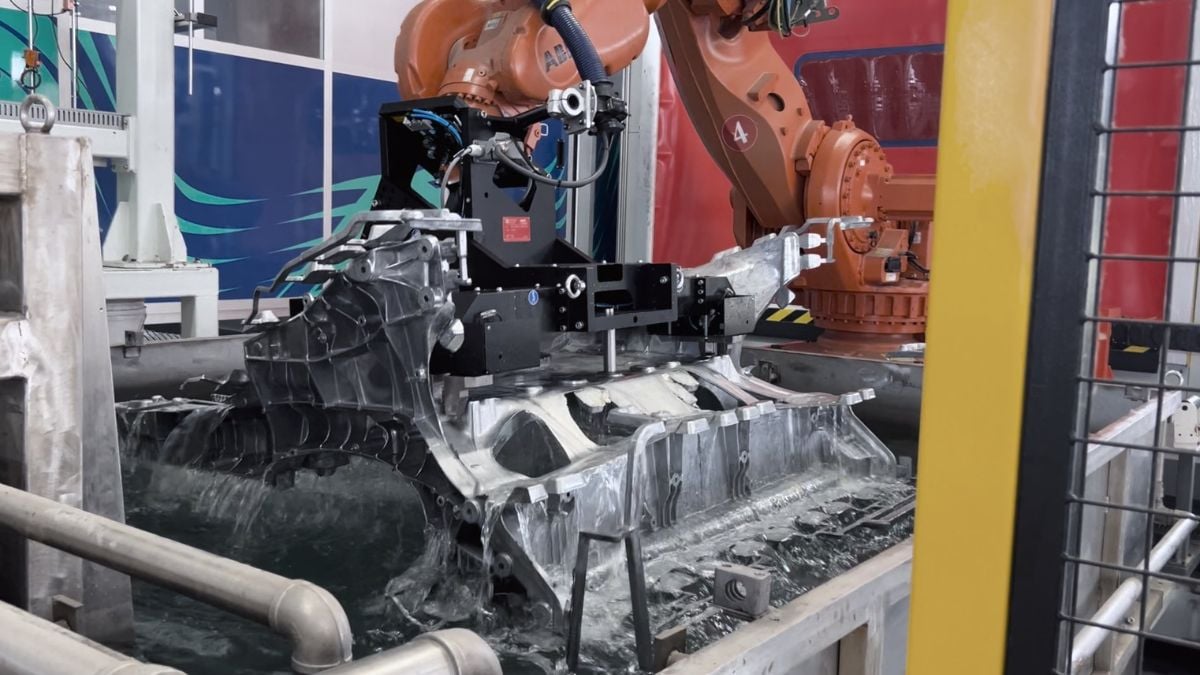
➡️ Ford will use large unicastings for the first time on the Universal EV Platform. The radically simplified aluminum unicastings condense over 146 parts into 2 and enable the assembly tree method at the Louisville Assembly Plant.
Can’t wait to share more!”
I am quoting Farley at length because this context matters. But here is his X post.
An early peek at our brilliant team working on the Universal Electric Vehicle project - one of the most audacious and important projects in @Ford's history. American innovation is how we compete and win against China and the rest of the world.
➡️ The team is spending countless… pic.twitter.com/Un4eCe258L— Jim Farley (@jimfarley98) February 5, 2026
This is not just a new truck story. This is Ford explaining how it believes it can survive and compete in an EV market that has been brutally unforgiving to legacy automakers.
Here is my full opinion on how Ford is planning to produce the $30,000 mid-size EV truck from the Torque News Youtube channel.
Why This Truck Is More Important Than It Looks
Ford is aiming this mid-size electric pickup at a roughly $30,000 price point, with production targeted for 2027 at the Louisville Assembly Plant in Kentucky. That alone puts this truck in a different category from nearly every electric pickup currently on sale.
We are not talking about a luxury toy or a niche halo vehicle. We are talking about volume, affordability, and real-world usefulness. That is why many observers are already framing this as a potential turning point, something Torque News explored in depth when asking whether Ford is approaching a true “Model T moment” with its new EV platform and a $30,000 midsize truck.
From my perspective, Ford is finally solving the right problem. For years, automakers chased range numbers, screen sizes, and acceleration stats. What buyers have been asking for instead is value.
The mid-size pickup segment has quietly become one of the smartest places to find that value, especially when you look at ownership costs, maneuverability, and everyday usability. I have seen this play out repeatedly, which is why I have written about how a midsize pickup truck often offers better overall value than buyers expect when compared to larger trucks like the Toyota Tacoma.
Ford clearly sees the same opportunity, and it is designing this EV specifically to exploit it.
My Expert Take: Ford Is Learning the Right Lessons, Finally
What encourages me most is not the price target, but how Ford plans to get there.
Large aluminum unicastings are a big deal. Collapsing more than 146 parts into just two is not a minor efficiency tweak. It fundamentally changes manufacturing cost, quality control, and assembly speed. Tesla proved that this approach works. Ford adopting it tells me pride has given way to pragmatism.
The same goes for Farley’s “best part is no part” philosophy. Over the years, I have watched complexity quietly destroy margins and reliability. Multi-function parts reduce failure points and weight, two enemies of affordable EVs.
Aerodynamic obsession may sound boring, but it is crucial. Better aero means smaller batteries, and smaller batteries are the fastest path to lower prices. This is the kind of thinking you only see once an automaker has been burned by early EV economics.
I have driven and lived with Ford’s current electric truck offerings, and those experiences inform my cautious optimism.
That experience is why I believe Ford understands truck buyers better than most EV-only startups.
Where My Skepticism Comes From, and Why It’s Earned
That said, 15 years in this industry has taught me to treat future pricing with caution.
Battery costs fluctuate. Supply chains break. Labor contracts change. And timelines slip. 2027 is far enough away that market conditions will look very different by the time this truck reaches dealerships.
There is also the question of capability. A $30,000 electric pickup still needs acceptable range, dependable cold-weather performance, fast charging, and real payload credibility. Ford has not shared those numbers yet, and until it does, enthusiasm should be tempered with realism.
Competition will not pause either. General Motors is pushing aggressively into premium EV trucks, and vehicles like the Sierra EV Denali show how quickly expectations can shift. I recently looked closely at how the 2025 GMC Sierra EV Denali could put pressure on Tesla and reshape buyer expectations in the electric truck space.
Ford will be entering a market that is far more crowded and far more demanding than it is today.
Why This Story Actually Helps You
Even if you never buy this Ford truck, this news matters to you.
Affordable EVs create pressure. They force competitors to justify prices, simplify trims, and offer better value. That benefits every buyer, regardless of brand loyalty.
This story also matters if you have been sitting on the sidelines, waiting for an electric truck that feels normal, usable, and financially rational. Ford is signaling that it understands that frustration.
Most importantly, this news shows a legacy automaker acknowledging reality, learning from rivals, and rethinking how vehicles are built from the ground up. That is how real progress happens.
I am optimistic, but I am not sold yet. Ford deserves credit for targeting affordability and manufacturing efficiency head-on. Whether this mid-size electric pickup becomes a breakthrough or another missed opportunity will depend on execution, not ambition.
By the way, also see my recent story about another truck: Seven Particular Things You Should Be Aware of Before Purchasing a Tesla Cybertruck, Shared By Current Cybertruck Owners From Their Experience With The Truck.
As always, I will keep watching closely, asking uncomfortable questions, and reporting what actually matters to buyers, because that is what more than a decade and a half in automotive journalism has taught me to do.
Armen Hareyan is the founder and Editor-in-Chief of Torque News. He founded TorqueNews.com in 2010, which since then has been publishing expert news and analysis about the automotive industry. He can be reached at Torque News Twitter, Linkedin, and Youtube. He has more than a decade of expertise in the automotive industry with a special interest in Tesla and electric vehicles.
Set Torque News as Preferred Source on Google
Follow us today...







Comments
Does anyone believe this…
Permalink
Does anyone believe this hoopty will be available at $30k? We don't either, actually.
Does anyone believe this…
Permalink
Does anyone believe this hoopty will be available at $30k? We don't either, actually.