
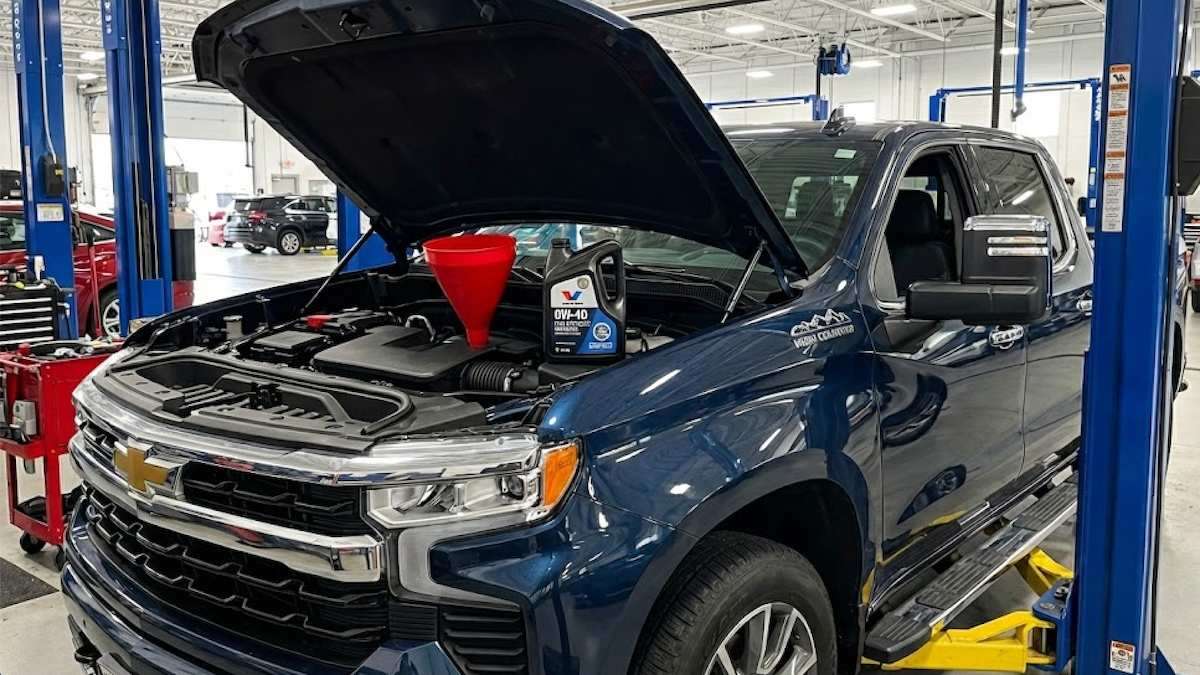

If you just bought a $75,000 Chevy Silverado High Country or GMC Sierra Denali with the 6.2L V8, or you are looking to buy one, you expect a powerhouse, not a ticking time bomb.
But for thousands of owners in late 2025, that's exactly what they feel they are driving. A massive wave of confusion is building around GM's handling of the L87 engine recall, and the "fix," a simple switch in oil viscosity, is leaving loyal customers feeling betrayed.
In my decade-plus reporting on the automotive industry, I've seen my share of "silent recalls," but the situation with the General Motors 6.2L V8 L87 engine is unique, and frankly, alarming. I recently covered how one owner's 2024 Silverado 2500 broke so often that GM had to buy it back, and now we are seeing that same frustration spread to the half-ton market.
"It feels like a cheap band-aid on a bullet wound," says one Silverado owner, Mark T., who was told by his dealer that his truck, which was under a stop-sale order for weeks, was now "safe" simply because they swapped the factory 0W-20 oil for 0W-40. "How does thicker oil fix a defective bearing? It doesn't. It just quiets the noise until the warranty runs out."
"Stop-Sale" Limbo
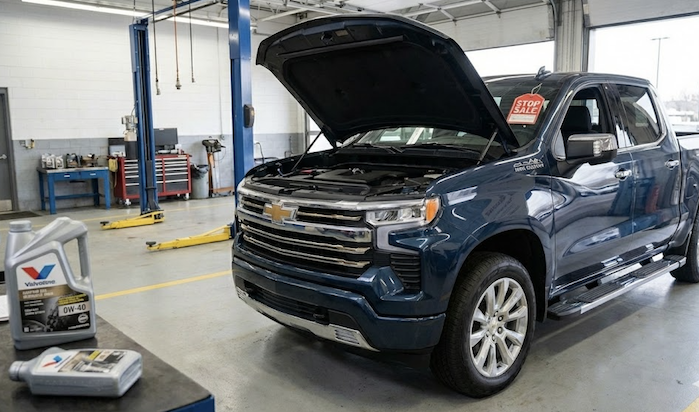
The situation is critical. GM issued a "stop-sale" order earlier this year for thousands of 2024 and select 2025 trucks due to a defect in the main bearings and connecting rods. The defect can cause immediate engine seizure, often with less than 5,000 miles on the odometer.
Dealers are currently in a state of chaos. While some trucks are receiving full engine replacements, others are passing a basic inspection and being sent back out with nothing more than a new oil cap and thicker oil. Owners are rightfully asking: If the bearing material is defective, how does oil save it? I discussed this inconsistency in my report, where a dealer cut an owner's oil change interval to 3,000 miles following the recall, signaling that even the service departments aren't confident in the longevity of these engines.
Why The "Fix" Is Controversial
The controversy stems from the sudden reversal of engineering logic. For years, GM insisted that 0W-20 was critical for the L87's tight tolerances and Dynamic Fuel Management (DFM) system. Now, facing a massive warranty bill, the solution is suddenly to use the thicker 0W-40 oil typically reserved for high-performance Corvettes.
After analyzing hundreds of owner reports and technical service bulletins (TSBs), my opinion is that switching to 0W-40 oil is a stop-gap measure, not a mechanical cure.
Here is why you should be skeptical.
1. Physics Doesn't Lie: If a batch of connecting rod bearings was manufactured with defective material, prone to premature seizure or delamination, changing the oil viscosity cannot "heal" the metal. Thicker oil (0W-40 vs. 0W-20) provides stronger film strength at high temperatures, which might delay failure or mask the "ticking" sound of a dying bearing, but it does not fix the underlying metallurgy.
2. The "Efficiency" Contradiction: For years, GM engineers told us that 0W-20 was non-negotiable for the Dynamic Fuel Management (DFM) system to function correctly. They claimed the tight tolerances of the lifters required thin oil. Now, overnight, they are claiming 0W-40 is perfectly fine? This reversal suggests that GM is prioritizing the engine's "survival" during the warranty period over the long-term efficiency it originally touted.
3. The Resale Value Hit: This is the "silent killer" of your truck's value. When you go to trade in your 2025 Silverado High Country in three years, savvy buyers will know this model year was plagued by the "bearing recall." Just as the infamous transmission shudder that has left some owners with their 6th torque converter destroyed has dropped the resale value of earlier models, this engine fiasco will likely place a permanent asterisk next to the 2024-2025 model years.
What 6.2L Owners Are Saying
I monitor the forums daily, so you don't have to. The sentiment right now is a mix of confusion and anger.
From Reddit (r/Silverado): "My dealer did the oil switch and told me I'm 'good to go.' I asked for a 100k-mile extended warranty in writing if they were so confident. They refused. That tells me everything I need to know."
From Facebook Owners Group: "I have a $78,000 paperweight. The dealer says I can't take my new truck home because of the stop-sale, but they also can't tell me when a new engine will arrive. They offered me a loaner Equinox. An Equinox!"
For a deeper dive into what owners are experiencing at the dealership, read my report on how one 2022 Silverado passed the recall "with flying colors," but the owner still feels they are on borrowed time.
The Bottom Line
If you are currently in a 2024 or 2025 GM truck with the 6.2L V8, or looking to buy one, here is my "bottom line" advice:
- Don't Accept the "Oil Fix" Alone: If your dealer performs the recall and simply changes the oil, demand an extended powertrain warranty. If they believe the fix works, they should back it with coverage up to 100,000 miles.
- Listen for the "Tick": The failure often starts with a rhythmic ticking that increases with RPMs. Do not ignore this. It is usually the sound of a lifter failing or a bearing spinning.
- The "Hard" Truth: If you tow heavy loads regularly, the 6.6L gas engine (in the HD trucks) or the 3.0L Duramax diesel is currently a far safer bet for reliability than the 6.2L V8.
Your Turn: Are you one of the owners stuck in "Stop-Sale" limbo, or has your dealer performed the oil viscosity update? I want to hear your story. Let me know in the comments below if you feel GM is doing enough to protect your investment.
NEXT UP: The Diesel Dilemma
Escaping the 6.2L Nightmare: Is GM's 3.0L Duramax a Safe Haven or Just Another Oil-Thirsty Trap?
Thousands of buyers fled the uncertainty of the 6.2L V8 "bearing recall" for the perceived safety of the 3.0L Duramax diesel. But are they truly safe, or did they trade a catastrophic failure for a maintenance headache?
The "Disappearing Quart": Why owners with less than 5,000 miles are seeing their oil levels drop alarmingly fast.
GM's Shocking Math: I break down why General Motors claims burning one quart of oil every 2,400 miles is "normal operation" for a $75,000 truck.
The Verdict: Why master technicians say you must adopt an "old school" maintenance mentality if you want the "Baby Duramax" to survive.
Check back tomorrow for the full investigative report!
With over 30 years of industry experience, Denis Flierl brings an insider’s perspective to Torque News, where he has been a Senior Reporter since 2012. Before picking up the pen, Denis consulted for the automotive industry's biggest brands and honed his skills as a test driver. He cuts through the noise to deliver the latest auto news, compelling owner stories, and the expert analysis necessary to navigate today's automotive landscape.
Have a tip or question? Follow me on X @DenisFlierl and @WorldsCoolestRides, or connect with me on Facebook, Instagram, and LinkedIn.
Photo credit: Denis Flierl
Set Torque News as Preferred Source on Google
Follow us today...





Comments
Check around, its looking…
Permalink
Check around, its looking like the primary source of the problem revolves around the crank and chamfers under the bearings.
I have a 2023 ZR2 with the 6…
Permalink
I have a 2023 ZR2 with the 6.2 engine. Went through the recall and got the new oil viscosity put in saying my truck is fine now. Before the recall my truck was making that ticking noise. I'm sure I am like many other owners, just waiting for it to blow up every time I take a trip. Very disappointed in Chevrolet after I spent that much on a truck and they won't fix it right.