
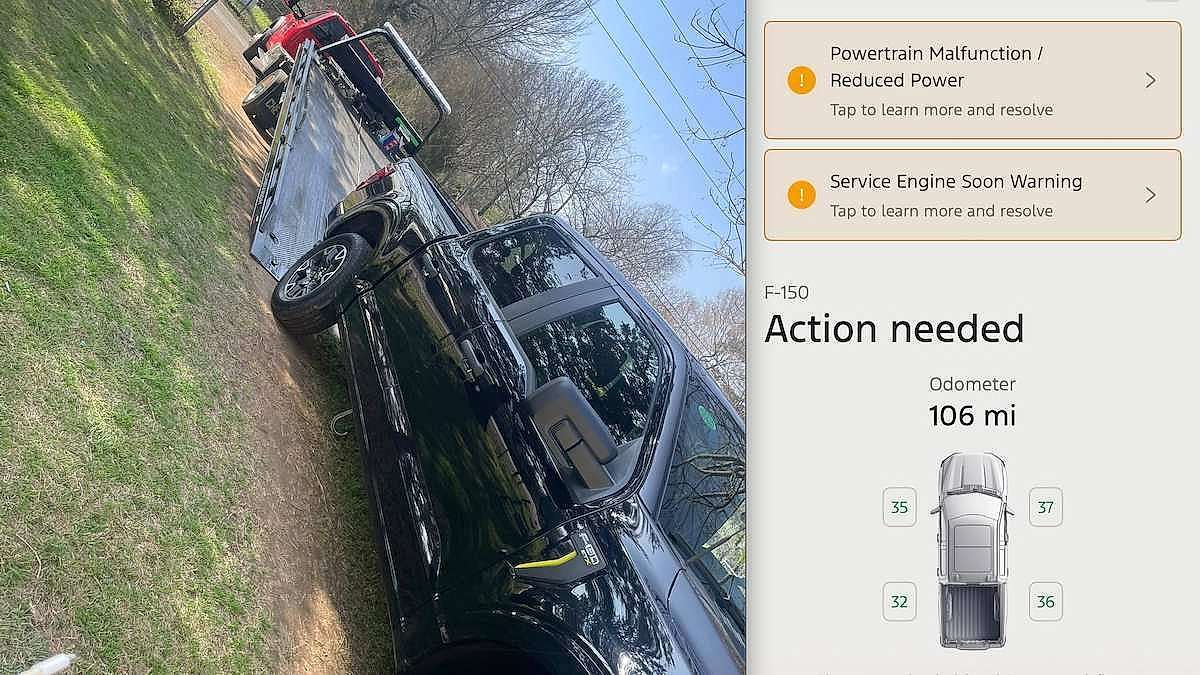

The "Built Ford Tough" promise usually implies years of service, but for one 2026 Ford F-150 owner, that promise didn't even last 24 hours. In a striking case of what engineers call "infant mortality," a brand-new 2.7L EcoBoost pickup suffered a catastrophic 10R80 10-speed transmission failure at just 106 miles. While many modern owners are wary of long-term reliability, this day-one mechanical collapse highlights a critical hardware non-conformity that bypasses software "learning" and points to a deeper struggle within Ford’s complex drivetrain architecture.
In my 30 years of covering the automotive beat, I’ve seen that the first few hundred miles are the most telling for any new vehicle. When a gearbox fails before the first tank of fuel is gone, it’s rarely a glitch; it’s a warning.
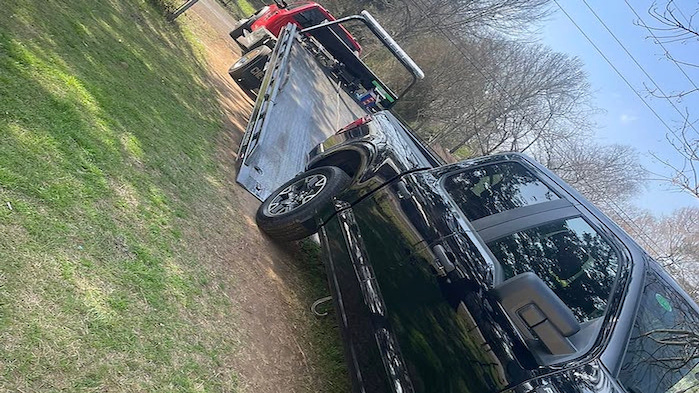
In my ongoing research into Ford reliability trends, I discovered a recent post shared in a Facebook community of Ford truck enthusiasts where Kileigh Elizabeth Jordan from Longview, Texas, detailed a startling first-day mechanical failure that highlights the unpredictable nature of modern 10-speed transmissions.
Kileigh says, “I’ve had this baby, a 2026 Ford F-150 2.7L, not even a full 24 hours, and just my luck! It only has 106 miles on it. I’m blown away by how something like this can happen on a brand-new truck. Man, talk about bad luck! The Ford dealer says it needs a new transmission. At least it’s getting a new trans now rather than later, I guess. But when I get her back, I’ll be starting with her mods.”
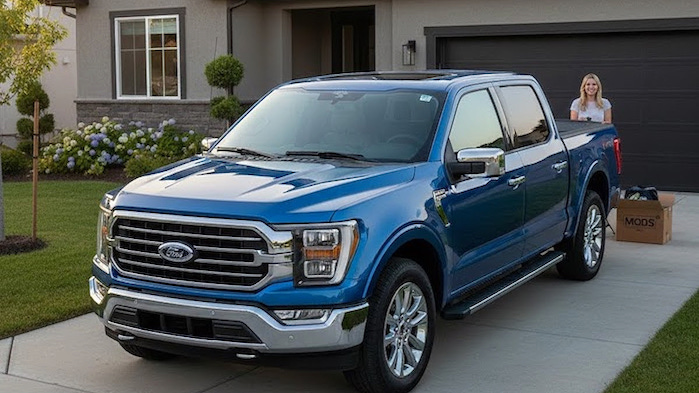
The following analysis examines the recent mechanical failure of the 2026 Ford F-150 2.7L EcoBoost drivetrain, specifically focusing on the 10R80 10-speed automatic transmission architecture. In the reported case of a total gearbox failure at 106 miles, technical indicators point to "infant mortality," a reliability phenomenon where manufacturing defects manifest immediately upon the component entering its first thermal cycles.
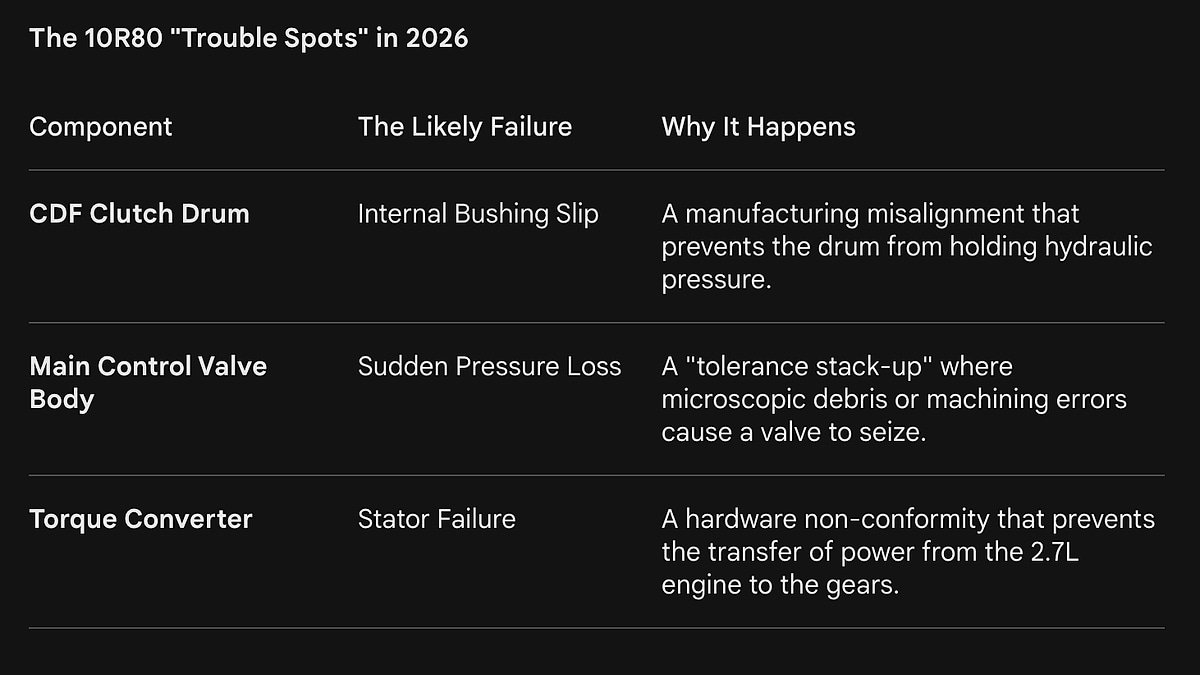
This specific failure at such low mileage typically bypasses the software-based "Adaptive Learning" phase and suggests a critical hardware non-conformity, such as a misaligned CDF clutch drum or a catastrophic loss of line pressure within the main control valve body.
To quantify the broader reliability landscape for the 2026 model year, technical data must be cross-referenced with established industry benchmarks. According to the latest Consumer Reports Automotive Reliability Data, transmission hardware remains a primary "trouble spot" for the F-150 platform, often overshadowing the mechanical durability of the 2.7L EcoBoost engine.
Furthermore, the NHTSA Recalls and Investigation Database maintains active monitoring of Ford’s 10-speed variants for shifting irregularities and power loss. For owners, documenting specific Diagnostic Trouble Codes (DTCs) like P0731 or P2700 is essential for validating warranty claims and ensuring that "infant mortality" defects are addressed through complete unit replacement rather than iterative software flashes.
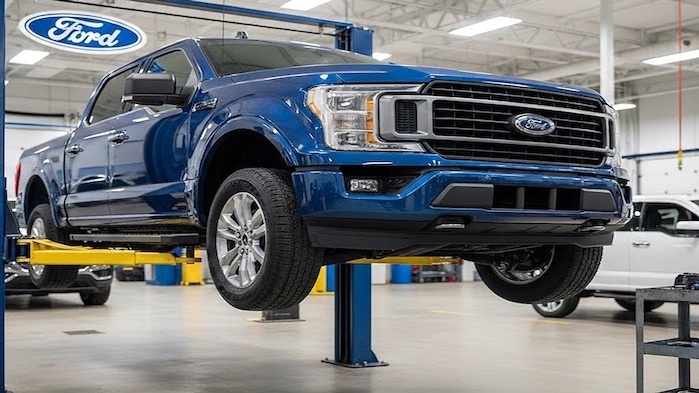
From My View: Why a New Truck Fails on Day One
In my 30 years of covering the automotive beat, I have seen it all, but nothing stings quite like "infant mortality" in a $60,000 machine. When we talk about who this affects, it is the loyal Ford buyer who expects the "Built Ford Tough" mantra to hold up for at least the first oil change. How does a truck with 106 miles need a total gearbox swap? It often comes down to a localized assembly defect or a "tolerance stack-up" where small errors in the complex 10-speed (10R80) architecture lead to a catastrophic hydraulic or mechanical failure.
As a Senior Reporter at Torque News, I’ve spent decades analyzing these patterns. I have previously explored how owners are losing faith in the newer drivetrains in my report on why post-2017 F-150 owners are questioning their purchases due to junk 10-speed components. The issue isn't always the design; sometimes, it’s the execution on the line.
What You Need To Know:
1. The 10-Speed Learning Curve: The 10R80 uses "Adaptive Learning," but a total failure at 106 miles is not a software glitch; it’s a hardware defect.
2. 2.7L EcoBoost Context: This engine is actually one of Ford’s most robust, but it’s only as good as the transmission it’s bolted to.
3. Warranty Protection: While frustrating, a failure this early is 100% covered, and Ford often fast-tracks these cases to avoid Lemon Law triggers.
My Take: The 10R80 Ghost in the Machine
The why behind these failures is often tied to the sheer complexity of the 10-speed automatic. While Ford has updated the internal "CDF Drum" to address older issues, new gremlins appear to be surfacing in the 2026 model year. In a recent AutoGuide analysis, experts noted that while the 2.7L is a safer bet than the 3.5L, the F-150's weakest part remains the 10-speed automatic transmission. This sentiment is echoed by many who feel the partnership with GM on this gearbox has left Ford owners holding the bag for shifting inconsistencies.
The Anatomy of "Infant Mortality"
When a 2026 Ford F-150 fails at 106 miles, we aren't looking at wear and tear; we are looking at Infant Mortality. This engineering term describes a component that fails almost immediately due to a manufacturing defect rather than usage.
I’ve closely monitored how these issues evolve, especially when compared with older, simpler trucks. For instance, I recently discussed how the high-tech 2025 F-150 can make drivers miss the raw, reliable power of a ten-year-old truck. As we add more gears and sensors, the margin for error shrinks to nearly zero.
Substantiating the Struggle
This isn't just an isolated social media post. Federal regulators are paying attention. According to reports from Car and Driver, the NHTSA has been investigating millions of F-150s for transmission downshift issues that can cause rear-wheel lockup. While that specific probe focused on older 6-speed models, it shows that the drivetrain is under the microscope.
When I look at the 2026 landscape, the 10-speed is still the "elephant in the room." I’ve written extensively about how Ford finally ditched its title of most-stolen vehicle, but it won't be able to celebrate if it earns a new title for the most frequent transmission replacements.
Key Takeaways for Owners
- Immediate Action: If your brand-new truck feels "clunky" or "hesitant" in the first 500 miles, take it to the dealer immediately to document the behavior.
- Rental Reimbursement: Ensure you request a loaner vehicle; Ford Corporate usually approves them for powertrain failures under 1,000 miles.
- Extended Warranties: If you plan on keeping your 2026 F-150 past the 60,000-mile mark, a Ford PremiumCare ESP is no longer an option; it's a necessity.
Community Technical Feedback
The community response to these early failures is a mix of sympathy and "I told you so." One user on Reddit noted the severity of the situation, stating, "My buddy has a 19 with all kinds of issues that Ford can't fix, 10 speed... I was preparing to go buy a 17 5.0 with low mileage", highlighting a trend of buyers retreating to older, proven tech.
Another owner highlighted the frustration of modern tech failing so early, mentioning, "On here you really only hear of horror stories with 10r80 transmissions... mine went out at 36k miles, and then again at 51k", which serves as a sobering reminder that for some, the first 100 miles is just the beginning of a long road of repairs.
The Path Forward
If you find yourself in Kileigh’s shoes, stay calm but be firm. A brand-new truck requiring a major component swap qualifies for a "buyback" or "lemon" claim in many states if the repair takes more than 30 days. I recommend keeping a detailed log of every dealer interaction. Ford’s 2.7L EcoBoost is a fantastic engine, and once the 10-speed is properly sorted, these trucks can run for 200,000 miles. The goal is to get through this "infant mortality" phase so you can actually enjoy the mods and the miles you planned for.
Ownership Shouldn't Start With a Tow Truck
Ownership should begin with a road trip, not a tow truck, yet cases like this 106-mile F-150 failure remind us that even the best-selling truck in America isn't immune to the complexities of modern engineering.
It’s Your Turn
Thanks for reading. After 30 years in the industry, seeing a total 10R80 swap at just 106 miles is a stark reminder that "Newer" isn't always "Better" when it comes to drivetrain complexity.
I want to hear from you: If you’ve taken delivery of a 2026 F-150, how has your 10-speed performed in the first 1,000 miles? Are you seeing the "clunky" shifts mentioned above, or has your experience been "Built Ford Tough"?
Click "Add new comment" below to share your mileage and any DTC codes you've encountered.
Denis Flierl is a 14-year Senior Reporter at Torque News and a member of the Rocky Mountain Automotive Press (RMAP) with 30+ years of industry experience. Based in Parker, Colorado, Denis leverages the Rockies' high-altitude terrain as a rigorous testing ground to provide "boots-on-the-ground" analysis for readers across the Rocky Mountain region, California EV corridors, the Northeast, Texas truck markets, and Midwest agricultural zones. A former professional test driver and consultant for Ford, GM, Ram, Toyota, and Tesla, he delivers data-backed insights on reliability and market shifts. Denis cuts through the noise to provide national audiences with the real-world reporting today’s landscape demands. Connect with Denis: Find him on LinkedIn, X @DenisFlierl, @WorldsCoolestRides, Facebook, and Instagram.
Photo credit: Denis Flierl via Kileigh Elizabeth Jordan
Set Torque News as Preferred Source on Google
Follow us today...







Comments
I have a 2023 F150 and a…
Permalink
I have a 2023 F150 and a 2020 Mustand ecoboost with the 10R80 and haven't had any problems at all, about 55K miles between the two vehicles. I love the way both vehicles drive-33 mpg on my mustang and 26 might highway on my F150