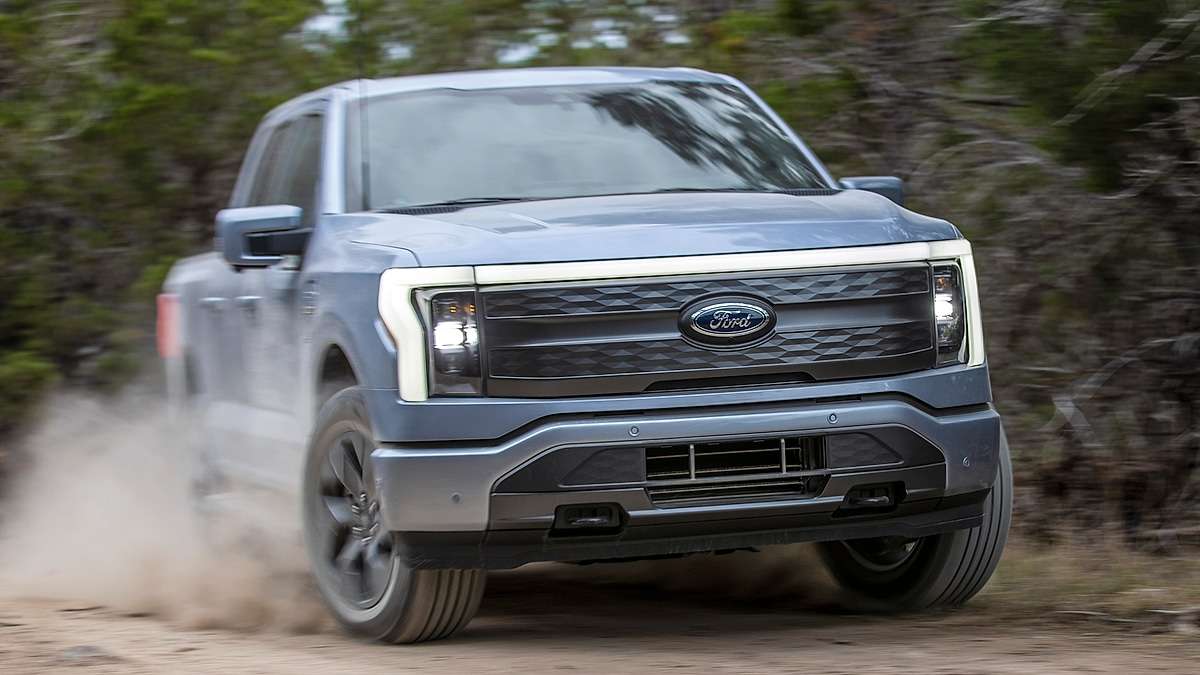

A Ford F-150 Lightning owner, shortsbagel, found themselves stranded at an intersection for 40 minutes, directing traffic around their inert electric pickup. The root cause was a neglected 12V battery warning, a signal that had gone unheeded for three days. This wasn't a sudden, unexpected failure; it was a consequence of ignoring the truck's explicit demand for attention to its auxiliary power system. The core problem here isn't just a dead battery; it's the complete immobilization of a modern electric vehicle when a seemingly minor component fails.
This scenario, increasingly common across the EV landscape, exposes a critical vulnerability in how manufacturers design their auxiliary power systems. While the massive high-voltage battery powers the drivetrain, a conventional 12V battery is still responsible for everything from door locks and infotainment to, crucially, powering the contactors that connect the main battery to the rest of the vehicle. When that 12V dies, the entire multi-thousand-pound electric truck becomes an immobile brick, regardless of the state of its primary battery pack.
The industry's continued reliance on a single, conventional 12V battery for critical EV functions is a design oversight that leaves owners vulnerable and manufacturers open to criticism for preventable roadside failures.
"Otherwise, you might find yourself stuck at an intersection for 40 minutes. Directing traffic around you, awesome truck, while your best friend brings you a battery tender so that you can limp down the road to an auto parts store to pick up the battery you ALREADY PAID FOR, but were too lazy to pick up for 3 days.
You will stand there, in the dying heat of the end of the day, as all the people getting off work are inconvenienced by your stupidity. Many of them will honk at you and simply not see the hazard lights you have turned on; this, too, will be your fault. The light for the turn lane you are stuck in will stay green for FAR longer than it ever needs to be, causing anger to flash across the people dying to get home from a long day of work. You will be forced to smile and wave people around as you stand there, even though all you want to do is bury your head in the sand.
You can avoid this, you can avoid the anger, the awkwardness, the complete helplessness by simply changing your battery at the first sign of an issue next time. At the end of the day, how long did it really take you, 5 minutes in an O'Reilly parking lot? You don't have five minutes to change a battery today, so Ford will take that five minutes and multiply it 8 fold, and they will be some of the longest minutes you have lived in a long time. So choose wisely."
Shortsbagel post is a stark, self-deprecating account of a common problem, but the underlying issue is far from humorous.
Ford F-150 Lightning: 12V Battery Vulnerabilities
- The Ford F-150 Lightning, like most EVs, relies on a conventional 12V lead-acid battery to power its auxiliary systems, including vehicle startup, infotainment, and electronic door locks. This battery is charged by a DC-DC converter from the main high-voltage traction battery, typically when the vehicle is "on" or charging.
- A failing 12V battery can render the entire vehicle inoperable, even if the main high-voltage battery is fully charged, because it cannot energize the contactors required to connect the main battery to the drivetrain. Owners often experience a "brick" scenario where the vehicle is completely unresponsive.
- The average lifespan of a 12V lead-acid battery is typically 3-5 years, but in EV applications with constant parasitic draws from features like sentry mode or remote connectivity, this can be significantly shorter. Some owners report failures within 18-24 months of ownership.
- Unlike internal combustion vehicles, where a dead 12V often allows for manual door unlocking and hood access, many EVs' electronic door latches and frunk releases are also dependent on the 12V battery, potentially locking owners out of their vehicle and preventing access to emergency jump starters.
The owner's frustration, directed at himself for procrastination, inadvertently shows a fundamental flaw in modern EV design: the single point of failure represented by the 12V auxiliary battery. This isn't a new phenomenon; even internal combustion vehicles can be immobilized by a dead 12V, but the expectation with an EV, especially one with a massive primary battery, is often different.
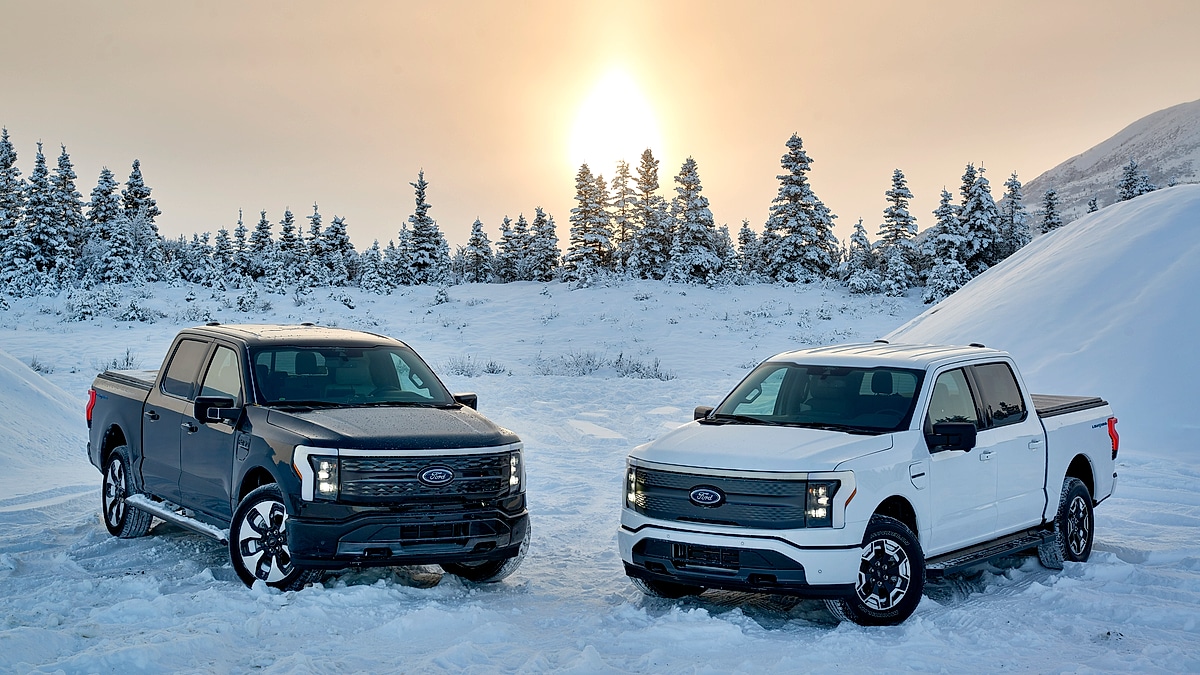
Reddit user u/natecoin23, who owns a '24 Flash F-150 Lightning, responded to the post, stating, "All of the stories here and the Lightning forum are why I keep a battery jump starter pack in the frunk." This comment immediately shifts the narrative from individual negligence to a recognized, systemic concern among owners. It suggests that a jump starter isn't just a convenience item for these vehicles, but a necessary piece of emergency equipment, implying a lack of robustness in the factory setup.
The fact that owners feel compelled to carry emergency jump starters for a component that should, by all reasonable engineering standards, be robust and reliable for at least five to seven years, points to a deeper issue. Why is a multi-thousand-dollar electric vehicle so easily incapacitated by a $200 part?
Another user, LaserGay, who keeps a jump starter in their Mach-E's frunk, brought up a point: "If the 12V is dead when I get to the car, I’ll need it to open the car." This reveals a compounding problem. Many modern EVs, including the F-150 Lightning and Mach-E, rely on the 12V battery to power the electronic door latches and frunk release mechanisms. A completely dead 12V can leave an owner locked out of their own vehicle, unable to even access the frunk where an emergency jump starter might be stored. This is not merely an inconvenience; it's a design oversight that can trap owners in a frustrating, circular problem.
The question of what "signal" the truck gives for 12V battery replacement was raised by u/QueueWho, a '22 Lariat SR AMB owner. User u/TREE-RX offered a common answer: "I believe it’s something along the lines of the truck entering 'battery saver mode'." This "battery saver mode" is often a cryptic dashboard message that doesn't explicitly state "replace your 12V battery now." It's a generic warning that can be easily misinterpreted or ignored, especially if the vehicle still appears to function otherwise. Ford and other manufacturers need to implement clearer, more direct warnings for critical component failures, rather than relying on ambiguous system messages.
SaltyExxer, who owns a '25 Lariat ER, provided another common scenario: "Mine does that all of the time, because my dashcam has sentry mode. I don't really want to disable it, either. I may look into a larger capacity battery." This shows the conflict between modern vehicle features and the limitations of the 12V system. Features like sentry mode, which continuously monitor the vehicle, draw power from the 12V battery, especially when the vehicle is parked, and the main high-voltage battery is not actively charging it. This constant drain can prematurely wear out the 12V battery, particularly if the vehicle is not driven frequently or for long enough durations to allow the DC-DC converter to fully recharge it. The F-150 Lightnings owner's consideration of a larger capacity battery is a band-aid solution to a design problem.
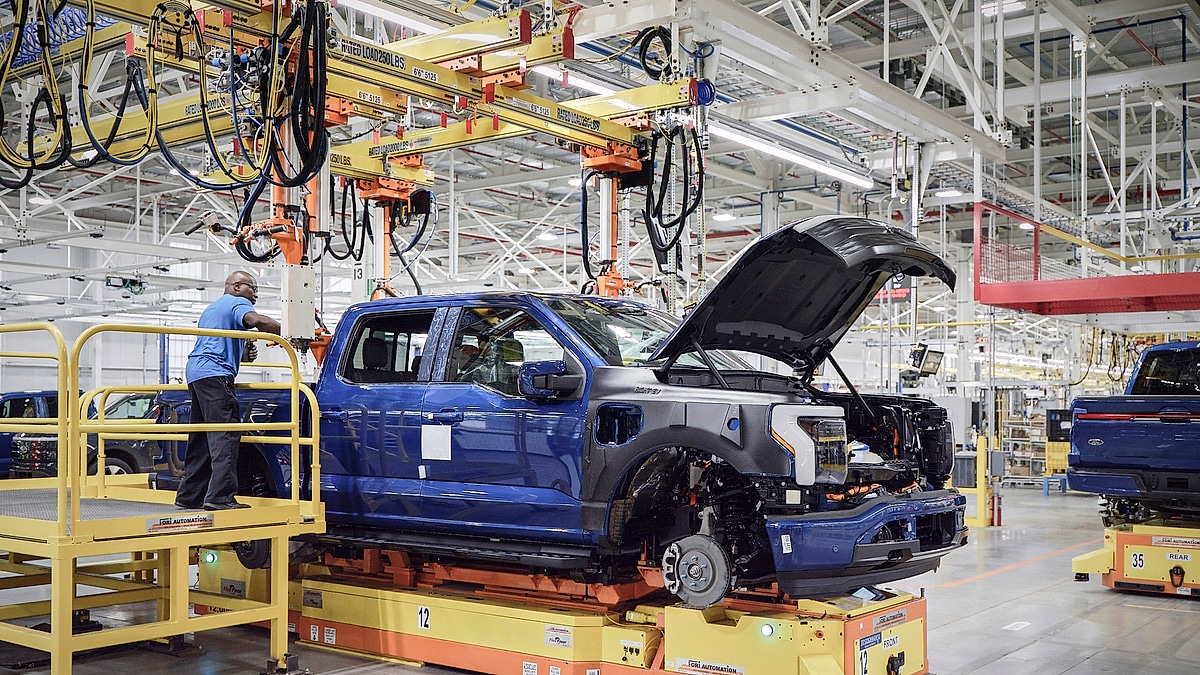
The shortsbagel incident is a symptom of a broader engineering choice that prioritizes cost or packaging over robust reliability. Ford, and indeed the entire EV industry, must re-evaluate the role and resilience of the 12V auxiliary battery. Owners should not be forced to carry emergency equipment to compensate for a design that leaves them stranded by a component that costs less than 0.1% of the vehicle's purchase price.
Image Sources: Ford Media Center
About The Author
Noah Washington is an automotive journalist based in Atlanta, Georgia, covering sports cars, luxury vehicles, and performance culture. His reporting focuses on explaining the engineering, design philosophy, and real-world ownership experience behind modern vehicles.
Noah has been immersed in the automotive world since his early teens, attending industry events and following the enthusiast communities that shape how cars are built and driven today. His work blends industry insight with enthusiastic storytelling, helping readers understand not just what a car is, but why it matters.
Noah is also a member of the Southeast Automotive Media Association (SAMA), a professional organization for automotive journalists and industry media in the Southeast.
His coverage regularly explores sports cars, luxury vehicles, and performance-driven segments of the automotive industry, including the evolving culture surrounding Formula Drift and enthusiast builds.
Read more of Noah's work on his author profile page.
You can also follow Noah here:
Set Torque News as Preferred Source on Google
Follow us today...