


An investigative analysis of corporate service protocols reveals that stringent administrative gates are stalling warranty-backed engine replacements for light-duty truck platforms. According to ongoing coverage by Denis Flierl at Torque News, tracking manufacturing defects and navigating complex approval pipelines has transformed standard corporate warranty coverage into an intensive compliance ordeal for consumers.
Field data indicates that corporate service hubs frequently delay high-expense component replication by requiring deep physical and digital teardown verification before authorizing parts distribution. This action plan equips vehicle owners with definitive navigation tools, legal prerequisites, and systemic tracking mechanisms to break through service-bay deadlocks and enforce their statutory consumer rights.
A primary long-form investigation by Torque News exposed severe mechanical vulnerabilities affecting top-end components on late-model light-duty truck platforms operating under sustained trailering stresses. When a vehicle undergoes a major operational failure far from home, the mechanical breakdown represents only the initial phase of consumer hardship. This consumer advocacy report establishes the essential, action-oriented counter-strategy for vehicle owners currently stranded inside corporate dealership networks.
As manufacturers implement rigorous cost-control procedures across their dealer operations, service managers are no longer authorized to independently order replacement long-block assemblies without multi-layered corporate pre-approval. This systemic shift often subjects truck buyers to extensive diagnostic delays, backordered components, and immediate disputes regarding vehicle usage boundaries.
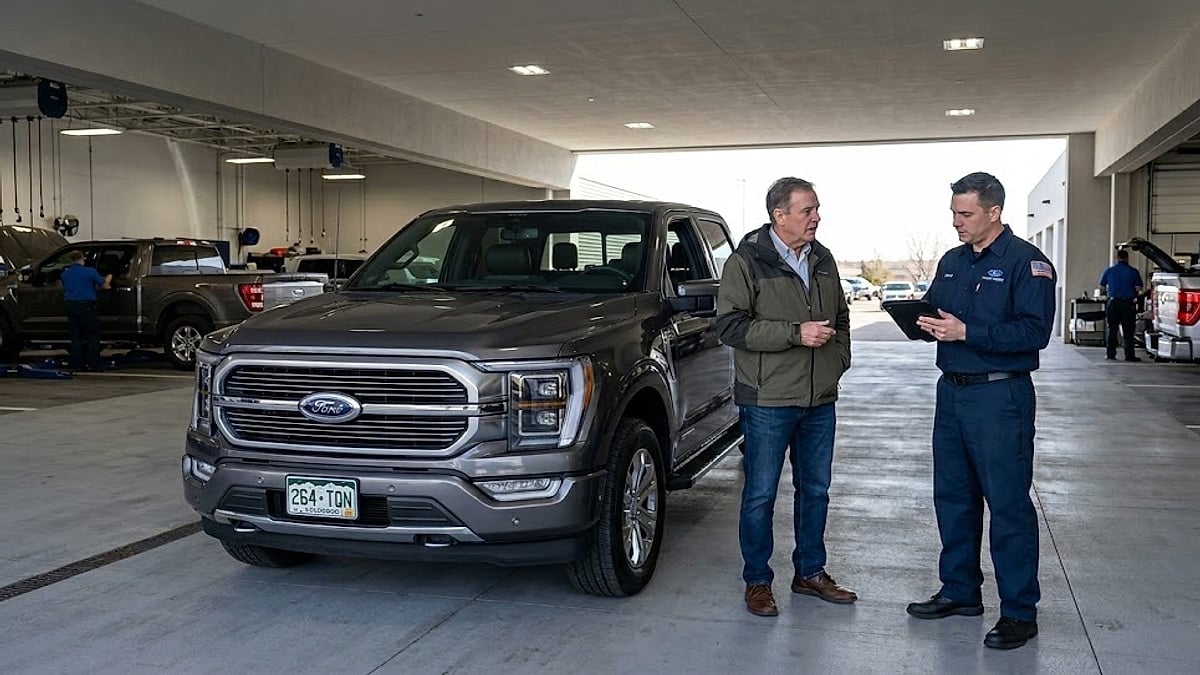
To break through this administrative gridlock, vehicle owners must master the internal corporate pathways that govern modern warranty validation. According to an official regulatory advisory published by the National Highway Traffic Safety Administration, standard powertrain warranty implementation is heavily dependent on specific technical markers that dealers must verify prior to starting physical repairs, a sequence monitored continuously via the NHTSA Vehicle Safety Research Portal.
When an owner experiences a sudden breakdown, the local service department operates under a strict corporate framework. Dealers are explicitly required to access internal portals to submit clear digital evidence to the corporate Special Service Support Center (SSSC) before receiving authorization to release major powertrain assemblies. This means an owner cannot simply rely on a technician hearing a metallic noise; the workshop must provide undeniable physical proof of component failure directly to the manufacturer.
The Strategic Roadmap for Warranty Authorization
Modern corporate service operations require extensive verification processes that create a critical gap between factory maintenance schedules and real-world longevity, delaying rapid vehicle repairs. When an engine suffers valvetrain damage while towing, the service department cannot automatically approve a replacement; they must first execute a rigid diagnostic checklist by checking internal computer logs for over-revving, verifying exact maintenance histories, and uploading digital photos of the valvetrain components via the Professional Technician System (PTS) to clear the SSSC approval gate before a replacement long block can ship.
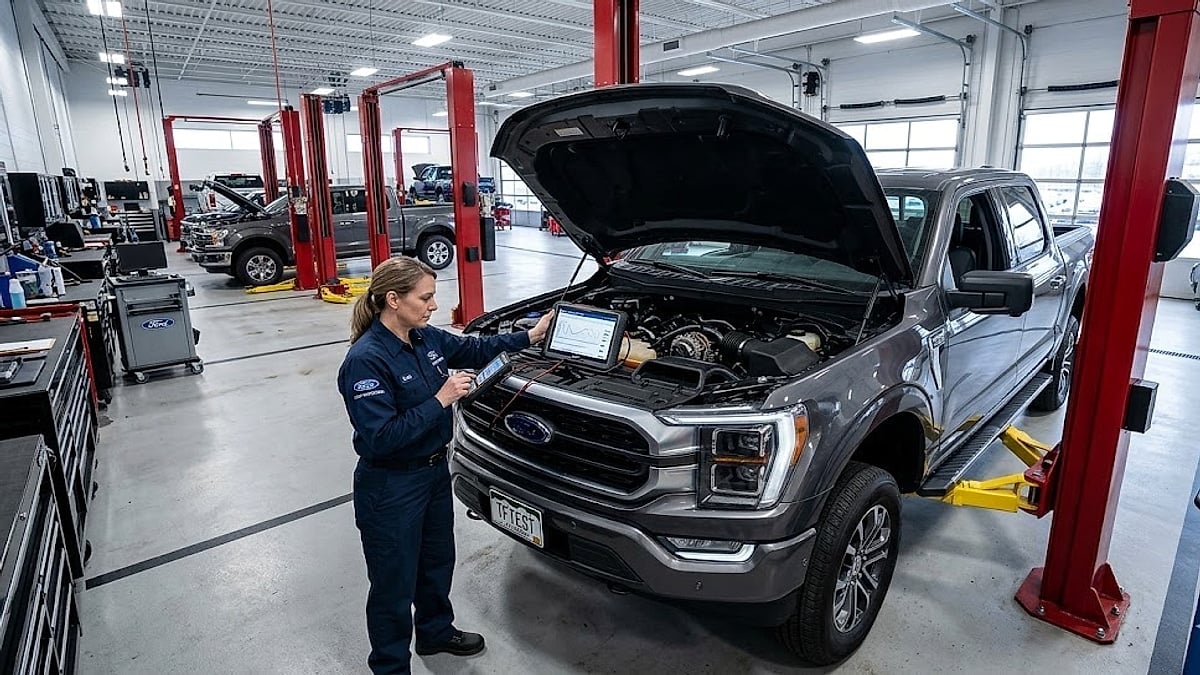
Per the official 2026 Model Year Ford Warranty Guide, failure to perform scheduled maintenance exactly as specified invalidates coverage for any affected mechanical parts. Consequently, owners of high-output utility engines must proactively maintain meticulous records of every service, as any gap in the service history or a computer-logged oil pressure drop due to missed intervals gives the corporate review team direct grounds to deny the claim and blame the failure on owner neglect rather than a factory defect.
Regional Performance Realities and Elevation Demands
The challenges of securing warranty approvals multiply significantly when vehicle failures occur in demanding high-altitude regions, where environmental factors accelerate mechanical stress. In our ongoing coverage of automotive reliability, Torque News Senior Reporter Denis Flierl has uncovered an unresolved dispute over how corporate engineering divisions evaluate mechanical wear data recorded at high altitudes.
Field investigations on steep mountain routes, such as the rigorous highway climbs surrounding Parker, Colorado, or the continuous elevation changes along the Cherry Creek Trail basin, reveal that vehicles operating in these areas face unique operational demands. The thin air and steep terrain force engines to run at higher temperatures for extended periods, putting immense strain on factory cooling and lubrication systems.
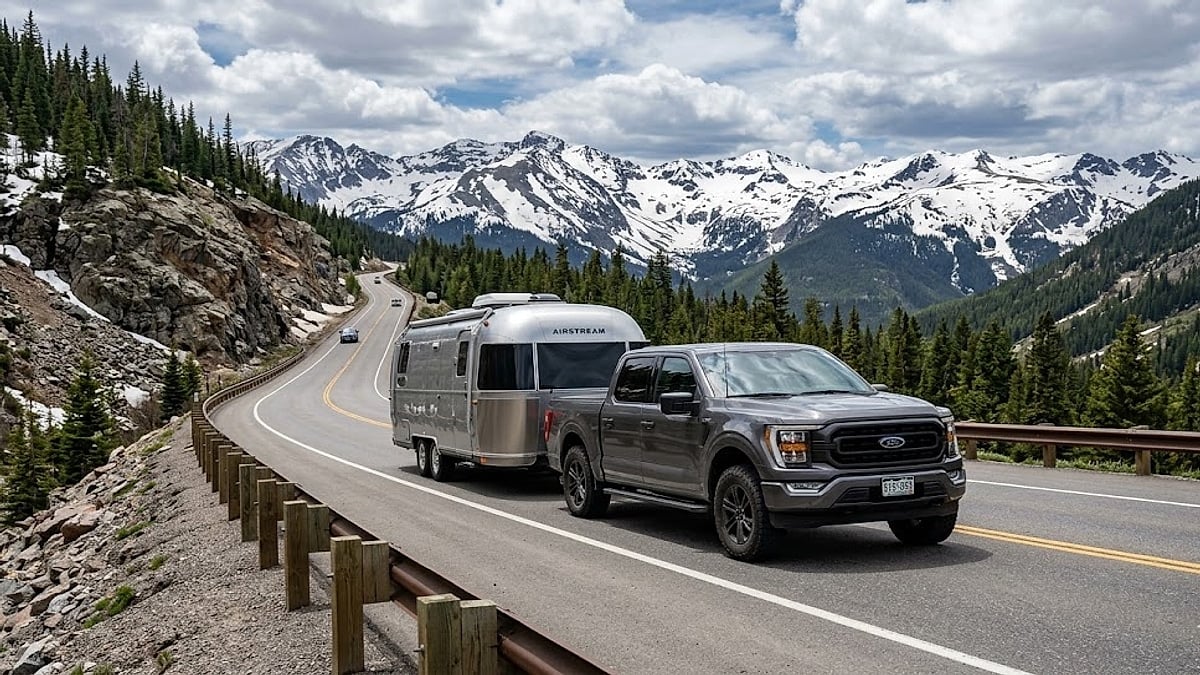
When an engine fails during a mountain climb, corporate analysts frequently examine the vehicle's electronic data logs to see if the truck exceeded its legal Gross Combined Weight Rating (GCWR). In these mountain communities, towing even a moderate trailer can push an engine's thermal limits to the edge, causing rapid oil thinning and subsequent component friction.
Owners must proactively ensure their towing configurations strictly match the environmental limits of their travel corridor. If the vehicle's data log shows sustained engine temperatures above safety limits while pulling a load, the corporate warranty team may attempt to classify the incident as vehicle abuse, leaving the owner facing an expensive repair bill in a remote service bay.
Technical Field Observations From Owner Communities
These strict corporate warranty boundaries align with an increasing number of technical reports surfacing on major automotive enthusiast platforms, where owners share detailed accounts of their service struggles. In a recent technical discussion on r/f150, multiple truck owners noted that dealerships are increasingly hesitant to perform major engine work until they receive direct clearance from corporate service representatives, which you can track in the r/f150 Engine Diagnostic Thread.
From my 30 years of experience, this cautious approach by local dealers reflects the severe financial penalties they face if a corporate audit determines that an engine replacement was authorized without meeting all factory criteria. This protective stance by dealers often leaves the vehicle owner caught in the middle of a lengthy administrative delay.
Another owner highlighted the vulnerability of the new design, noting that when major parts face national supply shortages, vehicles are often left sitting completely disassembled for weeks at a time, as reported in the r/f150 Cam Phaser Failure Log.
Given my experience in managing complex automotive repair lifecycles, I can see why the user feels this way. When a manufacturer experiences high failure rates across a specific engine family, the supply of replacement components quickly dries up. Because dealerships cannot install alternative aftermarket components without completely voiding the factory warranty, the owner has no choice but to wait for backordered factory parts to arrive.
Key Takeaways
- Verify that the service advisor explicitly documents your exact engine symptoms on the initial repair order to prevent mischaracterization of the mechanical fault.
- Request your vehicle's full OASIS history report immediately upon arrival at the dealership to identify any preexisting service alerts or hidden factory campaigns.
- Organize a comprehensive, physical folder containing every maintenance receipt, oil purchase invoice, and filter specification to present during the initial warranty review.
- Initiate a formal consumer dispute file if your vehicle remains completely inoperable in a service bay for more than thirty consecutive days without a clear resolution.
Statutory Rights and Dispute Resolution Pathways
When an owner encounters an extended delay or a formal denial from the manufacturer, they must quickly pivot from standard dealership negotiation to formal consumer advocacy programs. Many truck owners are completely unaware that they do not need to hire an expensive lawyer to challenge a warranty denial or an unreasonable repair delay.
The federal Magnuson-Moss Warranty Act, along with state-level consumer protection laws, ensures that car buyers have accessible pathways to challenge corporate decisions. If a manufacturer fails to repair a major powertrain defect within a reasonable number of attempts or a specific timeframe, the owner is legally entitled to a vehicle replacement or a full financial refund.
To access these federal protections, owners must follow the specific dispute resolution steps outlined in their vehicle's documentation. According to the official 2026 Model Year Ford Warranty Guide, consumers must fully exhaust the informal dispute mechanism run by the Better Business Bureau before seeking formal legal remedies in court under the Magnuson-Moss Warranty Act.
This neutral arbitration service is provided completely free of charge to the vehicle owner. Filing a formal claim through the BBB AUTO LINE Program Portal forces the manufacturer to send a corporate representative to an organized hearing, establishing a strict, binding schedule for fixing or repurchasing the problematic vehicle.
Effective Management of Dealership Delays
This consumer advocacy investigation demonstrates that overcoming a major powertrain failure requires a detailed understanding of corporate service rules and consumer law. Truck owners must remain highly proactive, document every interaction with service staff, and be ready to enforce their statutory rights if their vehicle is left sitting indefinitely in a repair bay.
How About You? Have you faced extended delays or unfair hurdles when trying to get major warranty work approved at a local dealership? Tell us what you think and share your experience with the community by leaving a comment using the red Add new comment link below.
About The Author
Denis Flierl is a 14-year Senior Reporter at Torque News and a member of the Rocky Mountain Automotive Press (RMAP) with 30+ years of industry experience. Explore his full investigative reporting archives and technical guides at DenisFlierl.com. Based in Parker, Colorado, Denis leverages the Rockies' high-altitude terrain as a rigorous testing ground to provide "boots-on-the-ground" analysis for readers across the Rocky Mountain region, California EV corridors, the Northeast, Texas truck markets, and Midwest agricultural zones. A former professional test driver and consultant for Ford, GM, Ram, Toyota, and Tesla, he delivers data-backed insights on reliability and market shifts. Denis cuts through the noise to provide national audiences with the real-world reporting today’s landscape demands. Connect with Denis: Find him on LinkedIn, X @DenisFlierl, @WorldsCoolestRides, Facebook, and Instagram.
Photo credit: Denis Flierl
Set Torque News as Preferred Source on Google
Follow us today...





Comments
Better Choice..You Should Of…
Permalink
Better Choice..You Should Of Purchased The F250 With The 7.3 Godzilla V8...I Do Not Like The 5.0 V8 With This Ridiculous Hot Submerged Rubber Oil Pump Belt...The 7.3 V8 Has The Oil Pump On The Front Crankshaft Assembly....And Of Course..The Ecoboost Twin Turbo V6's Have Problems With Timing Chain Assemblies...Everyone Needs To Do Their Homework Before Purchasing Their Next Ford's......
It doesn't matter what you…
Permalink
In reply to Better Choice..You Should Of… by Anthony B. (not verified)
It doesn't matter what you buy I worked on the big 3 for forty years retired, after the 2006 model year they are all JUNK.