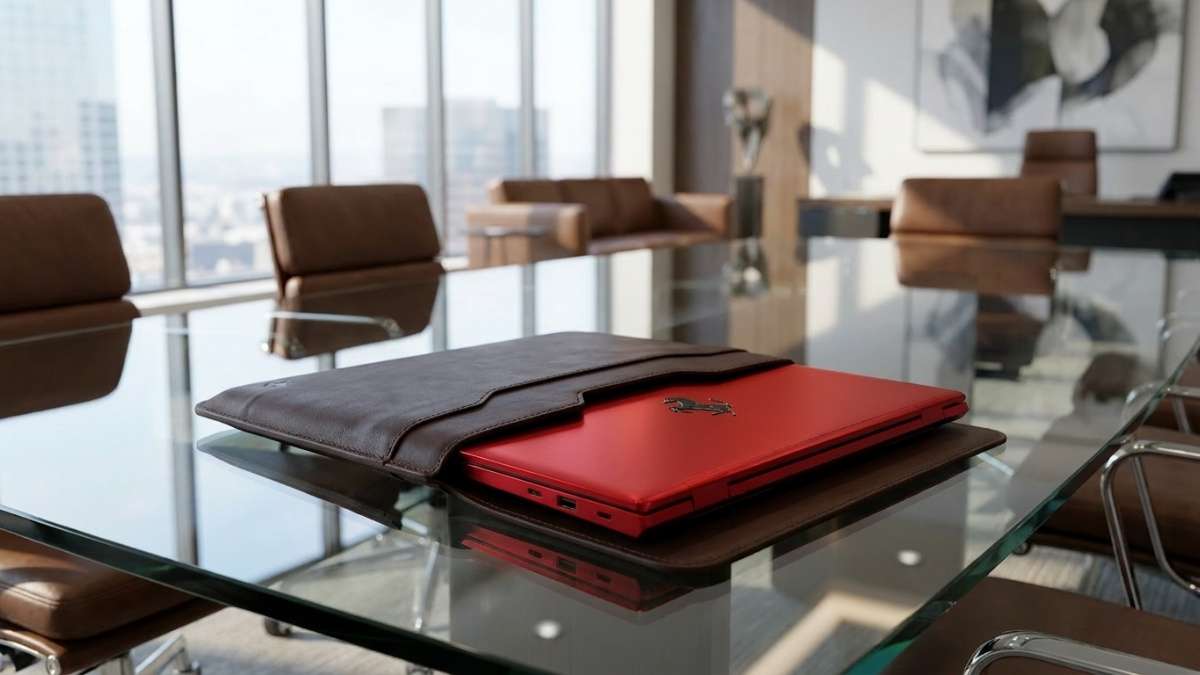

As a technology analyst who has spent decades covering the intricate dance between Silicon Valley and the broader consumer market, I constantly monitor how brands attempt to elevate the perceived value of their hardware. Laptops, for the most part, have become commoditized. Walk into any corporate meeting, and you are greeted by a sea of identical silver or space-gray aluminum slabs. But every so often, a PC manufacturer tries to break this monotony by tapping into one of the most visceral consumer passions on the planet: automotive enthusiasm.
This week, HP decided to inject some high-octane prestige into its lineup by announcing a new partnership with the legendary Italian automaker. As detailed in the recent HP shifts into a new gear with Ferrari press release, this new co-branded laptop aims to capture the spirit of Scuderia Ferrari and deliver it directly to the laps of mobile professionals and die-hard racing fans alike.
But slapping a famous automotive badge on a piece of consumer electronics is a delicate, often dangerous art. Done right, you create a halo product that transcends its silicon roots. Done poorly, and motorsport fans - who can be absolutely brutal in their critiques—will write it off as a cynical, overpriced cash grab. To understand the gravity of HP’s new Ferrari PC, we have to look back at the turbulent, fascinating history of automotive and tech co-branding.
The Magnetic Pull of Automotive Swag
To understand the business case behind a Ferrari laptop, you first have to understand the psychology of the automotive enthusiast. Fans of high-performance cars are deeply, emotionally tied to the brands they love. The presentation, the uniqueness, and the heritage of the product are paramount.
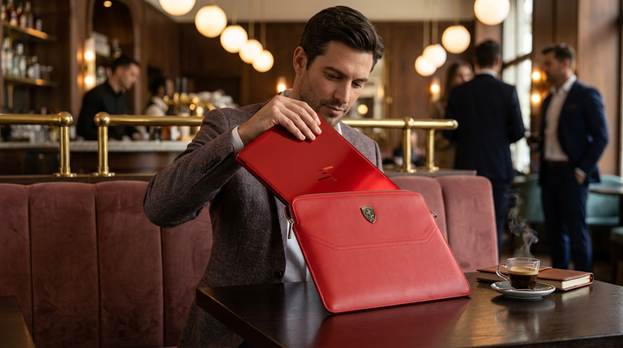
For the vast majority of motorsport fans, owning a $300,000 Ferrari supercar is out of reach. But owning a piece of the brand's aura is highly desirable. This is why car enthusiasts love logoed swag, and the market for these items varies widely in quality and scope. You can buy a $30 Ferrari baseball cap at a grandstand, or you can purchase high-end apparel that actually reflects the engineering ethos of the cars.
When co-branding works outside of the PC industry, it works because the partner brand respects the luxury and performance of the automaker. Think about Breitling’s long-standing, highly successful partnership with Bentley to create bespoke luxury timepieces. The watches weren't just standard Breitlings with a Bentley logo; they incorporated design cues from the cars' knurled controls and dashboard aesthetics. Similarly, Puma has sold millions of pairs of Ferrari and BMW-branded driving shoes because they serve a functional purpose while offering fans a tangible connection to the track. When HP puts a Prancing Horse on a laptop, they aren't just selling a computer; they are selling a ticket into the Ferrari lifestyle. The challenge is ensuring the device lives up to the exclusivity of the badge.
A Drive Down Memory Lane: The Hits and Misses of Tech Co-Branding
HP is not the first company to realize the marketing potential of an automotive partnership. In fact, reviewing the history of these devices reveals a graveyard of missteps alongside a few brilliant successes.
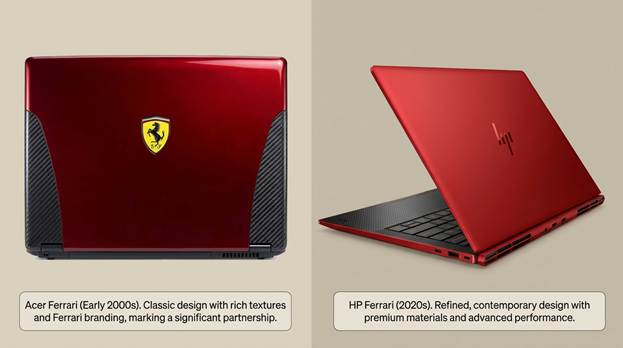
One of my absolute favorites—and a machine that I carried with me everywhere for years—was the Acer Ferrari notebook. Powered by AMD, this laptop was a brilliant piece of marketing that went beyond a mere sticker job. As I wrote years ago in my piece, My Love Affair with Acer’s Ferrari Notebook, this machine captured the imagination. Acer and AMD were heavily involved in sponsoring the Ferrari F1 team at the time, and the laptop reflected that synergy. The chassis was crafted with real carbon fiber, but the pièce de résistance was the boot-up sequence. When you pressed the power button, the PC blasted the aggressive, throaty roar of a Ferrari V8 engine. It was inherently fun. It was my favorite PC for several years because it created a connection that went far deeper than a simple logo on a plastic lid.
Competitors naturally tried to answer. Asus partnered with Ferrari's historic rival to release the Asus Lamborghini laptop. While it looked suitably aggressive with its angular, supercar-inspired lines, it was incredibly heavy—essentially a brick in your briefcase. I don't recall its sales numbers being particularly stellar, largely because it failed to balance the promise of mobile performance with the realities of carrying it through an airport.
Then there was the Hummer PC. It sounds absurd in hindsight, but at the height of the H2's popularity, a ruggedized, militaristic laptop bearing the Hummer badge hit the market. Surprisingly, it actually sold decently well, primarily because it was heavily merchandised within Hummer dealerships. It found a captive audience of buyers who had just dropped an exorbitant amount of money on an oversized SUV and were perfectly primed to add a matching, rugged-looking laptop to their financing package.
HP's Proven Track Record with Porsche Design
When evaluating whether HP can pull off this new Ferrari partnership, it helps to look at their own history. HP is not a novice when it comes to high-end automotive design language. Several years ago, they collaborated to create a Porsche-designed desktop PC.
This wasn't just a standard tower; it was a masterclass in industrial design, utilizing premium materials and thermal management techniques inspired by automotive engineering. I am a hardware enthusiast at heart—for decades, I’ve built around two desktop systems a quarter for my own use. The HP Porsche Design case was so well executed, so structurally sound and visually striking, that I actually ended up buying the chassis standalone later on just to use it as the foundation for a custom PC build. It was a remarkably fun build. That experience proved to me that HP has the internal design chops to respect an automotive brand's ethos. If they bring that same level of material obsession to the new Ferrari laptop, rather than just relying on cosmetics, they will have a winner on their hands.
The Unmatched Office Envy Factor
Never underestimate the power of executive envy when it comes to premium technology. In the business world, a laptop is the modern equivalent of the luxury briefcase or the high-end fountain pen. It is a tool, yes, but it is also a status symbol.
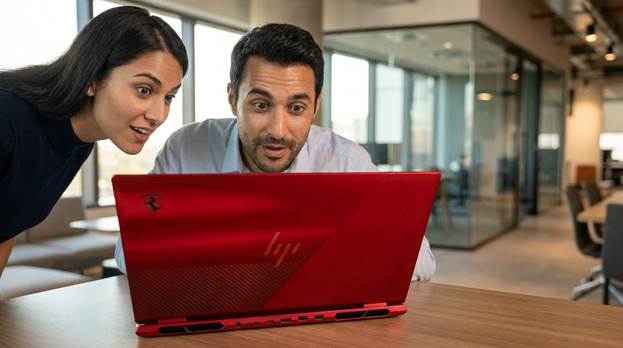
Imagine walking into a high-stakes board meeting. Your colleagues pull out their standard, issued enterprise machines - devices that blend into the woodwork. You, however, pull out a laptop adorned in Ferrari red, wrapped in a bespoke leather sleeve, bearing the most famous shield in motorsport. The psychological impact is immediate. It commands attention. It instantly sparks a conversation before the meeting even begins.
Coworkers will inevitably wander over. They will want to touch the finish, ask about the specs, and see if it runs as fast as it looks. The envy factor for a device like this is off the charts. For the executive who wants to project an image of speed, precision, and exclusivity, the HP Ferrari PC serves as the ultimate professional flex. It breaks the ice and establishes a certain dominance in a corporate setting, much like pulling up to the valet stand in an actual Ferrari.
Connecting the Dots to the Modern Automotive Evolution
The relationship between computing and cars is closer today than it has ever been, which makes these co-branded products feel much more relevant than they did a decade ago.
We are living in an era where the vehicle itself is becoming a rolling supercomputer. Just as I noted in my recent column covering the highly automated new Kia manufacturing plant, the convergence of silicon and steel is the defining trend of modern manufacturing. Vehicles are transitioning to complex 800V architectures, and automakers are exploring how to integrate agentic AI as a cognitive layer to manage advanced driving functions, separating the deep thinking of the vehicle from the execution-layer of basic automation.
Because cars are now defined by their processors, software ecosystems, and battery management systems, a partnership between a PC giant like HP and a racing legend like Ferrari feels inherently authentic. Ferrari needs massive computing power for its F1 simulations, aerodynamics modeling, and AI-driven telemetry analysis. When you buy the HP Ferrari PC, you are buying into a narrative that HP's technology is trusted by the engineers at Maranello. It bridges the gap between the factory floor, the racetrack, and the office desk.
Wrapping Up
Doing automotive co-branding right in the PC space is a delicate art. If the product is merely a screwy co-branding exercise - a slow machine dressed in red - the fans will see right through it, and the critics will be unforgiving. But if HP leverages the design maturity they showed with their Porsche collaboration, and injects some of the pure, visceral joy I remember from my old Acer Ferrari notebook, this new laptop will be a massive success.
The HP Ferrari PC represents more than just a computer; it is a statement piece for the modern professional. It taps into our deep-seated love for automotive prestige and leverages it to create a device that generates undeniable office envy. As the lines between the technology in our driveways and the technology on our desks continue to blur, machines like this remind us that computing doesn't have to be boring. Sometimes, it can be a thrilling ride.
Disclosure: Images rendered by Artlist.io
Rob Enderle is a technology analyst at Torque News who covers automotive technology and battery developments. You can learn more about Rob on Wikipedia and follow his articles on TechNewsWord, TGDaily, and TechSpective.
Set Torque News as Preferred Source on Google
Follow us today...