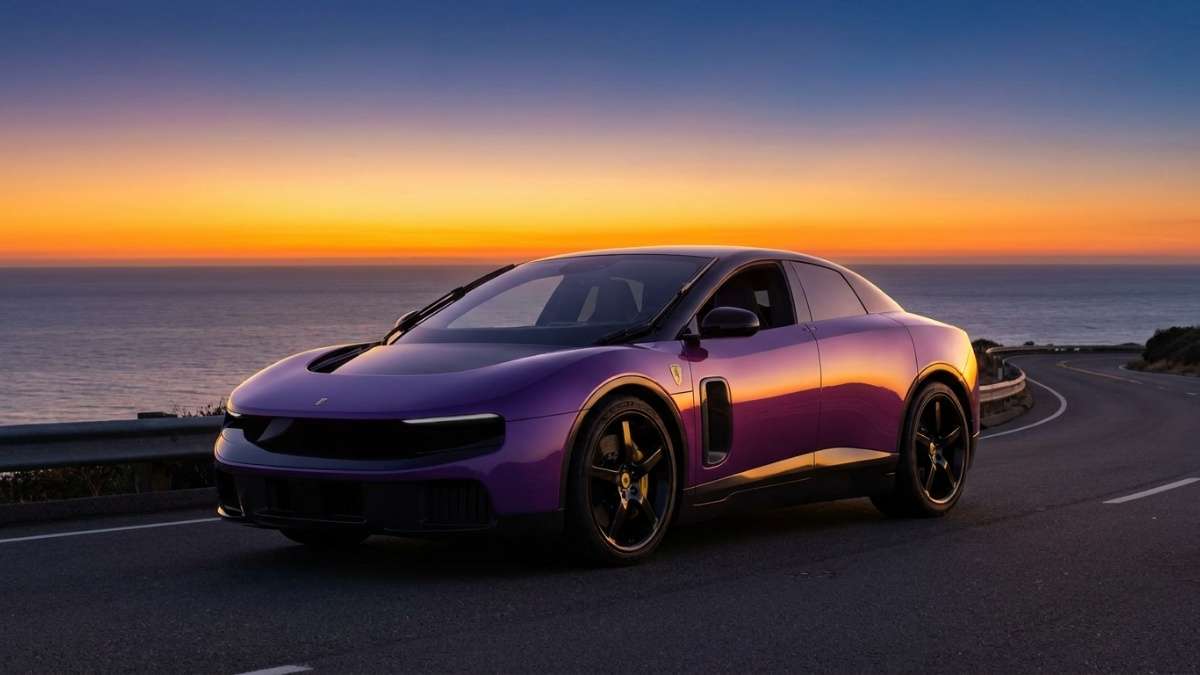

Back when I worked at Giga Information Group, we had the concept of the “alternative view” that was to showcase both sides of an argument. This is an example of that exercise and focuses on the potential positives of the Ferrari Luce.
For decades, the Ferrari brand has been synonymous with a very specific, aggressive flavor of automotive passion. It has been the domain of roaring V12 engines, track-day bragging rights, and a design language that practically screams for attention. But the introduction of the 2027 Ferrari Luce—Maranello’s inaugural all-electric vehicle—signals a seismic shift in strategy. Rather than simply stuffing a battery into a Purosangue chassis and calling it a day, Ferrari brought in former Apple design chief Sir Jony Ive and his firm, LoveFrom, to rethink the vehicle from the ground up.
The result is a $640,000, 1,035-horsepower, five-seat vehicle that looks unlike anything else in the company’s storied history. As automotive journalist Alistair Charlton aptly pointed out, the Ferrari Luce isn’t for the traditional Ferrari purist, and that is entirely by design. This vehicle represents a structural, aesthetic, and philosophical pivot. It is a pivot that, whether intentional or not, positions the Luce as a hyper-luxury vehicle uniquely suited to appeal to women drivers—a demographic historically overlooked by the upper echelons of the supercar market.
 The Design Divide Between the Sexes
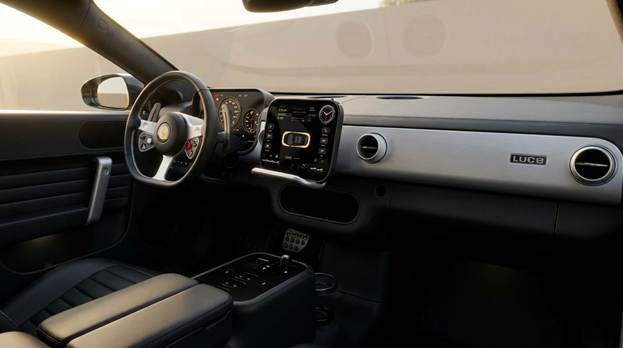
When the press images of the Luce first crossed my desk, the reaction in my household was immediately and violently split. My wife Mary, who spent years evaluating user interfaces and visual cohesion as the Creative Director for Intel, took one look at the smooth, cab-forward architecture and the minimalist, glass-and-aluminum interior, and absolutely loved it. Her eye for cohesive, functional industrial design immediately gravitated toward the elegance of the sweeping rear panel and the way the windshield flows seamlessly into the bonnet without visually disruptive shut lines. She currently drives a Volvo XC60 Recharge, a vehicle we both appreciate for its understated Scandinavian minimalism and calm cabin space. She immediately saw that same considered, user-centric ethos elevated to hyper-car levels in the Luce.
I, on the other hand, had a decidedly different reaction. Driving my Audi e-tron GT around the high desert of Bend, I prefer a vehicle with a broad, aggressive stance and sharp, assertive lines that clearly communicate its performance envelope. To my eyes, the Luce lacks the predatory visual impact I expect from Maranello; honestly, I thought it looked like someone hit a Jaguar I-Pace (a car I loved) with an ugly stick. The front scoop is massive but soft, the vehicle is taller than one would expect, and the side profile is largely devoid of the aggressive supercar lines and aggressive rear haunches that define modern supercars.
But this aesthetic divide perfectly highlights Ferrari’s underlying strategy. Traditional supercar design is overwhelmingly masculine. It relies on visual intimidation, sharp angles, and a brutalist approach to aerodynamics. The Luce completely discards this playbook. By employing a 122-kWh battery pack that is structurally integrated into an 800V architecture, the engineering allows for a massive rethinking of proportion. The lack of a front-mounted engine or a massive transmission tunnel allows for a completely flat floor and a spacious, highly adaptable cabin. The center-opening rear doors provide effortless, graceful entry and exit without the awkward gymnastics usually required by a low-slung supercar. It is a vehicle designed around the human experience rather than the mechanical dominance of the machine, a shift that strongly resonates with female luxury buyers who prioritize elegant utility and spatial comfort over aggressive posturing.
Echoes of the Early 1900s Electric Car Market
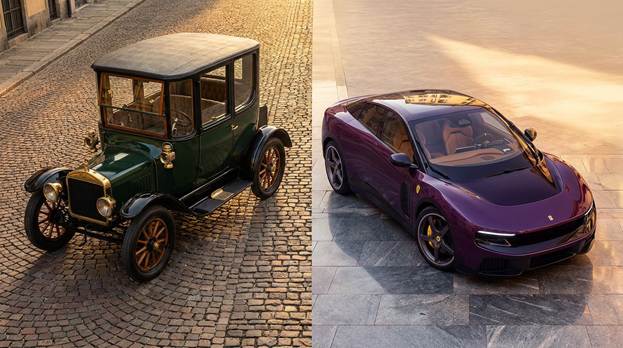
To understand why the Luce’s approach to the luxury market is so effective, we have to look backward. It is a fascinating historical fact that electric cars in the early 1900s successfully targeted women. While internal combustion engine (ICE) vehicles of the era required immense physical strength to hand-crank—a dangerous and dirty process that routinely resulted in broken arms or wrists—electric vehicles like the Detroit Electric simply turned on with the flip of a switch.
Early EVs were silent, lacked the noxious fumes of gas-powered cars, and did not require the driver to wrestle with a heavy, uncooperative manual transmission. They were marketed as refined, elegant, and reliable transportation for high-society women. Clara Ford, the wife of Henry Ford, famously preferred her Detroit Electric over her husband’s ubiquitous Model T for these exact reasons.
Over a century later, the high-end EV market is unwittingly circling back to these roots. The friction points of driving a traditional track-focused hypercar—the deafening exhaust drones on long highway trips, the jerky low-speed dual-clutch transmissions, the heavy steering racks, and the notoriously cramped visibility—are all bypassed by the inherent nature of electrification. The Luce offers an immense 1,035 horsepower and a 0-62 mph time of 2.5 seconds, but it delivers that power seamlessly through a sophisticated four-motor system managed by a Vehicle Control Unit updating targets 200 times a second. It provides the thrill without the brutality. Just as early EVs offered women a cleaner, more refined alternative to the chaotic mechanical realities of early gas cars, the Luce offers a hyper-luxury experience completely stripped of the exhausting, hyper-masculine theatrics.
Why a Separate EV Brand Could Capture the Market
This demographic shift raises a critical industry question: should legacy automakers launch separate EV sub-brands explicitly targeting women, rather than trying to force their legacy masculine branding onto electric platforms? Ferrari essentially created a sub-brand with the Luce by bringing in LoveFrom. Sir Jony Ive and Marc Newson completely divorced the interior and exterior user interface from the rest of the Ferrari lineup.
There is no carbon fiber overkill. The steering wheel uses delicate aluminum spokes and a thin leather rim inspired by a classic 250 GT Europa, abandoning the thick, button-heavy, Formula 1-style wheels seen in models like the 296 GTB. Even the torque delivery system is managed by elegant magnetic aluminum paddles rather than aggressive mechanical shifters.
Creating a separate marque—or a highly distinct sub-brand like the Luce—allows an automaker to experiment with softer, more organic designs without diluting the core heritage that appeals to their traditional male buyer base. We are already seeing luxury brands struggle with the EV transition; reports indicate that other Italian luxury manufacturers have canceled EV projects due to a sheer lack of interest from their core male demographic, who associate those badges exclusively with loud engines. By treating their electric divisions as distinct entities focused on entirely different values—ambient luxury, flawless technology, and sophisticated restraint—they can capture the affluent female demographic that has historically been alienated by the standard supercar segment.
Furthermore, as advanced driver-assistance systems and robust, hardware-based local NPU computing continue to take over active driving duties, the raw mechanics of driving will progressively take a back seat to the in-cabin experience. A separate brand could fully lean into this transition, prioritizing high-end materials, social space, and localized security rather than track-day lateral G-force metrics.
Comparing the Luce to Historically Female-Focused Cars
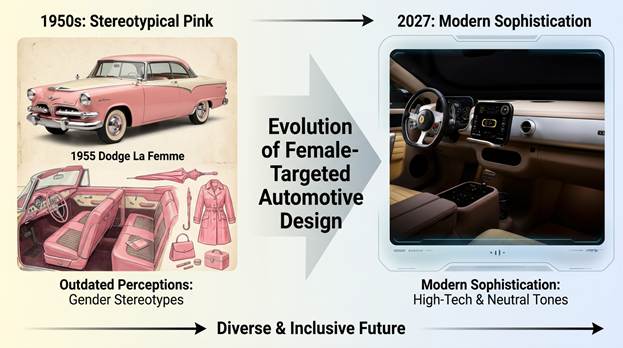
When automakers have explicitly tried to design cars for women in the past, the results have often been disastrously condescending. The most infamous example is the Dodge La Femme of the 1950s. Dodge’s corporate idea of appealing to female buyers was to take a standard custom Royal Lancer, paint it in a bespoke "Heather Rose and Sapphire White" colorway, and include a matching pink umbrella, a rain hat, and a makeup compact integrated right into the seats. It was patronizing at its worst, treating female drivers as an accessory rather than a serious consumer, and the vehicle failed spectacularly. More recent attempts, such as the Honda Fit "She's" in the 2010s - which featured pink stitching and a specialized "plasmacluster" climate control system supposedly designed to prevent wrinkles—suffered from the same fundamental flaw of pandering.
The Ferrari Luce succeeds precisely because it refuses to pander. It does not use cheap marketing gimmicks or stereotypical color palettes. Instead, it solves structural and experiential problems. It offers a five-seat configuration with a spacious, flat-floor rear seating area, making it genuinely practical for a multi-passenger lifestyle. The center-opening doors are a masterpiece of mechanical engineering, closing automatically at the touch of a button to eliminate the need to reach awkwardly outward.
Moreover, the Luce is a technical triumph that respects its driver. It features an active suspension system derived directly from the cutting-edge F80, massive 15.4-inch front brake rotors, and deeply integrated software that enhances safety and handling dynamically. It offers serious, world-beating performance, but it packages it in a way that emphasizes control and serenity. It respects the driver’s intelligence, offering granular torque vectoring and advanced thermal management for its proprietary motors (which can spin at an astonishing 30,000 rpm) without demanding that the driver tolerate a punishing, spine-rattling ride quality to access that performance. It proves that an automobile can perfectly align with female aesthetic and experiential preferences through fundamentally superior engineering rather than a patronizing coat of pink paint.
Wrapping Up
The Ferrari Luce is destined to be one of the most hotly debated vehicles of the current decade. Traditionalists will inevitably lament its softer curves, its silent electric powertrain, and its sharp departure from the aggressive styling that has defined Maranello for over half a century. But this vocal criticism completely misses the broader strategic genius of the vehicle. By partnering with LoveFrom, Ferrari has built an electric car that fundamentally reshapes the luxury automotive paradigm, moving away from hyper-masculine intimidation toward a sophisticated, human-centric elegance.
My early impressions of its exterior styling aside, the Luce represents a brilliant market maneuver that reflects a deep understanding of shifting demographics. It reaches back to the very early days of the automobile, recognizing that smooth, quiet, and reliable electric power holds an inherent appeal that transcends the traditional "car guy" demographic. It proves that to successfully capture the affluent female driver, modern automakers do not need to pander with superficial accessories or reductive marketing; they need to deliver flawless user interfaces, structural grace, and uncompromising performance wrapped in cohesive industrial design. The Luce may not be the Ferrari that the old guard asked for, but it is unequivocally the exact vehicle required to carry the prancing horse into a broader, more diverse, and highly profitable electric future.
Disclosure: Images rendered by Artlist.io
Rob Enderle is a technology analyst at Torque News who covers automotive technology and battery developments. You can learn more about Rob on Wikipedia and follow his articles on TechNewsWord, TGDaily, and TechSpective.
Set Torque News as Preferred Source on Google
Follow us today...