
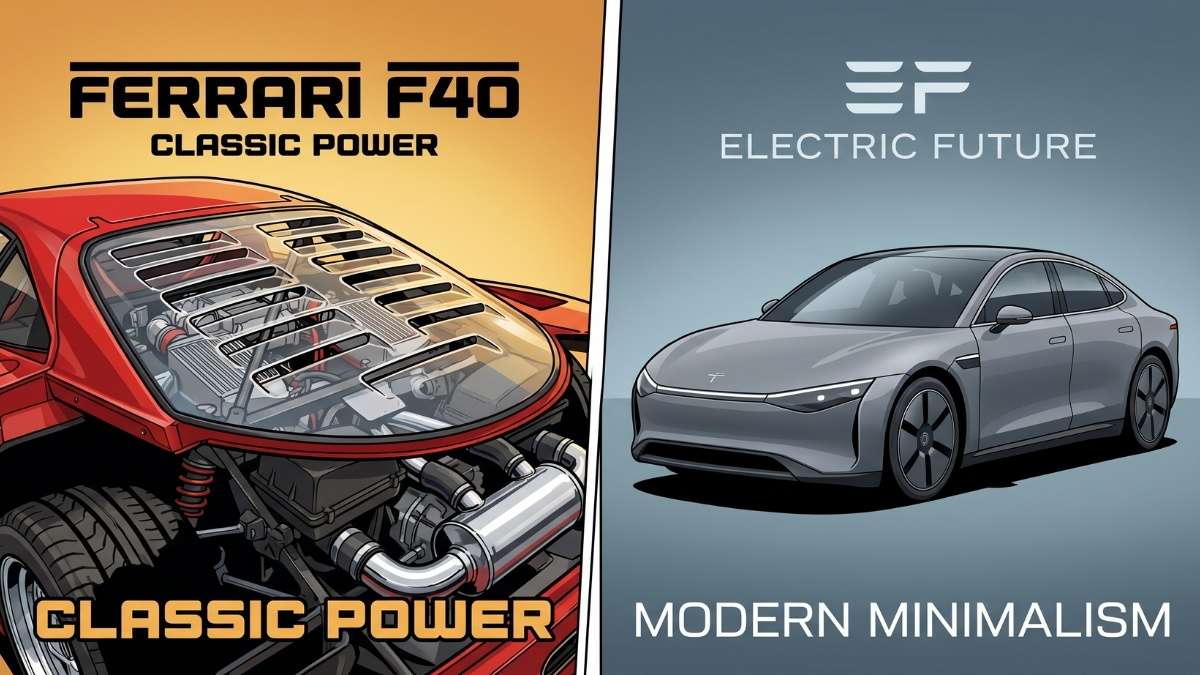

I’ve been analyzing corporate missteps, product strategies, and brand equity in the tech and automotive sectors for decades. From my base here in Bend, OR, I watch a lot of companies try to navigate market transitions, but if there is one cardinal rule of managing a legendary luxury brand, it is that you never alienate your core demographic to chase a theoretical market that doesn’t exist yet. The corporate landscape is heavily littered with the remains of companies that decided they were suddenly something else entirely, leaving their most loyal buyers scratching their heads and reaching for their checkbooks to buy from a competitor instead.
Recently, we’ve witnessed an absolute masterclass in how to butcher decades of painstakingly cultivated automotive brand equity. First, Jaguar decided to throw its historic, universally beloved leaping cat in the garbage and embrace what their executives awkwardly termed “exuberant modernism.” Automotive purists and fans thought it couldn’t possibly get any worse.
Then, in a move that will surely be studied in business schools under the heading of “Unforced Errors,” Ferrari unveiled its first battery-electric vehicle, the Luce. When the silk finally came off this highly anticipated EV, it honestly made it look like Maranello executives glanced over at the catastrophic reaction to the British automaker's pivot and proudly said, “if you think the Jaguar Type-01 looks bad, hold my beer.”
Let’s dive deep into why both of these legendary marques have so violently stepped away from their established design languages, the massive pushback from enthusiasts that is actively degrading both brands, and what Ferrari must do right now to stop the bleeding before the damage becomes permanent.

When Brands Forget Who They Are
Brand equity is not just a marketing buzzword; it is a tangible financial asset that companies spend billions of dollars and decades of time building. For an automaker, that equity is intrinsically tied to a specific design language and an emotional promise. When you see a Porsche 911, you know what it is from a mile away. When you hear a Ferrari V12 or see those sweeping, aggressive, wind-sculpted Italian curves, your heart naturally beats a little faster. These vehicles are highly emotional purchases, deeply rooted in a history of passion and motorsport dominance.
But over the last few years, a strange, destructive disease has infected the boardrooms of legacy automakers transitioning to electric vehicles. Executives sit in echo chambers surrounded by management consultants who show them charts of tech company valuations. They panic, assuming their rich heritage is suddenly a liability rather than their greatest competitive advantage. Instead of taking their iconic, beloved designs and outfitting them with cutting-edge 800V architectures and optimized charging curves, they have convinced themselves that “electric” must inherently mean “radically different and sterile.”
They hire industrial designers who cut their teeth making consumer electronics, completely forgetting that a car is not an appliance you stick in your pocket or plug into a wall outlet in your kitchen. By stepping away from their historic design languages, both Jaguar and Ferrari are essentially telling their most devoted fans that their past loyalty simply does not matter.
The resulting degradation of these brands has been swift, highly visible, and brutal. Enthusiasts don’t just casually dislike these new directions; they are actively organizing massive pushbacks on social media, writing off the brands entirely, and loudly voicing their displeasure on investor calls. They view these design shifts as outright betrayals of the brand's core ethos. In the tech industry, when a company completely changes its user interface without warning, it loses market share. In the automotive world, when a legacy luxury brand builds a car that ignores its visual history, it loses its soul.
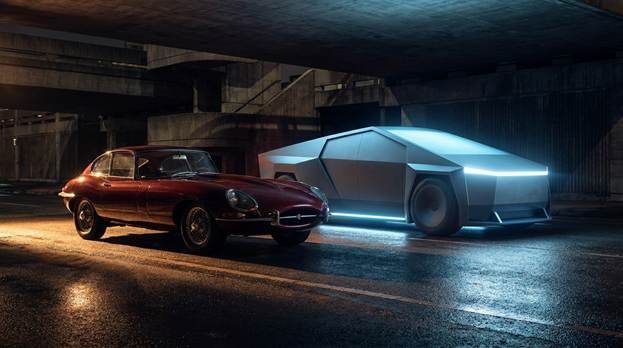
Jaguar Type-01 Paved the Way for Disappointment
To truly understand the magnitude of Ferrari’s current misstep, we first have to look at the crater left by Jaguar. Late in 2024, Jaguar hit the reset button with the wildly controversial Type 00 concept. They have now followed up that initial shock by officially announcing the production Jaguar Type-01, an electric four-door GT that promises over 1,000 horsepower, tri-motor technology, over 1,300Nm of torque, and an entirely new, polarizing aesthetic.
If you want to see the exact moment a legacy brand completely detached from its roots to chase a sterile future, just watch the 2027 Jaguar Type 01 Official Name Reveal video. It encapsulates a creative philosophy that sounds suspiciously like it was generated by a malfunctioning AI marketing chatbot. Instead of the graceful, muscular lines that defined legendary cars like the E-Type or the aggressive, beautiful stance of the F-Type, Jaguar gave us bold linear graphics, a heavy, blocky silhouette, and a complete erasure of their aristocratic British heritage. They even abandoned their traditional logo in favor of a simplistic corporate font.
The fan reaction was an absolute bloodbath. Long-time Jaguar owners felt entirely abandoned, wondering why a company with such a rich, beautiful design history felt the desperate need to reinvent itself as a purveyor of brutalist, cyberpunk mobility pods. The Type-01 boasts incredible specs, zero tailpipe emissions, and a bespoke platform built in the UK, but performance alone cannot overcome a fundamentally alienating design. If wealthy consumers wanted a car that looked like a futuristic technology appliance, they would simply buy a high-end Tesla or a Lucid. Jaguar essentially traded its unique charm for a generic tech-startup aesthetic, and brand equity tanked. You would think other high-end legacy automakers would have watched this disaster unfold in real-time and taken copious notes on what not to do.
Ferrari Luce Tells Jaguar to Hold Its Beer
Enter Ferrari. If Jaguar’s pivot was a disappointment, the unveiling of the Ferrari Luce is a full-blown corporate tragedy. In May of 2026, Ferrari finally revealed its highly anticipated first production electric vehicle. Instead of delivering a breathtaking, low-slung, aerodynamically dramatic supercar that simply happened to be powered by electrons, Ferrari delivered a five-seat, four-door liftback sedan that looks absolutely nothing like a Ferrari.
To style the Luce, Ferrari’s management brought in LoveFrom, the creative collective led by former Apple design chief Jony Ive and Marc Newson. Now, Jony Ive is an undeniably brilliant designer of phones, tablets, and laptops, but hiring him to design a Ferrari is like hiring a master sushi chef to cook a Texas barbecue brisket. The result is exactly what you would expect: a minimalist, overly simplified, shell-like form that strips away all the aggressive, passionate styling cues that make a Ferrari desirable. The Luce features an unprecedented "purity" of the glass house and a cowl so impossibly low they had to reinvent the windshield wiper by leaving the blades standing completely upright against the A-pillars. It is weird, bulbous, and heavy, tipping the scales at a massive 2,260 kg (nearly 5,000 pounds).
The public reaction to this radical departure was immediate and savage. Across the internet, social media commenters accurately pointed out that it looks like a generic, unlicensed vehicle from a cheap racing video game, or even a knockoff of a European car. This is certainly not the reaction any company wants for a flagship vehicle with a reported starting price of €550,000.
When I evaluate EV architectures—whether I'm looking at the 800V system in my Audi e-tron GT or analyzing the technical specs of the upcoming Volvo EX60 I have on order—I deeply respect serious engineering. And to be fair, the engineering underneath the Luce is objectively spectacular. It features an advanced 800-volt architecture, a 122-kWh battery, 1,035 horsepower, advanced torque vectoring, and active suspension derived from the F80. But the visual wrapper it comes in is deeply offensive to the Ferrari faithful. The disconnect was so severe that the stock market reacted by slashing Ferrari's shares by 8.4% the day after the presentation. When your new halo product causes billions of dollars in market capitalization to evaporate overnight, you haven't just made a bad car; you have made a historic strategic blunder.
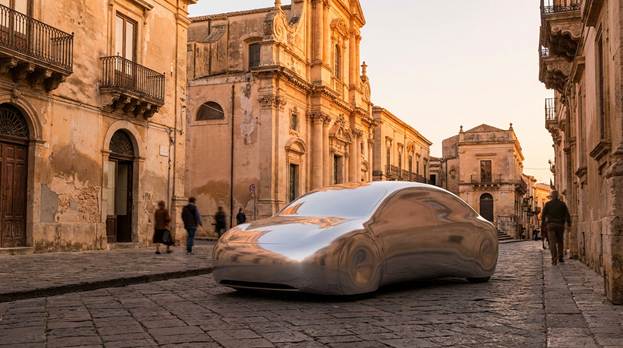
Why a New Brand Was the Only Logical Choice
In the tech world, when a company wants to launch a radically different product that doesn't fit its existing brand identity or consumer expectations, it creates a spin-off or a new sub-brand. This is Business Strategy 101. It protects the core brand while allowing the company to experiment freely and capture entirely new demographics without alienating the old ones.
Both Jaguar and Ferrari are stepping so far outside their established design languages that releasing these specific vehicles under their primary, historic badges was a catastrophic error. For such a massive departure from their prior cars, they absolutely should have launched a new brand.
Look at how successful this exact strategy has been historically across the automotive sector. Decades ago, Toyota created Lexus to sell premium luxury cars without the baggage of the mainstream Toyota badge. More recently, Volvo wisely spun off Polestar to handle its high-performance, avant-garde electric vehicles. This preserved Volvo's rock-solid reputation for safe, sensible family cars while giving Polestar the ultimate freedom to push minimalist design boundaries.
If Ferrari executives truly wanted to let Jony Ive build a €550,000 minimalist electric liftback with suicide doors and upright wipers, they should have resurrected the Dino badge or created an entirely new Maranello-backed electric luxury marque. A new brand would have allowed them to explicitly target ultra-wealthy tech executives in Silicon Valley without infuriating the traditionalists who buy mid-engine V8 and V12 supercars. It would have set the correct consumer expectations. By slapping the Prancing Horse on a car that fundamentally rejects everything the Prancing Horse stands for, Ferrari diluted its core identity. Jaguar made the exact same fatal mistake by refusing to create a purely electric offshoot, choosing instead to torch their entire legacy to force the Type-01 down the throats of a consumer base that clearly wanted no part of it.
How Ferrari Can Recover From the Luce Mistake
Recovering from a product launch this disastrous will require immediate, decisive action from Ferrari's executive leadership. They cannot simply ignore the massive fan pushback, the falling stock drop, and the scathing press, hoping the controversy will blow over in a few news cycles. In the ultra-luxury market, brand perception is reality, and right now, the perception is that Ferrari has completely lost its way.
First, Ferrari needs to loudly and publicly reassure its core base. They must unequivocally state that the Luce's styling is a one-off experiment for this highly specific five-door segment, and absolutely not the future design language for their true sports cars. They need to fast-track the announcement of a traditional, breathtaking, hyper-aggressive two-door electric supercar—designed strictly in-house by their own legendary design team, not an external consumer electronics designer.
Second, they need to pivot the marketing narrative around the Luce immediately. Stop trying to sell it as a "pure" Ferrari sports car design, because no one is buying that premise. Instead, market it as an ultra-exclusive tech-showcase—a completely separate pillar of the business designed specifically for executives who want the ultimate, silent daily driver. They need to separate it mentally from the racing lineage.
Finally, they should immediately begin working on a mid-cycle refresh—perhaps a "Luce Modificata"—that adds back some of the visual aggression, aerodynamic drama, and classic styling cues that the current model desperately lacks. Fix those bizarre upright windshield wipers. Add some pronounced, muscular haunches. Make it look like a machine that wants to devour the road, not sit quietly on a minimalist wooden table. If they act quickly and decisively, they can frame the Luce as a necessary but flawed step in their evolution rather than the exact moment the brand lost its identity.
Wrapping Up
Ultimately, the automotive industry is undergoing a painful, awkward transition, and legacy automakers are struggling to find their footing in an electrified world. But completely abandoning the design heritage that made these companies legendary in the first place is a guaranteed recipe for disaster. Jaguar’s disastrous rebranding with the Type-01 showed the industry what happens when a company forgets its history, but Ferrari’s baffling unveiling of the Luce took that lesson and amplified it to a shocking degree. You do not protect a premium brand by handing the design keys to an outsider and telling them to reinvent the wheel. You protect it by understanding exactly what makes your customers passionate and delivering that emotional experience, regardless of the powertrain. Both brands need to remember how to design cars that evoke raw emotion rather than sterile tech-bro minimalism before they see their brand equity erode completely.
Disclosure: Images rendered by Artlist.io
Rob Enderle is a technology analyst at Torque News who covers automotive technology and battery developments. You can learn more about Rob on Wikipedia and follow his articles on TechNewsWord, TGDaily, and TechSpective.
Set Torque News as Preferred Source on Google
Follow us today...






