
There is a particular flavor of automotive hate that arrives fully formed the second a new shape rolls onto a stage or leaks onto the internet. It has no patience for a road test. It does not wait for curb weight, steering feel, brake travel, range, lap time, or the first owner with 10,000 miles and a service invoice. It sees a silhouette, smells betrayal, and starts swinging.
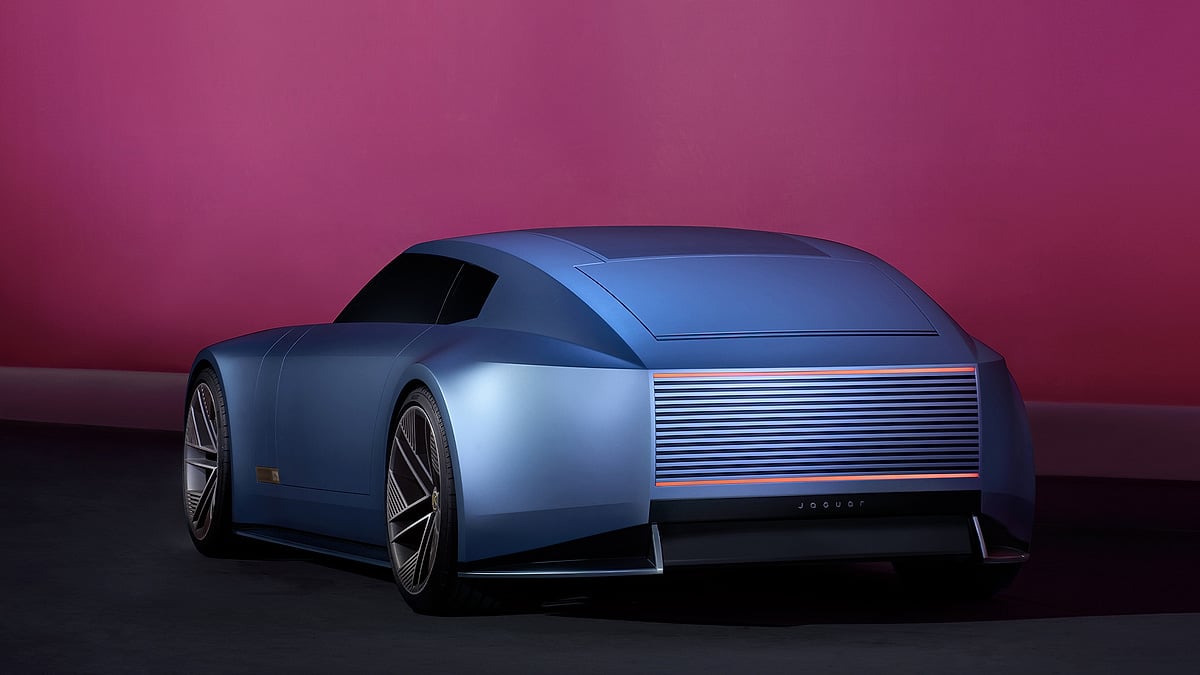
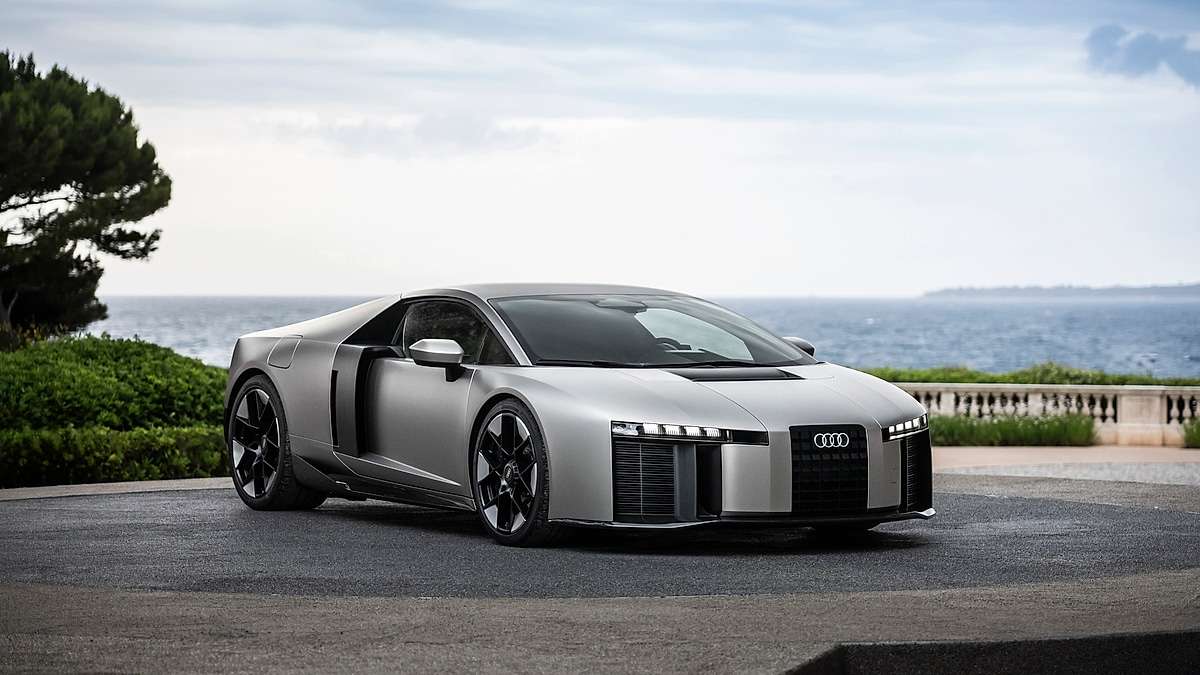
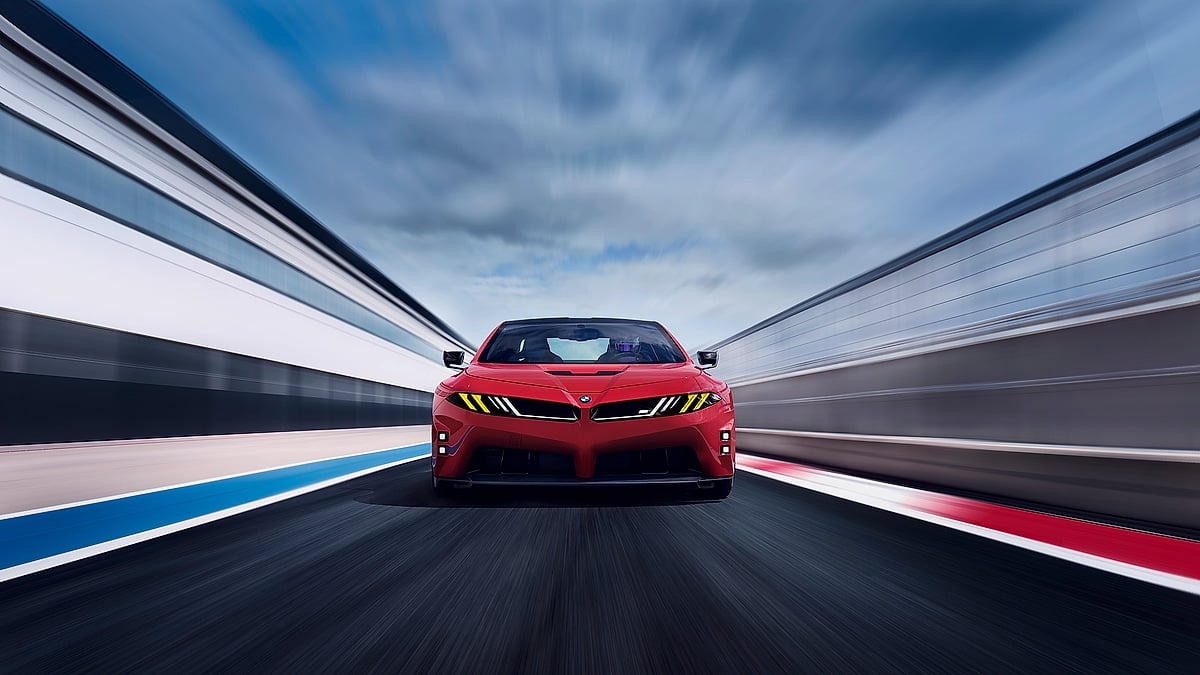
The Ferrari Luce draws that kind of hate. So does the Tesla Cybertruck. Jaguar’s Type 00, the one many people still call 001 in conversation, gets it by the barrel. BMW’s Concept M Neue Klasse and Audi’s new Nuvolari catch their share too. People do not merely dislike these cars. They resent them for walking into the room.
Sometimes the shape is the receipt:
- Ferrari Luce packages a 122-kWh battery, four independent electric motors, and five usable seats into a Ferrari without turning it into an SUV. The proportions people are arguing about are partly the result of solving a problem Maranello never had to solve before.
- Tesla's Cybertruck uses ultra-hard stainless steel body panels folded into flat geometries because conventional stamping becomes dramatically more difficult with that material. The form is inseparable from the manufacturing decision, whether you admire it or not.
- Jaguar Type 00 deletes familiar cues while previewing an all-electric future expected to deliver around 430 miles of range and ultra-fast charging capability. The absence of old Jaguar signals is the product strategy made visible.
The complaints arrive in familiar uniforms. Too minimal. Too brutal. Too sterile. Too corporate. Too vulgar. Too clean. Too strange. Too far from the brand in somebody’s head.
The Luce gets called a soap bar with a prancing horse badge. The Cybertruck gets called a stainless-steel fever dream drawn by a child with a ruler. Jaguar’s new face gets treated like a family betrayal dressed in pastel provocation and flush glass. BMW and Audi get accused of laundering character through precision until every old instinct comes back sanitized.
The funny part is that the anger usually proves the car has done its first job.
A forgettable car gets ignored. A hated car has entered the bloodstream.
These five machines do different things, and I would not pretend they all deserve equal praise. The Ferrari Luce and Cybertruck carry the strongest designer-personality charge. You can feel the authorship before you get to the spec sheet. Jaguar Type 00 works as a public act of reinvention, almost violent in how cleanly it cuts away the old language. BMW’s Concept M Neue Klasse and Audi’s Nuvolari live closer to corporate philosophy, new design systems trying to look inevitable before the public has agreed to anything.
Design Without Permission
They share one dangerous habit: none of them asks the old mental image of the brand for permission.
That refusal hurts.
Ferrari has spent decades perfecting the illusion that a car should look like it is already doing 150 mph while parked. Even the grand tourers carry tension in the skin. There is heat in the surfaces, a sense of machinery trapped under tailoring. The Luce walks into that church and lowers its voice.
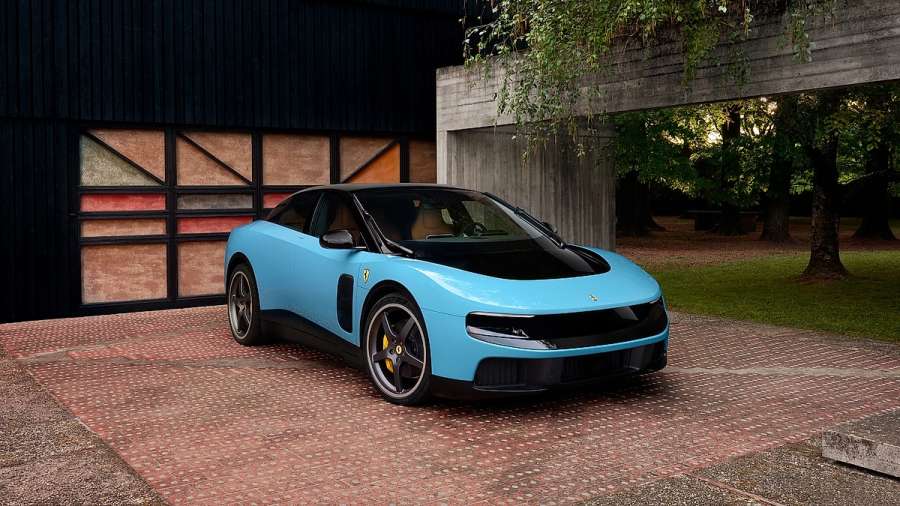
A five-door, five-seat electric Ferrari should sound ridiculous on paper. Then the numbers show up: over 1,000 horsepower, four motors, an 800-volt architecture, a massive battery, and the kind of acceleration that turns most old supercar arguments into estate jewelry. None of that soothes the wound. The performance is there. The shape refuses the old pantomime of aggression.
That is the insult.
The Luce does not beg you to hear cylinders. It asks whether silence can carry ceremony. That may be the most dangerous question Ferrari has asked in my lifetime. Ferrari fans can forgive speed in almost any costume, but they struggle when the costume stops flattering their memory of the brand. The Luce has quiet arrogance. It does not snarl. It glows.
Tesla's Quiet Rebellion
The Cybertruck offends from the other end of the bar.
Where the Luce polishes the stone, the Cybertruck throws one. Stainless steel. Flat planes. No chrome seduction. No friendly pickup haunches. No cowboy nostalgia. No little wink toward an F-Series, a Silverado, a Power Wagon, or a C10 with patina. It is a piece of industrial willpower left in a driveway.
I have criticized plenty about Cybertruck ownership, service, reliability reports, and the distance between Tesla’s stagecraft and some owners’ daily reality. None of that erases the guts of the design act. The truck forced everyone to admit how much pickup styling had become intimidation theater. Taller grilles. Angrier lamps. Bigger badges. More scowling plastic. More chrome armor for men who mostly drive to Costco.
Tesla walked in with a stainless triangle and made Detroit’s tough-guy costume look a little silly.
That does not make the Cybertruck beautiful. Beauty is a small word for a large disturbance. It is memorable, and memory has value in a car culture drowning in competent anonymity.
Jaguar Type 00 caused a different kind of riot because Jaguar was already standing on a trapdoor.
The old Jaguar idea had a romantic sickness to it. Long hood. Low roof. Wet pavement. Leather. Bad decisions made in a good jacket. Even failed Jaguars could seduce because they carried some trace of that old feline menace. Then Type 00 arrived with extravagant proportions, glassy surfaces, butterfly doors, no rear window, a new face, Miami Pink, London Blue, and the emotional delicacy of a match dropped into a cigar box.
The rage was not really about the color.
The rage was eviction.
A whole class of admirers looked at the Type 00 and realized Jaguar had stopped asking them to guard the door. The old cat was gone from the nose. The familiar cues had been swept off the table.
Jaguar's Break From Its Past
The message was cold enough to frost the glass: Jaguar would rather risk becoming strange than keep selling the memory of a company that no longer existed at scale.
That takes nerve.
It also takes a stomach for humiliation. Brand reinvention looks clean in a boardroom and obscene in a comment section. The public does not reward uncertainty. It sniffs it out and goes for the throat. Jaguar invited the attack because a timid reinvention would have been worse. A new Jaguar language had to be strong enough to be hated.
BMW’s Concept M Neue Klasse has a harder assignment. Ferrari can scandalize. Tesla can behave like Tesla. Jaguar can burn the curtains because the old house was already emptying out. BMW M has to carry heritage without becoming a tribute band.
That is a cruel brief.
M buyers want progress with lineage. They want battery architecture, motor control, software, and instant torque. They also want a shark nose, a road-hungry stance, a little bad temper, and a visual promise that the car will not behave like a premium appliance. BMW has spent the last decade teaching its own fans to brace for the next grille crime, so every new design arrives with handcuffs already on it.
The Concept M Neue Klasse comes in Monza Red with yellow motorsport eyes, wide arches, track-light graphics, aggressive aero, and the cleaner geometry of BMW’s next era. At its best, it looks physically necessary. At its weakest, it looks as if the graphics department is standing too close to the clay model.
The production car needs restraint in the last ten percent. That is where BMW keeps getting into fistfights with itself. The best BMWs had arrogance without desperation. They did not need to raise their hand in every photograph.
Audi’s Nuvolari sits in a cooler room. That makes it fascinating.
Audi's Search for Emotion
Audi built its modern identity on discipline: quattro traction, sober surfaces, precise interiors, technical restraint, and the sense that the car had been machined rather than styled. The Nuvolari tries to give that discipline a fever. Limited production. Hybrid supercar hardware. More than 1,000 PS. A claimed top speed beyond 350 km/h. Carbon fiber shaped to look almost metallic. A design philosophy Audi calls Radical Next, built around clarity, technical intelligence, and emotion.
I can hear old Audi loyalists clearing their throats.
Emotion has always been the word Audi uses when it wants to loosen its tie. The danger is obvious. A brand famous for cool control can look ridiculous when it suddenly starts talking like an art-school dinner guest. The Nuvolari survives that danger because the hardware gives the language a backbone. A 1,001-PS limited-run supercar can carry more theatrical design weight than a crossover with a lighting signature and a lease special.
Audi’s best chance lies in the Piëch ghost still rattling around the walls.
The easy comparison here is Steve Jobs. Wrong idea.
Jobs used minimalism to make technology feel inevitable and friendly. Ferdinand Piëch used impossible engineering targets to make automotive statements feel inevitable and absolute. Piëch treated engineers the way certain monarchs treated mapmakers: draw the impossible border, then make reality catch up.
Ferdinand Piëch and the Engineering Mandate
The Bugatti Veyron did not happen because somebody wanted a pretty fast car. It happened because Piëch wanted 1,000 horsepower, more than 250 mph, daily usability, and a machine that could turn a ridiculous brief into a warranty-backed object. The Volkswagen Phaeton came from the same madness, a Volkswagen built like a bank vault because excuses bored him. Audi quattro made all-wheel drive feel like destiny. The XL1 chased efficiency with monastic cruelty until the body became alien by necessity.
That is the standard radical car design has to face.
A strange shape earns forgiveness when the shape cashes a technical check. Aero. cooling. packaging. crash strength. manufacturing freedom. range. visibility. Tactile control. brand clarity. If the shape buys something real, give it time.
If the shape buys only launch-event poetry, get mean.
That rule saves a lot of trouble. Plenty of ugly cars are merely ugly. Plenty of minimalist interiors are cost-cutting exercises with a tablet glued to the wound. Plenty of brutalist shapes are just heavy-handed. Plenty of clean surfaces hide lazy thinking. Radical design deserves no automatic standing ovation. Some experiments deserve the ditch.
The cars in this argument at least have a case.
The Luce’s architecture changes what a Ferrari cabin and body can be around four motors and a huge battery. The Cybertruck’s form comes from a wager on stainless steel, flat planes, and manufacturing bravado. Jaguar’s Type 00 exists because continuing to massage the old Jaguar face would have been a slower death. BMW is trying to teach M a visual language for an electric performance age. Audi is trying to make precision sweat without turning itself into Lamborghini with a German passport.
Technology did not decorate these cars. It put pressure on their surfaces until old styling habits cracked.
When Engineering Forces the Shape
That is why the public reaction gets so emotional. People think they are arguing about ugliness. Most of the time, they are arguing about displacement. The old promise moved. The map changed. The familiar gesture disappeared. A brand that once reassured them suddenly demanded a new kind of attention.
Enthusiasts are worse than normal buyers here. The average customer has simpler needs and less mythology to protect: sit high, see out, feel safe, connect the phone, carry the dog, avoid a payment that causes night sweats. The enthusiast wants a miracle. Steering feel, heritage, novelty, restraint, aggression, low weight, useful technology, buttons, software, originality, resale value, drama, comfort, purity, and zero embarrassment at cars and coffee.
That path is thin enough to shave with.
One inch left and the car is timid. One inch right and it is a clown shoe. Designers know this, and the good ones draw anyway.
Slutty, refined, ugly, minimal, brutalist, monastic. Those words used to sound strange around cars. Now they describe the menu. The automobile has become a personality test with tires. Every surface tells the world which future you can tolerate. Some buyers want a car to disappear. Some want it to behave. Some want it to flatter them. A few still want the thing to argue back.
I am in the last camp.
Give me a design with a pulse and a wound. Give me a car that makes people lean forward, even if half of them are leaning forward to throw a chair. I would rather live in a car culture fighting over the Luce, Type 00, Cybertruck, Concept M Neue Klasse, and Nuvolari than one nodding politely at another anonymous crossover with a black roof and a fake diffuser.
The Value of Cars Worth Arguing About
The hate is the tax on refusal.
Some of these cars will age well. Some will become brave mistakes. A few may look obvious in ten years, the way the first critics of old radical machines eventually looked small and comfortable. The public has a poor first draft when confronted by new form. It mistakes shock for judgment, habit for taste, and heritage for ownership.
Ferrari is testing whether silence can still seduce. Tesla tested whether a truck could be a manufacturing dare in public. Jaguar is testing how much heritage can be burned before the name stops glowing. BMW is testing whether M can carry electricity without losing its blood pressure. Audi is testing whether restraint can learn heat.
Some will fail.
Fine.
Failure with authorship beats competence with no pulse. The cars everybody hates are often the only cars still brave enough to show us where the argument lives. I know which side keeps me interested: the one that produces objects worth fighting about in the first place.
About The Author
Noah Washington is an automotive journalist based in Atlanta, Georgia, covering sports cars, luxury vehicles, and performance culture. His reporting focuses on explaining the engineering, design philosophy, and real-world ownership experience behind modern vehicles.
Noah has been immersed in the automotive world since his early teens, attending industry events and following the enthusiast communities that shape how cars are built and driven today. His work blends industry insight with enthusiastic storytelling, helping readers understand not just what a car is, but why it matters.
Noah is also a member of the Southeast Automotive Media Association (SAMA), a professional organization for automotive journalists and industry media in the Southeast.
His coverage regularly explores sports cars, luxury vehicles, and performance-driven segments of the automotive industry, including the evolving culture surrounding Formula Drift and enthusiast builds.
Read more of Noah's work on his author profile page.
You can also follow Noah here:
Set Torque News as Preferred Source on Google
Follow us today...