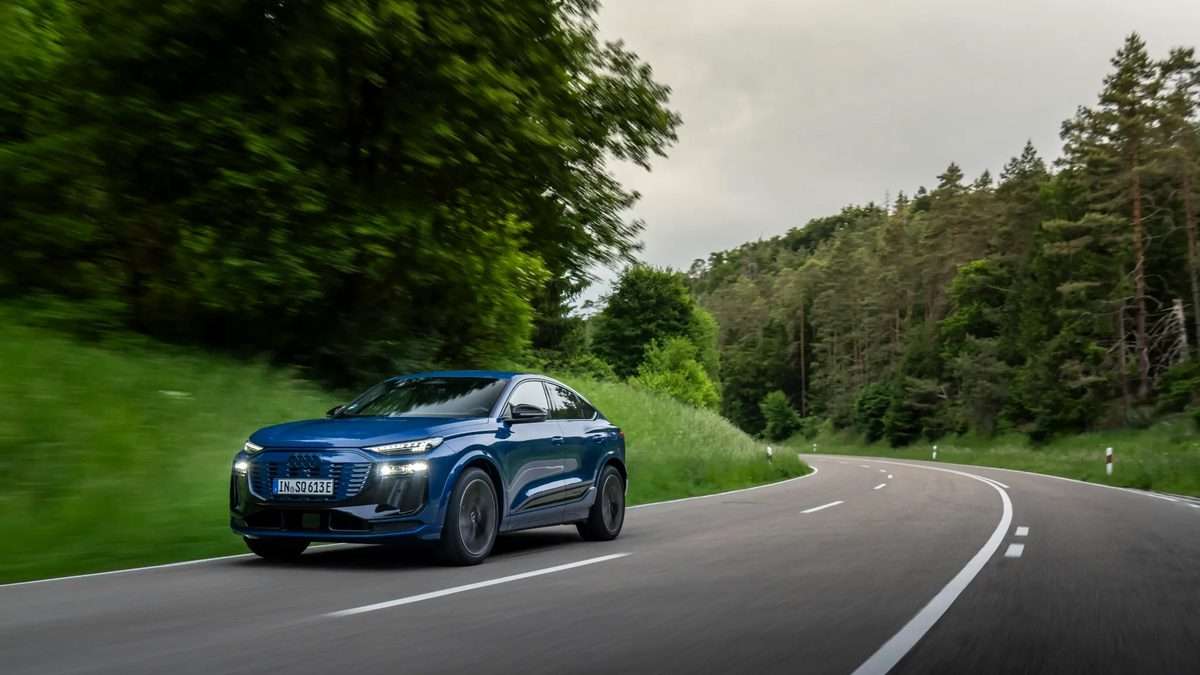

Audi's sales are down. That matters less than why. The company is structurally forbidden from being the sharpest knife in its own drawer. Within the Volkswagen Group, a corporate hierarchy dictates that Audi must never outshine Porsche. This visible product strategy has systematically dismantled the brand's performance credentials and left it adrift in a market that punishes the indecisive.
This corporate ceiling is most obvious in the cars Audi is no longer allowed to build. The R8, a world-class supercar that proved Audi could compete with anyone, was killed without a successor. The TT, an icon of accessible performance for 25 years, was discontinued.
Why Audi Can't Be the Best
These cancellations matter as the removal of brand proof points, the cars that told customers Audi was capable of greatness. What remains is functionally boxed in. The RS Q8 is positioned to remain a fraction slower than the Porsche Cayenne Turbo GT, which itself stays just behind the Lamborghini Urus. As one Reddit user explained,
"The Turbo GT's 0-60 time officially is conveniently 0.1s slower than the Urus on the spec sheet, even though it beats the Urus 9/10 times in the real world, even in the 1/4 mile."
This reflects how the product line cascades down: no Audi is ever allowed to be the undisputed best. The strategy is explicit and consistent. Audi engineers are tasked with building cars that are good enough to sell but never good enough to threaten Porsche. This is a deliberate constraint imposed from above.
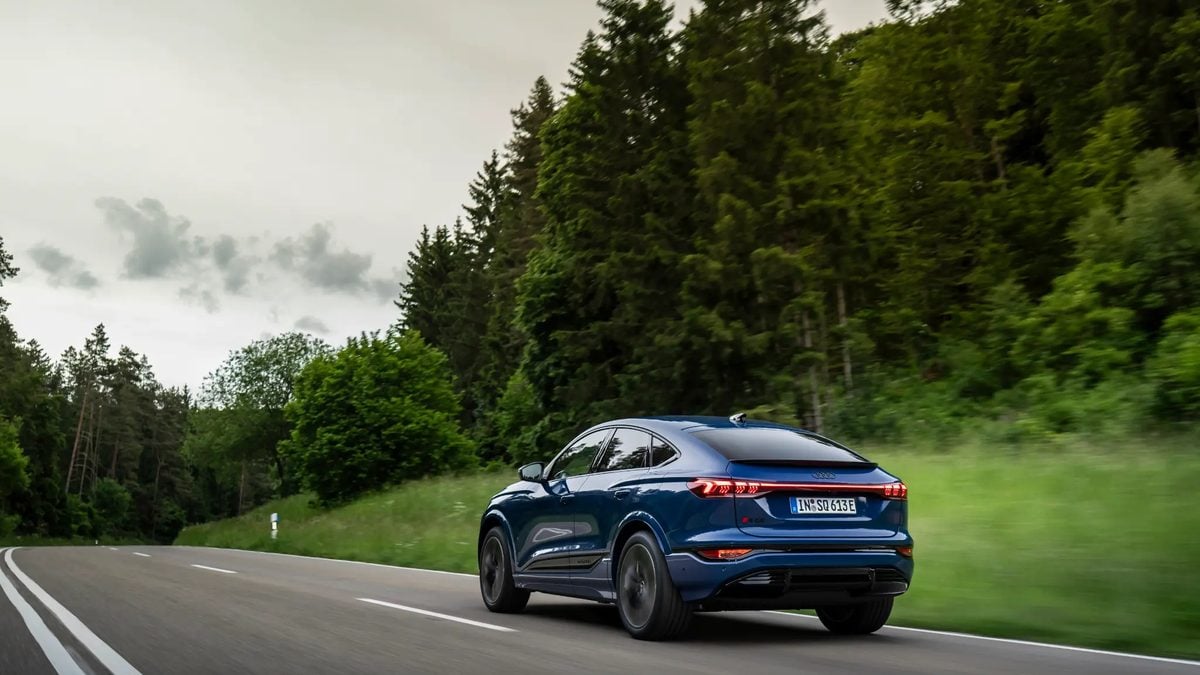
With its performance ambitions capped, Audi's identity as a premium brand has eroded from below. The value proposition collapses when entry-level models feel like more expensive Volkswagens, and high-end models are forbidden from challenging Porsche.
A frustrated enthusiast captured this:
"I feel somehow being part of Volkswagen it got sidelined. The value offered by Audi started diminishing. With Volkswagens being better value for money. And for premium there was Porsche available. When flagships like the A8 and Q7 were not at par with other counterparts like the BMW 7 series and Mercedes GLS, the whole aspirational aspect started declining. The no replacement for Audi R8 strategy was the worst."
When the flagship A8 and Q7 fail to measure up to their Mercedes-Benz and BMW counterparts, and the halo car is gone, the entire aspirational aspect disintegrates. Audi occupies no clear position. It is neither the people's car nor the prestige car. It is the car you buy when you cannot afford what you actually want.
How VW Group Handicaps Audi's Top Models
Stripped of its performance crown, the brand's execution has become sloppy. A new Audi A4 arrives with doors that vibrate with music. The user interface is a mess of over-engineering: capacitive touch buttons on the steering wheel, a feature Volkswagen wisely abandoned, and a trio of screens that create clutter.
Advertising
"Just new features for the sake of new features, quality going down, and price going up,"
He went on to say:
"They also need 3 screens and one of them has to ideally stick out and be the size of iPad Pro."
These are the actions of a brand that has forgotten what it stands for. Audi once pioneered the minimalist, intuitive interior. The brand understood that technology should serve the driver. Now it has become a case study in the opposite principle: technology for its own sake, features that confuse rather than clarify, a dashboard designed by committee and approved by none of them.
The e-tron lineup crystallizes this loss of direction. Audi produced competent but uninspired SUVs that felt like platform-sharing exercises. The e-tron GT, positioned as a halo car, arrived too late and at a price point that limited its appeal. Instead of doubling down on a promising platform, Audi reportedly retreated.
Audi's Electric Ambitions Undermined by Internal Politics
The void is being filled by Porsche's Taycan, which shares the same underpinnings but carries the prestige Audi can no longer claim. Audi was effectively prevented from making the e-tron GT the best car in its class because that would have threatened Porsche's position. So it was handicapped. So it is being killed. And now Porsche gets to win with the same basic architecture, the same platform, the same engineering. The only difference is the badge.
The corporate machinery behind these decisions operates with brutal clarity.
One Reddit commenter explained the VW Group's actual operating principle:
"You have to remember that a company's main purpose is to make as much money as possible while spending as little as possible, not to put V8s in minivans so that people don't buy 200k super SUVs anymore. They're not a charity trying to provide you the best product for your money."
The RSQ8 and Cayenne Turbo GT are positioned so that customers seeking the fastest, most capable vehicle are pushed toward the Lamborghini Urus. When consumers realize they are being manipulated, when they discover that the car they are buying is intentionally limited to protect another brand's sales, they leave.
Unshackling Audi from Internal Constraints
The hierarchy is no longer hidden. Audi is assigned a supporting role because the Group needs Porsche to stay on top. This constraint runs through every decision: which engines get developed, which models get killed, which interiors get the attention to detail that once made Audi legendary…it’s tiring.
That word, tiring, is what Audi has become to its own customers. The sales figures confirm this. In 2025, Audi recorded its worst US sales performance in years, with deliveries plummeting by 12.2 percent in North America and 5 percent in China. The popular Q3 SUV saw sales plunge by 27 percent, from 32,090 units to 23,581.
This internal decay left Audi unprepared for the external pressures that have rocked the entire industry. The shift to electric vehicles, the rise of Chinese competitors, and the dominance of the SUV have all been challenges. In China, the world's largest automotive market, companies like Nio, XPeng, and Li Auto have created a market where traditional brand prestige no longer guarantees success.
Audi, once dominant in China, is now struggling to maintain relevance against competitors who understand the market's appetite for innovation and value. In the United States, BMW and Mercedes-Benz quickly pivoted to offer comprehensive ranges of high-quality SUVs while Audi's lineup felt like an afterthought, with many models sharing platforms with mainstream brands rather than offering the premium experience expected from a luxury automaker.
Audi's Corporate Constraints: Key Performance Indicators
- The Audi R8, a mid-engine supercar, concluded its production run with approximately 40,000 units built across two generations. Its discontinuation in 2023 left a significant void in Audi's performance lineup, removing a direct competitor to vehicles like the Porsche 911 Turbo and Mercedes-AMG GT.
- The Audi RS Q8, despite its formidable 591 horsepower, is consistently benchmarked to deliver a 0-60 mph time of around 3.7 seconds. This figure, while impressive, deliberately positions it behind the Porsche Cayenne Turbo GT's 3.1-second sprint and the Lamborghini Urus's 3.0-second time, showcasing a clear internal performance ceiling.
- The Audi e-tron GT shares its J1 platform with the Porsche Taycan, yet its most potent variant, the RS e-tron GT, offers a maximum 637 horsepower (with overboost). This is intentionally capped below the Taycan Turbo S's 750 horsepower, ensuring Porsche maintains its performance supremacy even with shared architecture.
- In 2025, Audi reported a significant 12.2% sales decrease in North America and a 5% drop in China, totaling its worst U.S. sales performance in years. This decline is exemplified by the Q3 SUV, which saw its sales plunge by 27% from 32,090 units to 23,581, reflecting a broader struggle for market relevance.
Europe has become increasingly hostile to the large, turbocharged engines that once defined Audi's appeal, with stringent emissions regulations making it difficult to sell the kind of vehicles that built the brand's reputation. For Audi, already compromised by internal politics, these external pressures have been compounded rather than manageable.
There was a time when Audi's path was clear. Under Ferdinand Piëch, the brand was transformed from a niche player into a global powerhouse. The Quattro all-wheel-drive system was a revolution that proved Audi could compete with and surpass its rivals. Before the Quattro, Audi was hardly considered anything close to Mercedes or BMW.
The Quattro's dominance in the World Rally Championship had a halo effect on the entire brand, cementing its reputation for technological superiority. That history stands in brutal contrast to the company's current state. The brand that once defined the cutting edge of automotive technology now plays catch-up, a prisoner of its own success and the corporate structure it helped to build. Audi's rise was the result of bold vision and relentless innovation, lifted from obscurity by a single technological breakthrough and the leadership of a visionary who believed in pushing boundaries.
Audi's path to recovery lies in the direction its leadership is currently traveling. The "Vorsprung 2030" strategy addresses real market demands. But it cannot succeed while the brand remains constrained by internal corporate politics. Audi will not win in the EV market by being a competent follower. It will not reclaim its position in China by offering the same platforms as its competitors. It will not inspire customers by continuing to handicap its own products to protect Porsche's market position.
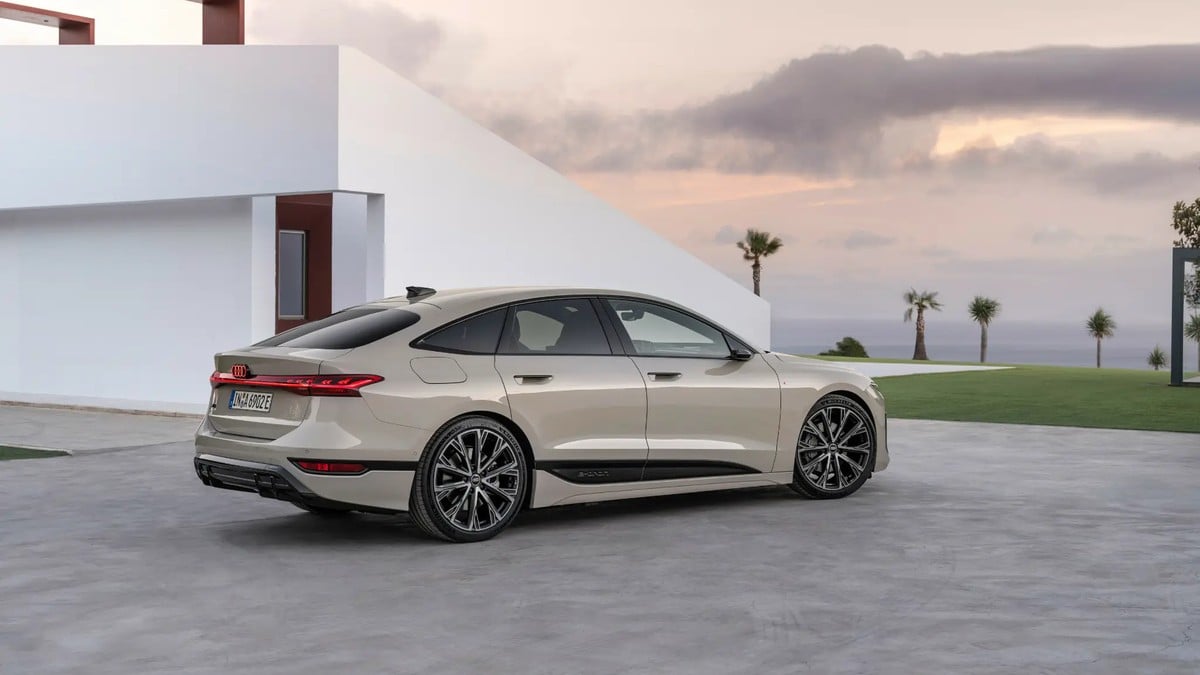
The brand can only recover if it is allowed to compete, internally as well as externally. Until then, it will remain what it has become: a shadow of its former self, a knife that has been sheathed by the very organization that should be wielding it.
Audi was once the knife that cut through the industry's complacency. It will never be that knife again unless it is freed. The question is not whether Audi can recover. The question is whether it will ever be allowed to try. Until the Volkswagen Group is willing to let Audi compete without constraint, the answer is no.
Image Sources: Audi Media Center
Noah Washington is an automotive journalist based in Atlanta, Georgia. He enjoys covering the latest news in the automotive industry and conducting reviews on the latest cars. He has been in the automotive industry since 15 years old and has been featured in prominent automotive news sites. You can reach him on X and LinkedIn for tips and to follow his automotive coverage.
Set Torque News as Preferred Source on Google
Follow us today...