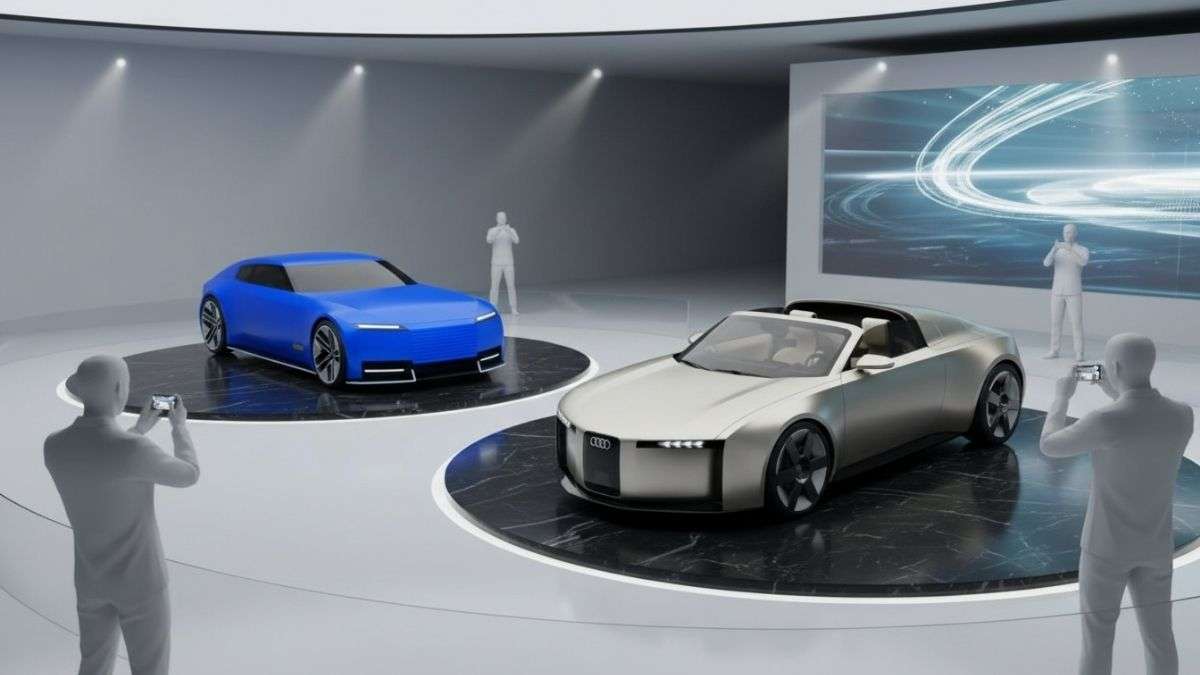

A Tale of Two Kitties: Audi's Pounce vs. Jaguar's Stumble
In the high-stakes poker game of the electric vehicle transition, concept cars are the ultimate "tell." They reveal a company's hand, its confidence, and its strategy for winning the pot. Recently, two of the automotive world's most storied "big cats," Audi and Jaguar, laid their cards on the table with a pair of stunning electric sports car concepts. Audi presented its Concept C, a sleek, titanium-hued roadster, while Jaguar unveiled the dramatic and divisive Type 00. Though both are two-door electric coupes aimed at a future of performance and luxury, they represent two fundamentally different philosophies, and their public reception tells a fascinating story about heritage, design, and brand identity in the electric age.
Shared DNA, Divergent Paths
At first glance, the Audi Concept C and Jaguar Type 00 share a surprising amount of design DNA. Both are an exercise in what some have called "brutalist" simplicity, a deliberate move away from the fussy creases and aggressive vents that have dominated car design for the past decade. They favor large, uninterrupted surfaces and monolithic forms. The Audi is all about "radical simplicity," with a single, sharp character line defining its powerful shoulder, while the rest of its body remains pure and unadorned. Similarly, the Jaguar embraces a long, dramatic silhouette with a fastback roofline and clean flanks, eschewing traditional ornamentation.
However, the differences are stark and speak volumes. The Audi Concept C is an evolutionary design, a car that feels both futuristic and recognizably Audi. Its most prominent feature, the "vertical frame" grille, is a clever nod to the brand's 1930s Auto Union Type C racers, seamlessly blending heritage with a forward-looking electric identity. The Jaguar Type 00, in contrast, feels like a revolution—or perhaps a schism. Its design is intentionally jarring, with a massive "strikethrough" element on the front and rear, butterfly doors, and proportions that feel more architectural than automotive. While Audi’s concept feels like a plausible next step, Jaguar’s feels like a deliberate break from its past, a move that has proven far more controversial.
Echoes of the Past, Visions of the Future
A concept car's success often hinges on its ability to connect with a brand's heritage. Here, Audi has played its hand masterfully. The Concept C is the clear spiritual successor to the much-loved Audi TT, filling the emotional void left by the iconic sports car's departure. It also channels the sophisticated, technical spirit of the R8 supercar. It’s a car that understands its lineage and reinterprets it for an electric future. The design feels like a natural progression, assuring brand loyalists that the soul of Audi's performance cars will endure.
Jaguar, on the other hand, seems to be running from its history. The Type 00 bears little resemblance to the recently discontinued F-Type, a car celebrated as the spiritual successor to the legendary E-Type. Instead of evolving that successful language, Jaguar has wiped the slate clean. This radical departure is a core part of its ambitious "Reimagine" strategy, which aims to transform Jaguar into an all-electric luxury brand by 2025. But by severing ties with its beloved design history, Jaguar risks alienating the very enthusiasts who have championed the brand for decades. The Type 00 doesn't feel like the next chapter in Jaguar's story; it feels like an entirely new book.
The Verdict of the Crowd
The reception of these two concepts has been a study in contrasts. The Audi Concept C was met with widespread acclaim. It was hailed as a stunning and worthy successor to the TT, a breath of fresh air that respected the past while boldly striding into the future. Its "shy tech" interior, which hides screens until they're needed, and its focus on high-quality materials were praised as a return to driver-focused, tactile luxury.
The Jaguar Type 00’s reception was, to put it mildly, mixed. While some lauded its boldness and artistic ambition, many longtime fans and critics were perplexed. The design was called awkward and disconnected from the brand's identity of graceful, feline beauty. The accompanying rebrand and polarizing debut at Miami Art Week only fueled the controversy, making the car feel more like a provocative art installation than a desirable automobile. While Audi’s concept prompted excitement for a future product, Jaguar’s prompted a fierce debate about the brand's very identity.
Charging Forward: Strategic Implications
Ultimately, these two cars are ambassadors for two very different corporate strategies. Audi’s electric strategy is one of pragmatic evolution. The Concept C signals a future where electric performance cars can coexist with and learn from a rich internal combustion heritage. It’s a message of continuity and confidence. Jaguar's all-in EV strategy is a high-risk, high-reward gamble. The Type 00 is a shock to the system, designed to announce that the old Jaguar is gone. The company is betting that a radical reinvention will attract a new, younger, and wealthier clientele, even if it means leaving its traditional base behind.
Wrapping Up
In this tale of two electric sports cars, Audi has chosen a path of confident evolution, while Jaguar has opted for a dramatic, bet-the-company revolution. The Concept C is a masterful blend of heritage and modernism, a car that feels both innovative and reassuringly familiar. The Jaguar Type 00 is a bold, artistic statement that demands attention but struggles to connect with the brand's soul. While only time will tell which strategy will ultimately succeed, the initial reception suggests that in the journey to an electric future, bringing your heritage along for the ride is a far more popular—and likely more successful—approach.
Disclosure: Images rendered by Google
Rob Enderle is a technology analyst at Torque News who covers automotive technology and battery developments. You can learn more about Rob on Wikipedia and follow his articles on Forbes, X, and LinkedIn.
Set Torque News as Preferred Source on Google
Follow us today...