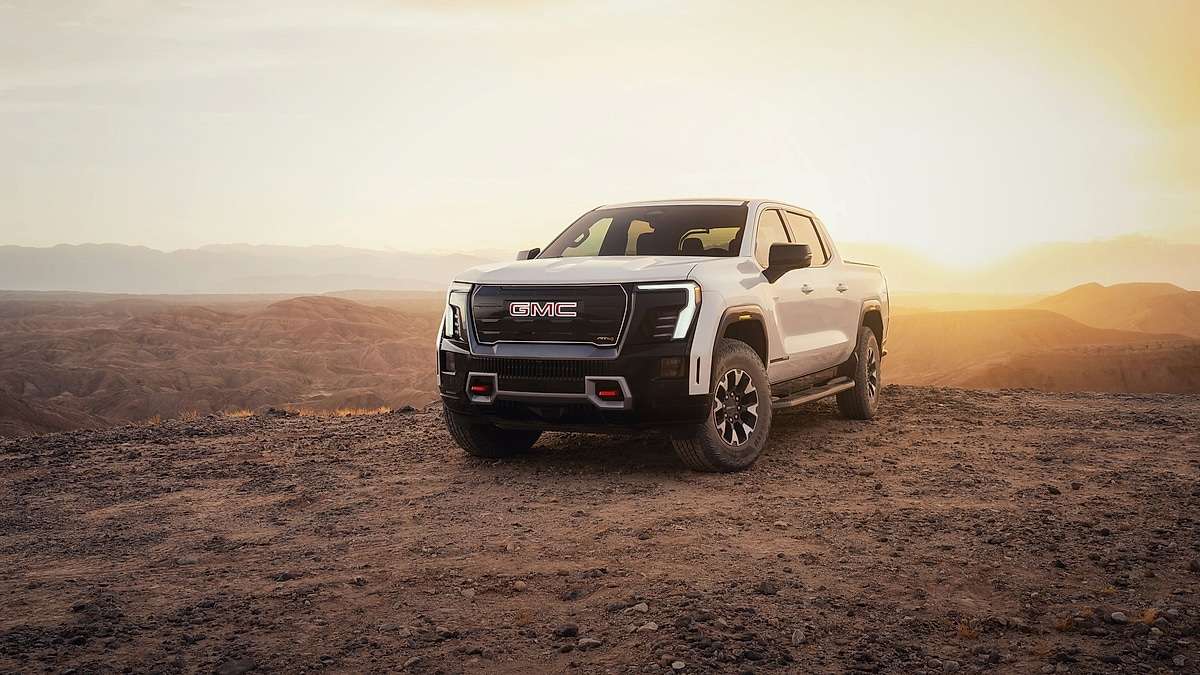

Cyle Hendricks’ GMC Sierra EV did something worse than throw a warning light.
It stopped taking energy.
That detail matters in the mechanical sense, and I’m going to use the word once because there is no cleaner substitute here. Hendricks, posting in a GMC Sierra EV owner group, says his Denali Edition 1 began showing a high-voltage battery alert around the same time at night. The dealer replaced the driver motor control module during the first service visit, then struggled to clear the alerts. Later that same day, the truck threw another service high-voltage battery warning.
At first, it still drove and charged.
Then it would not charge. Hendricks also noticed the truck barely accepted regenerative braking, showing roughly 1 kW on the display while slowing down.
That is the part I would circle in grease pencil.
A failed charge session can send people chasing the plug, the charger, the cord, the onboard charger, the software handshake, the house circuit, the dealer, the app, and three bad theories from a Facebook comment section. Loss of regen points closer to the high-voltage system’s willingness to accept energy. Plug power and regen arrive from different directions, but the battery still has to take the energy. When both begin acting strange, the story gets bigger than a fussy charger.
GMC Sierra EV: What You Need To Know
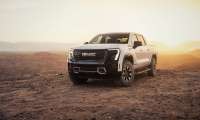
- The 2026 GMC Sierra EV can offer up to 478 miles of GM-estimated range, 760 hp, 785 lb-ft of torque, and 800V DC fast charging adding up to 116 miles in about 10 minutes.
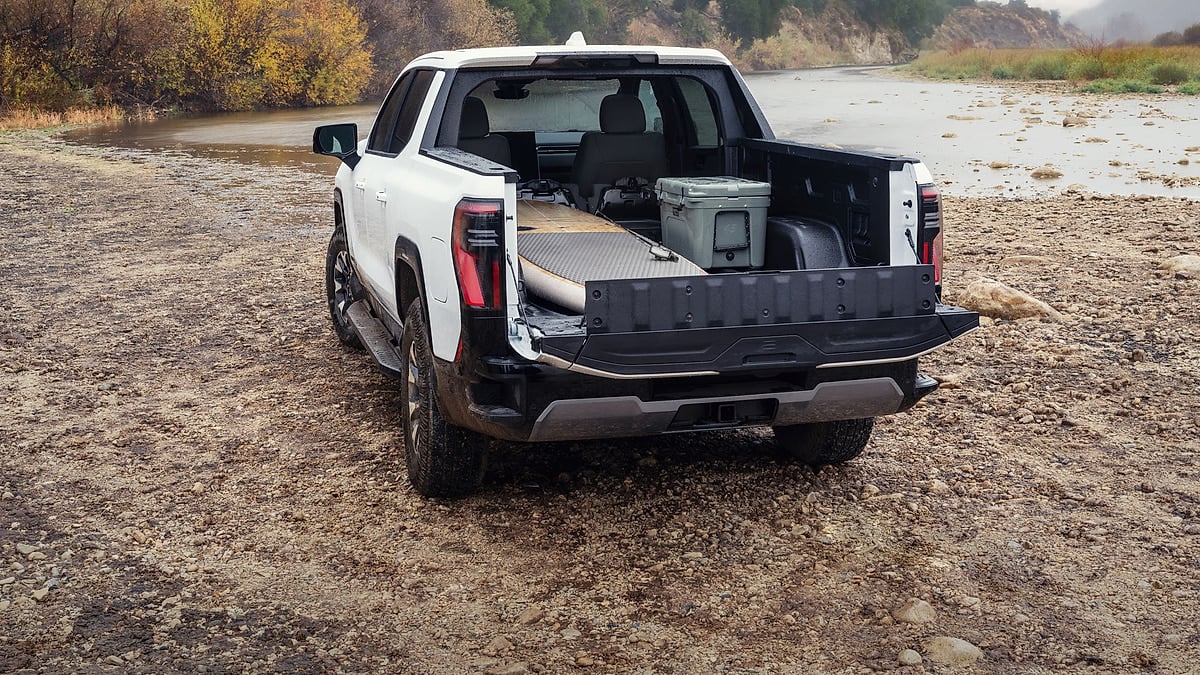
- GMC lists an 11 cu-ft power eTrunk, available MultiPro Midgate that expands cargo length to 10'10", and available 4-Wheel Steer with CrabWalk.
- GMC says EV battery-related warnings can reduce vehicle power and disable regenerative braking features like One-Pedal Driving; “Unable to Charge” or “Service High Voltage System” messages can also indicate battery cooling/system issues needing service.
Hendricks later updated the group: he was able to charge after work, still had the lithium-ion battery alert and red warning on the driver display, then the alert disappeared a few hours later. The truck went back to the dealer, and the app showed a service lithium-ion battery alert again.
He is approaching 36,000 miles.
That number changes the temperature in the room.
The regen clue deserves the first page of the repair order
Regenerative braking is one of those EV features owners stop noticing until it vanishes. In a heavy electric pickup, regen does more than save a few watt-hours. It shapes the whole driving rhythm. It reduces brake wear. It keeps a 9,000-pound machine from feeling like a runaway appliance every time traffic stacks up.
Hendricks says the display showed only about 1 kW while slowing down. That is essentially a whisper in a truck this large.
GMC’s own warning-light guidance says certain EV battery alerts can reduce power consumption to protect the battery, and regenerative braking features such as One-Pedal Driving can be disabled. That makes the owner’s observation valuable. The truck was not simply complaining. It was changing how it handled energy.
That is the 11th concept here: the regen display may be a better early-warning witness than the charge-port complaint.
A charge failure tells you the truck refused outside energy. Weak regen tells you the truck may also be limiting energy from its own motors during deceleration. That does not diagnose the battery, the charger module, the inverter, the cooling loop, or the control software by itself. It tells the technician where the investigation should start: why did the high-voltage system stop accepting normal incoming energy?
That question beats parts roulette.
A replaced module is only as good as the next drive home
The first service visit produced a driver motor control module replacement. That sounds serious enough to calm an owner for about ten minutes.
Then the warning came back the same day.
I have no interest in pretending I can diagnose Hendricks’ Sierra EV from a social post. I also have no patience for a repair that sends a $100,000-class EV truck back to the owner with the same basic high-voltage story still alive. A module replacement followed by same-day alerts means one of two things: the bad part was only one piece of the problem, or the repair path missed the main fault.
Either answer leaves the owner with a truck he cannot trust.
The comments had the usual spread. One person said his truck was fixed with a software update. Another suspected an onboard battery charger module. A technician who says he works on these trucks and Hummer EVs every day urged proper code scanning and suggested a dealer with stronger EV expertise. Another commenter said the truck needs a main battery, citing his own replacement at 12,000 miles. Hendricks later said the dealer mentioned something about needing a new battery and estimated about two weeks in the shop.
That is a rough sentence for any owner.
The Sierra EV Denali Edition 1 launched as the halo truck. GM put 754 horsepower, 785 lb-ft of torque, a 440-mile GM-estimated range claim, 800-volt DC fast-charging capability, four-wheel steering, air suspension, CrabWalk, and the MultiPro MidGate into one giant electric billboard. A truck with that much hardware can be magnificent when it works.
When it does not, nobody cares about CrabWalk.
They care whether it charges tonight.
The 36,000-mile line is the wrong place for uncertainty
Hendricks says the truck is coming up on 36,000 miles. That sits right at the edge of the ordinary bumper-to-bumper warranty conversation for many GM vehicles. The Denali Edition 1’s battery and electric components carry longer coverage, 8 years or 100,000 miles according to GM’s launch specifications, but owners should not let the longer battery warranty make them casual about documentation.
A high-voltage battery alert can touch many parts: pack modules, cooling hardware, onboard charging equipment, drive electronics, control modules, wiring, software, sensors, connectors, and diagnostic logic. Warranty coverage depends on the failed component and GM’s classification.
That is why the repair trail needs to be airtight before 36,000 miles.
Every alert screenshot. Every app message. Every dealer visit. Every repair order. Every code description the dealer will provide. Every sentence from the service adviser about possible battery replacement. Every day out of service.
A lemon-law comment showed up in the thread, because of course it did. That is where owners need discipline. Lemon law varies by state. Internet confidence does not move a manufacturer. Paperwork does.
If this becomes the third shop visit for a high-voltage battery-related alert, as Hendricks suggested in the comments, the file should already be organized like a court exhibit.
Dealer skill can save the truck or bury the owner
Electric pickups have exposed an uncomfortable truth about legacy automakers: the dealer network is both a strength and a liability.
A strong EV technician with GM tools, proper training, and the patience to follow the fault tree can turn a scary high-voltage alert into a clean repair. A weak shop can fire modules at the truck until the owner loses faith. The same brand can produce both outcomes depending on the service bay.
That is why the comments telling Hendricks to consider another dealer deserve attention.
A Sierra EV is not a gas Sierra with a large battery stuffed under it. It shares family blood with GM’s Ultium trucks and Hummer EV hardware. The service department needs real EV fluency. They need to understand how battery alerts, cooling faults, charging failures, regen disablement, control modules, and software updates interact. They need to know when to escalate to GM technical assistance instead of wandering through the parts catalog with a flashlight.
Owners should be polite. They should also be firm.
Ask whether the technician assigned to the truck is EV-certified for Ultium vehicles. Ask whether GM technical assistance has been involved. Ask whether the dealer performed high-voltage isolation tests, battery cooling diagnostics, onboard charger checks, module communication checks, and charging-system validation after repair. Ask whether they road-tested the truck long enough and under the time conditions that originally triggered the warning.
Hendricks said the alert seemed to appear around the same time at night. That may prove irrelevant. It may also point to scheduled charging, temperature changes, pack balancing, charger timing, garage conditions, or software routines. A good technician at least writes that down.
The battery warning and the charging failure belong together
A high-voltage alert that comes and goes can make an owner feel crazy. The truck warns. The warning disappears. The app complains. The dealer pulls codes. The truck behaves. Then the warning returns at night.
That pattern is poison for customer trust.
The worst EV problems are not always the ones that strand the vehicle instantly. Intermittent high-voltage warnings make the owner drive with a question mark in the passenger seat. Will it charge at work? Will regen work on the next hill? Will the warning disappear again? Will the dealer find the code? Will the truck shut down after the next stop?
Hendricks’ post has that exact stink.
The moment the truck refused to charge and also showed nearly no regen, the issue crossed from warning-light irritation into functional failure. A Sierra EV with a huge pack and long range still becomes useless fast if the owner cannot count on energy going back into the battery.
That is the basic EV bargain. The truck spends energy. The truck accepts energy. Break either half, and the spec sheet becomes wallpaper.
The owner advice is boring because boring works
Hendricks should not accept a vague diagnosis. Neither should any Sierra EV owner seeing the same pattern.
Start with the simple stuff because simple stuff saves embarrassment: try a known-good charger, capture the charge screen, note whether AC and DC charging behave differently, record outside temperature, record state of charge, and note whether the alert appears after sitting, after charging, after driving, or after remote preconditioning.
Then push the dealer for specifics.
What diagnostic trouble codes appeared? Which module set them? Were they current or history codes? Did the dealer perform module updates? Which modules? Did the truck pass a full charge test before release? Did regen return to normal? Did the red battery icon return during the dealer’s road test? Is GM technical assistance involved? Did GM authorize battery replacement, or did the dealer merely mention the possibility?
If the dealer says main battery, ask for that in writing.
If the dealer says software, ask which software.
If the dealer says module, ask which module and whether the repair was verified under the same conditions that triggered the fault.
This is where owners need to become irritating in a productive way.
The Edition 1 lesson
First-year halo vehicles always carry a little danger. The people who buy them get the best trim, the biggest toys, the most attention, and the earliest build reality. That has been true since carburetors had bad moods.
The Sierra EV Denali Edition 1 is one of GM’s most ambitious electric trucks. It is also part of the first wave of customers feeding real-world problems back into the Ultium service machine. Some trucks will run beautifully. Some owners will get a software update and move on. Some, like Hendricks, will find themselves in a loop of alerts, modules, charging failure, regen loss, and a dealer trying to decide whether the main battery is next.
That is expensive uncertainty.
GM needs these repairs to feel surgical. Owner drops off truck. Dealer finds exact fault. Dealer explains exact cause. Dealer repairs it. Owner gets the truck back with confidence.
Anything less turns the Sierra EV’s greatest strength, its giant high-voltage heart, into the thing owners fear.
Sierra EV owners, watch the regen
A red high-voltage warning deserves attention. A truck that will not charge deserves immediate service. A truck that will not charge and barely accepts regenerative braking deserves a repair order written with more detail than “battery alert.”
If you own a Sierra EV, Silverado EV, or Hummer EV, pay attention to regen behavior when a high-voltage warning appears. Note the kW reading while slowing down. Note whether One-Pedal Driving changes. Note whether the truck accepts AC charging, DC charging, both, or neither. Save the app alerts.
Those details give the technician a better map.
Hendricks’ case may end with a software update, an onboard charger module, a control module, a cooling-system repair, or a main battery. The final answer belongs to the diagnostic data. The warning for owners is already clear: when the truck stops taking energy from the wall and from regen, treat the problem as urgent.
Have you seen this Sierra EV warning?
If your Sierra EV, Silverado EV, or Hummer EV has shown a Service High Voltage System or lithium-ion battery alert, share the mileage, model year, trim, whether charging failed, whether regen dropped, what codes the dealer found, and what repair actually fixed it.
About The Author
Noah Washington is an automotive journalist based in Atlanta, Georgia, covering sports cars, luxury vehicles, and performance culture. His reporting focuses on explaining the engineering, design philosophy, and real-world ownership experience behind modern vehicles.
Noah has been immersed in the automotive world since his early teens, attending industry events and following the enthusiast communities that shape how cars are built and driven today. His work blends industry insight with enthusiastic storytelling, helping readers understand not just what a car is, but why it matters.
Noah is also a member of the Southeast Automotive Media Association (SAMA), a professional organization for automotive journalists and industry media in the Southeast.
His coverage regularly explores sports cars, luxury vehicles, and performance-driven segments of the automotive industry, including the evolving culture surrounding Formula Drift and enthusiast builds.
Read more of Noah's work on his author profile page.
You can also follow Noah here:
Set Torque News as Preferred Source on Google
Follow us today...