
Waiting on a single electronic module is not how anyone imagines spending the first months with a six-figure electric truck. Yet that is exactly what one 2025 GMC Sierra EV Denali Max owner experienced after his truck sat sidelined for more than three weeks, all because of a back-ordered OnStar telematics module.
The delay left core features like GPS, SuperCruise, and app connectivity unusable, turning a flagship EV into something far less futuristic than advertised.
The issue surfaced during what should have been a routine service visit for minor headliner clip work. Instead, the truck remained at the dealer while GM waited for a telematics module that simply was not available. According to the owner, the part finally arrived after more than three weeks, coincidentally just two days after he opened a buyback case with GM. He is careful not to claim causation, but the timing did not go unnoticed.
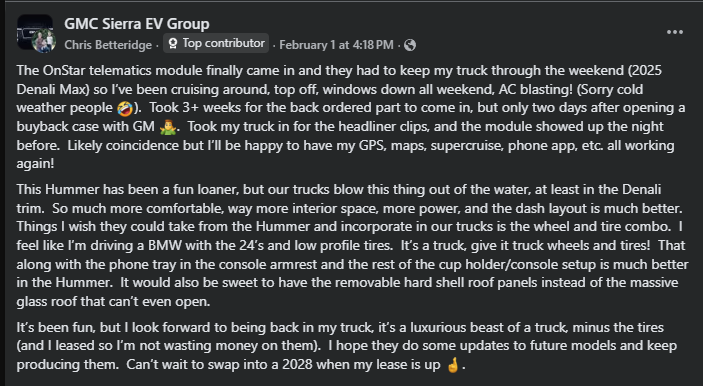
“The OnStar telematics module finally came in, and they had to keep my truck through the weekend (2025 Denali Max), so I’ve been cruising around, top off, windows down all weekend, AC blasting! (Sorry, cold-weather people. Took 3+ weeks for the back-ordered part to come in, but only two days after opening a buyback case with GM. Took my truck in for the headliner clips, and the module showed up the night before. Likely coincidence, but I’ll be happy to have my GPS, maps, supercruise, phone app, etc., all working again!
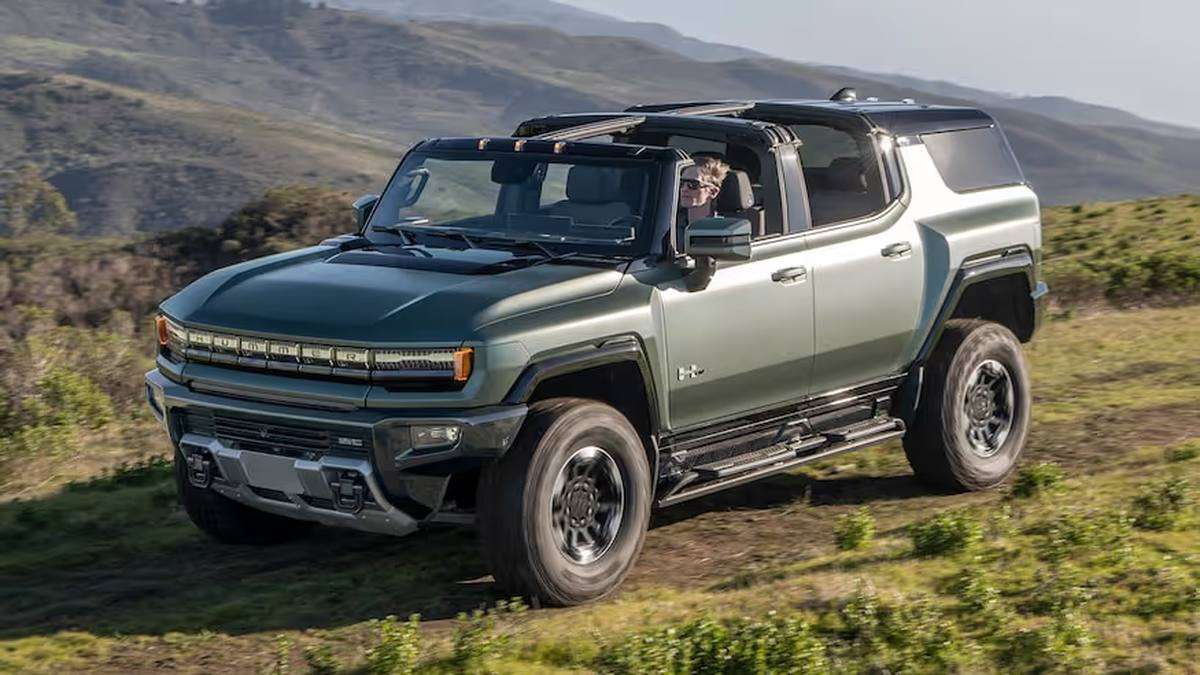
This Hummer has been a fun loaner, but our trucks blow this thing out of the water, at least in the Denali trim. So much more comfortable, way more interior space, more power, and the dash layout is much better. Things I wish they could take from the Hummer and incorporate into our trucks are the wheel and tire combo. I feel like I’m driving a BMW with the 24’s and low-profile tires. It’s a truck, give it truck wheels and tires! That, along with the phone tray in the console armrest and the rest of the cup holder/console setup, is much better in the Hummer. It would also be sweet to have the removable hard shell roof panels instead of the massive glass roof that can’t even open.
It’s been fun, but I look forward to being back in my truck; it’s a luxurious beast of a truck, minus the tires (and I leased so I’m not wasting money on them). I hope they do some updates to future models and keep producing them. Can’t wait to swap into a 2028 when my lease is up.”
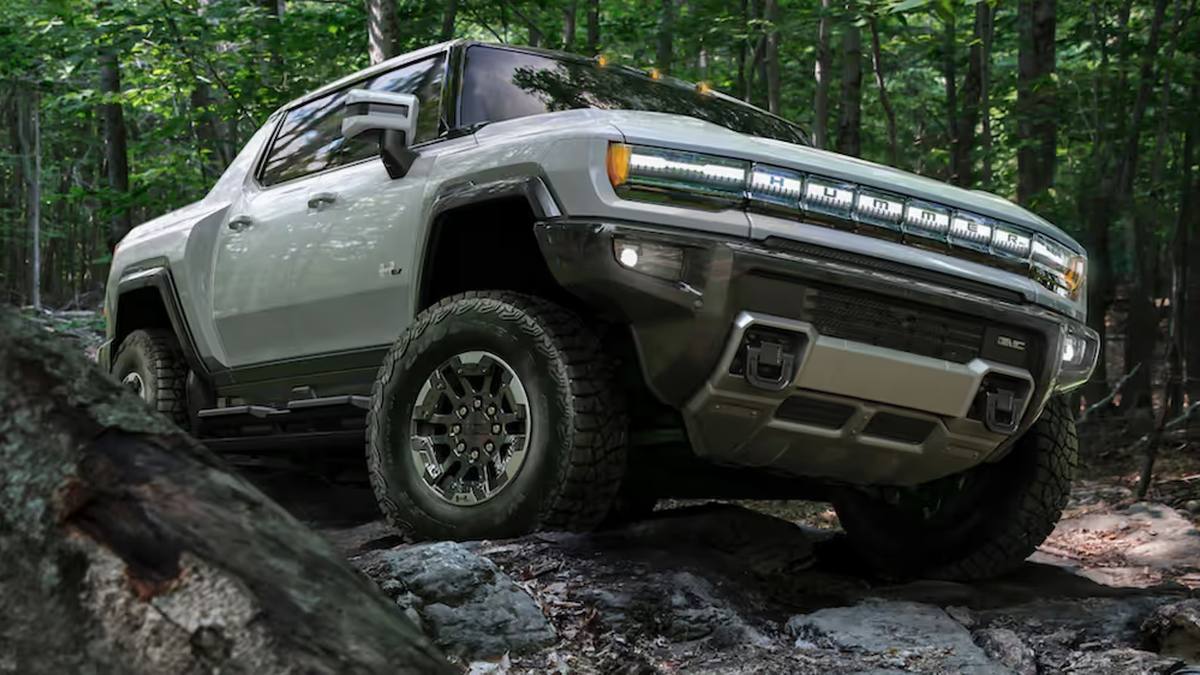
In the meantime, GM provided a Hummer EV loaner, and this is where the story takes an interesting turn. The owner did not hate the Hummer. In fact, he describes it as fun, loud in personality, and entertaining to cruise in with the windows down and the air conditioning blasting. But fun, he says, is not the same as livable. After weeks in the Hummer, his appreciation for the Sierra EV sharpened rather than faded.
GMC Sierra: Full-Size & Cabin Design
- The Sierra presents a more traditional full-size pickup formula, with road manners that depend heavily on cab configuration, wheel size, and whether it’s tuned for comfort or towing.
- Powertrain choices lean into torque and load capability, delivering confident towing performance while making fuel economy highly variable depending on engine selection and real-world use.
- Cabin design balances work-truck practicality with premium trims, offering strong storage and visibility while still feeling wide and tall in tight urban environments.
- Bed and tailgate features can improve day-to-day utility, though the Sierra’s size and turning radius remain key tradeoffs for drivers who routinely park in dense areas.
The contrast between the two vehicles became clear quickly. In Denali trim, the Sierra EV felt significantly more comfortable, with better seating, more usable interior space, and a dash layout that simply made more sense day to day. Where the Hummer feels like an event, the Sierra feels like a place you actually want to spend hours. It is less about shock value and more about refinement.
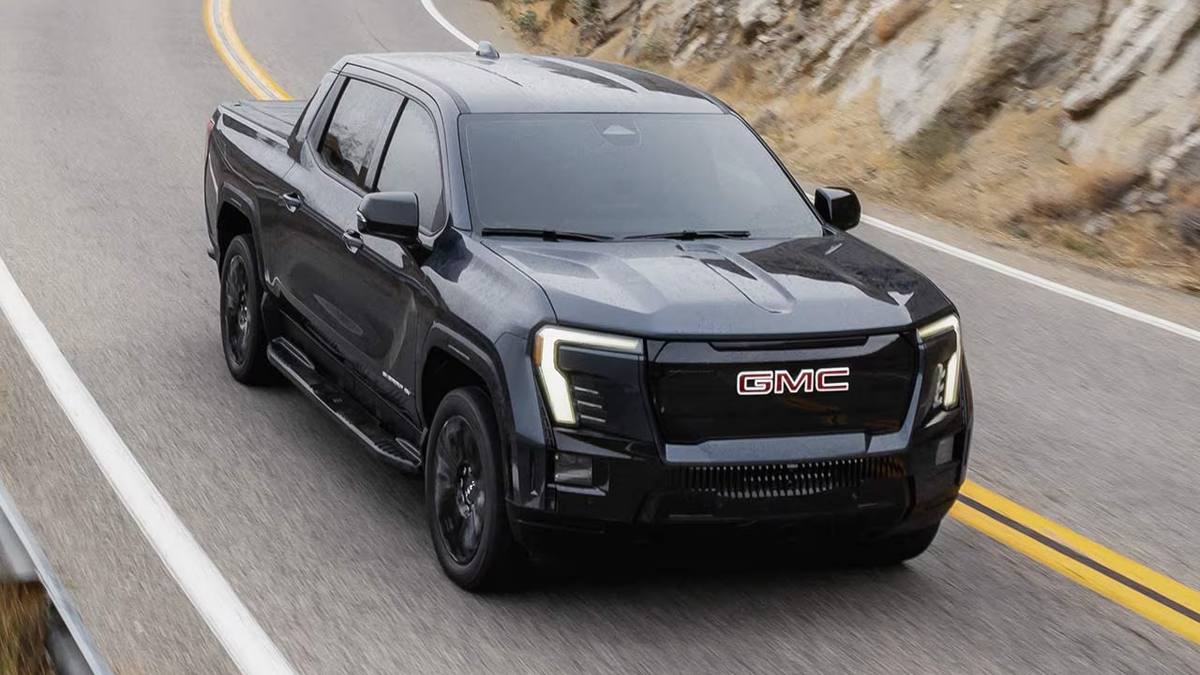
That refinement extends to how the truck fits into daily life. The owner missed his Sierra’s calmer ride and more intuitive interior, even while acknowledging that the Hummer brings a kind of weekend energy the Sierra does not try to match. Other commenters echoed that divide, describing the Hummer as the toy and the Sierra EV as the real utility vehicle, the one you choose when comfort, range, and practicality matter more than spectacle.
Still, the loaner experience highlighted a few areas where the Sierra EV could learn from its platform sibling. Chief among them is the wheel and tire setup. The owner bluntly criticizes the Sierra’s 24-inch wheels and low-profile tires, saying they feel more at home on a luxury SUV than a truck. “It’s a truck,” he writes, arguing that it deserves proper truck rubber rather than something that looks fragile and expensive to replace. Because his Sierra is leased, he is not willing to spend money correcting what he sees as a factory misstep.
He also points to smaller details where the Hummer wins. The center console layout, phone tray placement, and cup holder design are all more thoughtful in the Hummer. The removable roof panels are another envy point, especially compared to the Sierra’s massive fixed glass roof that cannot even open. These are not dealbreakers, but they stand out once you live with both.
The frustrating part is that none of this would matter if the truck had not been down for weeks over a single electronic component. In an EV, this is dependent on software and connectivity; a failed or missing telematics module does not just inconvenience the owner. It disables features that are core to the vehicle’s identity. SuperCruise without connectivity is not SuperCruise at all.
Once the part arrived, the owner was relieved rather than triumphant. He wanted his truck back, not an argument with GM. He remains optimistic about the Sierra EV’s future and even says he hopes GM continues refining the platform so he can step into a newer model when his lease ends around 2028. That is not the language of someone walking away angry. It is the language of someone who believes in the product but expects the ownership experience to catch up.
The Sierra EV Denali Max is positioned as a luxury electric truck meant to blend comfort, power, and technology seamlessly. When one missing part can take all of that offline for nearly a month, it exposes how fragile that promise can be. The good news for GM is that once everything works, owners like this one still want to come back. The challenge is making sure they do not have to open a buyback case just to get there.
Image Sources: GMC Media Center
Noah Washington is an automotive journalist based in Atlanta, Georgia. He enjoys covering the latest news in the automotive industry and conducting reviews on the latest cars. He has been in the automotive industry since 15 years old and has been featured in prominent automotive news sites. You can reach him on X and LinkedIn for tips and to follow his automotive coverage.
Set Torque News as Preferred Source on Google
Follow us today...