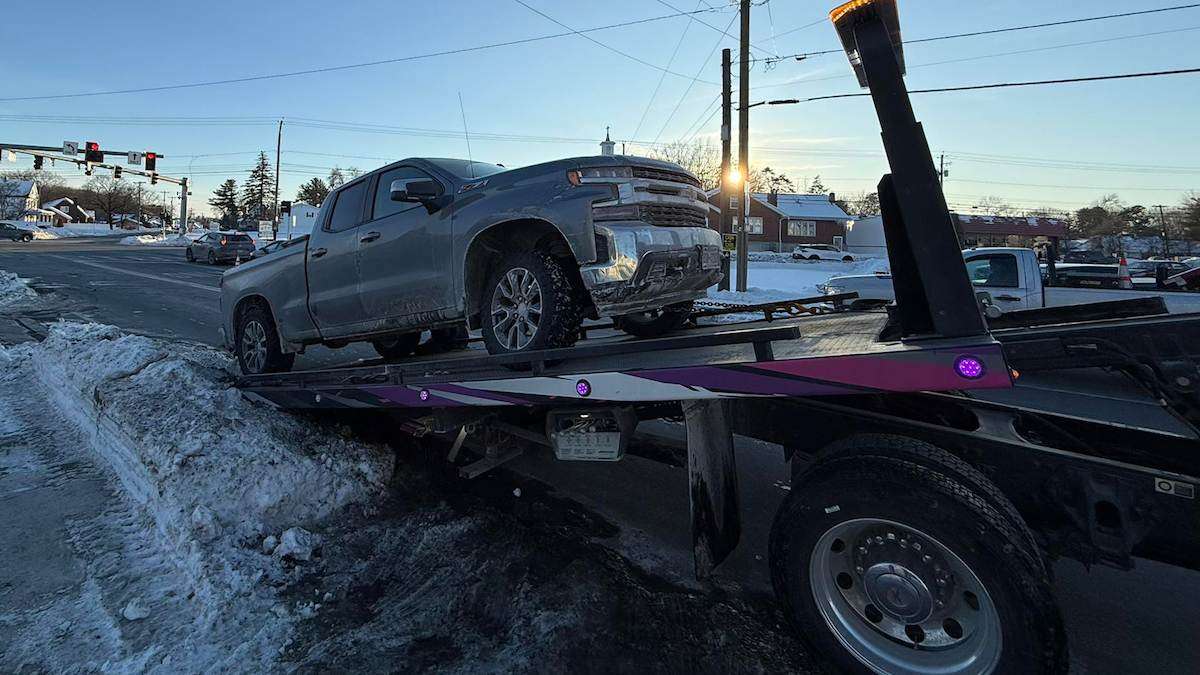

I’ve spent decades tracking the evolution of the American pickup, from the grease-monkey days of the '90s to the high-tech "sealed units" of 2026. But after seeing what happened to Jason Smith’s 2023 Silverado, it’s clear that "modern engineering" has officially collided with real-world truck use.
In my research on GM reliability issues, I found a recent post shared in a Facebook community of 2019-2026 Chevy Silverado and GMC Sierra owners. Jason Smith highlighted growing concerns about the durability of modern Chevrolet trucks and the steep costs of staying on the road when factory engineering fails to meet owner expectations.
The story of Jason Smith is a chilling reminder that brand loyalty doesn't protect your ball joints. Smith, who has maintained a fleet of trucks over the decades, recently hit a breaking point. “This truck has been the biggest pile of shit!!” he vented.
“I’ve had Fords and Rams always run a level with 33s, and these new Silverados are the only trucks that can’t handle them. The front ends are absolute dog [dirt]. These trucks are not made to last anymore; you can’t even grease the upper control arms because they’re a sealed unit! It’s time for a Toyota Tundra, 5.7L only!”
In the world of full-size pickups, there is an unwritten rule: if you buy a truck, you’re going to make it yours. For most of us, that starts with a leveling kit and a set of 33-inch tires. It’s the "bread and butter" of truck customization. I’ve done it to Fords, I’ve done it to Rams, and I’ve seen thousands of owners do the same without a second thought. But the 2023–2026 Chevrolet Silverado has introduced a mechanical "wall" that is catching lifelong owners off guard.
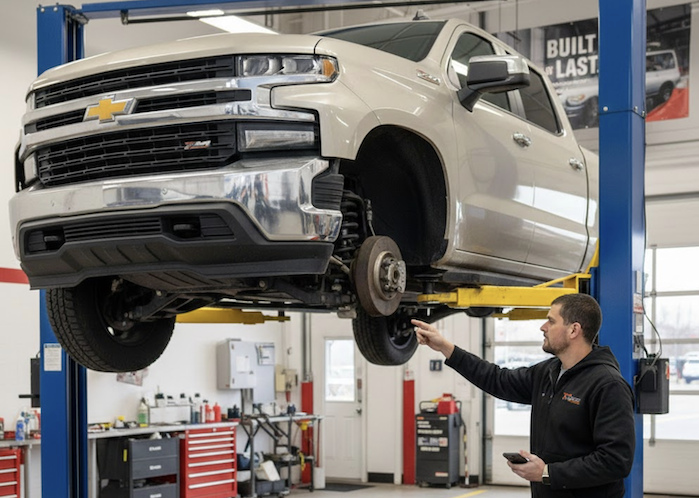
The Death of the Serviceable Part
The industry secret that GM isn't highlighting in the brochure is the shift toward "sealed" upper control arms (UCAs). In the past, a squeak or a bit of play in your front end could be solved with a $20 part and a grease gun. Today, these UCAs are non-serviceable units. When that ball joint fails, which it often does under the increased stress of a leveling kit, you aren't just replacing a part; you’re replacing the entire arm.
This lack of serviceability is a growing trend I’ve covered across the Big Three. For instance, I recently reported on how Ford F-150 owners are facing a nightmare with transmission failures and shifting issues that are forcing lifelong fans to reconsider their loyalty. Much like the Silverado’s front end, modern trucks are being designed with components that are easier for robots to assemble at the factory but harder for owners to maintain over the long term.
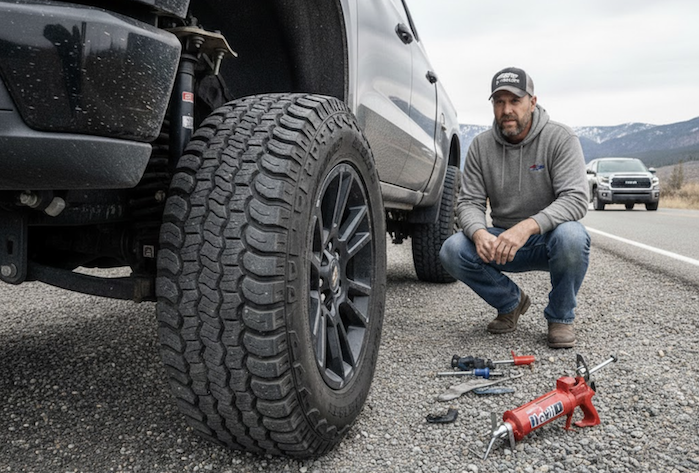
Geometry Doesn’t Lie
Why is the Silverado failing where the Ram and Ford succeed? It comes down to operating windows. Every suspension system has a range of motion. When you install a "puck" or spacer level on a modern Silverado, you are pushing the stock UCA to its absolute limit. On older trucks, there was enough "meat" in the geometry to absorb that 2-inch change. On the newer GM platform, that 2-inch level puts the ball joint at a "death angle."
The result? Catastrophic failure. Smith noted this was his second time dealing with UCA issues on stock arms at a level. This mechanical frailty is why many are looking to the competition, though even the "gold standard" is slipping. As I noted in my report on why the Toyota Tundra is seeing an increase in engine-related complaints, no brand is currently immune to the "tech-over-toughness" era.
The Pivot to "Old School" Reliability
Frustrated by what he calls "stamped steel junk," Smith is ready to walk away from the Bowtie. “It’s time for a Toyota Tundra, 5.7L only!” he declared. He’s not alone. There is a massive secondary market growing for the "Last of the V8s." Buyers are realizing that the complexity of modern trucks, such as the Silverado's Dynamic Fuel Management (DFM), often comes at the expense of long-term durability.
I’ve spent considerable time documenting these specific powertrain woes, including my deep dive into why Chevy Silverado owners are still battling 5.3L V8 lifter failures and DFM-related meltdowns that can leave a truck dead in the water before the first 100,000 miles. When you combine a weak engine with a front end that can't handle basic driving, you start to see why owners are looking back to the 5.7L era.
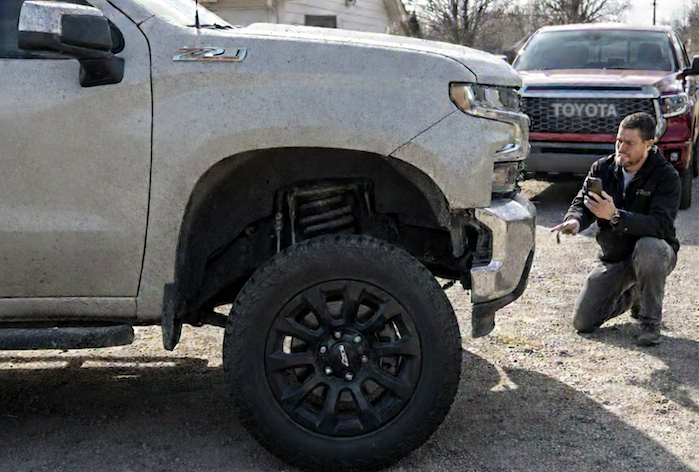
My Verdict: Level with Caution
If you are driving a 2019–2026 Silverado or Sierra and you want that leveled look, the "industry secret" is simple: Do not trust the stock upper control arms. If you're adding a 2-inch spacer, you must budget for aftermarket UCAs designed for the corrected angle. Brands like Rough Country or ReadyLift offer fabricated arms that fix the geometry GM left on the table. GM may have built a truck that looks great on the showroom floor, but as owners like Jason have found, it wasn't built to be messed with.
As I noted in my recent analysis of the Ram 1500 Hurricane engine vs. the legendary Hemi V8, the industry has moved away from the "over-built" philosophy that defined my first 20 years on this beat. We are now in the era of the "Lease and Release." If you plan to keep your truck longer than the warranty, especially if you're modding it, you'd better be ready to re-engineer what the factory left behind.
It’s Your Turn
Are you running a leveling kit on your 2019–2026 Silverado or Sierra? Have you experienced a ball joint failure, or did you swap out your UCAs before the trouble started?
Leave a comment in the red “Add new comment” link below, and let’s get a real-world count of how many owners are seeing these "sealed units" fail.
Next Up: The End of the Lifter Crisis?
If you think the front-end geometry on the new Silverado is a headache, wait until you see what’s happening under the hood. For years, I’ve been tracking the catastrophic engine failures caused by GM’s Dynamic Fuel Management (DFM) system. But the tide may finally be turning. In my latest investigative piece, I analyze a groundbreaking discovery from a 2026 Chevy Silverado owner who looked up his VIN and found that GM may have finally eliminated DFM to solve the notorious lifter issues that have plagued the brand for a decade. Is this the return to reliability we've been waiting for, or just another "sealed unit" mystery?
Read the full story here: 2026 Chevy Silverado Owner Says, "I Looked Up My VIN and Discovered GM Officially Eliminated DFM to Fix Lifter Issues"
Denis Flierl is a Senior Reporter at Torque News with over 30 years of hands-on experience in the automotive industry. Having served as a professional test driver and industry consultant for major automakers such as Chevrolet, Ford, Toyota, Honda, and Tesla, Denis provides a "boots-on-the-ground" perspective that goes beyond standard reporting. Since joining Torque News in 2012, he has specialized in cutting through market noise to deliver data-backed analysis and real-world owner stories. His work focuses on navigating the transition to EVs and the shifting automotive market.
Have a tip or question for Denis? > Engage with him directly on LinkedIn for industry analysis, or follow his latest updates on X @DenisFlierl and @WorldsCoolestRides. You can also find his latest car features on Facebook and Instagram.
Photo credit: Denis Flierl via Jason Smith
Set Torque News as Preferred Source on Google
Follow us today...