
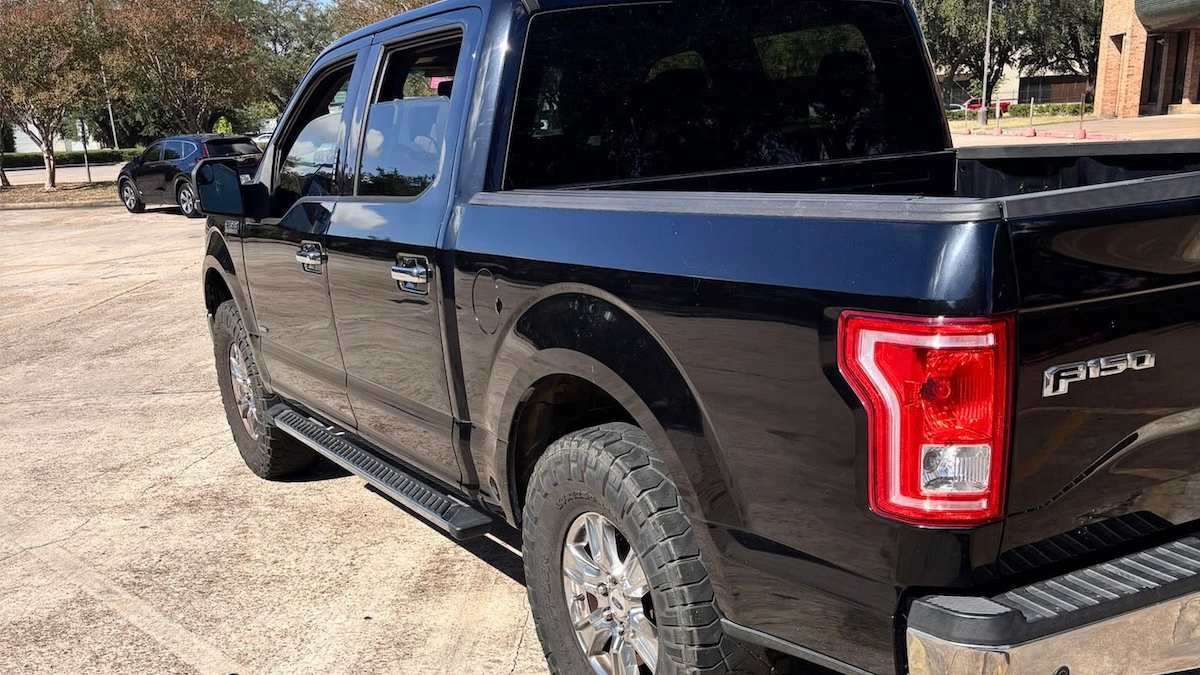

The big question: 10-speed or 6-speed transmission? A Ford F-150 truck owner is itching to try the 10-speed! What's the best transmission for the 5.0 Coyote V8?
When a loyal Ford F-150 owner, who goes by Inferior Blaize, chimed in on the F-150 Owners Facebook page, asks, "5.0 10 speed or 5.0 6 speed. I wanna trade my 2016 3.5 eco for a 2018+ 5.0 but I'm not sure which transmission to go with," it's more than just a preference question—it's a search for the best F-150 transmission for daily driving and longevity.
Since Blaize is trading out of a 3.5L EcoBoost, he's already comfortable with sophisticated modern powertrains, but the jump to the 5.0-liter Coyote V8 brings two very different shifting dynamics into play.
The Proven Veteran: The 6R80 (6-Speed Automatic)
If maximum peace of mind is the goal, the 6-speed automatic (6R80) is the undisputed champion. This transmission is a mature, battle-tested unit paired with the 5.0-liter V8 in the 2018 model year before the full transition to the 10R80.
Its design is simpler, which translates directly to fewer potential points of failure and generally lower repair costs should an issue arise. For many traditionalists and those who prioritize simplicity over micro-optimization, the question of Ford F-150 5.0L V8 10-speed vs 6-speed reliability is answered with the 6R80.
The Performance and Efficiency Maverick: The 10R80 (10-Speed Automatic)
The 10-speed automatic (10R80), developed in a joint venture with GM, is the modern standard for a reason. Its primary function is to keep the engine, particularly the 5.0-liter V8, in its optimal power band more consistently. This is critically important for maximizing the towing capacity of the Ford F-150 5.0 V8, as the closer gear ratios prevent large RPM drops between shifts under load.
However, the 10R80 has a reputation built on its early years. Many owners initially complained about "gear hunting," slow shifts, or a pronounced "shift shock" at lower speeds. These concerns were addressed in subsequent model years, demonstrating why 2018 Ford F-150 5.0 owners switch transmissions—often seeking the smoother, refined tuning of the 2020 and later models.
The key takeaway for Blaize is that the 10R80's success is heavily dependent on the truck's model year. If he's looking at a late 2018 or 2019 model, he needs to verify that the latest Transmission Control Module (TCM) software updates have been applied. Failing to do so is the root of many Common issues with Ford's 10R80 transmission.

Take The 10-Speed, But Be Selective
Blaize is trading his EcoBoost for the V8 experience—the sound, the power, and the responsive throttle feel. The 10-speed facilitates this experience better by ensuring the power is always ready. So, the short answer to, Is the Ford 10-speed transmission worth the upgrade? Yes, if you select the right model year.
- If choosing 2018-2019: Opt for the 6-speed for stability, or ensure the 10-speed truck has detailed maintenance records and confirmed TCM software updates.
- If choosing 2020-Present: The 10-speed is the superior choice for performance, resale value, and overall efficiency.
The Takeaway:
Beyond the initial choice, the most practical takeaway for Ford F-150 5.0 V8 maintenance tips for longevity is simple: The 10R80 uses a non-serviceable filter design from the factory, but proactive maintenance—a fluid and filter change every 60,000 miles—will dramatically extend its life, regardless of how Ford markets the "lifetime" fluid. Don't overlook it.
What the Community is Saying
Blaize's curiosity about the 10-speed is shared by many. The desire to "try" the 10-speed usually stems from better highway fuel economy and the improved launch feel. It's a compelling upgrade from the 6R80.
- Noah Johnson - "A later build date 23 has the updated parts in the transmission and doesn't have all the issues the older ones have."
- Zach Dillman - 23 and up. I have a 2015 5.0, and my dad has a 2023 —it's night and day. The new 5.0 paired with the 10-speed is an animal. Make sure you're patient and find one with 3.73 gears.
- Ross Tschappat - The 10-spd is really fun and nice when it works well, buutttt the moment it doesn't, you're going to be dissatisfied.
Here are two more of my stories related to the Ford F-150.
- I'm a Lifelong Ford Fan, But My F-150 Crapped Out at 175K Miles, and I Decided To Get My Dream Truck, A 2025 Toyota Tundra. I Hope I Made the Right Choice
- I'm Typically A Ford F-150 Guy, But I Picked Up This Well-Optioned 2025 GMC Sierra SLT Premium Plus For Less Than What F-150 XLTs Are Selling For
Final Question for the F-150 Owners
For those of you with a 5.0L V8, does the 10-speed transmission enhance the classic V8 feel with its smoother power delivery, or does the 6-speed keep the driving experience more direct and responsive, the way a true truck should be? Click the red Add New Comment link below and let us know.
I'm Denis Flierl, a Senior Torque News Reporter since 2012, bringing over 30 years of automotive expertise to every story. My career began with a consulting role for every major car brand, followed by years as a freelance journalist test-driving new vehicles—equipping me with a wealth of insider knowledge. I specialize in delivering the latest auto news, sharing compelling owner stories, and providing expert, up-to-date analysis to keep you fully informed.
Follow me on X @DenisFlierl, @WorldsCoolestRides, Facebook, and Instagram
Photo credit: Denis Flierl via Inferior Blaize
Set Torque News as Preferred Source on Google
Follow us today...







Comments
I own a 2011 with the Coyote…
Permalink
I own a 2011 with the Coyote and the 6r80 transmission. I like the combination of the power train, it’s coupled with the 3.55 rear diff. The truck never seems stressed on the road either towing or just driving. The only oddity I have noticed is that the truck shifts very hard from 2 to 3 on the first cycle of shifts in the morning. After that initial hard shift, it works fine. What I have found to eliminate this issue is to allow the truck to roll down my driveway in neutral after I start it, stop the truck completely, shift into reverse and back up five feet. Stop again, shift to drive, and go. The 2 to 3 shift is then perfectly smooth.