

Buying a new EV often comes with an assumption that home charging will be simple, inexpensive, and in some cases “included.”
For one new Mustang Mach-E owner, that assumption collapsed the moment her installation quote arrived. What she expected to be a turnkey benefit quickly turned into a nearly $8,000 surprise, with almost the entire cost tied to a mandatory electrical panel upgrade.
The owner shared her experience shortly after taking delivery of her Mach-E, explaining that she had been told home installation was part of the purchase. Instead, she received a quote totaling $7,930. Of that amount, $7,705 was allocated to a main panel upgrade, with just $225 covering permitting and administrative fees. The charger itself was not the issue. Her home’s electrical infrastructure was.
“Just got my mustang, was told it included a home installation. I was given this quote. Any suggestions to get a better price?”

According to the estimate, her existing panel is a split-bus design, which cannot accept additional circuits under the current electrical code. To safely add an EV charging circuit, the installer specified a full upgrade to a 200-amp panel. That process includes replacing the panel, updating the meter box, bringing grounding electrodes up to modern code, installing whole-house surge protection, labeling, and pulling new permits. In short, it was not an EV charger quote. It was a full electrical modernization project.
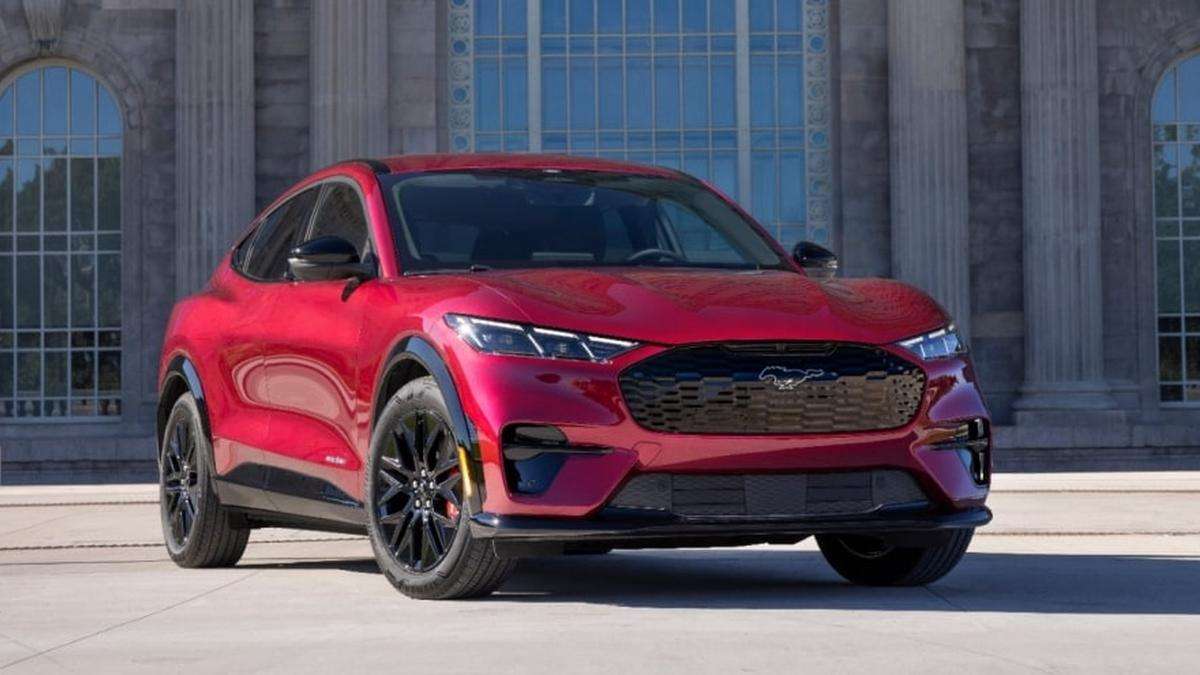
Ford Mustang Mach-E: Crossover & Acceleration
- The Mach-E’s crossover shape prioritizes usable rear-seat space and cargo flexibility, even if the sloping roofline slightly limits rear visibility.
- Acceleration is immediate and easy to modulate in traffic, with regenerative braking calibration that can meaningfully change how “one-pedal” driving feels day to day.
- Cabin design is dominated by a large vertical touchscreen, creating a clean interior but concentrating most functions into menus rather than dedicated buttons.
- Highway behavior is stable and quiet for the segment, though the firm suspension can transmit sharper impacts over broken pavement.
Reactions from other owners were immediate and sharply divided. Some electricians chimed in to say the price was not unreasonable at all, arguing that once permits, inspections, labor, materials, and liability are factored in, a $7,700 panel upgrade is squarely within market norms. Several stressed that EV charging is a continuous load and that improper wiring is a serious fire risk, especially when corners are cut with undersized wire or uncertified installers.

Others pushed back just as hard, not necessarily disputing the price of the upgrade, but questioning whether the upgrade was truly necessary. Multiple commenters pointed out that many EV owners do not need 48-amp or 60-amp charging at home. A lower-amperage 240-volt circuit, such as a 20- or 30-amp setup, can still fully recharge a Mach-E overnight. In those cases, the existing panel may be sufficient, avoiding a service upgrade entirely.
Several owners shared real-world examples. Some installed adjustable-amperage wall chargers set to lower output and ran them for years without issue. Others opted for a simple NEMA outlet installation near the breaker panel, trading faster charging for dramatically lower upfront cost. One commenter bluntly suggested using the $7,700 savings to go on vacation instead.
What frustrated the owner most was not just the price, but the gap between expectation and reality. Being told that home installation was “included” created a mental picture of convenience, not a conditional offer dependent on the age and configuration of her house. While the fine print often clarifies that electrical upgrades are the homeowner’s responsibility, that nuance is rarely emphasized during the excitement of a new car purchase.
This situation highlights a broader issue facing first-time EV buyers. The vehicle may be modern, but many homes are not. Panels installed decades ago were never designed with high-draw, continuous loads like EV chargers in mind. When those realities collide, the sticker shock can feel personal, even if the quote itself is technically justified.
It also exposes a communication gap in how EVs are sold. “Home installation included” often means the coordination service is included, not the electrical work itself. Companies like Qmerit act as middlemen, ensuring code-compliant installs, but they do not magically bypass local regulations or physical limitations of older electrical systems.

The best advice repeated throughout the discussion was simple. Get multiple opinions. Talk to independent electricians, not just the installer provided through the EV program. Ask whether lower-amperage charging meets your daily needs. Understand that faster is not always necessary, and that overnight charging at reduced power still works for most driving patterns.
For this Mach-E owner, the excitement of going electric came with an unexpected lesson in home infrastructure. The car itself was not the expensive part. The house was. And while $7,930 may be defensible on paper, it is a jarring number for anyone who believed plugging in at home would be the easy part of EV ownership.
Image Sources: Ford Media Center
Noah Washington is an automotive journalist based in Atlanta, Georgia. He enjoys covering the latest news in the automotive industry and conducting reviews on the latest cars. He has been in the automotive industry since 15 years old and has been featured in prominent automotive news sites. You can reach him on X and LinkedIn for tips and to follow his automotive coverage.
Set Torque News as Preferred Source on Google
Follow us today...




Comments
Wait! You thought you were…
Permalink
Wait! You thought you were getting home charging included in the price of the vehicle? Why would you think that, right?
We get to watch the electric…
Permalink
We get to watch the electric car die twice in the USA. Good riddance
This mentality is why China…
Permalink
In reply to We get to watch the electric… by Mike M (not verified)
This mentality is why China will surpass the US in my lifetime. “Hurr durr new technology bad. Me want to continue to give money to people who hate us for energy. More efficient car dumb!”